Global — As generative artificial intelligence models continue their meteoric rise—generating everything from complex software code and marketing copy to hyper-realistic imagery and architectural layouts—a pervasive anxiety has gripped the creative industries. Writers, artists, developers, and product designers find themselves staring down an existential horizon, wondering if their specialized skill sets are about to be rendered obsolete by machines trained on a quarter of the Library of Congress.
Yet, industry veterans and design educators argue that this panic is rooted in a fundamental misconception. AI does not possess the capacity to truly create; it mimics. By examining the core, non-technical human attributes that define the design process—often referred to as designerly behaviors—experts suggest that the future of design lies not in human displacement, but in human augmentation.

Main Facts: The AI Disruption vs. Human Reality
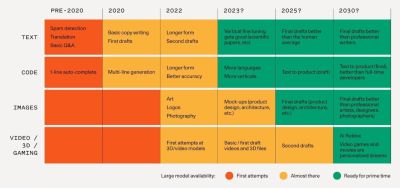
The discourse surrounding artificial intelligence and employment is dominated by efficiency metrics, automation timelines, and the fear of mass redundancies. Sequoia Capital and other market forecasters have mapped out aggressive timelines predicting when AI will match or exceed human competency across various text, code, and visual domains.
However, these predictions operate on the false premise that human creators and artificial intelligence share identical qualities and operational architectures.
- What AI Does Best: Artificial intelligence is exceptional at processing, analyzing, and synthesizing vast quantities of data quickly, accurately, rationally, and consistently. It follows programmatic rules and identifies statistical patterns across billions of parameters.
- What AI Lacks: AI is devoid of consciousness, physical sensory experiences, emotional intelligence, intuition, and lived cultural context. It can simulate empathy or artistic style based on training data, but it cannot authentically experience the world, understand the messy realities of human environments, or make value-based ethical judgments.
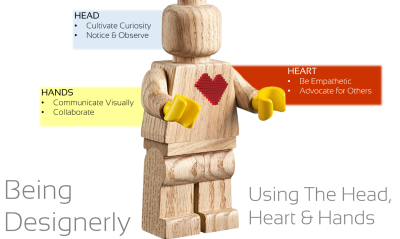
The true differentiator for modern professionals is a suite of innate, non-technical skills categorized under the "Head, Heart, and Hands" framework—organizing thinking, feeling, and doing. These distinct human attributes ensure that creators retain the ultimate competitive advantage.
Chronology: From Pandemic Constraints to Field Ethnography
To understand how human-centric design thrives where algorithms fail, one can look at the real-world case study of a global product redesign executed during the COVID-19 pandemic.
- Early 2020: Tasked with redesigning a tablet application for sales representatives at the world’s largest food and beverage company, a lead designer faced a formidable constraint. Having never worked as a sales rep, the designer had to rely initially on remote video interviews during global lockdowns.
- Mid-2020 (Restrictions Ease): As soon as company protocols permitted, the design lead met two sales representatives at a local Walmart.
- The Field Visit: Wearing masks and maintaining social distance, the designer shadowed these representatives through dairy, pet food, and freezer aisles. This real-world immersion uncovered critical workflow friction points—such as juggling multiple devices, handling printouts, and operating touchscreens inside low-lit, freezing walk-in coolers while avoiding harried shoppers—that never surfaced in sterile video interviews.
- Post-Visit Execution: Armed with these qualitative, empathetic insights, the distributed global team experimented with novel concepts, refined them via direct feedback from the field, and launched a completely revamped application. The result garnered glowing praise from both end-users and corporate stakeholders.
This milestone demonstrates that physical presence, emotional resonance, and contextual observation cannot be replicated by remote data scraping or automated machine learning.
Supporting Data: The Six Pillars of "Designerly" Behavior
First coined by design researcher and educator Nigel Cross, the term designerly refers to the underlying patterns of how designers think and act. Utilizing the transformative sustainability framework of Head, Heart, and Hands, these behaviors can be broken down into six essential, AI-proof competencies:
1. Head (Thinking Skills)
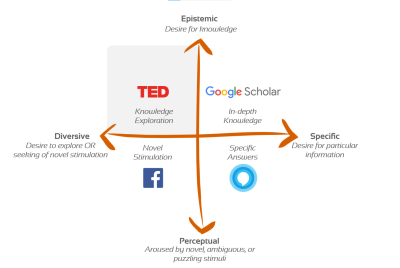
- Cultivate Curiosity: Building on Daniel Berlyne’s 1950s Theory of Human Curiosity—which distinguishes between perceptual and epistemic curiosity, as well as diversive and specific exploration—humans possess an intrinsic desire to learn and question. While AI is programmed to find answers within fixed parameters, human curiosity drives us to explore the unknown, uninhibited by artificial boundaries.
- Notice and Observe: Noticing is seeing something for the first time; observing is paying intentional attention. Unlike AI, which is bound by historical datasets, human observers can step into a coffee shop or grocery line, read spatial and emotional dynamics, and spot subtle, unarticulated behavioral patterns that spark breakthrough innovations.
2. Heart (Feeling Skills)
- Be Empathetic: Drawing on Roman Krznaric’s definition, empathy is the imaginative art of stepping into another person’s shoes and letting that understanding guide action. Psychologist Paul Ekman notes that "compassionate empathy" drives us not just to understand feelings, but to alleviate suffering. AI can measure facial expressions, but it cannot feel pain, joy, or fatigue.
- Advocate for Others: User advocacy transforms empathy into action. In an ecosystem of competing corporate priorities, a designer serves as the voice of the user. AI cannot independently evaluate ethical dilemmas or fight for human-centric values without human oversight.
3. Hands (Doing Skills)
- Communicate Visually: Storytelling and visual mapping—from rough whiteboard sketches to interactive prototypes—allow multidisciplinary teams to align on abstract concepts instantly. Lacking physical senses and emotional context, AI cannot "read the room" or intuitively sketch a solution on a napkin to solve an immediate collaborative hurdle.
- Collaborate: True collaboration requires navigating complex social dynamics, negotiating compromises, and adapting dynamically to live human feedback. While humans can utilize AI as a supportive productivity tool (e.g., for transcription, code suggestions, or data sorting), AI itself cannot participate in the socio-emotional nuances of team synergy.
Official Responses and Industry Perspectives
Tech leaders, venture capitalists, and design directors have increasingly weighed in on the integration of generative AI into the creative pipeline.
Industry analysts emphasize that organizations adopting AI are not replacing human staff; rather, they are automating tedious operational overhead—such as manual data transcription, repetitive formatting, and layout generation. This shift mirrors the culinary world: just as automated kitchen appliances and recipe databases assist line cooks, the executive chef (the human designer) remains essential for strategic menu planning, emotional curation, and final quality control.

Furthermore, public missteps by generative tools—such as hallucinated facts, inaccurate historical attributions, and tone-deaf automated customer interactions—underscore the absolute necessity of human stewardship. AI outputs require rigorous fact-checking, ethical alignment, and emotional intelligence to ensure they serve society safely and effectively.
Implications: The Future of Creative Work
As artificial intelligence matures, the nature of creative labor is undergoing a profound structural evolution. The implications for the workforce are clear:
- Shift from Execution to Strategy: Professionals will spend less time on manual asset generation and more time on high-level problem framing, stakeholder alignment, and contextual research.
- Amplified Value for Soft Skills: Competencies like empathy, active observation, cross-functional collaboration, and user advocacy will command a premium. These are precisely the traits that cannot be automated.
- Augmentation, Not Replacement: Creators who successfully integrate AI into their daily workflows as a co-pilot will outpace those who resist technology or rely on it entirely without human oversight.
Ultimately, artificial intelligence will continue to redefine the tools we use, but the fundamental drive to understand, serve, and elevate human experiences will remain firmly in human hands. By mastering designerly skills across the head, heart, and hands, creators can secure not only their professional relevance, but a more innovative and human-centric future.