In the modern corporate landscape, professional development is often the first item on the chopping block when budgets tighten. Yet, attending a high-level industry conference remains one of the most effective ways to accelerate innovation and solve complex organizational challenges. When you approach your manager with a request to attend an event, you are not merely asking for a paid vacation or a week of networking; you are proposing an investment that carries significant potential for ROI.
The reality is that a major conference—especially those involving travel, lodging, and high-ticket registration fees—can cost thousands of dollars. To secure approval, you must move beyond the "personal growth" narrative and pivot toward a compelling business case that directly addresses your organization’s bottom line.
The Foundation: Aligning Personal Development with Business Objectives
The most common mistake employees make when requesting conference approval is focusing on what they want to learn. While your manager may value your career trajectory, their primary concern is the performance of the team and the success of the company.
To build a winning case, start by mapping the conference agenda to your organization’s current strategic priorities. Is your company struggling with declining productivity? Are you under pressure to integrate Artificial Intelligence into your existing workflows? Is there a mandate to reduce operational costs? By selecting a conference that addresses these specific pain points, you transform your request from a discretionary expense into a tactical business solution.
For instance, if your organization has set a goal to overhaul its marketing tech stack, a specialized conference focused on AI-driven marketing applications is far more defensible than a general-purpose trade show. By demonstrating that you have done the homework to find the right event—not just the most popular one—you signal to your leadership that you are thinking like an owner, not just an employee.
Constructing the Financial Narrative: Investment vs. Expense
When you present your request, the budget should be transparent, comprehensive, and framed as an investment. Do not simply list the registration fee; provide a line-item breakdown that includes:
- Registration and Workshops: The core educational costs.
- Logistics: Detailed estimates for airfare, hotel accommodations, and ground transportation.
- Subsistence: Per diem estimates for meals.
- Opportunity Cost: Acknowledge the time away from the office by outlining how your current projects will be covered during your absence.
Once the costs are laid out, pivot to the "value-add" section. You do not necessarily need to promise a fixed dollar-value ROI, which can be speculative and difficult to track. Instead, present a strategic framework of expected outcomes. Focus on the transfer of knowledge: How will the information you gather be disseminated? What specific methodologies will you bring back to the team? By positioning the conference as a research and development mission, you move the conversation from "How much will this cost?" to "How much value will this generate?"
Proactive Advocacy: Anticipating the "No"
A successful pitch anticipates the inevitable questions your manager will have. By answering them before they are asked, you project confidence and thoroughness.
"Why can’t you learn this online?"
The digital age has democratized information, but it hasn’t replaced the power of immersion. You must emphasize the "Room Matters" factor. While webinars and online courses provide passive information, a live conference offers high-bandwidth, unfiltered conversations. You gain access to real-time feedback from peers who are facing the same challenges and speakers who are at the cutting edge of the industry. The change of scenery and the act of being fully removed from daily distractions foster "big-picture" thinking that is nearly impossible to achieve from behind a desk.
"What exactly will we get out of this?"
Commit to specific, tangible deliverables. A vague promise to "bring back ideas" is rarely enough to secure funding. Instead, propose a concrete post-conference plan:
- The Executive Summary: A written report highlighting the most relevant sessions and key takeaways.
- The AI Audit: A list of new AI workflows or automation tools you intend to evaluate for the team.
- The 30-Day Roadmap: A clear plan for how the lessons learned will be integrated into your team’s operations within the next month.
"Why this conference in particular?"
This is where you clearly define the risk of not attending. If your company is currently navigating a pivot—such as the rapid adoption of generative AI—failing to attend a specialized summit like MAICON (the Marketing AI Conference) could result in wasted expenditure on the wrong software, inconsistent adoption patterns, and falling behind competitors who are actively upskilling.
Case Study: The Strategic Value of MAICON
To understand how this looks in practice, one must examine conferences that prioritize actionable intelligence over mere networking. The Marketing AI Conference (MAICON) serves as a prime example. Unlike general marketing events that may offer only a single track on technology, MAICON is built for leaders who need to understand how AI is changing the landscape right now.
For an organization, sending a team member to MAICON is an investment in institutional readiness. The sessions are designed to move beyond theoretical "AI hype" and into the granular, practical use cases that managers crave. When you justify a trip to an event like this, you aren’t just saying you want to attend a seminar; you are saying you want to bring back a playbook for the future of your company’s operations.
The Path Forward: From Proposal to Implementation
The process of gaining approval is, in itself, a test of your leadership capabilities. It requires you to synthesize business data, display financial literacy, and align your personal growth with the broader vision of the firm.
Managers are rarely looking for a reason to say "no." They are, however, looking for evidence that their team members are capable of strategic thinking. By following the steps outlined—starting with business priorities, framing the budget as an investment, and providing a plan for tangible results—you make it significantly easier for your manager to say "yes."
Join the Conversation in 2026
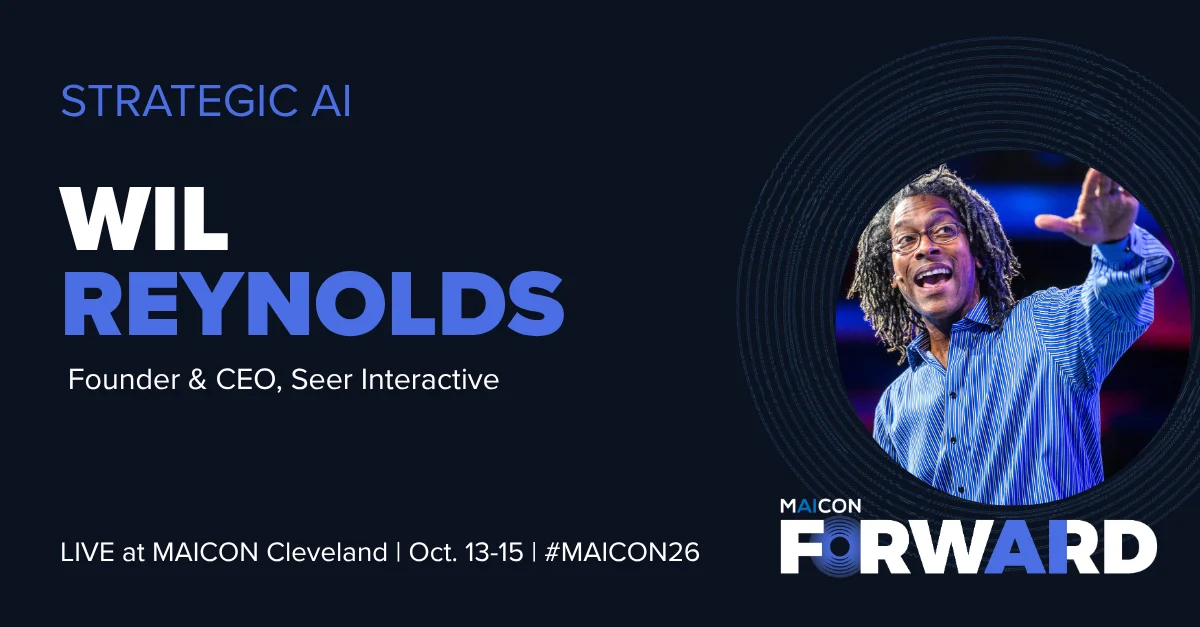
As the industry stands at a pivotal juncture, the need for education and strategic alignment has never been greater. The 7th annual Marketing AI Conference (MAICON) will take place from October 13–15, 2026, in Cleveland, Ohio. This event is designed to serve as a catalyst for organizations looking to harness the power of AI to drive efficiency and innovation.
If you are ready to make the case, start by visiting the conference website. Many leading events now provide "justification kits"—templates, email drafts, and ROI calculators—that you can adapt to your specific role. By taking the initiative to prepare a professional, business-forward pitch, you demonstrate that you are not just a participant in the industry, but an active driver of your organization’s future success.
Conclusion: The Long-Term Professional Dividend
Ultimately, the request to attend a conference is an opportunity to prove your value to the company. When you return, the real work begins. The commitments you made in your proposal—the 30-day action plan, the tool evaluations, and the team presentations—are what turn a trip into a long-term professional dividend.
By treating the request as a business proposal, you build a foundation of trust with your leadership. You show that you are intentional with company resources and that your professional development is a vehicle for broader organizational growth. When you demonstrate that level of maturity, you don’t just get the "yes" for this conference—you secure the support for your career development for years to come.