In the hyper-kinetic world of Silicon Valley, where venture capitalists often compete for social media clout as much as they compete for deal flow, Insight Partners has remained a deliberate outlier. With $90 billion in assets under management (AUM), the firm is a behemoth, yet it operates with a measured, low-profile discipline that contrasts sharply with the "loud" VC culture of X (formerly Twitter) and the podcast circuit.
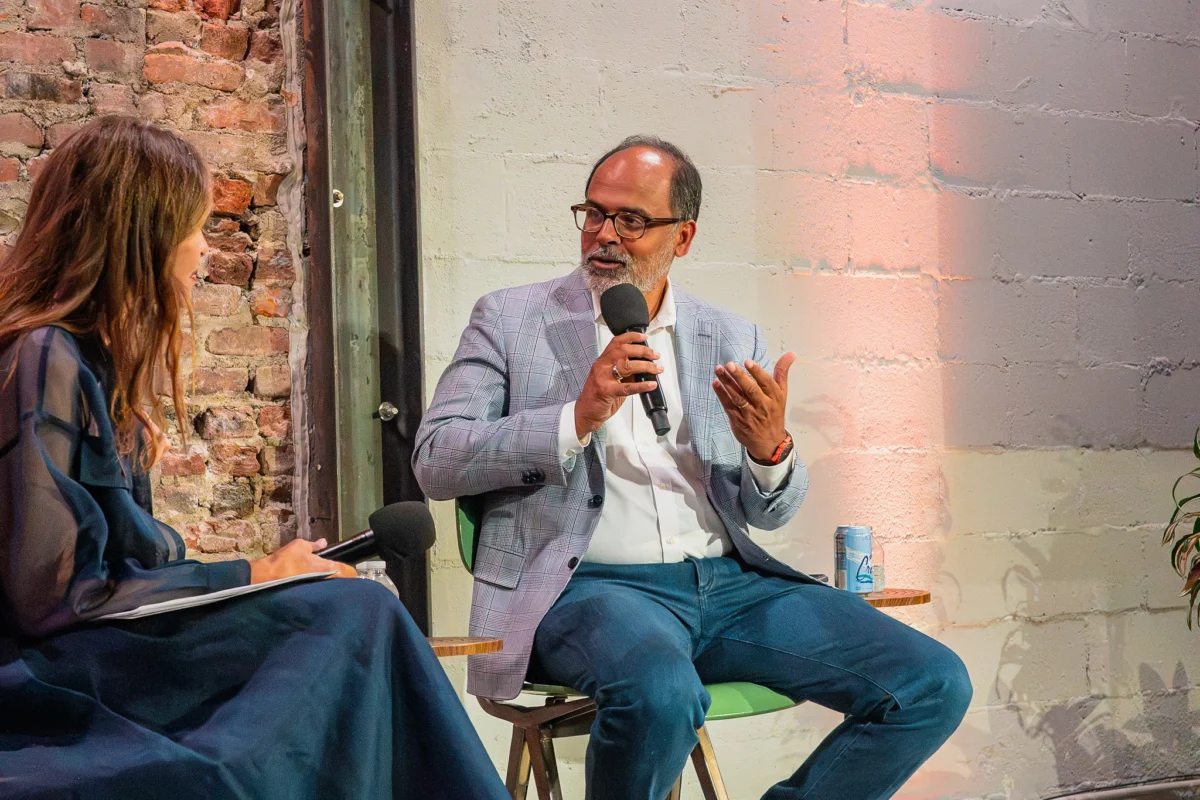
At the helm for 26 years is Deven Parekh, a Managing Director whose steady hand has guided Insight through multiple market cycles. In a rare, wide-ranging sit-down at the TechCrunch StrictlyVC event in New York, Parekh offered a candid look at the philosophy that has sustained one of the world’s most influential software-focused investment firms.
The Philosophy of Silence and Performance
For Parekh, the noise surrounding modern venture capital—where investors weigh in on everything from epidemiology to geopolitics—is a distraction. "Every venture capitalist thinks they’re an expert on everything now," Parekh noted. "Our attitude has been: Let the portfolio do the talking. We have to communicate enough that people know who we are, but our performance should speak for itself."
This restraint is not merely a stylistic choice; it is a strategic imperative. Insight Partners focuses on the long-term compounding of software businesses rather than the fleeting trends of the day. By avoiding the temptation to become public commentators, Parekh’s team preserves the focus required to manage a massive, diversified portfolio that ranges from early-stage startups to late-stage growth and strategic buyouts.
AI Risk: Hysteria or Evolution?
The discourse surrounding Artificial Intelligence has reached a fever pitch, punctuated by high-profile exits of researchers warning of existential risks. When asked if the current alarmism regarding AI safety amounts to "hysteria," Parekh offered a pragmatic, albeit optimistic, counter-narrative.
"Sure, there’s a risk some non-state actor gets access to an open-source model and creates a biological weapon," Parekh conceded. "But there’s an even higher probability we get a massive decrease in the time it takes to develop new drugs and cure diseases. I’ll take that bet."
Parekh, who serves on the board of NYU Langone, views AI through the lens of tangible utility. He pointed to the transformative potential of AI in clinical settings, where algorithms analyze millions of patient records to predict health outcomes—such as heart attack risks—with startling accuracy. "Net-net, I think this is highly positive," he stated. "Every generation has new risks, and somehow, over time, the world still raises living standards. We’re going to need AI to scale healthcare—the population is aging and there aren’t enough medical professionals to go around."
Strategy: Adapting to a Changing Market
Insight’s investment strategy is characterized by its flexibility. Rather than adhering to fixed geographic or stage-based allocations, the firm evolves with the macroeconomic climate.
The Shift Toward Early-Stage
The firm has notably pivoted toward earlier-stage investments as late-stage valuations have become increasingly detached from risk-adjusted returns. "Normally, a follow-on round means more data, so you pay a higher price for lower risk," Parekh explained. "Right now, rounds move so fast there’s almost no incremental data, so you’re paying more without reducing risk. The logical response is to go earlier."
By writing smaller initial checks—in the $20–$25 million range—and doubling down on winners, Insight manages to mitigate the risks associated with the "frothy" valuations currently dominating the AI landscape. A prime example is Wiz, the cloud security unicorn. Insight participated in the Series A and consistently followed on, resulting in a significantly higher return than if they had simply sat on the sidelines.
Geographies of Innovation
While talent for "vertical AI"—such as financial services—is blooming in hubs like New York, Parekh acknowledges the gravitational pull of San Francisco for "AI infrastructure." He noted that even his own son, a fellow venture capitalist, has relocated to the Bay Area, citing it as a prerequisite for serious AI infrastructure investing. However, Insight remains globally minded, willing to follow talent to Stockholm or anywhere else the next great founder emerges.
The "Dual" Bet: Investing in Rivals
Perhaps the most notable departure from traditional VC "taboos" is Insight’s investment in both OpenAI and Anthropic. Once considered a conflict of interest, this move is framed by Parekh as a recognition of the shifting landscape of large-scale capital.
"At the Series A/B stage, we do have information-sharing restrictions and we don’t invest in directly competing companies," he clarified. However, as these firms evolved into entities requiring $30–$100 billion in capital, they outgrew the ability of any single investor to dictate exclusivity. For Insight, investing in both represents a strategic play on the two dominant models of AI: OpenAI’s consumer-centric dominance and Anthropic’s enterprise-hardened approach.
The Liquidity Imperative: Why DPI Matters
One of the most sobering points in Parekh’s analysis concerns the current state of venture capital liquidity. He expressed concern over the number of funds that have raised significant capital since 2021 without returning meaningful cash to their Limited Partners (LPs).
"LPs want to know you can turn positions into cash; that’s the job," Parekh stated. "Over the last two years, we’ve returned more than $20 billion to LPs through strategic sales and IPOs." He emphasizes that Distributed to Paid-In Capital (DPI) is the ultimate metric of success. Insight’s approach involves active portfolio management—regularly reviewing hundreds of companies to identify when to double down, when to hold, and when to exit.
He cited the case of Armis, a cybersecurity company where Insight initially lost the lead to Sequoia but maintained a relationship. Eighteen months later, Insight bought out the entire cap table and eventually sold the company to ServiceNow for $7 billion. This "patience and persistence" model serves as a stark contrast to the "spray and pray" methodology often seen in newer, less disciplined funds.
The Future of IPOs and Market Correction
As the market looks toward the imminent IPOs of OpenAI and Anthropic, Parekh sees these events as a necessary transition for the industry. While these companies have achieved trillion-dollar potential in record time, he warns that the era of triple-digit growth cannot last forever.
"Eventually even these companies become normal-growth companies, and you need public markets for that," Parekh said. He remains skeptical of the current "frenzy" fueled by LPs who, having pulled back after 2021, are now rushing back into the market just as valuations are peaking.
"The math doesn’t work," he noted regarding the sustainability of current valuation growth. "You can’t compound $40 billion at 50% every two months for two years without becoming the world economy."
Conclusion: The Path Ahead
Deven Parekh’s approach offers a masterclass in institutional longevity. In an industry defined by cycles of extreme optimism and inevitable correction, Insight Partners has carved out a position of influence by prioritizing data-driven conviction over social media discourse.
For founders and investors alike, the takeaway from Parekh is clear: the venture capital business is not about winning every deal or chasing every headline. It is about the rigorous, often quiet work of identifying inflection points, providing the capital to scale, and, most importantly, knowing when to convert paper gains into real-world liquidity. As the AI sector matures and the inevitable market corrections arrive, firms that operate with the discipline of Insight Partners are likely to be the ones left standing, regardless of the noise.