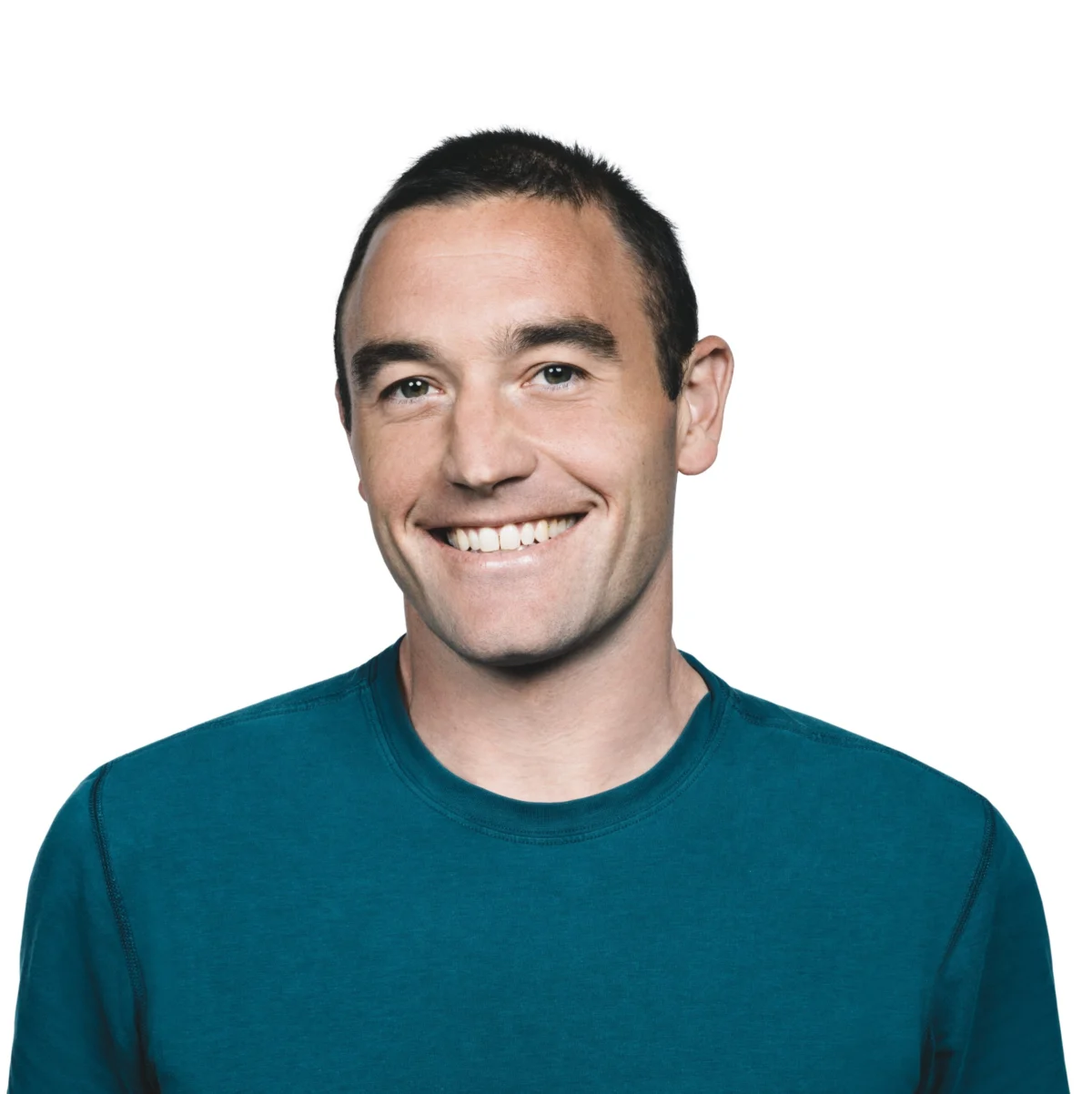
In a move that signals a maturing of the commercial space industry, Stoke Space—the high-flying Seattle-based startup developing fully reusable launch vehicles—has announced the appointment of tech industry veteran Kevin Weil to its board of directors. Weil, whose resume reads like a map of the last decade’s most influential Silicon Valley firms, joins the company at a critical juncture as it transitions from a R&D-heavy startup to an operational launch provider.
The appointment is not merely a symbolic addition of star power. It represents a strategic alignment between the rigorous, hardware-intensive world of aerospace engineering and the agile, scaling-focused culture of Silicon Valley’s software giants. As Stoke Space prepares to test its "Nova" rocket, the company is betting that Weil’s experience at the intersection of AI, satellite imaging, and defense policy will provide the necessary guidance to navigate the treacherous path toward global launch market dominance.
A Chronology of Collaboration: From Y Combinator to Series D
The relationship between Stoke Space CEO Andy Lapsa and Kevin Weil is rooted in the early, foundational days of the company. When Lapsa, a former Blue Origin engineer, co-founded Stoke in 2020, he found himself with a revolutionary technical vision but little experience in the labyrinthine world of venture capital.
"It’s real simple for me," Lapsa told TechCrunch regarding his initial encounter with Weil. "I came out of engineering, started a company, had no idea how to fundraise. I had no idea how Silicon Valley worked. I had no network."
Weil, acting alongside his wife Elizabeth through their fund, Scribble Ventures, became one of Stoke’s earliest believers. This early investment provided more than just capital; it provided mentorship. Throughout the startup’s formative years—a period that saw Stoke successfully navigate Y Combinator’s winter batch—the two kept a steady line of communication.
This mentorship proved invaluable as Stoke secured a staggering $1.34 billion in total funding. The climax of this fundraising effort came in 2025 with a $510 million Series D round, a massive injection of liquidity that solidified Stoke’s standing as one of the few legitimate challengers to SpaceX’s hegemony in the launch sector. Having helped build the foundation, Weil’s transition to the board as a director serves as a formalization of his long-standing role as a strategic advisor.
The Technical Imperative: The Quest for True Reusability
To understand why Stoke Space is attracting the caliber of talent like Kevin Weil, one must first understand the "Nova" rocket and the industry-wide obsession with rapid reusability.
While SpaceX’s Starship has brought the concept of a reusable, heavy-lift rocket into the public consciousness, the technological challenges of atmospheric reentry—specifically surviving the extreme heat and mechanical stresses of returning from orbit—have long deterred even the most well-funded aerospace entities. Blue Origin, where Lapsa cut his teeth, has explored similar concepts but has not prioritized the "full and rapid" reuse model that Stoke considers the holy grail of the industry.
"The world is realizing that launch is still not solved," Lapsa noted. "The idea of full, rapid reuse was a little bit out there at that time… that’s now been rather normalized, and people see the inevitable now."
Stoke’s design philosophy hinges on the belief that for humanity to truly expand its footprint in space—whether for national security, scientific research, or the construction of orbital data centers—the cost of launch must drop to near-commodity levels. Current market data suggests that despite the billions poured into the sector, the supply of launch vehicles remains insufficient to meet demand. The company that can successfully operationalize a fully reusable, reasonably priced rocket stands to capture a significant share of a multi-billion-dollar economy.
Implications: The OpenAI Connection and Strategic Synergy
Weil’s arrival on the board inevitably raises questions about the broader ecosystem of his previous employers. His most recent role was at OpenAI, where he served as chief product officer and later led the company’s efforts to accelerate scientific research.
Industry observers have noted that OpenAI CEO Sam Altman was reportedly scouting potential investments in a SpaceX competitor last year. When asked if Weil might serve as a bridge between the frontier AI lab and Stoke Space, Lapsa remained disciplined, declining to comment on "gossip and rumors."
However, the logic of such a partnership is not hard to discern. The vision of "space data centers"—facilities in orbit that leverage solar energy and bypass terrestrial regulatory or political constraints—has become a siren song for venture capitalists. The primary bottleneck for this vision is the cost of putting high-performance computing hardware into orbit. If Stoke can provide reliable, low-cost, high-frequency launch services, the synergy between a company like OpenAI and a firm like Stoke becomes a strategic inevitability rather than a speculative rumor.
Furthermore, Weil brings a unique dimension regarding the Department of Defense (DoD). He is one of a handful of elite tech executives who recently joined the US Army Reserve, a deliberate move aimed at improving the recruitment pipeline and institutional cooperation between the defense sector and Silicon Valley. Given that military and intelligence contracts are the lifeblood of any successful launch company, Weil’s experience in navigating the halls of the Pentagon and the corridors of Silicon Valley is a massive strategic asset for Stoke.
A Proven Track Record: Beyond Software
Critics might argue that Weil’s background is primarily in digital products and platforms, which are distinct from the hardware-intensive realities of aerospace. Yet, this ignores his tenure as president of Planet Labs.
During his three years at Planet, Weil was instrumental in scaling the company’s operations as it transitioned to a public entity in 2021. Planet, which operates a vast constellation of earth-observation satellites, is a hardware-heavy business that requires constant synchronization with launch providers. He understands the "customer side" of the launch business—the frustration of delays, the necessity of orbital precision, and the volatility of the satellite industry.
The Road Ahead: Execution is Everything
Despite the funding, the high-profile board appointments, and the technological promise of the Nova rocket, the company faces a period of intense pressure. The "startup" phase is ending, and the "operational" phase is beginning.
"We’ve got a good chunk of the risk behind us, we’ve got more to go," Lapsa said, maintaining a grounded tone. "We’ll work as hard as we can, and we’ll go when it’s ready."
The board now includes a veteran who has navigated the scaling of Twitter, the complexities of Meta, the public-market transition of Planet Labs, and the frontier research challenges of OpenAI. For Stoke Space, the strategy is clear: leverage the capital, utilize the policy expertise, and maintain an uncompromising focus on the physics of reusability.
As SpaceX continues to iterate on Starship and the global space race intensifies, Stoke Space is no longer just another hopeful entrant. With Weil now sitting in the boardroom, the company has signaled that it is positioning itself for a long-term, high-stakes battle for the skies. The next twelve months, which will see Nova’s path to the launchpad, will be the ultimate test of whether this strategic alignment can translate into successful, repeated, and profitable missions to orbit.
Stoke has the funding. It has the engineering vision. And now, it has the architect of scale to guide it through the most critical phase of its existence. Whether the "Nova" can live up to the expectations of its board and the broader industry remains to be seen, but the preparations are complete, and the clock is ticking.