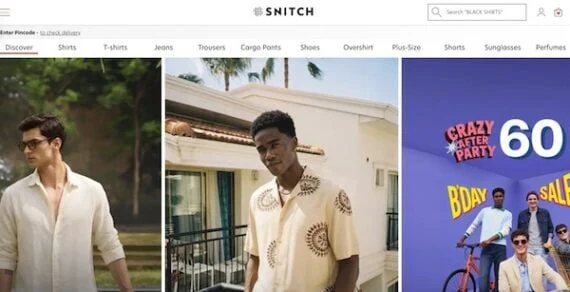
Global — In the rapidly evolving landscape of digital commerce, online merchants are discovering a lucrative secondary revenue stream hiding in plain sight. Retail media—the practice of selling digital advertising space directly on ecommerce websites, apps, and digital newsletters—is fundamentally transforming how online retailers generate profit.
While traditional merchandise sales face heavy headwinds from fulfillment, shipping, and inventory holding costs, retail media offers an intoxicating alternative: profit margins that routinely rival software-as-a-service (SaaS) business models. Industry analysts, major consulting firms, and retail executives are waking up to a phenomenon where digital storefronts are evolving into powerful, highly profitable media publishing houses.
Main Facts: The Anatomy of Retail Media Profitability
To understand the gold rush surrounding retail media, one must first examine the economics of modern retail. Traditional ecommerce is a game of thin margins. When a merchant sells a physical product, a massive chunk of the revenue is immediately eaten up by the cost of goods sold (COGS), warehouse fulfillment, payment processing fees, and carrier shipping rates.
For a typical online or brick-and-mortar retailer, merchandise sales produce gross margins near 50%, contribution margins hovering around 25%, and net profit approaching a modest 12%.
By contrast, retail media margins are astonishingly high. When a retailer sells ad space—such as a sponsored product listing in a search result, a banner on a category page, or a placement in a weekly promotional email—the underlying product has already been paid for. The audience has already been acquired. The retailer is essentially monetizing eyeballs and high-intent traffic that it has already paid to bring through its digital front doors.
Products Versus Ads: A Margin Comparison
Consider the stark financial contrast between selling physical goods and selling digital advertising space:
- Selling Physical Goods: Selling a $100 product might leave a merchant with just $25 after accounting for COGS, fulfillment, payment gateways, and shipping. This yields a standard 25% contribution margin.
- Selling Digital Ads: Conversely, selling a $1,000 newsletter sponsorship or a homepage banner comes with virtually no comparable cost of goods sold or return-inventory risk. Ancillary expenses—such as sales commissions, graphic design, and ad-serving technology—might total $250, leaving $750 before general overhead. This translates to an impressive 75% contribution margin.
Industry giants and major research houses have validated these figures on a macro scale. In comprehensive 2022 reports, both McKinsey & Company and the Boston Consulting Group (BCG) estimated that operating margins for established retail media networks routinely hit 70% and higher.
Chronology: From Co-Op Advertising to Digital Media Networks
The evolution of retail media did not happen overnight; it is the modern digital evolution of decades-old retail practices.
The Era of Traditional Co-Op Marketing
For decades, physical retail relied heavily on "co-operative" (co-op) advertising funds. Suppliers and manufacturers would allocate budgets to help retailers offset the costs of printing circulars, running newspaper ads, or featuring products in physical store displays. These programs were often cumbersome, heavily manual, and difficult to track in terms of direct attribution.
The Rise of Ecommerce and Sponsored Search
As retail shifted online in the late 1990s and 2000s, merchants focused almost exclusively on traffic acquisition and conversion rate optimization. However, early digital pioneers soon realized that their digital real estate held immense value for third-party brands. Amazon was an early pioneer in this space, transforming its product search pages into a bidding marketplace where brands could pay to secure top placement.
Mainstream Adoption and the TransUnion Era (Present Day)
Over the past five years, retail media has exploded beyond marketplace giants like Amazon and Walmart, trickling down to mid-sized specialty ecommerce merchants, grocery chains, and fashion platforms.
By the mid-2020s, retail media transformed from a novel marketing tactic into a core strategic imperative. A landmark 2025 study by TransUnion underscored this shift, revealing that a staggering 70% of companies planned to actively increase their retail media budgets, cementing the channel as a permanent fixture in modern corporate marketing strategies.
Supporting Data: Intent, Scale, and the "Double-Dip" Effect
Why are brands shifting billions of dollars away from traditional open-web digital advertising (like social media and search engines) and pouring those funds directly into retail media networks? The answer lies in audience quality, purchase intent, and a unique economic phenomenon known as the "double-dip."
Unmatched Purchase Intent
Traditional publishers—such as news sites, lifestyle blogs, and entertainment magazines—attract readers by offering content. A digital publisher might know that a visitor frequently reads articles about outdoor hiking.
An outdoor specialty retailer, however, possesses far more valuable transactional data. That same retailer knows that the user actively searched for waterproof hiking boots, meticulously compared three different models, and previously purchased hiking socks six months ago.
This hyper-specific transactional data provides advertisers with a distinct advantage: commercial purchase intent. Advertisers are no longer guessing at broad demographic interests; they are paying for direct access to consumers who are actively holding their credit cards, standing at the digital checkout line.
The "Double-Dip" Economic Model
When the buyer of a retail media ad is also a merchandise supplier, the ecommerce merchant experiences a financial phenomenon known as "double-dipping."
- First Dip: The merchant earns high-margin revenue directly from the ad placement fee (e.g., a monthly newsletter sponsorship or sponsored product placement).
- Second Dip: The ad successfully drives consumer interest, resulting in a surge of merchandise sales for that supplier’s products. Consequently, the retailer sells more inventory, generating standard retail product margins on top of the ad dollars.
According to the 2025 TransUnion research, 70% of retail media spending was entirely incremental to suppliers’ broader trade and marketing budgets. This means brands are not simply cannibalizing or shifting money from Google and Meta; they are opening entirely new financial pipelines to fund retail partnerships.
Official Responses and Industry Insights
As retail media networks mature into multi-billion-dollar ecosystems, marketing leaders, data scientists, and retail executives are speaking out about the structural shifts reshaping the digital economy.
Industry analysts at McKinsey & Company note that commerce media represents "the new force transforming advertising," bridging the gap between brand awareness and lower-funnel conversion in ways traditional media never could. Because third-party cookies are phasing out across the digital landscape, brand marketers are aggressively hunting for "first-party data"—information that retailers possess in abundance.
Furthermore, executives from Boston Consulting Group emphasize that retailers are uniquely positioned to become media owners because they own the entire loop of the customer journey. "You are no longer just selling a product to a consumer," notes one retail tech strategist. "You are selling the attention of that consumer back to the manufacturer who made the product in the first place. It is the ultimate closed-loop ecosystem."
Despite the overwhelming enthusiasm, industry experts also sound notes of caution. TransUnion’s 2025 study highlighted that scale and measurement remain key barriers for smaller merchants attempting to launch their own retail media networks. While retail giants possess millions of daily active users, niche merchants with smaller subscriber bases must carefully balance ad monetization with customer experience fatigue. Overloading an email newsletter or a product category page with too many sponsored ads can alienate shoppers and degrade the core user experience.
Implications: The Future of Ecommerce and Brand Partnerships
The rapid proliferation of retail media networks carries profound implications for the future of digital commerce, small-to-mid-sized merchants, and brand marketing budgets.
1. The Democratization of Ad Tech
In the early days of retail media, building a programmatic ad network required millions of dollars in custom software development. Today, a growing ecosystem of specialized tech platforms allows mid-market ecommerce merchants to easily spin up sponsored product engines, onsite banner bidding, and automated newsletter sponsorships. This democratization means that even boutique online retailers can begin capturing high-margin media revenue.
2. A Shift in Brand Marketing Budgets
For decades, brand marketing (building top-of-funnel awareness) and performance marketing (driving bottom-of-funnel conversions) lived in separate silos managed by different agencies. Retail media merges these two disciplines. Because suppliers can use retail media to simultaneously build brand awareness and drive immediate point-of-sale transactions within the same digital ecosystem, corporate marketing budgets are undergoing a permanent structural realignment.
3. The Customer Experience Balancing Act
As retail media continues its meteoric rise, merchants face a delicate tightrope walk. The temptation to maximize high-margin ad revenue is immense, but the long-term health of any ecommerce business relies on customer trust and loyalty. Retailers that successfully navigate this landscape will be those that integrate ads seamlessly—treating sponsored recommendations as genuinely helpful shopping guides rather than intrusive digital billboards.
Conclusion
Retail media has fundamentally rewritten the rules of ecommerce profitability. By transforming standard online storefronts into targeted media networks, retailers are unlocking profit margins that physical merchandise alone can rarely deliver. Armed with rich first-party purchase data and backed by eager suppliers willing to allocate incremental budgets, the modern merchant is no longer just a shopkeeper—they are a media mogul.