In the fast-paced landscape of modern software development, few mantras are repeated as often—or misunderstood as profoundly—as the call for "deep collaboration between engineering and design."
Organizations frequently invest substantial resources into establishing design systems, hoping to streamline workflows, ensure visual consistency, and accelerate time-to-market. Yet, despite the best intentions of talented individual contributors, building and maintaining these systems often devolves into a logistical nightmare. Designers wait for technical constraints to be defined; engineers groan over pixel-pushing demands that ignore database architectures; and products launch late, bloated, and disjointed.

According to product design experts, the root cause of these recurring friction points lies in a fundamental misallocation of focus: teams are obsessing over isolated elements rather than building reusable design patterns first.
The Anatomy of Collaboration Breakdown
True collaboration to create or maintain a design system is critical for crafting superb digital products. However, working across disciplines is inherently tricky. In its ideal form, a design system is the manifestation of close alignment between developers and designers. In practice, the collaborative journey is fraught with systemic pitfalls.

Common pain points plague teams across industries, from nimble startups to enterprise monoliths:
- The "Blind Hand-off": Designs are finalized in silos, only for engineers to discover that the proposed components are technically impractical or demand convoluted state management.
- Reinventing the Wheel: Developers build bespoke components because they are unaware that a slightly different variant already exists elsewhere in the codebase.
- The Moving Target: Requirements shift mid-sprint, rendering complex design components obsolete before they are fully coded.
Alignment does not happen automatically simply because cross-functional teams attend regular syncs. In fact, it is remarkably easy for a project to move aggressively forward before stakeholders realize they hold completely divergent mental models of what is being built. When balancing the reuse of existing components against the creation of novel features, alignment requires deliberate practice.
A New Framework: Design Patterns Over Isolated Elements
To solve these persistent collaboration hurdles, industry practitioners are turning to a time-tested concept with a modern twist: design patterns.
Classically defined as "a toolkit of solutions to common problems" or templates for solving recurring challenges in various contexts, patterns have long governed architecture, urban planning, and software engineering. As the legendary theorist Christopher Alexander noted in The Timeless Way of Building, "Even the most complicated, sophisticated things are defined by a small number of composable patterns."
In the context of product design, we must distinguish between two levels of abstraction:
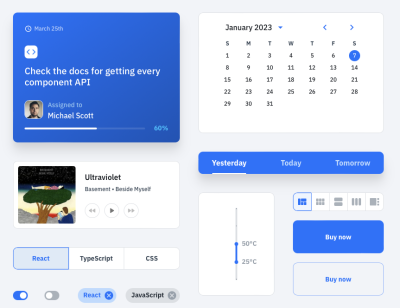
- Design Elements: Small, isolated components such as buttons, chips, and input fields.
- Design Patterns: Reusable combinations of elements configured for a specific purpose—larger functional modules capable of driving a distinct user experience.
Most corporate design system initiatives focus heavily on elements. Popular component libraries like Tailwind, Bulma, Skeleton, and MUI (Material-UI) provide vast, highly polished arsenals of these basic building blocks. However, having a robust set of elements does little by itself to save development time, boost velocity, or ensure that designers and engineers are genuinely aligned. Elements do not implement features; patterns do.

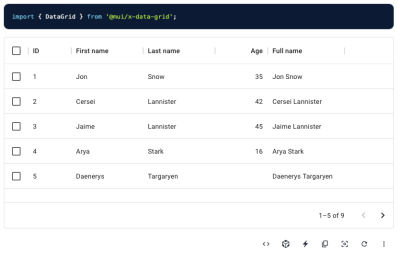
While pre-built component suites often offer complex combinations like "Data Grids" or "List Builders," they rarely fit a specific product’s unique requirements out of the box. True utility emerges when a design pattern is forged directly from the recurring operational needs of your specific product.
Case Study: Implementing Patterns in the "WeTrip" App
To understand how pattern-first development transforms cross-functional workflows, consider a hypothetical cross-functional team building a group travel coordination app called WeTrip.
The Scenario
WeTrip aims to solve a universal pain point: the exhausting logistics of planning group travel. The app provides a shared interface where families or friends can propose, discuss, and vote on daily itineraries and dining options. Operating on modest seed funding, the startup urgently needs a Minimum Viable Product (MVP) to validate market demand. Neither designers nor engineers can afford to bottleneck one another.
Step 1: Naming and Whiteboarding
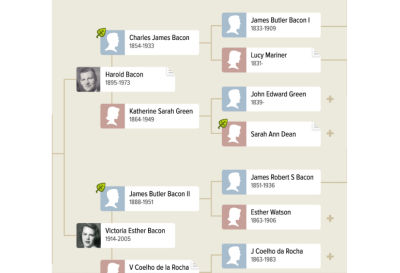
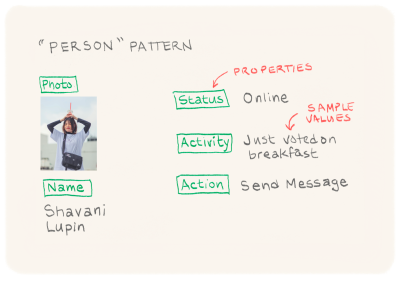
Instead of waiting for high-fidelity mockups, designers, engineers, and product managers gather to identify foundational objects and their associated properties. They begin by defining a "Person" (a traveler voting on activities), a "Place" (a destination or venue), and an "Occasion" (a scheduled group activity).

Using a physical whiteboard or a shared digital canvas, the team outlines these primitives. This initial exercise requires no specialized design skills, ensuring everyone participates equally.
Step 2: Integrating Existing Element Libraries
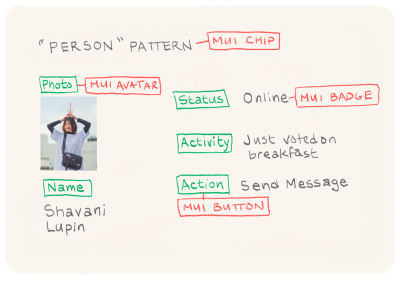
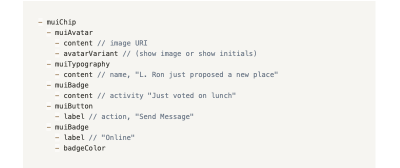
Recognizing that reinventing basic components is a waste of time, the team decides to leverage restyled MUI elements. They pull these elements—complete with defined properties like color, padding, and content attributes—into both their Figma workspace and their React codebase.
Rather than treating these elements as standalone UI pieces, they map them directly to their newly defined patterns.
Step 3: Documenting via Shared Repositories
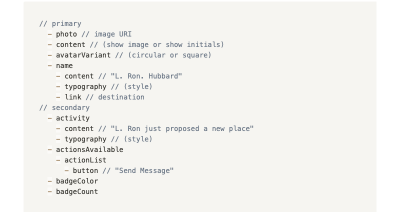
The team establishes a centralized documentation page in Notion for each pattern. Here, they blend the properties of the chosen MUI elements with the attributes brainstormed on the whiteboard.
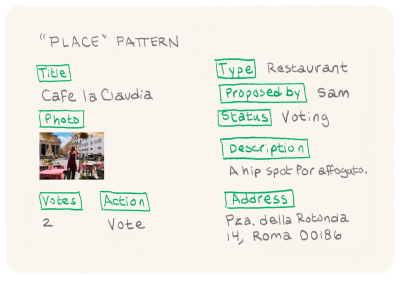
Crucially, adding a property to this documentation does not lock it into the final visual design; rather, it acts as a low-stakes ledger of possibilities. A Figma component is created with variants for each property, while engineers simultaneously stub out corresponding TypeScript interfaces.
// Example of a Person component stubbed out in TypeScript based on pattern definitions
interface PersonProps  'offline';
  actionsAvailable: Array<'vote'
Step 4: Parallel Execution and Iteration
Because the design pattern serves as the single source of truth, engineering and design can work in parallel. An engineer can build functional components using the agreed-upon data models while a designer works on the visual skin in Figma.
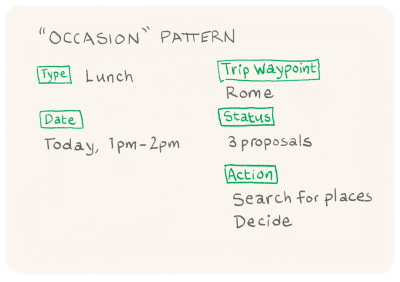
When developers realize mid-build that they need a presence property to handle live user notifications, they simply update the Notion document and notify the team. Designers immediately incorporate a presence indicator into the component variants. There is no hand-off, no gatekeeping, and zero waiting time.
As the project matures, the team defines higher-level views—such as a People List, a Schedule View, and a Proposals Feed—by nesting these foundational patterns. The visual design phase occurs naturally at the end of the process, rather than acting as an upfront bottleneck.
Organizational Implications and Scaling
While pattern-driven workflows excel in small, cross-functional product teams, their principles scale effectively into larger organizational structures.
As codebases and design systems mature, patterns can be extracted into dedicated repositories. In larger enterprises, individual patterns can be assigned formal "owners" responsible for bug fixes, accessibility compliance, and performance optimization.
Furthermore, well-structured pattern documentation bridges the gap between design tokens and backend APIs. Reused modules can be integrated directly into modern development toolchains—such as module federation systems—allowing teams to track design system adoption and reuse metrics similarly to how software engineers monitor test coverage.
Conclusion: A Shift in Perspective
The pursuit of a seamless design system does not require rigid corporate mandates or heavy-handed governance processes. By shifting the focus away from isolated elements and toward product-specific design patterns, teams can fundamentally alter how they collaborate.
When designers and developers co-create patterns early, outline properties collaboratively, and maintain shared documentation, the traditional boundaries between design and engineering dissolve. The result is not only a faster, more harmonious workflow, but a deeply resilient product ecosystem built to scale effortlessly into the future.