By Editorial Staff
Published: April 2023
Main Facts
The rapid, unprecedented explosion of generative Artificial Intelligence tools spanning text generation, graphic design, and code production has sent shockwaves through the creative industries. Across the globe, creators, copywriters, artists, and UI/UX designers are confronting a deeply unsettling existential question: Will artificial intelligence render my profession obsolete?
While machine learning models have proven exceptionally adept at pattern recognition, data processing, and asset generation, a profound operational chasm separates technological automation from genuine human capability. AI is fundamentally engineered to mimic human intelligence by processing colossal datasets—by some estimates, equivalent to a quarter of the Library of Congress. However, it lacks consciousness, physical senses, lived experience, and emotional depth.

Rather than signaling the extinction of creative professions, the rise of AI highlights the irreplaceable value of "designerly" skills—non-technical human attributes such as curiosity, acute observation, empathy, user advocacy, visual communication, and multidisciplinary collaboration. Instead of replacing human creators, AI functions best as a powerful operational augment, streamlining workflows and freeing professionals to focus on higher-order strategic problem-solving.
Chronology
The tension between human labor and automation is not entirely new, but the timeline of generative AI development has accelerated dramatically over recent years.
- Pre-2020: AI applications remained largely deterministic, rule-based systems utilized for specific, narrow computational tasks. Creators viewed technology as a background tool.
- Early 2020 (The Onset of the COVID-19 Pandemic): As remote work became mandatory, organizations scrambled to digitize touchpoints. For example, product teams leading large-scale enterprise app redesigns were forced to pivot away from traditional, in-person field research toward restrictive digital-only strategies before safely returning to immersive, on-the-ground ethnography.
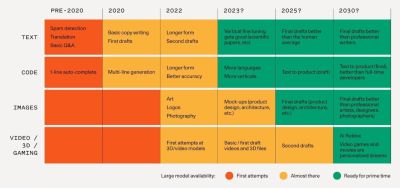
- 2022–2023: The launch of advanced generative models for text, code, and high-fidelity imagery captured mainstream public consciousness. Social media platforms and news outlets became saturated with speculative timelines predicting when artificial intelligence would achieve human-level proficiency across creative job functions, sparking widespread anxiety regarding career displacement and permanent layoffs.
- Present Day: Industry consensus is shifting away from pure displacement models toward collaborative paradigms. Organizations are learning that while AI can draft, iterate, and process at lightning speed, it chronically stumbles on factual accuracy, context, and emotional nuance, cementing the need for human oversight.
Supporting Data & Case Studies
To understand how human capabilities outmatch machine automation, one must examine real-world design challenges where data alone falls short.
At the onset of the pandemic, a design team undertook the tablet application redesign for sales representatives at the world’s largest food and beverage conglomerate. Operating under the foundational design rule—Know Thy User—the lead designer initially relied on remote video interviews. However, real breakthroughs occurred only after conducting field observations at a local retail store, walking the dairy and freezer aisles alongside sales reps.
This field research uncovered critical, non-quantifiable pain points:
- Reps had to juggle multiple physical printouts and digital devices simultaneously.
- Technology failed in extreme physical environments, such as low-lit, freezing walk-in units.
- Personnel attempted to execute complex workflows without disrupting rushed, stressed shoppers, repeating this grueling routine 20 to 30 times a day.
These visceral insights could never be surfaced through standard algorithmic data aggregation because they require physical presence, empathy, and contextual awareness.
Furthermore, data demonstrates the fallibility of current AI systems. When tested for factual self-awareness or domain authority (such as generating accurate biographies or professional histories), prominent Large Language Models routinely hallucinate errors, misattributing credentials, geographic locations, and publications. This factual unreliability reinforces the absolute necessity of human stewardship.
Official Responses & Industry Perspectives
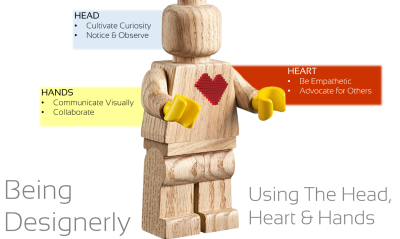
Industry leaders, design researchers, and technologists have weighed in heavily on the integration of AI into creative workflows, establishing a framework built on the "Head, Heart, and Hands" approach to transformative learning.
Design researcher and educator Nigel Cross originally coined the term designerly to describe the underlying behavioral and cognitive patterns of how designers think and act. Expanding on this, contemporary thought leaders categorize these indispensable traits into three psychological pillars:
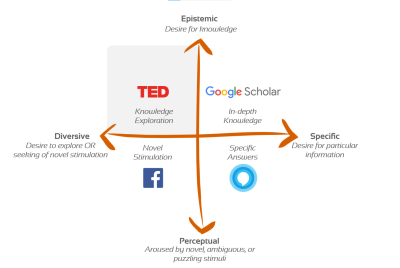
- The Head (Thinking Skills): Comprising curiosity and keen observation. As psychologist Daniel Berlyne’s Theory of Human Curiosity dictates, human inquiry splits into perceptual and epistemic dimensions. Unlike AI, which retrieves programmed answers, humans engage in diversive-epistemic exploration—spontaneously seeking out novel ideas, cross-pollinating concepts, and navigating the physical world through five senses.
- The Heart (Feeling Skills): Encompassing empathy and advocacy. Drawing on definitions by Roman Krznaric, empathy is the imaginative act of stepping into another’s shoes to guide action. Psychologist Daniel Goleman separates this into cognitive, emotional, and compassionate empathy. AI models can mathematically measure micro-expressions, but they possess zero emotional consciousness or shared life experiences.
- The Hands (Doing Skills): Centered on visual communication and collaboration. Humans possess the innate capacity to read social dynamics, negotiate compromises, and adapt fluidly to live, dynamic inputs—capabilities entirely outside the programming scope of traditional machine learning.
Rather than viewing these developments with paralyzing fear, enterprise leaders advocate for viewing AI as an advanced sous-chef rather than an independent head chef. Just as automated cooking equipment assists culinary professionals without replacing human palates and menu strategy, AI assumes tactical, repetitive burdens while leaving strategic execution to humans.
Implications
The integration of artificial intelligence into the creative economy carries profound implications for the future of work, education, and industry standards.
1. The Redefinition of Creative Labor
The value of a creator is shifting away from pure execution—such as rendering pixels, writing basic code, or transcribing interviews—toward strategic orchestration. Because AI drastically accelerates the production phase, professionals who master designerly skills will spend less time on mechanical labor and more time on high-level problem framing, ethical oversight, and stakeholder alignment.

2. The Imperative of Human-Centric Ethics
As automated systems take over data processing, the risk of algorithmic bias and tone-deaf execution increases. Human designers must actively step into the role of User Advocates, defending the consumer’s interests within complex corporate ecosystems. Machines cannot make moral judgments or evaluate the societal impact of a design choice; that heavy ethical lifting remains strictly human territory.
3. Educational Evolution
Educational institutions must pivot away from training students merely in technical software proficiency—which algorithms can easily replicate—and focus intensely on nurturing emotional intelligence, critical observation, collaborative problem-solving, and unrestrained curiosity.
Ultimately, the future belongs not to artificial intelligence working in isolation, nor to human creators burdened by manual repetition, but to a powerful symbiotic partnership. By utilizing our heads, hearts, and hands in tandem, humans will continue to leverage AI not as a replacement, but as the ultimate catalyst for human creativity and innovation.