
In an era defined by an unrelenting, exponential explosion of digital data, humanity faces a paradox: while we have never had more access to information, finding precisely what we need, precisely when we need it, has never felt more overwhelming. From enterprise websites and mobile applications to global knowledge repositories, the sheer volume of content threatens to paralyze users.

Enter information architecture (IA)—the structural backbone of the digital world. By systematically categorizing, organizing, and structuring data, effective information architecture brings clarity and meaning to chaos. In this deep dive, we explore the core principles of IA, how it shapes user experience (UX) and business success, and the broader societal implications of data in the modern Information Age.

Main Facts: What Is Information Architecture and Why It Matters
At its core, as defined by the Information Architecture Institute, IA is "the practice of deciding how to arrange the parts of something to be understandable." From a user experience perspective, this requires deeply understanding how target audiences think, identifying the specific problems they are trying to solve, and presenting information within a logical, intuitive framework.

Whether applied to a multinational e-commerce platform, a complex software suite, or a minimalist smartphone application, IA dictates how information is structured and translated into a navigation hierarchy. Without it, users drown in data.
Why Good IA Matters for Users
Good information architecture transforms a frustrating digital journey into a seamless experience. When a site’s layout mirrors a user’s mental model, they experience:
- Reduced Cognitive Load: Users don’t have to guess where information lives; pathways are self-evident.
- Faster Task Completion: Finding a product, article, or account setting takes seconds rather than minutes.
- Effortless Orientation: Clear signposting ensures users always know where they are, where they came from, and how to get back.
Consider e-commerce platforms like Punk Avenue, which utilize clean main navigation bars accompanied by concise summaries of page content, complemented by visual tabs that keep users anchored. Conversely, poor IA—such as cluttered layouts, buried links, and redundant categories—leads to immediate user abandonment and plummeting conversion rates.

Why Good IA Matters for Businesses
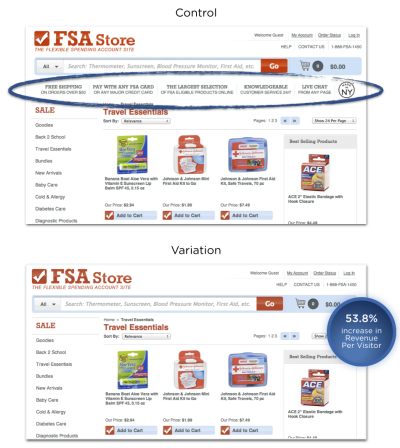
For organizations, IA is directly tied to the bottom line. A case study highlighted by Optimizely demonstrated how a major online retailer increased customer revenue by an astounding 53.8% simply by refining their site architecture. By removing superfluous vertical navigation bars and irrelevant information wedged between the search bar and product displays, they moved products higher up the visual hierarchy, aligning the page layout directly with buyer intent.

Chronology: The Evolution of Search vs. Navigation
The debate over whether users prefer to browse via site navigation or bypass it entirely using site search has evolved over decades of digital research:
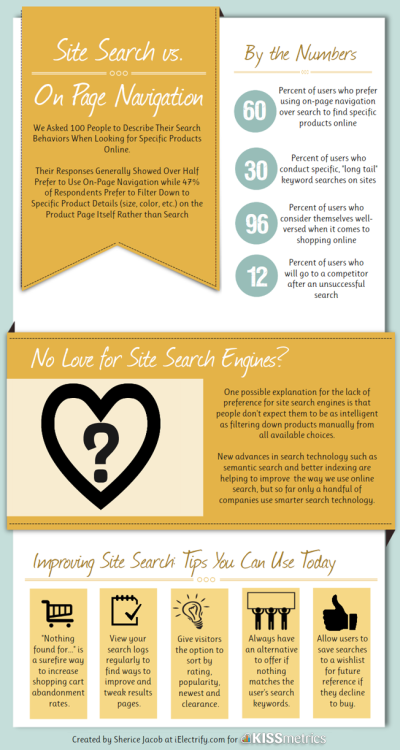
- 1997: Jakob Nielsen conducts a landmark study revealing that over 50% of website visitors prefer using the search function over traditional site navigation.
- 2010: Gerry McGovern publishes research showing that roughly 30% of users actively lean toward search over browsing.
- 2012: Econsultancy reports that 30% of visitors to e-commerce sites immediately utilize site search, while Kissmetrics data places that figure closer to 40%.
- Modern Era: Contemporary UX consensus indicates that search and navigation are not mutually exclusive; they are symbiotic partners. Research by MeasuringU notes that roughly 14% of users initiate their sessions with a search query, while the vast majority begin by browsing structured navigation menus.
When a user searches for an item like "antibacterial hand wash" on a health products site, they may find themselves forced to choose between ambiguous categories like "Body Washing Products" or "Skin Cleansers." If products are sorted alphabetically or poorly categorized, the user experiences friction. To bridge this gap, modern IA employs metatags—hidden background data attached to content that maps alternative phrasing (such as "hygienic soap" or "germ-fighting wash") directly to the search engine, ensuring accurate results regardless of the user’s specific vocabulary.

Supporting Data: Good vs. Bad IA in Practice
To evaluate the real-world efficacy of information architecture, industry analysts routinely point to distinct examples of design triumph and failure:

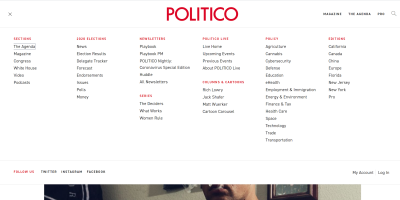
- Useful Navigation (Sears): By deploying sophisticated mega drop-down menus, Sears successfully groups massive sub-categories into easily digestible visual blocks, drastically accelerating user cognition and decision-making.
- Search-Driven Navigation (Pinterest): Given the astronomical volume of user-generated visual content on Pinterest, traditional hierarchical categories would fail. Instead, Pinterest treats the search bar as the primary navigation tool, matching visual media dynamically to user queries.
- Overwhelming Navigation (Legacy Fry’s Electronics): A classic cautionary tale of IA failure, this platform suffered from complete information overload. Poor utilization of white space, cramped typography, and an overwhelming density of unorganized links made it nearly impossible for users to identify viable options.
Methodologies for Getting IA Right
Designers rely on established testing and research frameworks to ensure their information architecture hits the mark:

- Card Sorting: Participants are given cards detailing various content sections and asked to group them logically. An open card sort allows users to create their own category names, while a closed sort requires them to place cards under predefined headings.
- Scenario Testing: Using clickable wireframes or prototypes, designers observe real users attempting to complete specific workflows, such as registering an account and booking an event.
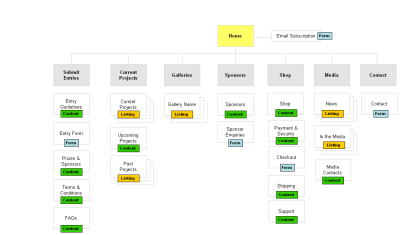
- Tree Testing (via tools like Treejack): Evaluates hierarchical navigation structures independently of visual design, asking users to locate specific items within a text-based site tree.
- Keyword Research: Leveraging tools like AnswerThePublic to unearth the exact terminology and phrasing target audiences use, ensuring menu labels resonate with actual users.
Implications: The Macro View of the Information Age
Moving beyond digital interfaces, the principles of information architecture force us to confront a larger reality: we live in the Information Age, characterized by instantaneous, global connectivity. Yet, as activist Aaron Swartz argued before his tragic death in 2013, information is not merely a utility—it is a locus of immense power.
The Power and Peril of Information
Information changes world events in an instant. During the COVID-19 pandemic, rapid policy shifts by governments globally—such as Australia’s sudden pivots regarding elective surgery suspensions—demonstrated how swiftly new data alters societal landscapes. However, the same channels that distribute vital public health data also facilitate the spread of misinformation, unverified conspiracy theories, and politically motivated propaganda.

Furthermore, the sheer volume of data we generate daily creates severe security vulnerabilities. Massive data breaches, such as the 2018 Facebook security exploit and the 2017 Equifax breach impacting over 147 million Americans, underscore the permanent dangers of mishandled personal data. These crises have catalyzed global regulatory responses: today, 132 of 194 countries have enacted robust data protection laws to govern how personal information is gathered, stored, and shared.

Conclusion
Whether designing a streamlined e-commerce application or navigating the complex socio-political landscape of the modern data ecosystem, the underlying truth remains identical: information unorganized is information neutralized. Good information architecture serves as the vital bridge between overwhelming oceans of data and the human need for clarity, meaning, and security. By investing in rigorous IA methodologies, user testing, and thoughtful structural design, creators can tame the noise of the Information Age and deliver truly transformative digital experiences.