For thirteen years, the name "Khosla Ventures" has been synonymous with the rugged, tech-centric prestige of Sand Hill Road in Menlo Park, California. The firm, a titan in the venture capital world, has long functioned as a cornerstone of the Bay Area’s ecosystem, operating with a lean, centralized philosophy that eschewed the sprawling, multi-city footprints adopted by some of its peers.
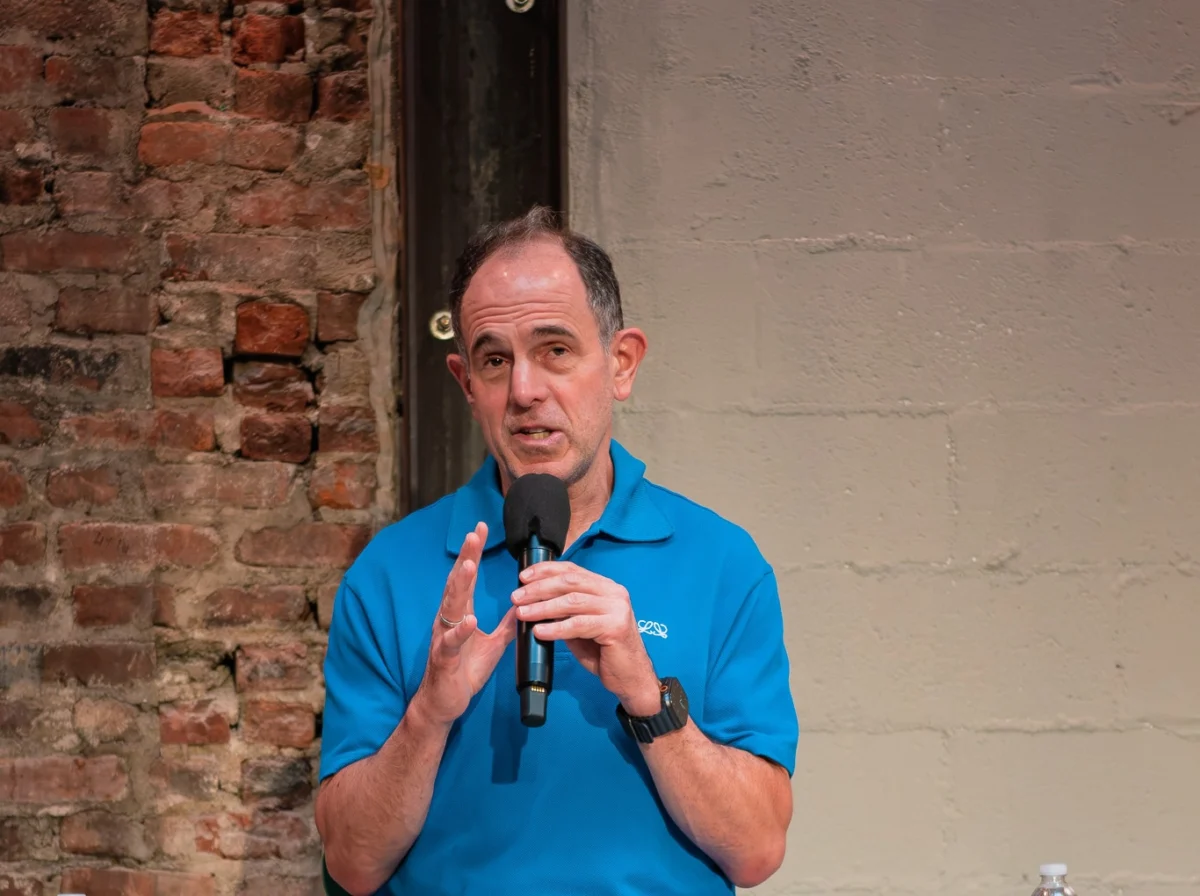
That era of geographic isolation is officially coming to an end. Speaking at TechCrunch’s StrictlyVC event in New York’s West Village this past Thursday, partner Keith Rabois confirmed that Khosla Ventures is preparing to launch its first-ever office outside the San Francisco Bay Area. Situated on 14th Street in Manhattan, the new outpost is slated to open its doors this fall, marking a pivotal moment in the firm’s history and signaling a broader, structural realignment within the venture capital industry.
The Strategy Behind the 14th Street Outpost
The decision to establish a New York presence is not merely a symbolic gesture; it is a calculated operational pivot. According to Rabois, who has been a central figure in the firm’s investment strategy, the office will serve a dual purpose. While it will provide a physical base for a handful of Khosla’s investment team, its primary innovation lies in what Rabois describes as an "executive briefing center."
This facility is designed to bridge the gap between early-stage innovation and institutional adoption. The firm plans to invite 10 to 12 portfolio companies to the center on a rotating basis, four days a week, to engage in direct, high-level meetings with Fortune 500 executives.
"The portfolio companies love this," Rabois told the StrictlyVC audience. "They get pilots and customers, and so it’s going to be a very vibrant office because of that." By positioning themselves at the crossroads of East Coast enterprise and West Coast innovation, Khosla aims to accelerate the commercialization of its startups, transforming the office from a traditional investment hub into a high-octane business development engine.
Despite the ambitious vision, Rabois maintained a pragmatic, if slightly skeptical, outlook on the project’s timeline. "It’s actually allegedly being built out now," he noted with the dry wit of someone who has navigated the pitfalls of commercial real estate. "We’ll see. This fall opening date is very vague in my mind."
A Chronology of Change: From Menlo Park to Manhattan
The firm’s westward-to-eastward migration is reflective of a personal and professional evolution for its leadership. Rabois himself recently relocated to the East Coast to be closer to his family, including his husband, Jacob Helberg, who serves as the Under Secretary of State for Economic Growth, Energy, and the Environment, and their children based in Washington, D.C.
This personal transition underscores a broader trend: the "center of gravity" for elite talent and capital is no longer strictly tethered to the 94025 zip code. For years, Khosla Ventures resisted the urge to expand, even choosing not to maintain a formal office in San Francisco—a rarity among firms of its scale. The transition to New York represents the most significant departure from its established operating model since the firm’s inception.
While firms like Andreessen Horowitz and Sequoia Capital have maintained a presence in New York for years, those footprints have historically been secondary, modest outposts compared to their West Coast headquarters. Khosla’s move, while similarly focused on a select group of partners, aims to leverage New York’s unique proximity to global finance and legacy enterprise in a way that feels intentional and disruptive.
The Talent Paradox: Density vs. Geography
A central theme of the discussion at StrictlyVC was the perennial debate over whether New York can truly rival the Bay Area’s legendary density of technical talent. Rabois offered a nuanced assessment, splitting his view based on seniority and function.
The Junior Talent Boom
At the junior level, Rabois was effusive in his praise for the New York market. He pointed to fintech powerhouse Ramp—a company he has backed repeatedly—as a case study in successful bottom-up recruitment. By tapping into the pipeline of graduates from elite East Coast universities and early-career professionals, companies can achieve a "critical density of talent" that is, in his words, "extraordinary."
The Senior Executive Hurdle
However, the narrative shifts significantly when discussing senior technical architects and C-suite executives. Rabois identified a "pain point" that plagues companies insisting on a strict in-office culture: the quality-of-life trade-off.
"If you have an in-office culture, most of the more senior people that live and reside in the New York area live outside the city," Rabois explained. He noted that the commute, for those living in the suburbs or surrounding regions, can be "very painful." For a senior executive, the prospect of an hour-plus commute each way, five days a week, is often a dealbreaker.
"When you need to recruit proven executive talent, and you really believe in an in-office culture, that has been very challenging," he admitted. His solution at the board level has been to advise firms to build from the ground up, bypassing the need for expensive, high-gravity hires early on. "If you need a CFO, an SVP of sales, someone who’s got a lot of gravitas and experience, it’s really hard to have them in the office five days a week, because unless they’re very independently wealthy, they really can’t afford to raise a family right in the middle of the city."
Supporting Data: The Shifting Tech Tide
Khosla’s move arrives in the wake of a provocative report from commercial real estate services firm CBRE, which found that New York has, for the first time in the 13 years the firm has tracked the data, overtaken the San Francisco Bay Area in total tech talent headcount.
The findings have sent shockwaves through the industry, though the causality is debated. The rise in New York’s numbers is largely attributed to aggressive hiring by financial institutions looking to bolster their AI capabilities, often at the same time that traditional Bay Area tech giants have been trimming their rosters.
Yet, the skepticism remains palpable among the industry faithful. At the event, attendees openly questioned the validity of the CBRE headline. "I heard about that study," one venture capitalist noted. "I don’t buy it." The sentiment reflects a lingering belief that while headcount numbers may fluctuate, the "intellectual density" of the Bay Area—the unique, iterative cycle of founders and engineers—remains the gold standard.
Implications: The Future of Venture Capital
The implications of Khosla’s expansion are threefold:
- The Rise of Hybrid Ecosystems: Venture firms are increasingly acknowledging that capital must be where the customers are. By placing an executive briefing center in Manhattan, Khosla is essentially treating New York as a "customer acquisition laboratory."
- The Evolution of Remote and Hybrid Work: The challenges Rabois highlighted regarding senior leadership recruitment suggest that the "return to office" debate is far from over. Firms that fail to accommodate the realities of senior-level lifestyles—specifically those involving families and commutes—may find themselves at a competitive disadvantage in the talent market.
- Regional De-centralization: As venture capital firms continue to establish satellite offices in cities like New York, Austin, and Miami, the monolithic dominance of Sand Hill Road is likely to diminish. This shift does not imply the decline of the Bay Area, but rather the maturation of the American tech ecosystem into a more distributed, networked, and multi-hub landscape.
As Khosla Ventures prepares to open its doors on 14th Street, the move serves as a bellwether. The firm that once defined the "San Francisco way" of doing business is now betting that the future of scaling tech companies requires a broader, more geographically diversified approach. Whether the "executive briefing center" model will deliver the promised results remains to be seen, but the decision itself marks a definitive transition in the venture capital playbook.