In the rapidly shifting landscape of search engine optimization and digital marketing, staying ahead of algorithmic updates requires more than just standard keyword research and basic link building. In a recent, information-dense episode of the Niche Pursuits podcast, digital strategist and agency owner Brian Winum pulled back the curtain on his latest ecosystem-level framework. Returning as a guest to build upon the authority-stacking strategies he detailed two years ago, Winum outlined an advanced blueprint tailored for modern search engines, AI visibility models, and automated content scaling.
For advanced site owners, SEO professionals, and affiliate marketers navigating a post-Helpful Content Update era, Winum’s approach offers a technical masterclass in managing high-volume networks without the overhead of massive manual teams.
Main Facts: The Evolution of Authority Stacking
Winum, a partner in Long Island-based web design and marketing agencies MAXBURST Web Design and MAXPlaces Marketing, brings nearly two decades of experience across web design, e-commerce, nationwide SEO campaigns, and affiliate properties. His latest strategy represents a significant maturation of the authority-first systems that previously helped his portfolio weather massive Google core updates.
Key pillars of Winum’s current methodology include:
- WordPress Multi-Site Subdomain Architecture: Deploying hundreds of tightly focused subdomains under a single main domain to test niches rapidly and maximize indexing efficiency.
- AI-Era Discoverability (LLMS.txt & Markdown): Implementing customized data layers specifically designed for Large Language Models (LLMs) to ingest brand, product, and authority signals.
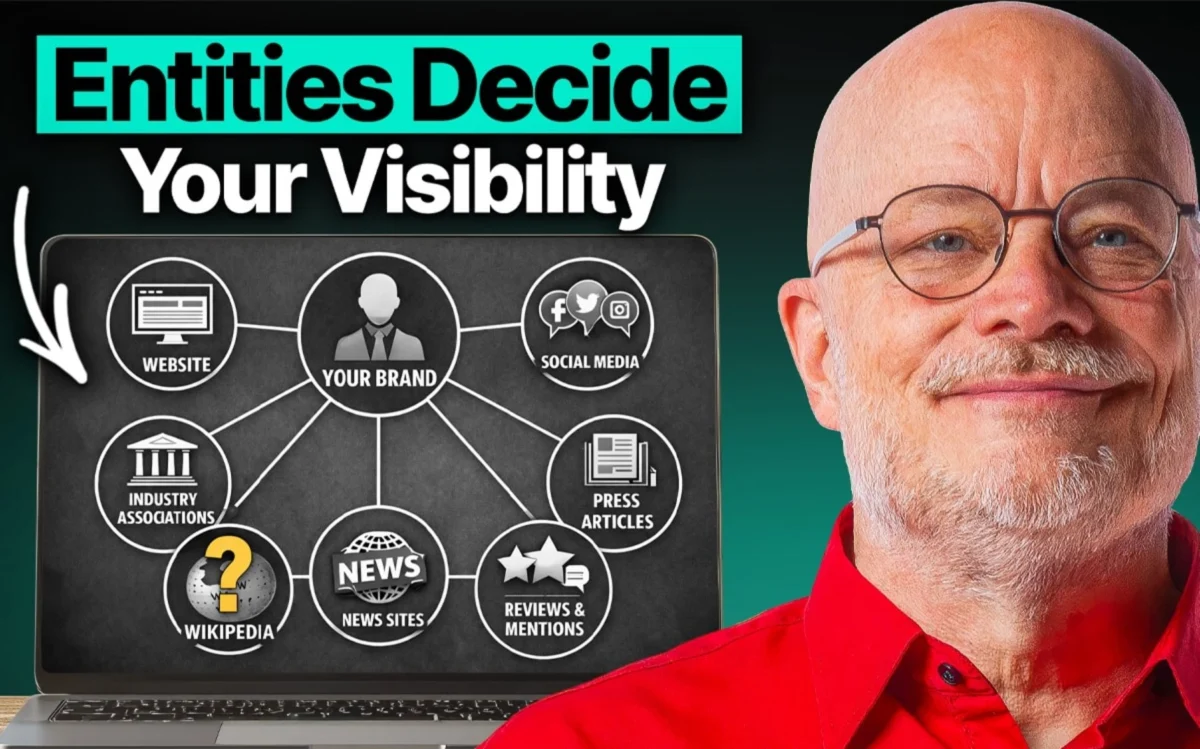
- Tiered Entity Silos: Structuring links across multi-layered web properties to eliminate ambiguity and reinforce clear entity relationships.
- Cryptographic Trust Layers: Utilizing blockchain-backed timestamps and digital certificates to cement author attribution and content originality.
- Autonomous AI Workflows: Utilizing custom cron jobs, overnight AI processes, and API integrations to handle everything from guest post sales to content generation and indexing verification.
Chronology and Context: From Display Ads to Integrated Ecosystems
To understand Winum’s current framework, it is necessary to examine how his operational and monetization strategies have evolved over the past several years.
The Foundation (Two Years Ago)
During his initial appearance on the Niche Pursuits podcast, Winum outlined an authority-stacking framework anchored in traditional E-E-A-T (Experience, Expertise, Authoritativeness, and Trustworthiness) signals. While many affiliate and content sites were heavily penalized by successive Google core updates, Winum’s properties survived and thrived by utilizing detailed author profiles, social signals, Google News approval, and active engagement tactics like Reddit polls.
The Pivot in Monetization
Over the last 24 months, Winum’s revenue mix has experienced a deliberate structural shift. Display advertising, which historically formed a larger portion of income across many content sites, has taken a backseat. Instead, his current revenue stack prioritizes:
- Direct lead generation and localized service acquisition
- High-intent affiliate partnerships
- Direct sponsorships and specialized monetization models
This shift fundamentally altered his content strategy. Rather than publishing high volumes of broad, top-of-funnel informational posts—which have become increasingly vulnerable to AI-generated search overviews—Winum focuses heavily on middle- and bottom-of-funnel assets. His portfolio now emphasizes deep product research, nuanced comparison guides, buyer intent matching, and rigorous authority signals.
Supporting Data and Technical Implementation
Winum’s strategies are defined by their technical depth. Rather than relying on out-of-the-box plugins or surface-level tweaks, his operations rely on proprietary, scalable architecture.
WordPress Multi-Site Network Strategy
The cornerstone of Winum’s current scaling capability is the WordPress multi-site subdomain network. Rather than purchasing and managing hundreds of distinct root domains—each requiring independent domain age development, hosting setups, and security maintenance—Winum consolidates his properties under a single, highly authoritative main domain.
- Scale: A single master domain can comfortably host between 700 and 800 subdomains, each targeting a micro-niche.
- Agility: Winum notes that he can clone an established site template to a new subdomain in under 30 seconds. Following quick keyword and branding adjustments, a new localized property can be live and operational within minutes.
- Indexing Advantages: Addressing modern indexing hurdles, Winum highlighted a network he manages called PressClone. Despite containing only about 100 unique core press releases, Google indexed roughly 5,000 to 7,000 pages across the network. This suggests that Google’s crawling architecture treats subdomains with enough separation to evaluate and index syndicated or repetitive content at scale.
Optimizing for AI: The Role of LLMS.txt
As search moves increasingly toward AI-generated answers and conversational engines, traditional sitemaps and robots.txt files are no longer sufficient. Winum argues that generic LLMS.txt files—much like default plugin schema—yield negligible results.
Instead, he deploys heavily customized LLMS.txt files at both the root and subdirectory levels (for specific product or service categories). These files feature:
- Detailed brand and organizational manifestos
- Explicit service and product definitions
- Target audience profiles and use cases
- Third-party validation and external evidence links
To ensure these data layers are discovered, Winum constructs a comprehensive crawl path system. He integrates internal file links, header meta tag injections, XML sitemaps, and supplemental markdown and JSON files. Server log analysis indicates that AI crawlers actively parse these files, correlating with measurable increases in AI-driven referrals and brand mentions.
Tiered Link Building and Entity Silos
Winum’s approach to link acquisition relies on clear entity association. The core money site hosts primary content, schema markup, and LLMS.txt files.
- Tier 1: Supports the money site through high-value assets such as industry interviews, authoritative guest posts, digital PR mentions, and curated listicles.
- Tier 2: Amplifies Tier 1 assets. For example, a digital PR press release covering a third-party interview of a brand expert is syndicated across hundreds of network subdomains.
This multi-layered structure ensures that search engines and AI models receive zero ambiguity regarding who owns the brand, what products they offer, and what entities are associated with them.
Cryptographic Trust and Author Attribution
To combat the commoditization of content in the generative AI era, Winum incorporates a cryptographic trust layer. Utilizing services like ScoreDetect (at a nominal cost of roughly $10 per month for 100 certificates), he generates blockchain-backed timestamps and digital certificates for published content.
This process establishes an immutable record proving who published an article and precisely when it entered the public domain, providing a powerful signal of original authorship that standalone CMS databases cannot replicate.
Implications: Scaling with AI and Automation
Perhaps the most dramatic shift in Winum’s operations is the reduction of manual labor through artificial intelligence and automation. Historically, building and maintaining networks of thousands of sites required significant capital and large teams of virtual assistants. Winum referenced a colleague who operated a 14,000-site network before exiting for $29 million—an operation that previously required extensive manual oversight.
Today, Winum has largely replaced manual processes with custom AI workflows, cron jobs, and overnight processing scripts. Automated tasks now include:
- Automated market research and keyword grouping
- Content drafting, formatting, and internal linking
- Automated guest post sales funnels (where inquiries are automatically processed, payments accepted, content generated, and review links delivered without human intervention)
- Continuous indexing and uptime monitoring
Furthermore, Winum has experimented with building proprietary discussion platforms—independent of Reddit or traditional forums—populated by AI-generated user threads and contextual replies. These platforms generate natural brand discussions, adding contextual depth to the overarching entity footprint.
Conclusion
Brian Winum’s appearance on the Niche Pursuits podcast delivers an unvarnished look at the bleeding edge of digital asset management. While parts of his multi-layered system—such as automated discussion networks and aggressive subdomain structures—may challenge conventional SEO orthodoxy, Winum maintains that results are driven by the entire stack, rather than any single trick or plugin.
For digital marketers, affiliate site owners, and SEO strategists, Winum’s framework underscores an undeniable reality: the future of search optimization belongs to those who master technical infrastructure, embrace AI-native discoverability, and build undeniable, cryptographically verified authority ecosystems.