
The digital commerce landscape is undergoing its most radical transformation since the advent of mobile shopping. This week’s roundup of new products and services for merchants highlights a massive industry-wide pivot toward autonomous systems, generative artificial intelligence, and frictionless cross-border trade. From groundbreaking partnerships bridging traditional logistics giants with advanced AI platforms, to conversational advertising integrations inside mainstream large language models (LLMs), merchants are being equipped with unprecedented tools to scale their operations.
This week’s updates span international shipping, cross-border payments, AI-powered logistics, conversational ad campaigns, social commerce, multi-channel dropshipping, and automated reputation management. As artificial intelligence evolves from a novelty into the foundational infrastructure of digital retail, understanding these new releases is critical for any merchant looking to stay competitive.
Main Facts: The New Era of AI-Driven Infrastructure
The defining theme of this week’s product releases is the maturation of "agentic commerce"—an ecosystem where autonomous AI agents shop, negotiate, and transact on behalf of consumers and brands.

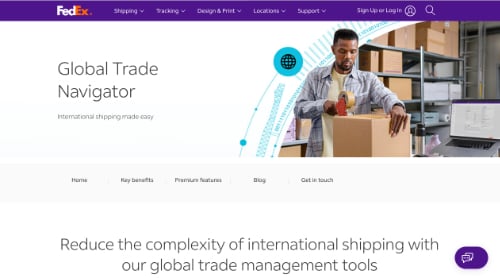
Major logistics and shipping titans are aggressively adapting to this paradigm. FedEx Corp. has launched the Global Trade Navigator, a robust suite of digital tools designed to simplify the labyrinthine processes of international shipping, regulatory compliance, and duty calculations. Simultaneously, DHL Group has partnered with Alibaba.com to embed AI-powered logistics capabilities into Alibaba’s agentic platform, Accio, allowing small and medium-sized enterprises (SMEs) to effortlessly secure real-time freight forwarding quotes and manage bookings.
Financial technology is evolving in tandem with AI logistics. Ant International has teamed up with global payment heavyweights Visa and Mastercard to establish a new payment standard for AI agents. This collaboration focuses heavily on "knowing your agent" (KYA), developing verification frameworks that link autonomous buyers to valid legal entities while monitoring behavioral patterns. Furthermore, Mastercard has introduced Agent Connect to streamline how merchants and digital platforms integrate with multiple AI shopping ecosystems.
On the advertising and marketing front, the boundaries between conversational chat interfaces and retail media networks are dissolving. Amazon Ads has launched a high-profile pilot with OpenAI to bring conversational ad campaigns directly into ChatGPT. This allows brands to engage shoppers while they explore, compare, and decide on products within the chatbot environment. Concurrently, conversational commerce platforms like Mastercard and Flowcart’s new integration in East Africa are enabling end-to-end chat-based shopping on WhatsApp without redirecting users to external websites.
Chronology of Releases: A Packed Week in Tech
The rollout of these transformative platforms occurred in a rapid succession of announcements across global technology hubs:
- September 8: Lightsage (formerly Sapient) announced a $4 million funding round led by Nexus Venture Partners to scale its agent-led growth platform for software and e-commerce companies. Simultaneously, TopDawg launched its live Temu integration, allowing U.S.-based dropshippers to expand multi-channel sales seamlessly.
- September 9: A wave of enterprise infrastructure tools dropped. M11 Labs launched its agentic trust platform and OpenMarket marketplace to combat the trust gap in AI-driven shopping. Mntn and Klaviyo unveiled a powerful cross-channel integration linking Performance TV advertising directly with CRM email and SMS workflows. RankRabbit AI expanded its brand visibility suite by launching Reputation AI to automate online review management.
- September 10: Major global fintech and logistics developments hit the wires. Ant International, Visa, and Mastercard announced their collaborative framework for AI agent payment standards. DHL and Alibaba.com formalized their AI logistics partnership. Amazon Ads officially confirmed its ChatGPT advertising pilot. Xflow expanded its fintech capabilities by enabling global businesses to collect payments seamlessly from India-based customers.
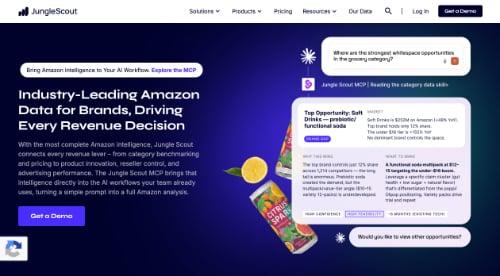
- Throughout the Week: Consumer-facing AI shopping assistants also flooded the market. Instacart introduced Clementine, its new North American AI grocery assistant. Shipt rolled out Ask Shipt for same-day delivery users. Jungle Scout launched AI Solutions (including Ask Cobalt and the Jungle Scout MCP), and SurveyMonkey released its comprehensive AI Analysis Suite.
Supporting Data and Technical Architecture
To fully grasp the magnitude of these new releases, it helps to examine the underlying architecture and quantitative backing of this week’s product rollouts:
- FedEx Global Trade Navigator Components: The suite is multi-layered, consisting of the Trade Planner (self-service guidance requiring no login), a dedicated Duty and Tax app on Shopify (providing guaranteed checkout calculations), Global Trade APIs (for custom ERP and storefront integrations), and Ship Manager (handling Harmonized System codes and country-of-manufacture metrics).
- Lightsage Funding: The $4 million injection led by Nexus Venture Partners will specifically target the expansion of large-scale simulations across answer engines, aiming to measure brand visibility and track real agent traffic attribution.
- Cross-Border Expansion (Xflow): Backed by prominent investors including Stripe, PayPal Ventures, and General Catalyst, Xflow’s new India collections feature support for local payment rails such as cards, bank transfers, and Unified Payments Interface (UPI), mitigating the need for foreign businesses to establish local legal entities.
- Social Commerce Reach: The Mastercard and Flowcart integration is rolling out initially in Kenya, with a strategic roadmap targeting high-growth African economies including South Africa, Nigeria, and Côte d’Ivoire.
Official Responses and Industry Commentary
Industry leaders have been vocal about the strategic necessity of these new tools, emphasizing cooperation and trust in an automated economy.

Regarding the collaboration on AI payment protocols, representatives from Ant International noted that building common standards to "know your agent" is the absolute prerequisite for scaling autonomous commerce securely. Without rigorous entity verification and behavioral monitoring, the risk of fraudulent machine-driven transactions would paralyze the ecosystem.
On the logistics front, executives from DHL and Alibaba.com highlighted the democratization of global trade. By integrating DHL’s deep freight forwarding network into Alibaba’s Accio AI platform, millions of small and medium-sized enterprises are suddenly equipped with supply-chain capabilities that were previously exclusive to multinational conglomerates.
In the realm of retail media and conversational ads, Amazon Ads’ partnership with OpenAI marks a philosophical shift in how brands reach consumers. Instead of waiting for users to visit traditional search engines or marketplaces, brands can now intercept consumer intent at the exact moment of conversational discovery inside tools like ChatGPT.

Implications for Merchants: What You Need to Do Next
For e-commerce merchants, dropshippers, and digital marketers, this week’s product releases signal a mandatory evolution in strategy. The passive approach to digital marketing, SEO, and logistics is no longer sufficient.
1. Optimize for AI Agents (AIO)
With the launch of platforms like M11 Labs’ OpenMarket, Lightsage’s growth stack, and Jungle Scout’s MCP (Model Context Protocol), brands must ensure their product data is machine-readable and easily digestible by AI buying assistants. If an AI agent cannot accurately verify your product claims, pricing, and stock levels in real time, you will be systematically excluded from automated recommendations.
2. Embrace Conversational and Social Commerce
The convergence of advertising and chat interfaces—exemplified by Amazon’s ChatGPT pilot and Mastercard/Flowcart’s WhatsApp payment integration—proves that checkout is moving away from traditional web browsers. Merchants must evaluate their conversational commerce stack, ensuring that chat bots and messaging channels are backed by secure, frictionless payment gateways.
3. Leverage Automated Cross-Border Tools
Global expansion is becoming friction-free. Tools like the FedEx Global Trade Navigator, Shopify duty apps, and Xflow’s India collection gateway mean that merchants can test international markets without taking on crushing regulatory or logistical overhead.
4. Guard Your Brand Reputation
As automated review management tools like RankRabbit’s Reputation AI become ubiquitous, consumer sentiment will be monitored and acted upon at machine speed. Merchants must maintain proactive customer service protocols to keep pace with AI-driven reputation monitoring.
In summary, the tools released this week are not mere incremental updates; they are the foundational bricks of the next generation of global commerce. Merchants who proactively integrate these AI-driven logistics, payment, and advertising solutions will find themselves uniquely positioned to thrive in an automated future.