In the rapidly evolving digital landscape of 2026, the conversation surrounding web accessibility has undergone a seismic shift. For years, the topic was confined to technical checklists, legal compliance, and the moral imperative of inclusivity. However, a new narrative is emerging, championed by accessibility strategists and data-driven researchers: accessibility is no longer just a social responsibility—it is a powerful, high-impact business strategy.
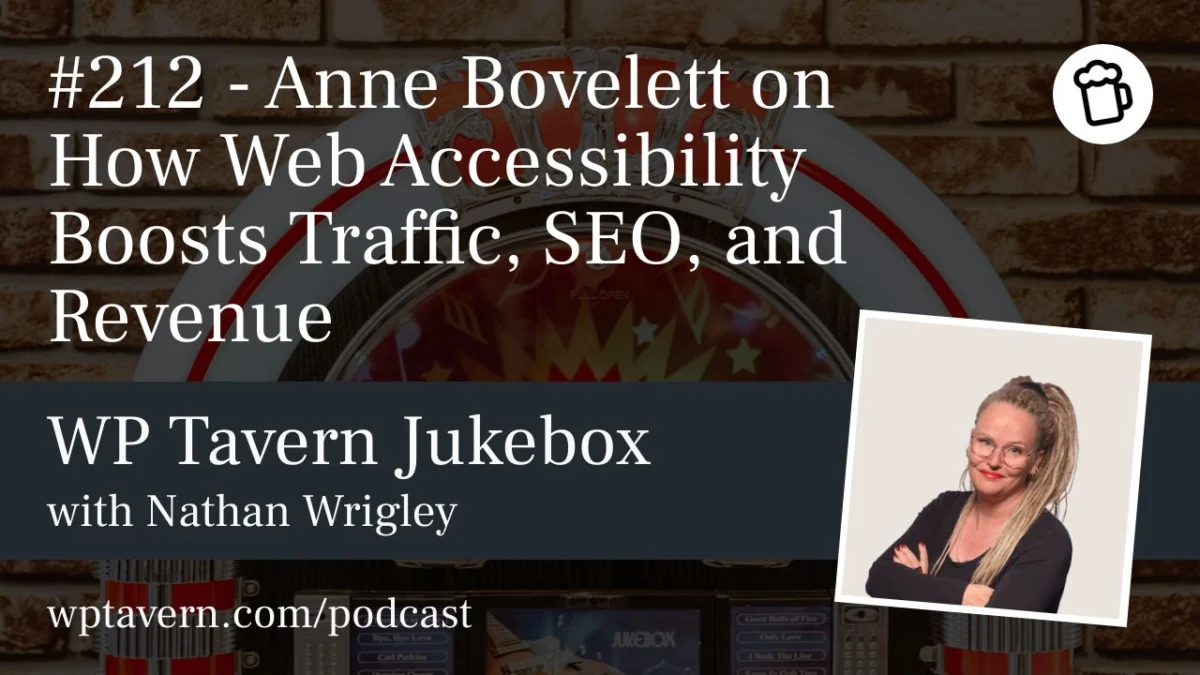
In a recent episode of the WP Tavern Jukebox Podcast, host Nathan Wrigley sat down with veteran accessibility strategist Anne Bovelett to discuss the intersection of universal design and tangible business outcomes. The central thesis of their conversation was both provocative and empirical: website owners who neglect accessibility are quite literally leaving millions of dollars on the table.
The Evolution of the Web: A Failure of Design
To understand the current state of the web, one must look back at its origins. In the early days of the internet, accessibility was built-in by default, largely because web development relied on semantic HTML. Developers were limited by the tools of the time, which meant that code was structured in a way that assistive technologies—such as screen readers—could naturally interpret.
As the industry evolved, the pursuit of aesthetic perfection and the rapid development of sophisticated frameworks led to what Bovelett describes with the German term verschlimmbesserung—an attempt to improve something that ultimately makes it worse. The rise of "div and span" coding, which relies heavily on JavaScript to render visual elements, created a "tofu-like" digital environment: visually appealing but structurally hollow.
"Semantic HTML was not a thing anymore because people were coding with div and span," Bovelett explains. "A div is like tofu without seasoning. You can make it look like something, but you can’t make it behave like something without a ton of JavaScript." This over-engineering prioritized developer convenience over user-centric utility, systematically excluding large portions of the population from the digital experience.
The Economic Imperative: Bridging the Gap
The most compelling argument for accessibility today is not found in the courtroom, but in the balance sheet. For years, proponents of accessibility struggled to move the needle because they framed the issue through a moral lens. However, as the digital economy matures, the data is beginning to tell a different, more lucrative story.
Data-Backed Growth
A landmark study conducted by Semrush in collaboration with AccessibilityChecker.org analyzed 10,000 websites to determine the correlation between compliance and performance. The findings were stark:
- Organic Traffic: Websites with higher accessibility compliance saw an average increase of 23% in organic traffic.
- Keyword Rankings: Compliant sites ranked for 27% more organic keywords.
- Domain Authority: There was a 90% boost in authority scores for sites that prioritized accessibility.
These figures suggest that search engine algorithms are increasingly prioritizing "human-centric" design. By making a site accessible, developers are also making it more readable for search engine crawlers. When a site is logically structured, uses semantic tags, and provides clear navigational cues, search engines can index the content more effectively, leading to higher visibility.
The "Click-Away" Cost
The financial consequences of ignoring accessibility are equally staggering. The "Click-Away Pound" report—a recurring study tracking the economic impact of inaccessible e-commerce—has highlighted that billions of pounds in revenue are lost annually because users with disabilities are forced to abandon their carts.
In 2019, the estimated lost revenue reached £17 billion in the UK alone. Bovelett points out that this figure is likely much higher today. "It’s a billion-pound mistake," she asserts. When a user with a disability encounters a site that is difficult to navigate—perhaps because of missing alt text, poor color contrast, or unlabelled buttons—they do not simply struggle through it; they leave. In many cases, they head to a competitor who has invested in a seamless, accessible user experience.
The Human Element: Why Users Pay More
One of the most counterintuitive findings discussed in the podcast is the willingness of users to pay a premium for accessibility. A staggering 75% of disabled customers report that they would willingly pay more for a product from an accessible website rather than navigate a cheaper, but inaccessible, competitor.
This behavior highlights a fundamental truth about user experience: accessibility is about dignity and autonomy. When a business makes its digital storefront accessible, it signals to the user that they are a valued customer. Conversely, an inaccessible site creates a barrier that forces the user to rely on others, eroding their independence.
"I have been to stores where I was ignored because of my physical state," Bovelett shared, drawing from personal experience. "When you provide a way for people to do things by themselves, you are empowering them. That is the service that they are willing to pay for."
Implications for Businesses and Developers
The implications of these findings are clear for anyone managing a digital product. Whether you are a small business owner or a lead developer at a major corporation, the path forward requires a shift in mindset.
The Rise of the "Accessibility Strategist"
Bovelett proposes a new role within modern tech teams: the Accessibility Strategist. Currently, many companies are trapped in a cycle of burnout, expecting a single individual to handle all accessibility compliance on top of other duties. A strategist, by contrast, would act as a bridge between design, development, and the C-suite.
This individual would not just be a technician; they would be a communicator capable of "kicking the shins of the C-suite in a professional manner" while fostering a culture of collaboration. They would ensure that designers and developers communicate at the beginning of a project, rather than attempting to fix accessibility flaws as an afterthought.
Reducing Support Costs
Accessibility is also a hedge against operational bloat. A significant portion of customer support requests stems from users struggling to navigate a website. By implementing universal design principles, companies can drastically reduce the number of support tickets, as users are empowered to solve their problems independently.
"In the Netherlands, a local tax office underwent a full accessibility redesign," Bovelett noted. "Support requests dropped by 30%. That is a direct, measurable reduction in overhead costs."
A Call to Action
The era of viewing accessibility as a "nice-to-have" or a "legal headache" is coming to an end. The data is increasingly clear: the most successful, authoritative, and profitable websites are those that prioritize the needs of all users.
For website owners, the first step is to stop looking for the "bare minimum" of compliance. Compliance is often a floor, not a ceiling, and relying solely on automated tools can create a false sense of security. Instead, businesses should view accessibility as a core pillar of their growth strategy.
As Bovelett concludes, "We have to stop thinking about next week and start thinking about the long term." By investing in accessible, human-centric design, businesses are not just doing the right thing; they are securing their position in a competitive global market, driving higher traffic, and capturing the loyalty of a vast, underserved, and economically powerful audience.
For those ready to start, the roadmap is available. From utilizing semantic HTML to auditing user flows and implementing structured data, the tools to make the web a more inclusive and profitable place are within reach. The only question remains: will you seize the opportunity, or will you continue to leave your revenue on the table?