Main Facts: The End of Blind Faith in Digital Advertising
For as long as digital marketing has existed, practitioners have wrestled with a fundamental, persistent ghost in the machine: attribution. From the earliest days of banner ads to today’s hyper-sophisticated, AI-driven algorithmic campaigns, marketers have struggled to answer a deceptively simple question: How much of this revenue would have happened anyway?
This core query addresses the principle of counterfactuality—the evaluation of what would occur in the absence of a specific marketing stimulus. Historically, digital advertising platforms—ranging from Google and Meta to emerging AI-powered discovery engines—have operated as judge, jury, and executioner in their own courts. Using native attribution models, each platform routinely claims credit for the exact same conversions, creating a distorted ecosystem where total reported conversions across all channels routinely outstrip actual, bottom-line business sales.
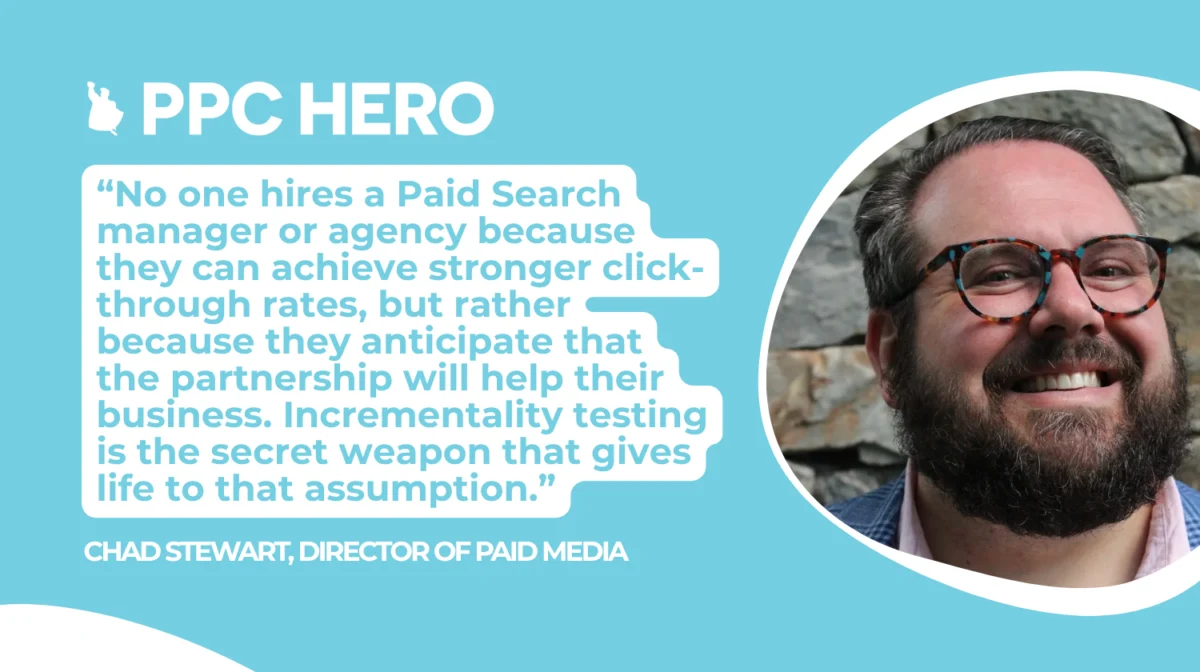
Enter incrementality testing: a rigorous methodology designed to strip away platform bias, eliminate vanity metrics, and measure the true, real-world business impact of advertising spend. Far from being merely the next iteration of legacy attribution modeling, incrementality testing requires marketers to actively alter inputs—such as pausing specific campaign types in designated geographic regions or among isolated user cohorts—to measure the causal lift generated by their efforts.
As digital budgets face tighter scrutiny and executive boards demand clear returns on investment (ROI), incrementality testing is rapidly transforming from a niche statistical exercise into the definitive cornerstone of modern, intelligent media management.
Chronology: The Evolution of Measurement and the Rise of Causal Inference
To understand why incrementality testing has become the industry’s focal point, it is helpful to trace the chronological evolution of how marketers have attempted to measure advertising effectiveness over the past few decades.
1. The Era of Last-Touch Attribution (Pre-2010s)
In the early days of digital marketing, measurement relied heavily on rules-based attribution models, most notably Last-Touch Attribution (LTA). Whichever ad a user interacted with immediately before converting received 100% of the credit. This model heavily favored bottom-of-funnel tactics—specifically Brand Search—while completely ignoring the upper-funnel awareness campaigns (such as display, video, and non-brand search) that originally introduced the consumer to the brand.
2. Multi-Touch Attribution and Platform Silos (2010s–Early 2020s)
As customer journeys grew more complex, crossing multiple devices and channels, the industry shifted toward Multi-Touch Attribution (MTA). While theoretically sounder than LTA, MTA quickly bogged down in technical limitations, privacy regulations (such as Apple’s iOS privacy updates and the phasing out of third-party cookies), and walled gardens. Google Analytics measured Google Ads, Meta measured Facebook and Instagram, and each platform utilized algorithms incentivized to over-report its own efficacy.
3. The Pivot to Privacy-Safe Experimentation (Present Day)
With cookie deprecation making user-level tracking increasingly difficult, traditional attribution models have broken down entirely. Marketers can no longer reliably track a single user across a multi-week buying journey. Consequently, the industry has experienced a paradigm shift toward aggregate, privacy-compliant experimentation. Incrementality testing has emerged as the gold standard, replacing passive observation with active, controlled scientific experimentation.
Supporting Data: Dissecting Paid Search and the Illusion of Branded Dominance
Paid Search programs provide a glaring case study in the flaws of traditional attribution. Within search engine marketing, Brand Search campaigns consistently display the strongest Key Performance Indicators (KPIs): exceptionally high click-through rates (CTR), low cost-per-acquisition (CPA), and sky-high conversion rates.
However, advanced search managers are increasingly asking a critical question: Are branded PPC campaigns actually driving new revenue, or are they merely intercepting users who were already going to buy?
Industry case studies—such as research examining Bing and Google brand search dynamics—demonstrate that heavily scaling back on branded search often results in a far smaller drop in total revenue than platform attribution reports would suggest. This occurs because upper-funnel tactics (Non-Brand Search, Demand Gen, social video, and programmatic displays) build foundational brand equity, driving users to ultimately search for the brand by name.

When organizations implement structured incrementality testing frameworks, the data frequently reveals complex behavioral mechanics:
- The Halo Effect: Upper-funnel campaigns often exhibit zero direct attribution under last-click models, yet geo-holdout tests reveal a measurable decline in total enterprise revenue when those campaigns are paused.
- Cannibalization of Organic Traffic: Studies across various ecommerce verticals show that up to 50% or more of branded search clicks are "non-incremental"—meaning the user would have clicked the free organic search result had the paid ad not been present.
- Minimum Detectable Effect (MDE): Successful testing programs rely heavily on pre-test statistical calculations. Organizations establish an MDE threshold—the smallest performance fluctuation required to convince stakeholders that a test result is conclusive—before launching any experiment.
Official Responses and Industry Perspectives: Overcoming Stakeholder Resistance
Implementing incrementality testing is rarely a purely technical challenge; it is frequently an organizational and cultural hurdle. When marketing teams propose running incrementality tests—particularly Geo Holdout tests where advertising is intentionally paused in specific regions—they regularly encounter pushback from executive leadership, sales teams, and clients.
The Executive Pushback
A typical boardroom objection to a geo-holdout test sounds like this: "You want us to turn off ads in ten major states? That sounds like losing money on purpose!"
The Strategist’s Response
Leading media strategists and agency executives emphasize that framing is everything. Rather than positioning a holdout test as "turning off revenue-generating ads," professionals pitch it as an investment in efficiency and risk mitigation.
Industry thought leaders argue that uncovering dead spend is just as valuable as finding new revenue streams. By establishing clear guardrails—such as pre-agreed sources of truth (e.g., Shopify revenue data for ecommerce brands or CRM-verified lead volumes for B2B enterprises)—agencies secure executive buy-in by promising complete transparency.
Furthermore, standard best practices dictate that comprehensive testing protocols must include a halo period following the test. This phase tracks how quickly performance normalizes once standard marketing operations resume, reassuring stakeholders that any temporary disruptions during the test window are controlled and finite.
Implications: The Future of Account Management and Omnichannel Strategy
The widespread adoption of incrementality testing carries profound implications for the digital marketing landscape, reshaping agency-client relationships, budget allocations, and the overarching definition of campaign success.
1. Moving Beyond Vanity Metrics
The era of optimizing campaigns purely for platform-reported metrics (such as ROAS figures generated inside ad managers) is drawing to a close. Advertisers are increasingly judged on their ability to move enterprise-level business metrics. An agency or internal marketer who can prove true incremental lift commands greater trust and larger budgets than one who merely points to inflated platform reports.
2. Navigating Negative Results and Fostering Optimization
What happens when an incrementality test reveals that a specific campaign type—such as Non-Brand Search or a specific video initiative—is genuinely ineffective? Far from being a failure, this outcome represents a strategic breakthrough.
When data proves a tactic is not driving incremental lift, sophisticated marketers lean into the "why." Is the keyword targeting misaligned? Is the market saturated by other intersecting channels, such as Performance Max or emerging AI-driven chat ads? Answering these questions transforms isolated experiments into an ongoing optimization framework, ensuring marketing budgets are constantly reallocated toward genuinely accretive tactics.
3. The Cornerstone of Modern Intelligence
Ultimately, incrementality testing is not a one-off project to be checked off a quarterly to-do list. It must be woven into the cultural fabric of modern marketing organizations. In an increasingly complex omnichannel world where no single system can perfectly measure every customer touchpoint, incrementality testing acts as the ultimate reality check. It aligns paid media efforts directly with broader corporate financial objectives, transforming marketing from a cost center operating on blind faith into a scientifically validated engine for business growth.