In the traditional era of digital marketing, success was measured by a single, definitive metric: traffic. If your analytics dashboard showed an upward trend in clicks, your strategy was working. But in today’s fragmented digital ecosystem, that dashboard is hiding a fundamental reality.

Your analytics tracks who lands on your site, but it tells you nothing about who didn’t—the users who read an AI-generated summary that favored your competitor, or those who scrolled through a Reddit thread where your brand was entirely absent. This “invisible” loss of visibility is the silent killer of market share.
As the path to purchase shifts from simple search queries to complex, AI-driven discovery, relying on traffic data alone is like navigating a ship by looking at the wake instead of the horizon. To truly understand your market position, you must pivot to a more comprehensive metric: Share of Voice (SoV).
What Is Share of Voice?
At its core, Share of Voice measures your brand’s visibility relative to your competitors across the channels where your customers actually live, breathe, and research.
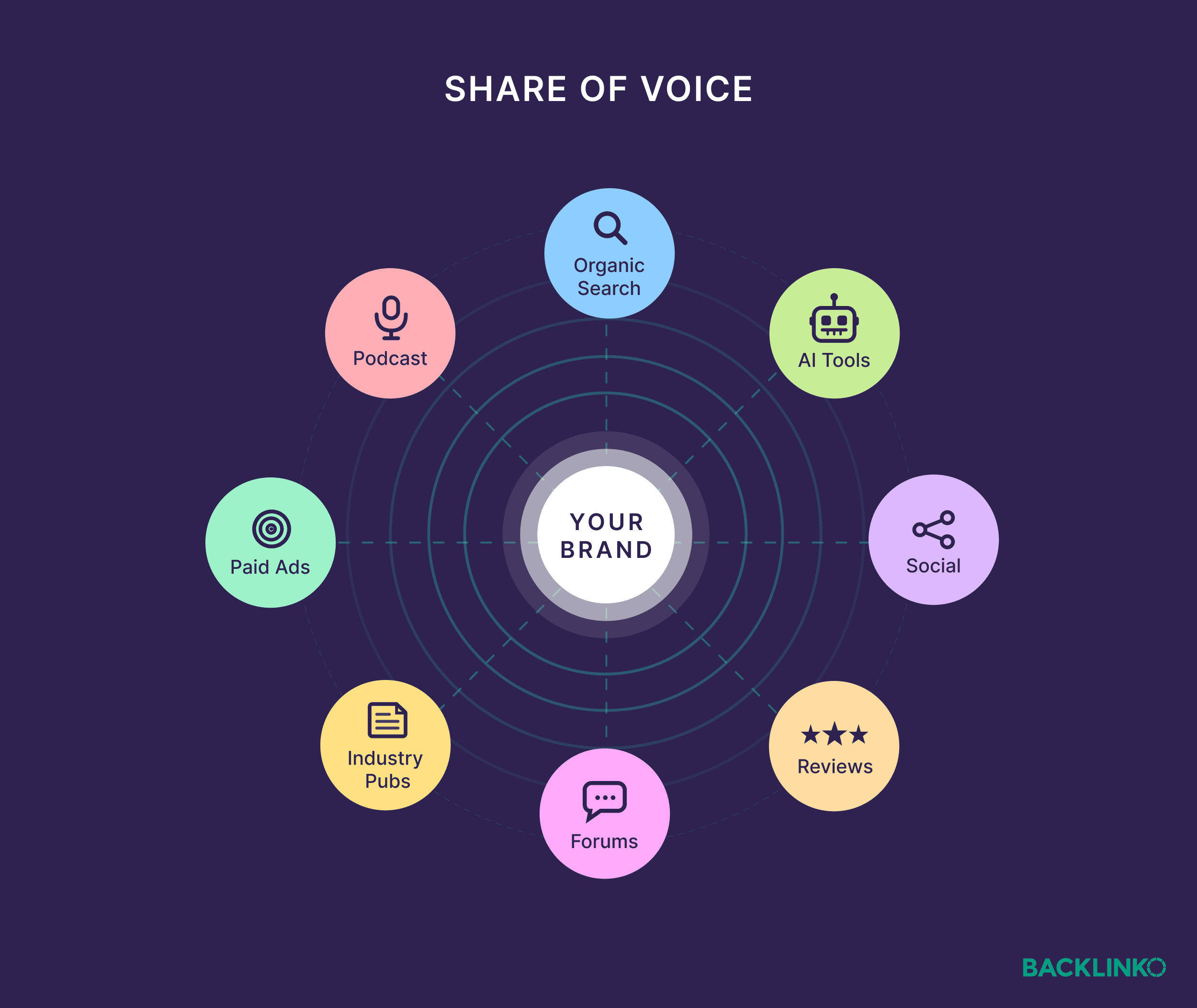
Traditionally, SoV was a blunt instrument used by advertisers to track their percentage of total ad spend in a given market. Today, it has evolved into a sophisticated, multi-dimensional metric. It captures your presence across organic search, AI-powered LLM responses, social media discourse, and third-party review platforms. In simple terms, SoV answers the question: What percentage of the conversation in your category do you actually own?
While SoV spans everything from PR to paid media, search—specifically organic and AI search—is where the battle for customer intent is won. It is the foundation of the modern buyer’s journey. If you cannot measure your visibility in the AI-driven answers that are becoming the first point of contact for millions, you are effectively operating in the dark.
The Shift: Traditional SEO vs. AI Search
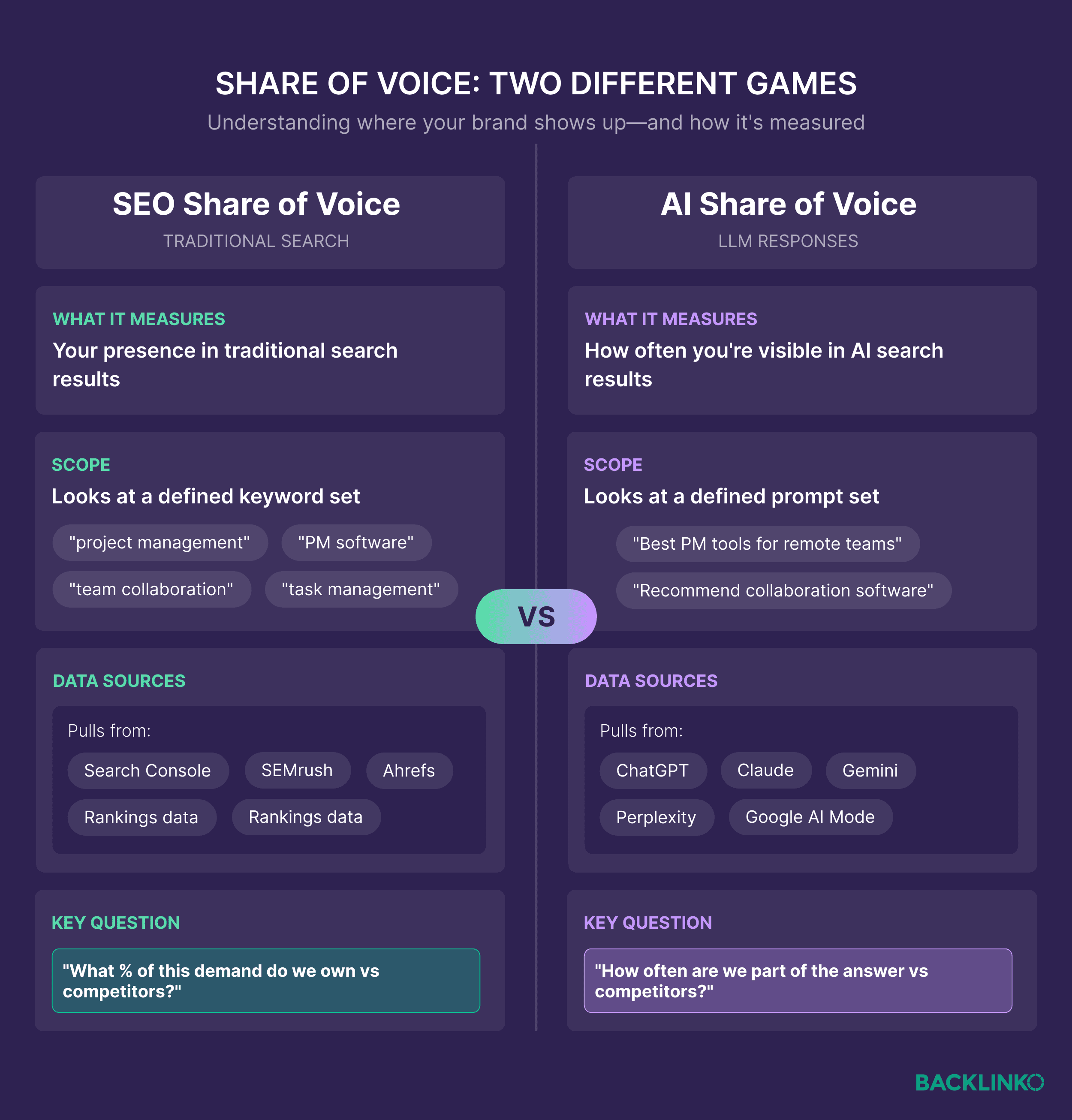
To master SoV, you must recognize that you are playing two different games.
1. The SEO SoV Game
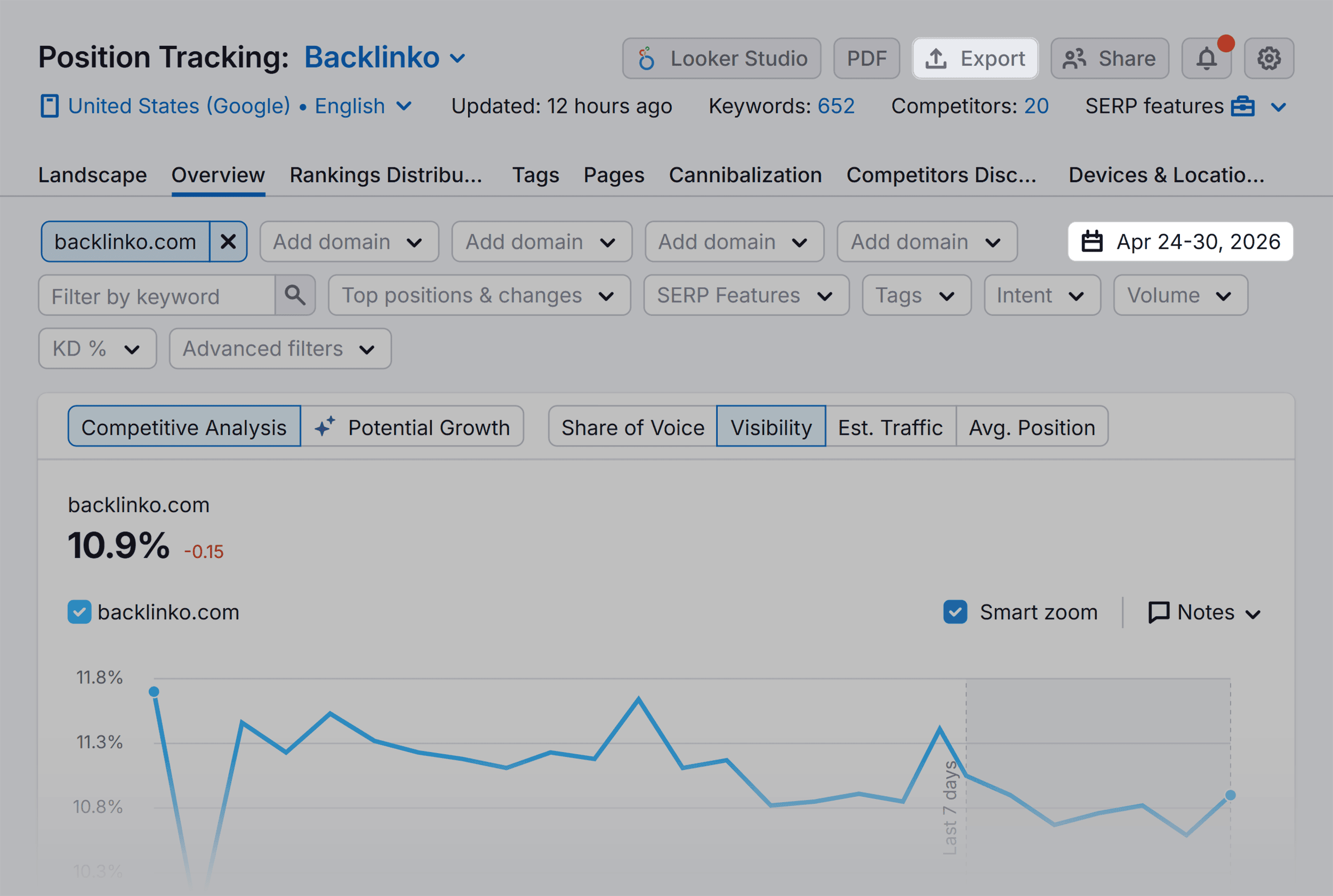
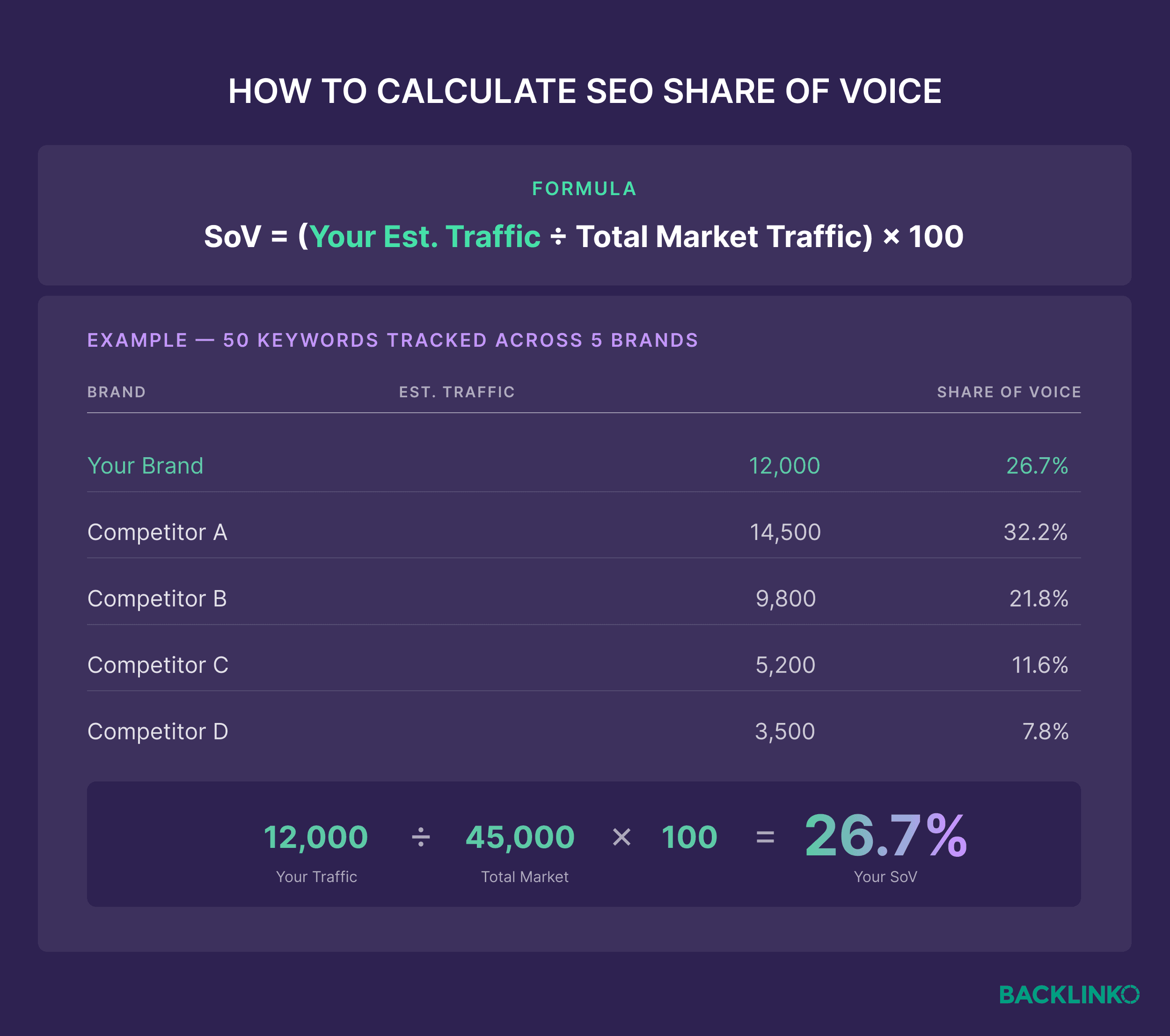
SEO SoV calculates your slice of the traditional organic traffic pie. If you track 100 core keywords that generate 50,000 monthly visits across your industry, and your brand captures 15,000 of those, your SoV is 30%. It is a measure of your domain authority and content relevance in a static search environment.

2. The AI SoV Game
AI SoV is a different beast. It measures how often your brand is mentioned or cited in responses from ChatGPT, Perplexity, or Google’s AI Overviews. If you test 100 category-specific prompts and your brand appears in 45 of them while a competitor appears in 30, you are winning the AI visibility war. Because AI responses are conversational and contextual, AI SoV is not just about rankings; it’s about credibility.
Why SoV is Your New Essential KPI
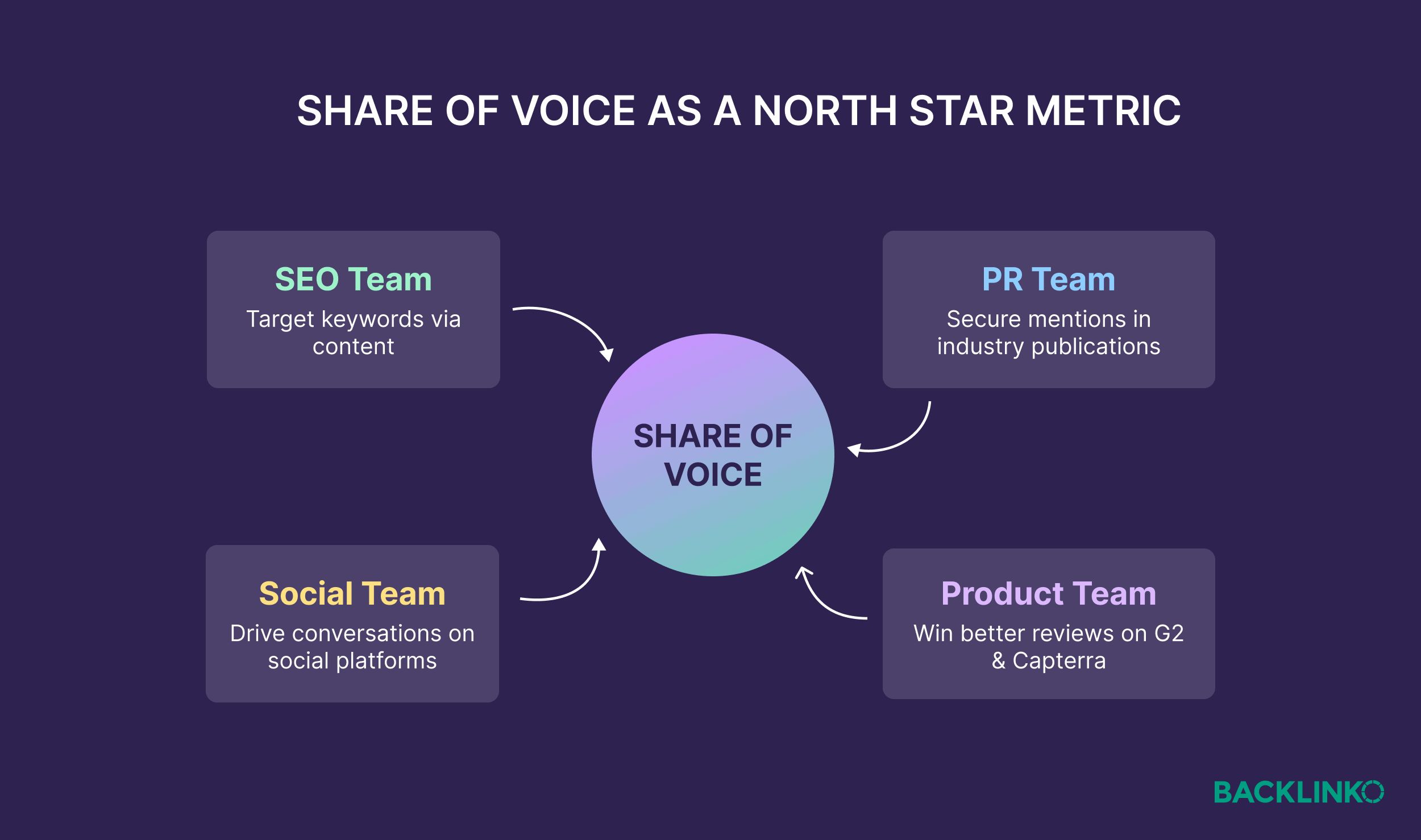
If your marketing team is currently operating in silos—with the SEO team chasing clicks, PR chasing mentions, and social teams chasing engagement—you are likely missing the big picture. Here is why SoV must become your core KPI.
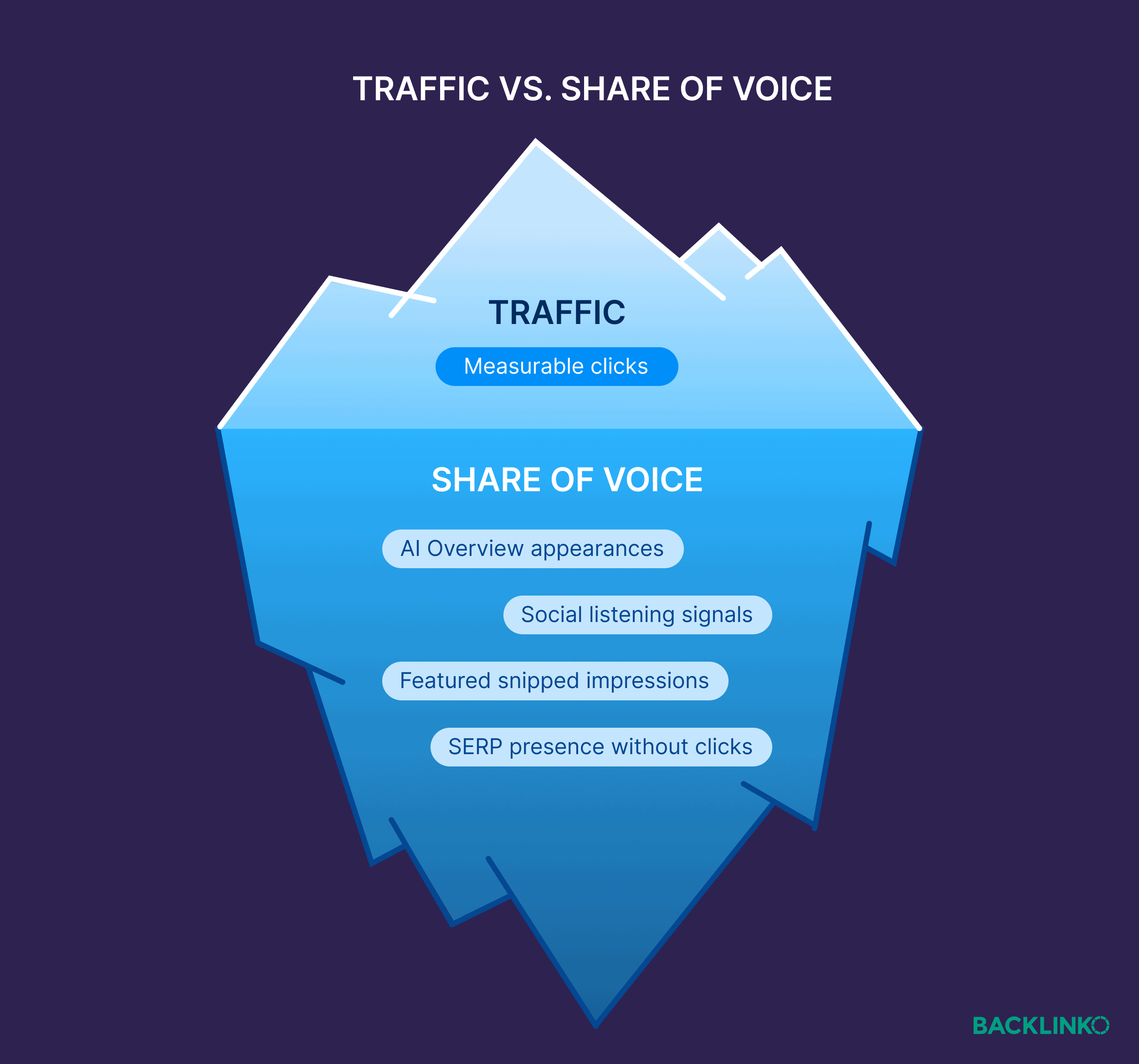
Tracking Visibility in a "Zero-Click" World
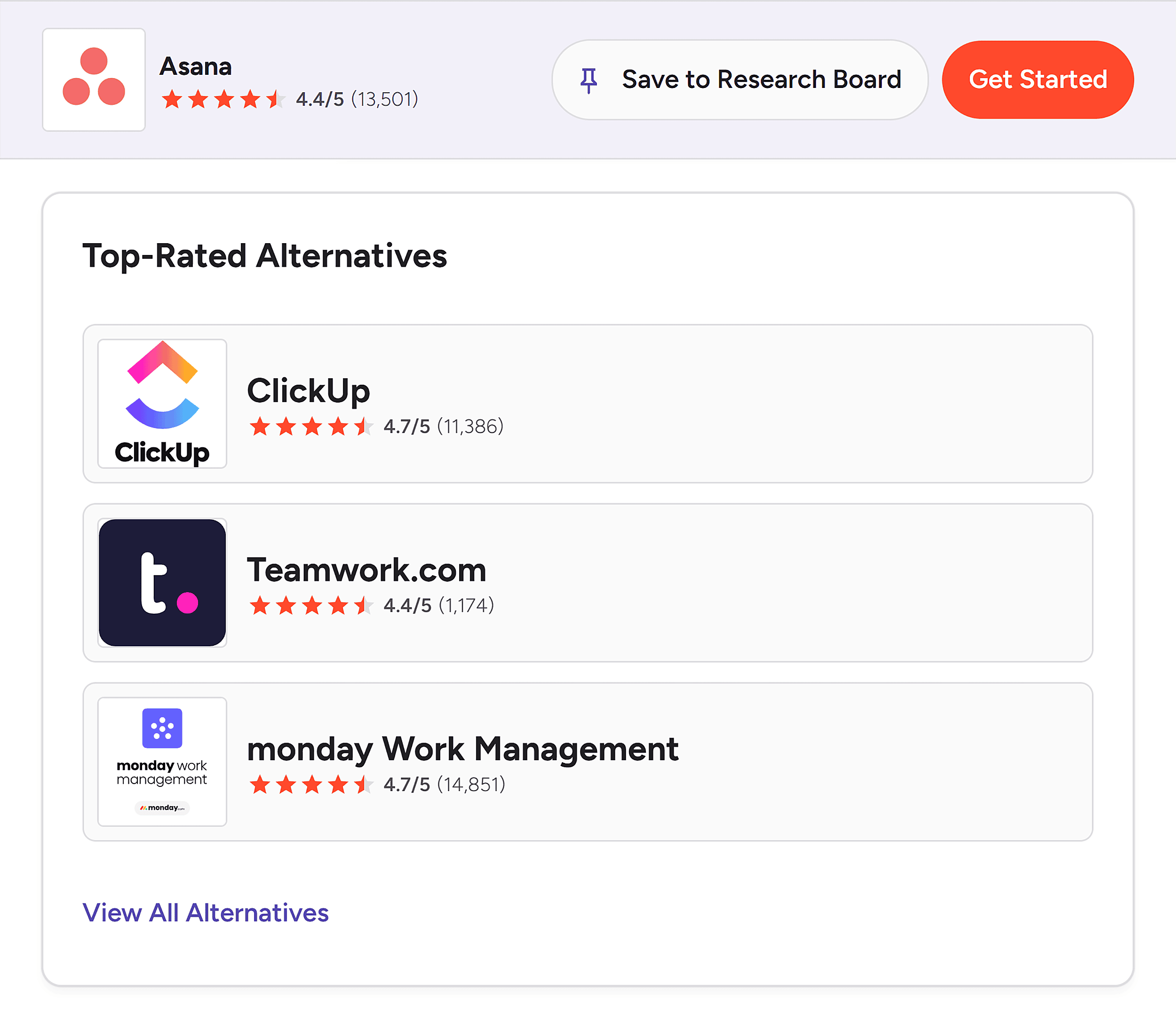
With the rise of zero-click searches, traditional traffic data is becoming a lagging indicator. When a user asks an AI for the "best project management software," they often get their answer without ever clicking a link. Your analytics will show no traffic, but your brand may have been the top recommendation. SoV fills this void by measuring your presence in the consideration set, regardless of whether a click occurred.
Creating a Unified North Star
The power of SoV lies in its ability to align disparate teams. When the content, PR, and SEO departments all work toward increasing a single percentage point of total market visibility, collaboration shifts from competitive to strategic. It forces teams to stop optimizing for vanity metrics and start optimizing for market dominance.

Measuring Share of Voice: A 4-Step Strategic Framework
Calculating SoV might seem daunting, but it becomes manageable when broken down into a four-step process.
Step 1: Define Your Industry Landscape
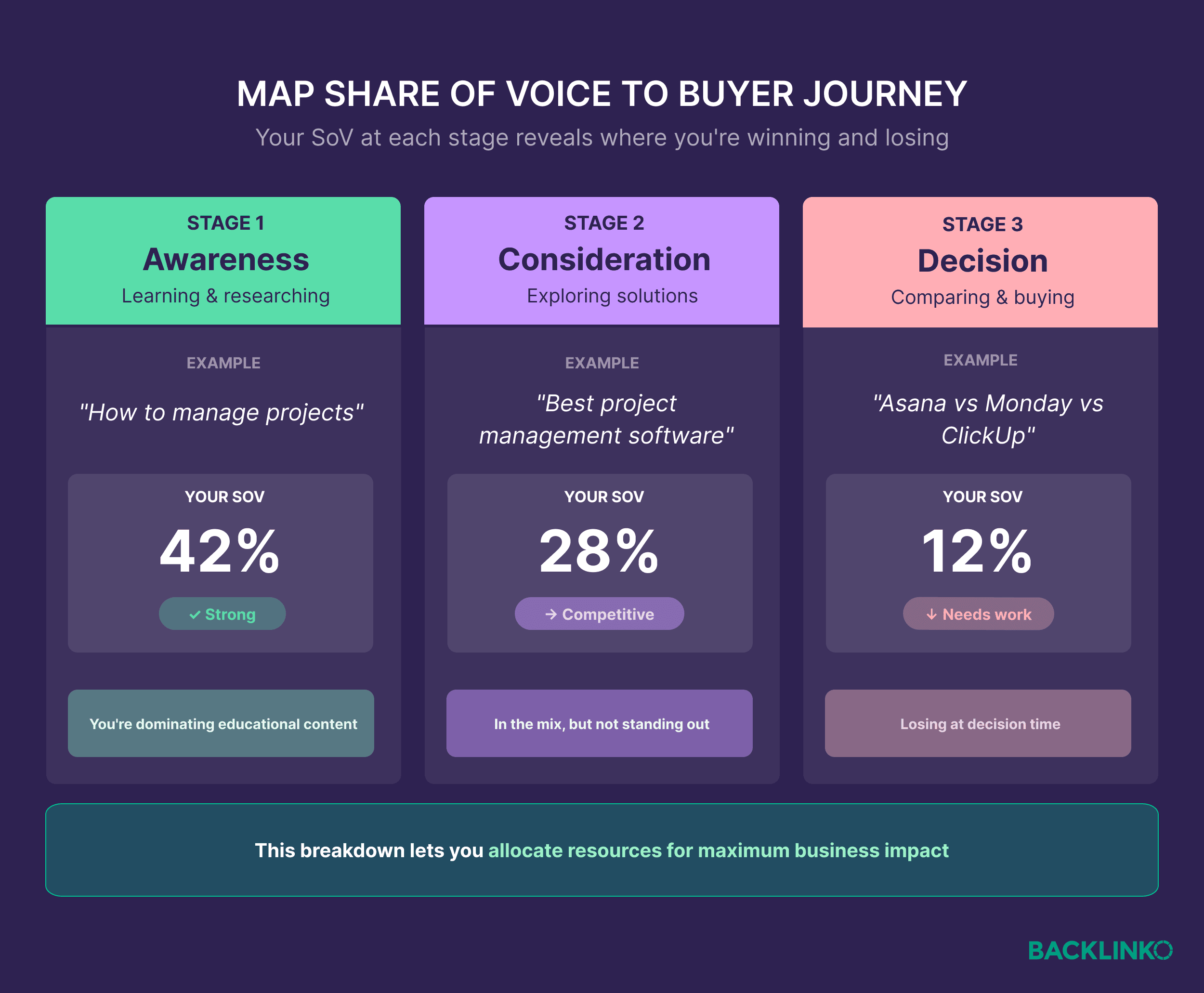
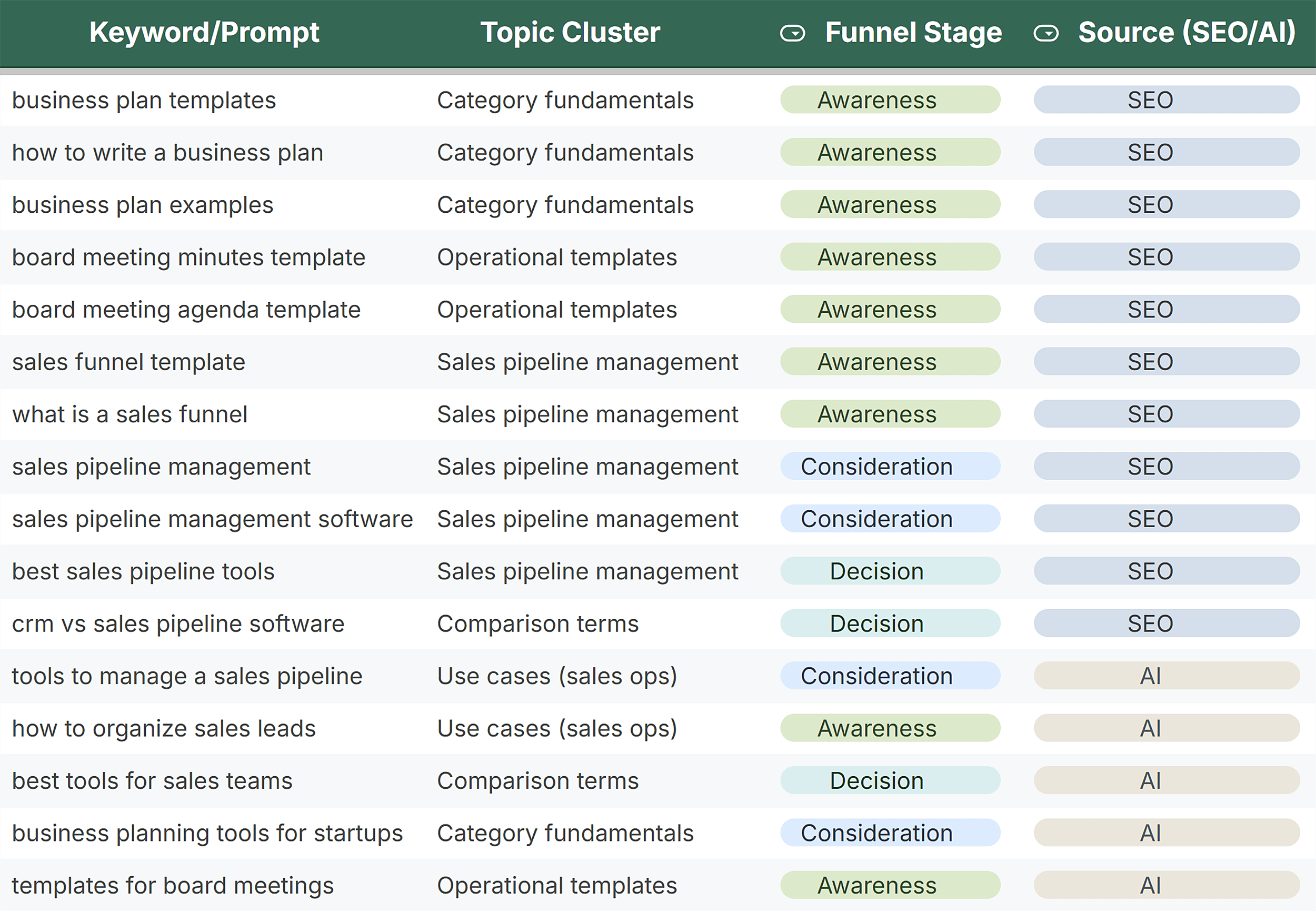
Don’t try to measure everything. Map your competitive terrain by identifying 3–5 core "topic clusters" that directly correlate to revenue. Segment these by funnel stage:
- Top of Funnel: Educational queries (e.g., "how to manage remote teams").
- Middle of Funnel: Solution-oriented queries (e.g., "project management software features").
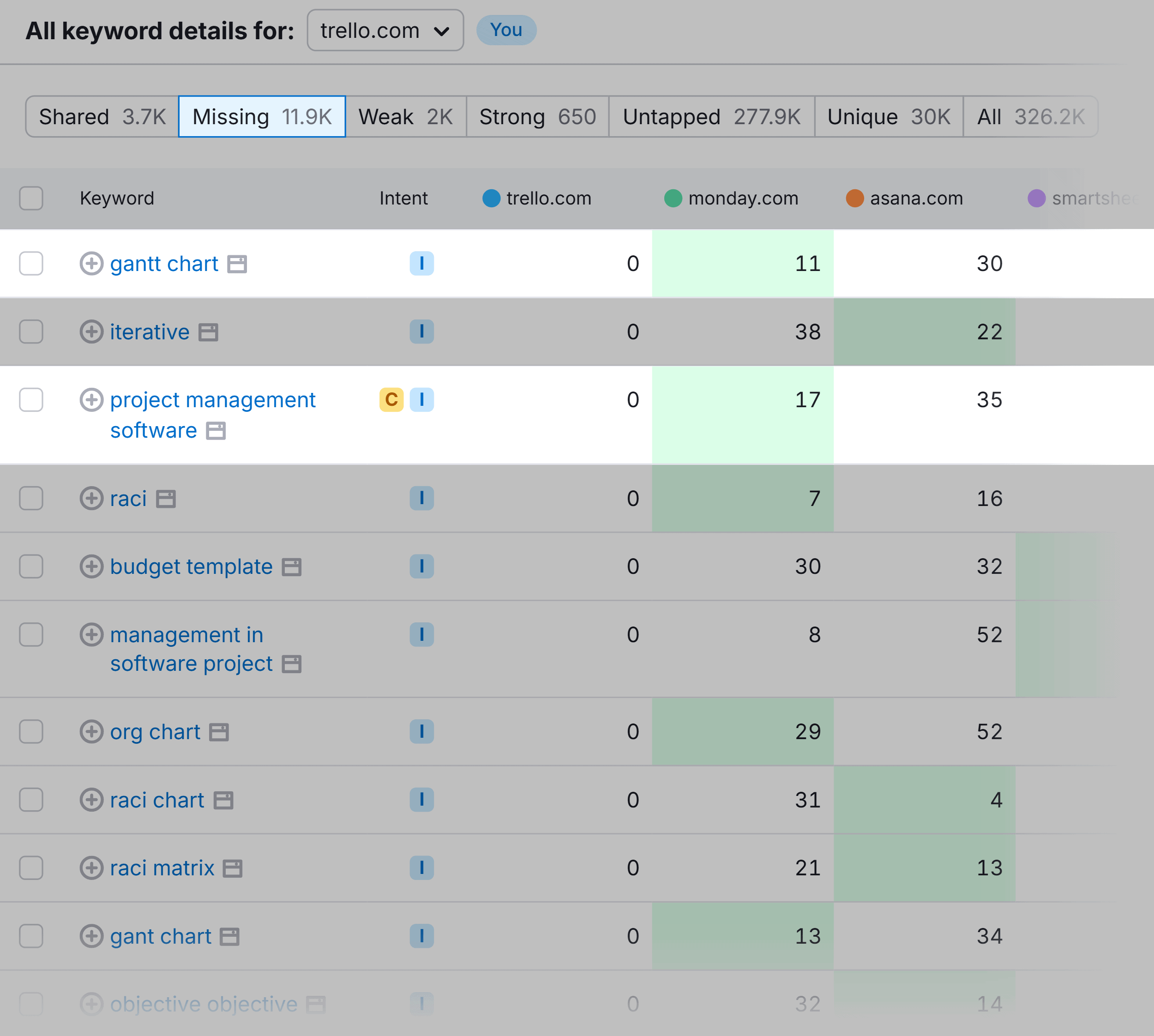
- Bottom of Funnel: Decision-based queries (e.g., "Asana vs. Monday.com").
Step 2: Build Your Keyword and Prompt Library
You need to build a library of 200–500 queries that reflect how your audience thinks.
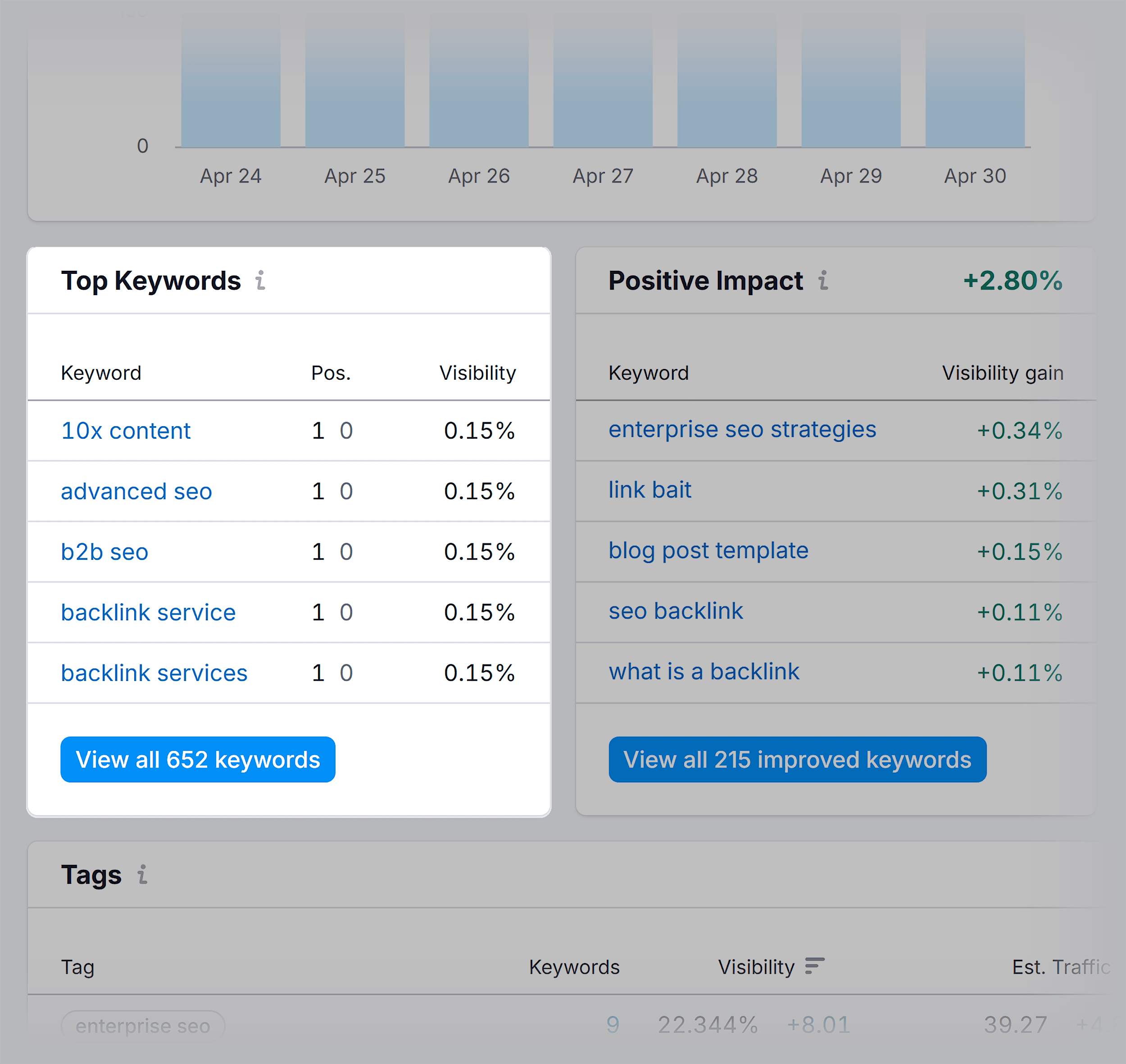
- SEO Data: Use Google Search Console and Semrush to export keywords where you currently have impressions.
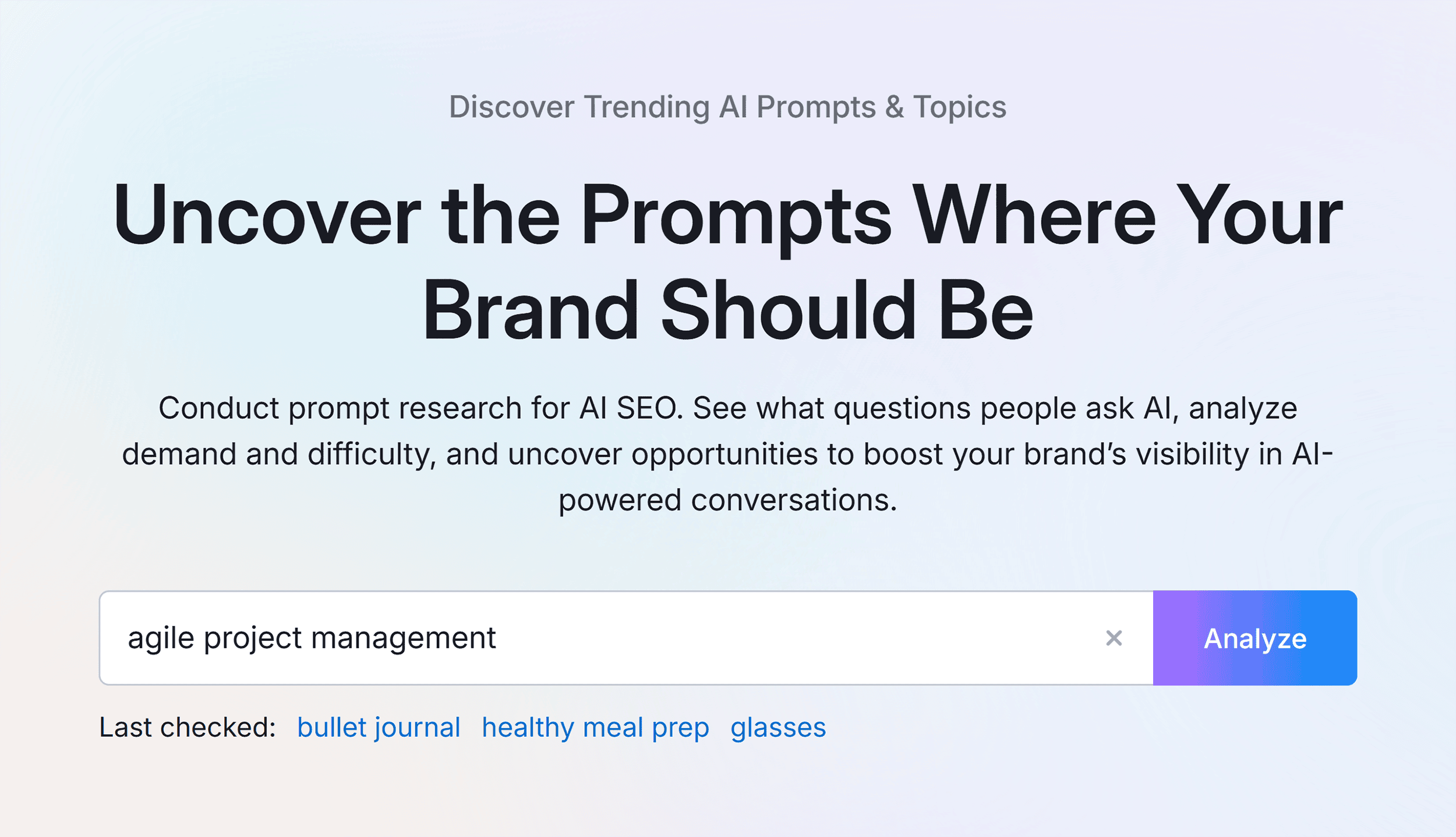
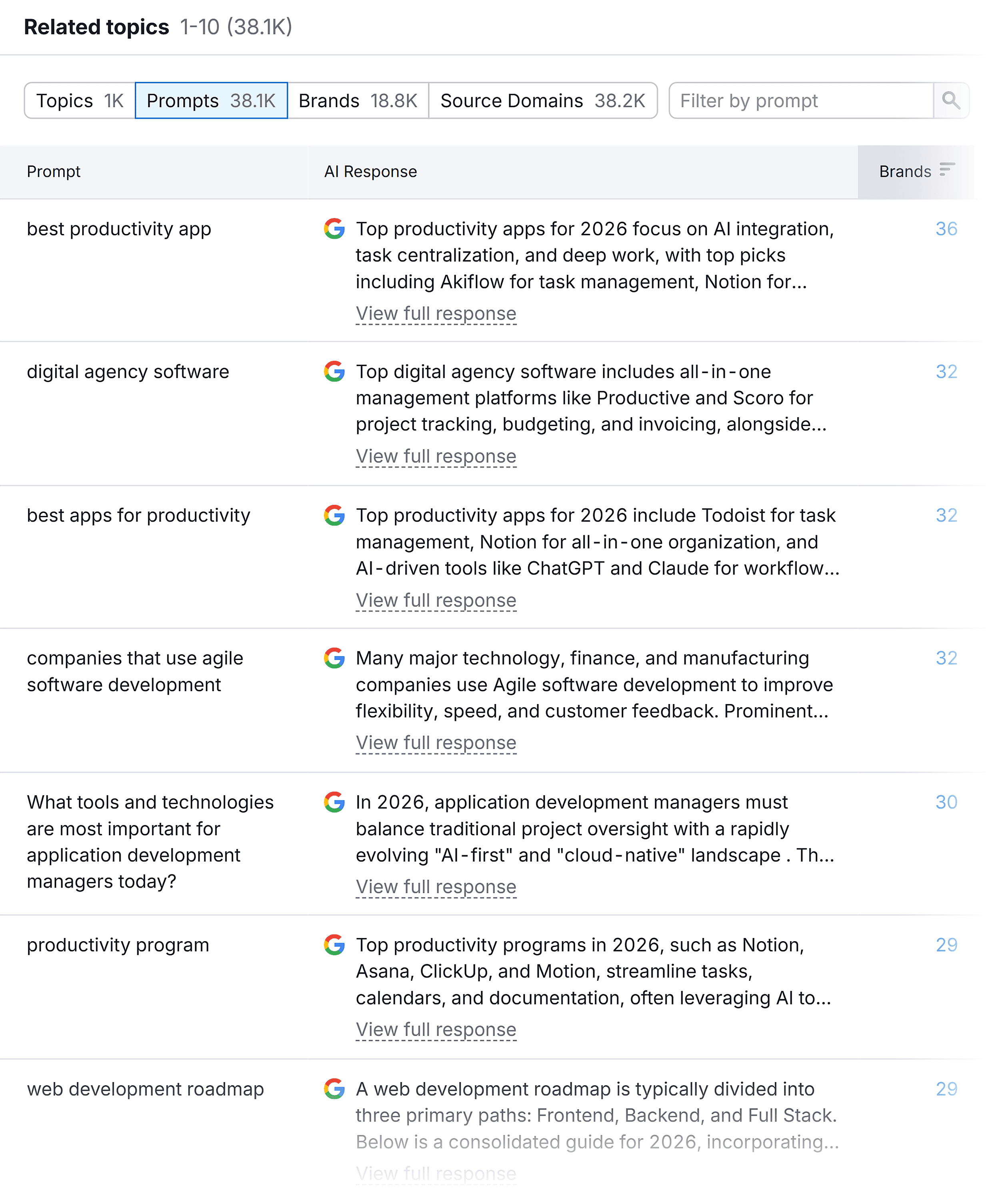
- AI Prompting: Monitor Reddit, Slack communities, and review sites like G2 to see how users ask for solutions. Use tools like the Semrush AI Visibility Toolkit to identify the exact prompts that trigger AI answers in your space.
Step 3: Calculate the Data
For SEO, multiply search volume by the average click-through rate of your ranking position to estimate traffic share. For AI, test your prompt library across major LLMs and count the frequency of brand mentions. The goal is to establish a ratio of "Your Brand / Total Market Presence."
Step 4: Establish a Baseline
Your first calculation is your baseline. Set up a dashboard that tracks these numbers monthly. Quarterly, perform a deep dive to see if your visibility is shifting toward the bottom of the funnel. If your SoV is high at the top of the funnel but low at the decision stage, you have a conversion problem, not a brand awareness problem.
Implications: Turning Data into Decisions
Once you have your SoV, you must act on it. Use the following diagnostic approach:
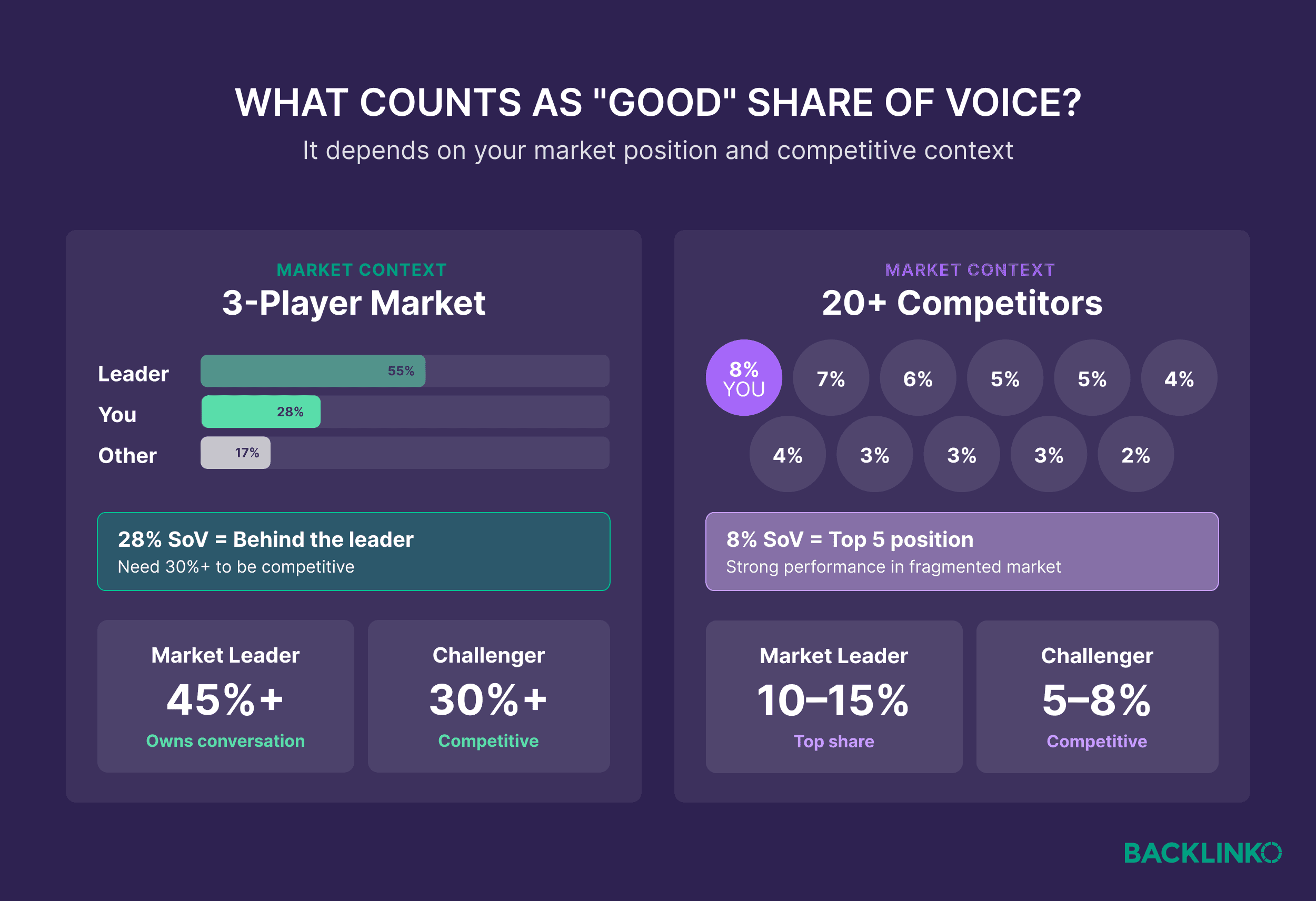
- If your SoV is <10% in a cluster: You are effectively invisible. Prioritize high-impact, low-effort tasks like creating "Best Of" guides or comparison pages.
- If you have high SoV but low conversion: Your efficiency is low. You are attracting the wrong audience. Shift your budget away from broad awareness and toward high-intent case studies and ROI-focused content.
- If a competitor is gaining 5% SoV in your strongholds: This is an early warning sign of a competitive threat. Respond by auditing your review profiles and increasing your presence in the community discussions where that competitor is being talked about.
Conclusion
In the modern digital landscape, the "click" is no longer the final word. The brands that win in 2026 and beyond will be the ones that understand how they appear across every touchpoint, from traditional search bars to the black boxes of AI models.
By adopting Share of Voice as your North Star, you stop chasing fleeting traffic spikes and start building a sustainable, dominant presence in the minds of your customers. Start measuring, start optimizing, and start owning your category.