DETROIT — In an era defined by media fragmentation and digital noise, the fundamental metric of television advertising—the completed view—is undergoing a radical interrogation. As audiences fluidly transition between traditional cable, subscription video-on-demand (SVOD), and free ad-supported streaming TV (FAST) services, the old yardsticks of media evaluation are falling short. Simply put, an ad served is no longer an ad seen.
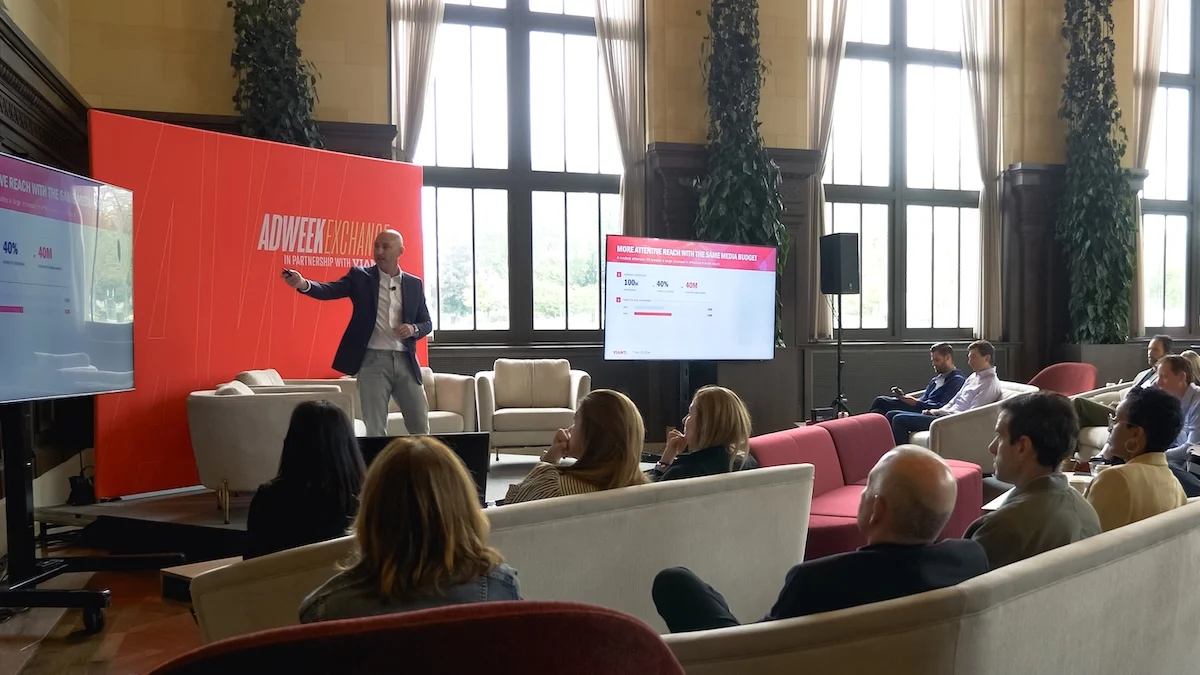
This reality took center stage at the inaugural ADWEEK Exchange in Detroit, the launchpad for a multi-city national roadshow presented in partnership with advertising software company Viant. Bringing together top-tier brand executives, data scientists, and media innovators, the event sought to answer a multi-billion-dollar question: What does attention data actually reveal about consumer behavior, and how can brands leverage it to transform media spend from a guessing game into a science?
Main Facts: The Shift From Exposure to Engagement
The central thesis emerging from the Detroit summit is that the modern advertising ecosystem suffers from a massive "attention gap." While households continue to consume television and streaming video at historic rates, the percentage of that time dedicated to actively watching commercials has plummeted.
Key takeaways from the event include:
- The Attention Deficit: Out of nearly four hours of daily TV and streaming consumption, only a fraction is dedicated to advertising, and an even smaller window commands genuine viewer focus.
- The Context Factor: Creative quality alone does not dictate attention; the surrounding genre, platform, and even live-event pacing dramatically alter viewer engagement.
- Actionable Optimization: Industry leaders are moving away from treating attention metrics as post-campaign report cards, urging brands instead to use them in real-time to shift budgets toward high-performing placements and creative assets.
Chronology of the Detroit Exchange
The day’s events mapped a clear trajectory from baseline industry challenges to tactical, real-world solutions:
Opening Keynote: The Data Behind the Glare
Yan Liu, CEO of TVision, kicked off the conference by presenting eye-opening statistics regarding American viewing habits. According to Liu, the average U.S. consumer devotes 213.5 minutes per day—nearly four hours—to television and streaming video. Of that expansive window, approximately 24.5 minutes are spent exposed to commercials.

However, exposure does not equal engagement. Liu revealed that viewers actively pay attention to those ads for only nine minutes out of the entire day. The rest of the time, viewers are multitasking, out of the room entirely, or simply ignoring the screen while the ad plays to an empty space.
The Executive Panel: Translating Metrics Into Action
Following the keynote, ADWEEK CEO Will Lee moderated a high-level panel featuring Deena Bahri (CMO at Nutrafol), Sarah Tarraf (SVP of Knowledge and Insights at Rocket), and Chris Vanderhook (COO and Co-Founder of Viant). The conversation interrogated the operational friction of applying attention data to everyday marketing strategies.
Closing Roadmap: Real-Time Optimization
Tim Vanderhook, CEO and Co-Founder of Viant, brought the event to a close by detailing how marketers can operationalize these insights. Rather than waiting for a post-mortem analysis, Vanderhook advocated for mid-campaign optimization—actively trimming low-attention inventory and doubling down on placements that hold viewer eyes.
Supporting Data: What the Numbers Tell Us
The discussions in Detroit were heavily anchored by quantitative research, illustrating direct correlations between viewer attention and brand lift.
- Ad Awareness Scales with Attention: In a sprawling multi-industry study examining hundreds of campaigns across 20 distinct sectors, TVision uncovered a direct mathematical relationship: each single-percentage-point increase in attention corresponded to nearly a 1% increase in overall ad awareness.
- The Power of Content Context: Liu demonstrated that the exact same creative execution performs wildly differently depending on the surrounding content. Sci-fi and sports programming consistently commanded higher attention spans from viewers compared to news and reality television programming.
- The Live Sports Anomaly: Highlighting live sports consumption, Liu referenced data from a recent Thursday night football matchup between the Detroit Lions and the Buffalo Bills. Surprisingly, attention metrics bucked traditional trends: viewer attention dropped as the score widened in early quarters, but rebounded significantly when the game tightened up in the third quarter. Notably, the second half drew more attention than the first, bucking historical viewership drop-off curves, though overall co-viewing (multiple people watching together) declined sharply post-halftime.
Official Responses and Industry Perspectives
The intersection of technology, data privacy, and creative execution sparked vigorous debate among the industry leaders on stage.
The Skepticism and Curiosity of Brand CMOs
When pressed on whether attention metrics reliably translate into business outcomes, Nutrafol CMO Deena Bahri admitted initial skepticism. However, she noted that the empirical data presented by TVision offered a compelling path forward for brands trying to break through category noise. For Nutrafol—a brand centered on the emotional and physical journey of hair wellness—finding the right balance between storytelling on linear TV, creator partnerships on social channels, and in-person experiential touchpoints is paramount.

"Finding that balance between variety and consistency, I think, is the magic in great creative," Bahri shared during the panel.
The Challenge of Lasting Awareness
Rocket’s Sarah Tarraf addressed the unique obstacles faced by brands whose services are utilized infrequently. Because consumers do not apply for a mortgage every day, Rocket’s emotional advertising must forge deep, enduring memories.
Tarraf pointed out an early stumbling block in their campaign measurement: while viewers vividly remembered Rocket’s Super Bowl commercials, a portion of the audience failed to connect the creative back to the brand itself. This insight forced a strategic pivot, prompting Rocket to integrate the brand more aggressively into its visuals and voiceovers, while deploying strict test-and-control groups to measure the direct line between brand exposure, site visits, and conversions.
Bridging the Gap in Connected TV (CTV)
From the technology provider’s perspective, Viant’s leadership stressed that programmatic buying must evolve past basic app-level targeting. Viant’s strategic acquisition of IRIS.TV was designed precisely to extract deeper content-level metadata from streaming apps. By integrating TVision’s attention data into its predictive bidding models, Viant is providing marketers with a clearer picture of campaign effectiveness before a single dollar is spent.
"You cut low attention providers, and you reallocate your budget to the higher attention placements that are there," noted Tim Vanderhook, emphasizing the shift toward dynamic, performance-driven media execution.
Implications for the Future of Advertising
The insights gathered at the Detroit stop of the ADWEEK and Viant roadshow signal a profound structural shift for the advertising industry. As consumer behavior fragments across an ever-expanding universe of streaming apps, linear channels, and digital devices, traditional reach-and-frequency models are no longer sufficient.

1. The Death of Blind Reach
Media buyers can no longer afford to treat all impressions as equal. An impression delivered to an empty room or an unengaged viewer watching reality TV carries a drastically lower value than an impression served during high-attention sports or sci-fi programming. As attention metrics become more accessible, pricing models across connected TV (CTV) will likely evolve to reflect true engagement rather than simple playback verification.
2. A Call for Creative Agility
The data proves that creative execution cannot exist in a vacuum. Advertisers must design assets that respect the viewing context while remaining fundamentally anchored to distinct brand identifiers. As Rocket’s experiences demonstrated, brilliant creative that fails to drive brand attribution is a wasted investment.
3. Real-Time Accountability
The ultimate takeaway for brands is operational: attention data must shift from a retrospective report card to an active optimization tool. By actively auditing media partners, cutting low-attention placements mid-flight, and reallocating budgets to environments where audiences are genuinely watching, brands can maximize their return on investment in an increasingly competitive marketplace.
As the ADWEEK and Viant roadshow continues its national tour across the country’s leading advertising hubs, the conversation around attention data is cementing itself as the defining media debate of the decade—transforming how the industry measures value, creativity, and connection.