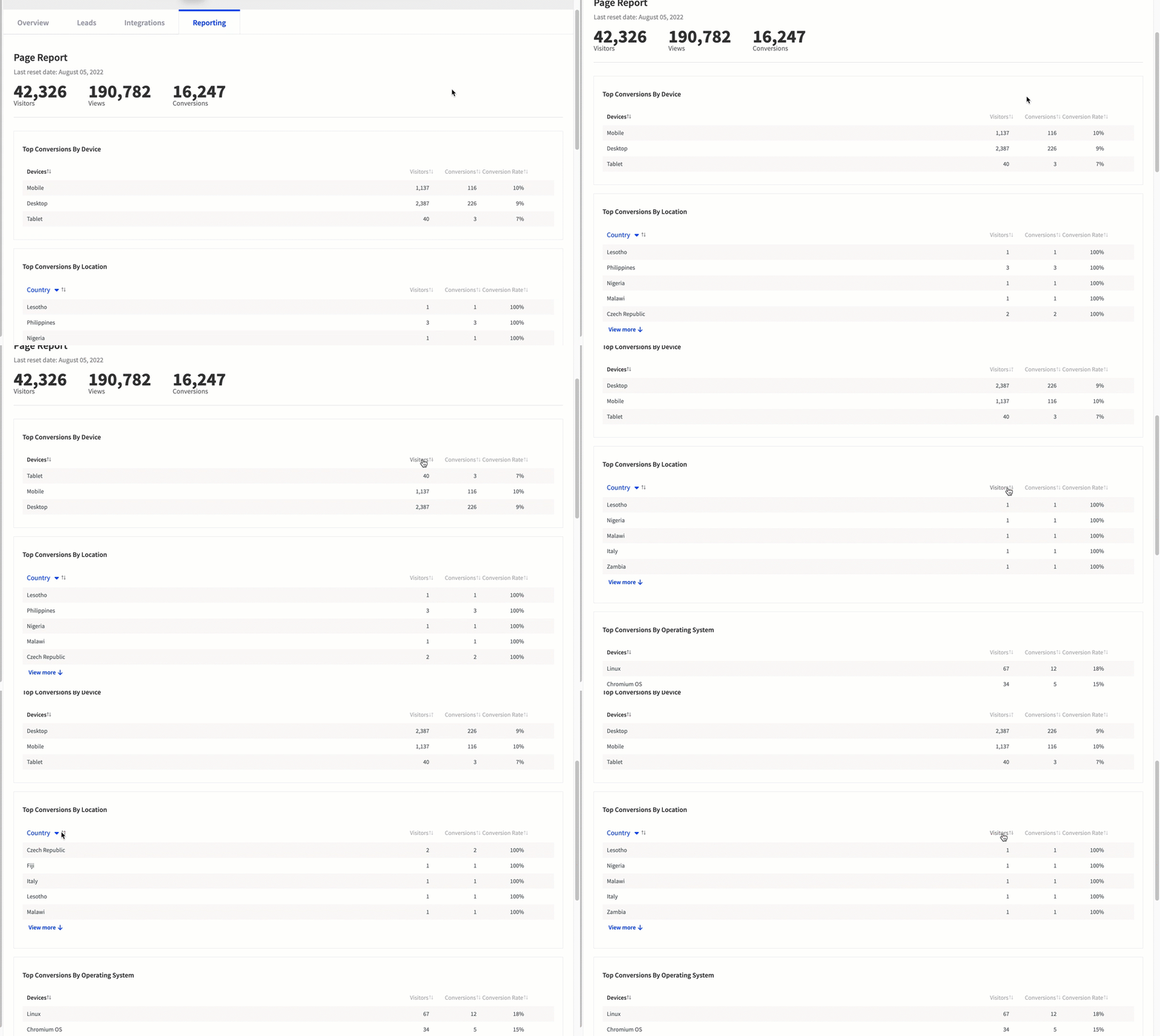
In the fast-paced world of digital marketing, the traditional "set-it-and-forget-it" approach to campaign management has become a liability. Many marketing teams view A/B testing as a singular event—a launch followed by a brief period of data analysis, culminating in a "winner" that is then left to run indefinitely. However, as user behaviors evolve and market competition intensifies, this static mindset often leads to stagnant performance and wasted budgets.
The solution lies in iterative testing, a methodology that shifts the focus from sporadic experiments to a continuous cycle of evidence-based optimization. By treating every campaign as a living project, marketers can transform their strategies from guessing games into data-driven engines of growth.
What is Iterative Testing?
At its core, iterative testing is the process of repeatedly testing, measuring, and refining marketing assets based on the insights gleaned from previous cycles. Rather than attempting to overhaul an entire landing page or ad strategy in one massive redesign, iterative testing focuses on small, incremental improvements.
This philosophy, borrowed from agile product development, allows teams to make continuous, granular changes that compound over time. It is not about hitting a home run with a single campaign; it is about stringing together a series of "base hits" that, collectively, produce significantly higher conversion rates and better ROI.
Why Marketers Must Embrace the Cycle
Most marketing initiatives do not fail due to catastrophic errors. Instead, they suffer from "slow leaks"—minor inefficiencies in messaging, design, or user experience that drain the marketing budget day after day. Iterative testing acts as a sealant, plugging these leaks through:

- Evidence-based decision making: Eliminating the "HiPPO" effect (Highest Paid Person’s Opinion) in favor of user-validated data.
- Reduced wasted spend: By testing small segments before a full-scale rollout, teams can pivot away from failing tactics without burning their entire budget.
- Adaptability: Maintaining relevance in an era where consumer preferences shift rapidly due to trends and external factors.
A Step-by-Step Framework for Iterative Success
For teams looking to transition to an iterative model, the process must be structured yet flexible enough to allow for rapid experimentation.
1. Define a Focused Hypothesis
The most common mistake in testing is attempting to measure too many variables at once. If you change a headline, an image, a button color, and a form field simultaneously, you will never know which change actually triggered the shift in conversion.
A strong hypothesis should be laser-focused. For example: "Changing the hero image from a stock photo to a product-in-use shot will increase click-through rates by 5% because it provides better social proof." By isolating a single variable, your results become actionable, providing a clear roadmap for the next iteration.
2. Prioritize Based on Impact and Effort
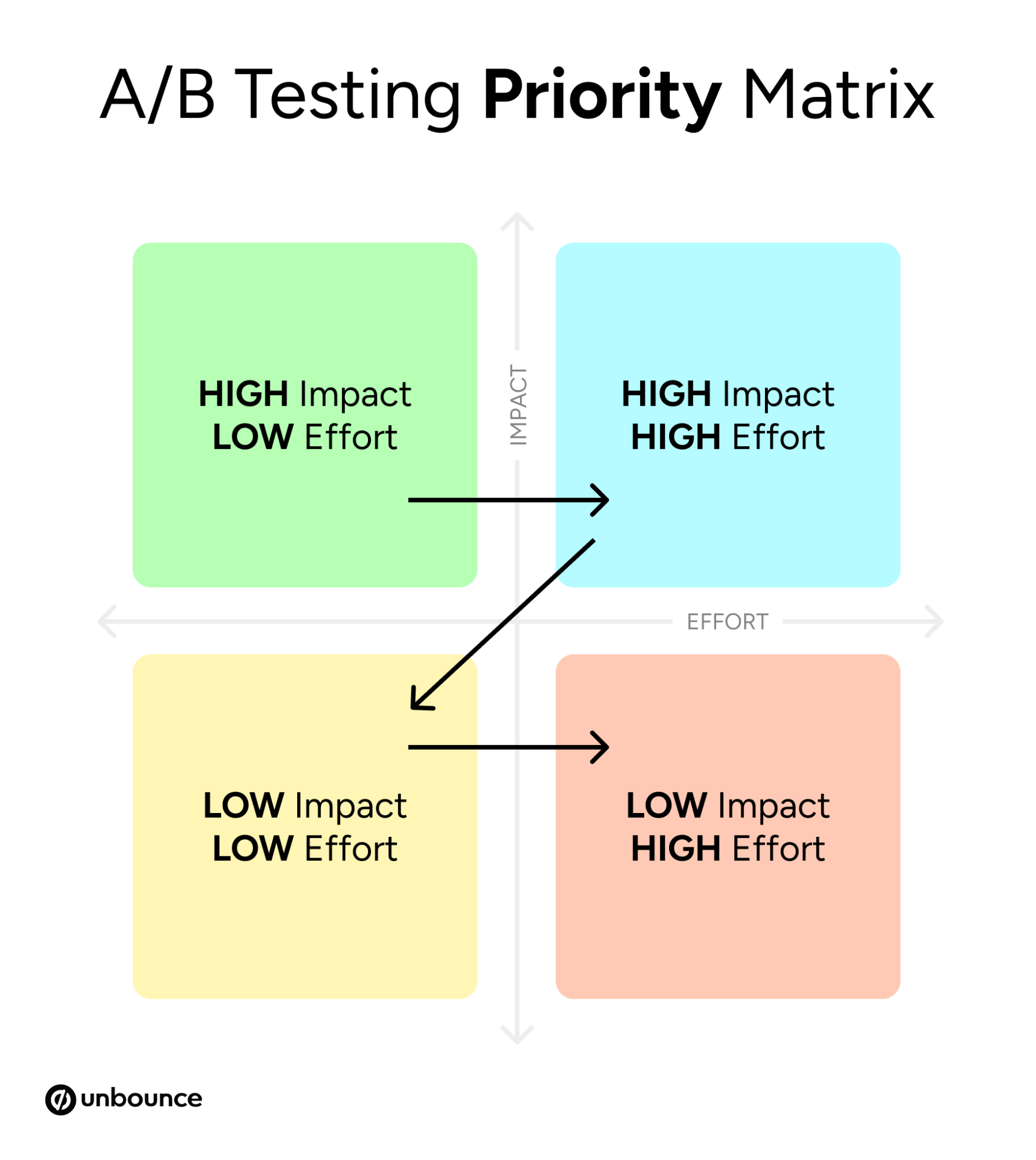
Not all tests are created equal. Marketers should utilize a prioritization matrix to categorize tests by their potential impact versus the effort required to implement them.
- High Impact/Low Effort: The "low-hanging fruit" that should be tested immediately.
- High Impact/High Effort: Strategic projects that require more planning and resources.
- Low Impact/Low Effort: Useful for building momentum or filling gaps in the calendar.
- Low Impact/High Effort: These should generally be avoided.
3. Build Minimal, Testable Variations
Speed is the currency of the iterative model. Using an A/B testing platform allows teams to duplicate existing pages and make targeted adjustments—such as simplifying a CTA or shortening a form—without needing to involve the engineering team. The goal is to build a "minimal viable test" that is sufficient to prove or disprove your hypothesis.

4. Launch and Collect Statistically Significant Data
Impatience is the enemy of data integrity. Many marketers fall into the trap of "peeking"—stopping a test early because they see an early trend in one direction. Without waiting for statistical significance, you are merely acting on noise.
Establish clear thresholds for data collection before the test goes live. If you do not have a massive traffic volume, use tools that optimize traffic distribution (such as AI-powered traffic allocators) to reach conclusions faster without compromising accuracy.
5. Analyze and Extract Actionable Insights
Data without interpretation is just a series of numbers. When a test concludes, the analysis must go beyond "Variant B won." Ask:
- Why did the audience respond better to this variation?
- What does this tell us about our audience’s pain points or priorities?
- How can we apply this specific learning to other channels, such as email subject lines or social media ads?
Supporting Data: The Case for Simplicity
Evidence from the 2024 Conversion Benchmark Report underscores the necessity of this approach. The report highlights that pages written at a 5th-7th grade level convert at 11.1%, more than double the rate of professional-level writing. Furthermore, landing pages with higher word complexity show a -24.3% negative correlation with conversion rates.
These are not just statistics; they are testing triggers. An iterative team would take this data and immediately launch a series of tests to simplify their specific landing page copy. They wouldn’t just assume the data applies to them; they would verify it through their own cycle of experimentation.
Implications for Organizational Culture
Moving to an iterative testing model has profound implications for marketing departments. It forces the dismantling of organizational silos. When the customer support team reports that users are confused by pricing, that becomes a hypothesis for the marketing team to test. When the sales team notices that leads are consistently asking about a specific feature, that becomes an opportunity to adjust the hero copy.
Building a culture of experimentation means encouraging failure. If a hypothesis is proven wrong, it is not a "failure" of the marketer—it is a successful capture of data. By removing the fear of being "wrong," leadership empowers teams to innovate, learn, and grow at a pace that traditional marketing organizations simply cannot match.
Conclusion: The Path Forward
Iterative testing is not a destination; it is a permanent state of operation. It is the acknowledgement that the market is always changing and that the "perfect" campaign is a moving target.
By prioritizing speed, focusing on actionable hypotheses, and fostering a cross-departmental culture of curiosity, marketers can move away from the anxiety of high-stakes launches. Instead, they can embrace the steady, compounding growth that comes from a commitment to constant, evidence-based improvement.
As you refine your process, remember: the goal is not to reach perfection, but to ensure that today’s campaign is more effective than yesterday’s—and that tomorrow’s will be better still. Whether you are using specialized optimization software or manual testing workflows, the principles of iterative improvement remain the most reliable way to secure a competitive edge in a crowded digital landscape.