In the rapidly evolving digital ecosystem of content management systems, WordPress stands as an undeniable giant, powering over 40 percent of the internet. Yet, beneath its sprawling enterprise and global community lies a silent barrier that deters thousands of potential users every day: the paralyzing weight of beginner anxiety.
For many newcomers, opening a fresh WordPress installation for the first time is not an act of creation, but one of intimidation. Confronted by an infinite labyrinth of choices, contradictory "it depends" advice from seasoned developers, and a pervasive fear of breaking the system, beginners often quietly close their browsers and walk away.
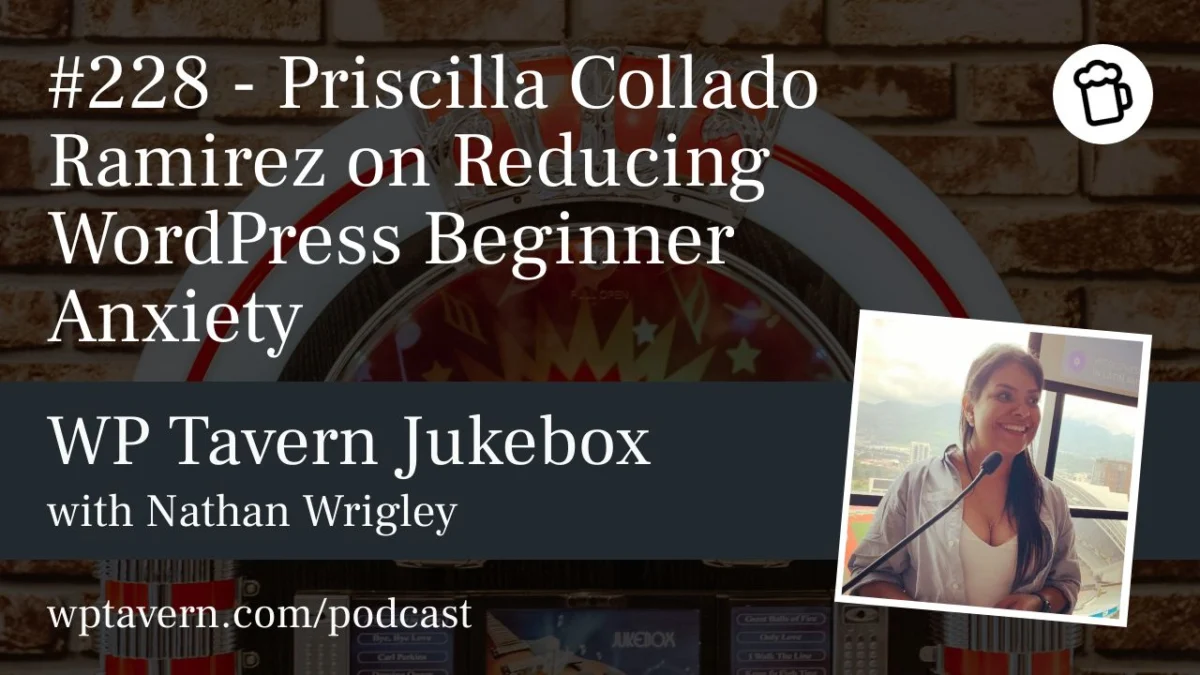
Enter Priscilla Collado Ramirez—an educator, fashion designer, sound therapist, and wellness coach from Costa Rica. Having traveled an impressive 14 hours by plane to attend WordCamp Europe, Ramirez brought a uniquely holistic, empathetic, and deeply human perspective to a community historically dominated by rigid engineering mindsets. Her mission is simple yet radical: to demystify the WordPress onboarding experience by treating the human mind before touching the machine.
The Main Facts
The core narrative surrounding Ramirez’s arrival in the global WordPress spotlight centers on her crusade against beginner overwhelm. Her approach is built upon a foundation that merges technical education with holistic mental health practices.
- The Long Hiatus: Seventeen years ago, Ramirez first encountered WordPress as a university student studying advertising and web design. Overwhelmed by the sheer volume of options and lacking community support, she abandoned the platform, walking away for nearly two decades.
- The Return Through Mentorship: Ramirez returned to WordPress out of necessity, seeking to help her fashion school students circumvent the exorbitant costs of hiring web designers. Recognizing that her students struggled not from a lack of intelligence, but from an incompatibility with traditional technical teaching styles, she re-entered the ecosystem as an educator.
- The Holistic Methodology: Ramirez advocates for a radical shift in tech education. By integrating principles of neuro-education, somatic breathing (pranayama), and emotional reset tools, she argues that effective learning cannot happen under stress. Her philosophy dictates that confidence does not precede action; rather, confidence is built through action via small, manageable baby steps.
A Chronological Journey: From Quitter to Global Speaker
To understand Ramirez’s revolutionary approach to WordPress education, one must look at the timeline of her relationship with the platform and technology at large.
Phase 1: The Initial Paralysis (17 Years Ago)
As a university student, Ramirez approached WordPress when the platform was still in its relative infancy. Without an inclusive community, and facing an environment that felt exclusively tailored to technical men with linear problem-solving skills, she experienced severe cognitive overload. Feeling "slow" and out of place, she made the decision to quit the platform entirely, categorizing herself as someone unsuited for technical environments.
Phase 2: The Catalyst of Entrepreneurship
Years later, as an established educator and founder of a fashion school, Ramirez observed her own students facing the exact same roadblocks she had encountered decades prior. Small business owners and creative students were being priced out of digital spaces by expensive web designers, yet they felt equally alienated by standard technical instruction. This realization served as the catalyst for her return to WordPress. Armed with a background in education and wellness coaching, she decided to learn the software again—not just for herself, but to build a bridge for other non-technical creatives.
Phase 3: Finding Community and Global Recognition
A major turning point in Ramirez’s journey occurred when she discovered the women’s speaker initiatives within the WordPress community. Finding mentors and peers who reflected her own experiences transformed her confidence. In 2023, she began speaking at local events in Costa Rica, culminating in her transcontinental journey to WordCamp Europe, where she delivered a widely discussed talk on beginner anxiety.
Supporting Data and Educational Insights
Ramirez’s methodology is backed by established principles of cognitive science and constructivist learning theory—the educational philosophy that states learners construct knowledge actively rather than passively taking in information.
- The Two Learning Paths: Ramirez identifies two primary learning frameworks: linear learning (step-by-step, straight-line progression favored by many traditional engineers) and spiral learning (a cyclical approach where learners revisit topics at deeper levels over time, common among creative minds).
- The Plugin Paradox: With tens of thousands of free and premium plugins available in the WordPress repository, the illusion of choice frequently leads to decision paralysis. Ramirez notes that beginners are routinely overwhelmed by questions regarding what to install, what to ignore, and whether they genuinely need features like SEO tools or advanced contact forms.
- The Physiology of Stress: According to Ramirez, cognitive overload restricts the brain’s ability to retain information. When learners operate under anxiety—fearing that a single click might delete their entire digital presence—the learning center of the brain shuts down, rendering technical tutorials ineffective.
Official Perspectives and Community Dialogues
During her discussions with WordPress community figures, Ramirez has consistently highlighted the cultural disconnect between traditional software developers and creative beginners.
When technical mentors use phrases like "it depends"—meant to encourage open-ended exploration among seasoned developers—beginners frequently interpret the advice as a dead end, resulting in inaction and self-doubt. Ramirez points out that technical experts often suffer from the "curse of knowledge," failing to remember what it feels like to encounter a computer interface without foundational mental safety nets.
Furthermore, Ramirez addresses the gender gap historically present in technical spaces. Reflecting on her early experiences in a male-dominated digital landscape, she emphasizes the vital importance of inclusive community groups that actively uplift women and non-traditional technologists.
"When I saw the WordPress group for women speakers, I realized WordPress is not only for men, WordPress is not only for technical people," Ramirez notes. "I can approach that community, and I can be a mentor too, helping beginners understand that it’s not just about the technical environment—it’s about how the community engages with your goals."
Implications for the Future of WordPress Education
Ramirez’s philosophies carry profound implications for how the global WordPress project approaches onboarding, documentation, and community mentorship.
1. Re-engineering Beginner Onboarding
The broader WordPress community has long debated how to improve the out-of-the-box experience for newcomers. Initiatives like the Site Editor and patterns aim to simplify building, but Ramirez’s work suggests that software simplification alone is insufficient. True improvement requires pedagogical reform—teaching the educators how to teach. By training mentors to recognize diverse cognitive styles, the WordPress community can drastically reduce attrition rates among non-technical users.
2. Normalizing Confusion and Emotional Resets
By introducing concepts like "normalizing confusion" and somatic breathing into technical training, Ramirez challenges the relentless hustle culture often associated with tech entrepreneurship. Her work suggests that digital exhaustion and burnout can be actively mitigated if learning environments prioritize mental safety and emotional regulation.
3. Fostering Holistic Tech Spaces
While traditional developers may initially dismiss wellness-adjacent approaches as unconventional, the intersection of mental health and digital literacy is becoming increasingly crucial. As WordPress expands its reach into every corner of global commerce, education, and creative expression, the platform must embrace diverse perspectives that champion accessibility, patience, and empathy.
Conclusion
Priscilla Collado Ramirez’s journey from a discouraged student who quit WordPress for 17 years to an international speaker at WordCamp Europe serves as a powerful testament to the resilience of the human mind. Her work proves that technology is ultimately only as accessible as the humans who teach it. By championing baby steps, limiting overwhelming choices, celebrating small victories, and encouraging users to pause and breathe, Ramirez is laying the groundwork for a kinder, more inclusive digital future—one mindful click at a time.