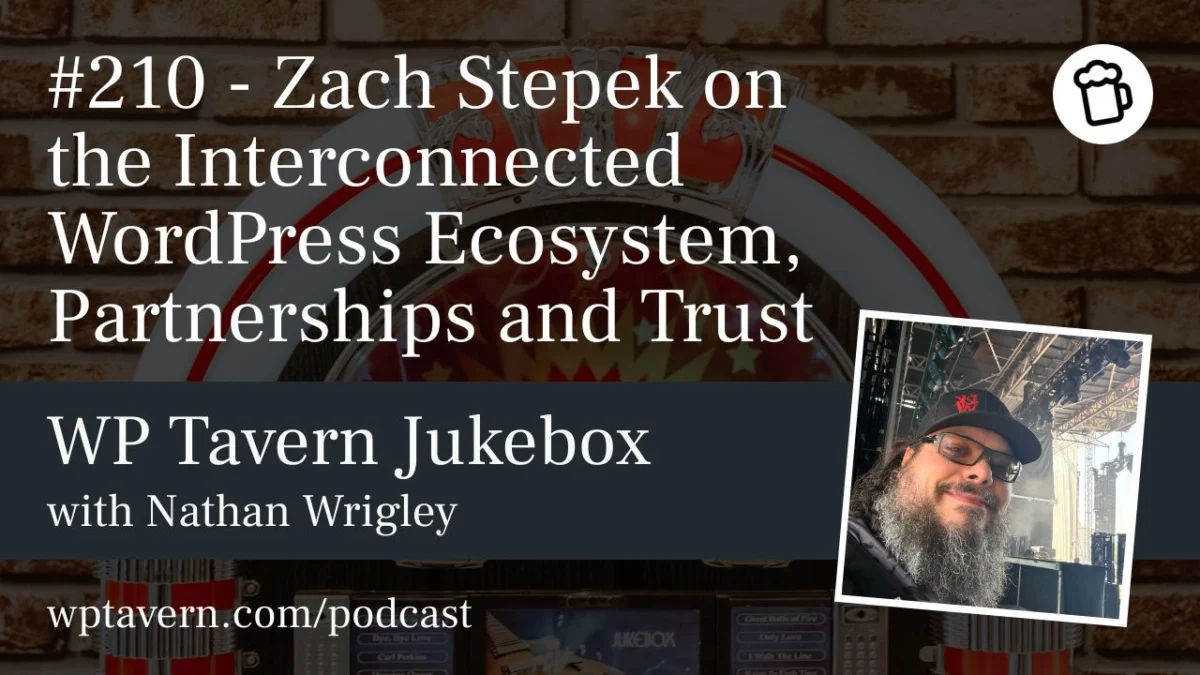
The WordPress ecosystem—spanning agencies, product developers, and hosting infrastructure providers—faces an inflection point. In a recent episode of the Jukebox Podcast from WP Tavern, host Nathan Wrigley sat down with tech veteran Zach Stepek to explore the invisible threads binding the community together.
As market pressures, economic shifts, and a growing emphasis on short-term return on investment (ROI) collide with open-source traditions, industry leaders are forced to reevaluate how partnerships are forged, sustained, and valued.
Main Facts: The Anatomy of a WordPress Partnership
At its core, the modern WordPress landscape operates on a foundation of mutual reliance. According to Stepek, who describes himself as a tech "unicorn" with a career spanning Cold Fusion, Flash, JavaScript, and WordPress, the ecosystem is built upon three interconnected pillars:
- Agencies and Independent Builders: The creators who implement solutions and deliver tailored experiences for end clients.
- Product Companies: Developers building the plugins, blocks, and themes (such as forms, SEO tools, and block architectures) that extend core functionality.
- Hosting and Infrastructure Providers: The underlying architecture that determines whether a digital storefront can scale under pressure or buckle during traffic spikes.
Rather than acting as isolated vendors, these three layers function as an intricate, interdependent network. A failure at any single point—be it a poorly optimized plugin, fragile infrastructure, or misaligned agency support—can destabilize the entire user experience.
Stepek emphasizes that true partnerships go beyond transactional affiliate agreements. They require alignment in values, deep mutual understanding of business models, and a long-term commitment to community stewardship.
Chronology: From Viral Crashes to Ecosystem Advocacy
Stepek’s journey into WordPress illustrates how organic community interactions shape professional paths within the ecosystem:
- Early Career & The Flash Collapse: Stepek began his career as a Cold Fusion and Flex developer, teaching frameworks for brands like IBM and MTV. When the tech landscape shifted away from Flash, his contracts vanished overnight, resulting in a crucial lesson in contract clauses and business resilience.
- The Turning Point (2015): While working with Oscar Mike—an organization supporting injured veterans—Stepek faced a massive crisis. Their WooCommerce site went viral during a televised Green Bay Packers vs. Chicago Bears Thanksgiving game. Due to an overloaded VPS and an email spooling error, the server crashed after just 14 orders.
- Community Engagement: Stepek resolved the root cause, fell in love with WooCommerce, and shared the case study at WordCamp Milwaukee in 2015. His talk caught the attention of WooCommerce Product Manager Patrick Rauland, cementing a long-term relationship with the platform.
- Evolution to Fractional Consulting: After launching and pivoting out of a successful agency, Stepek transitioned into the hosting space. Today, he operates as a fractional partnership consultant and WordPress infrastructure specialist via his agency, Mighty Swarm.
Supporting Data & Industry Dynamics: The Shift Toward Short-Termism
While the WordPress community has traditionally thrived on open-source collaboration and long-term community investments, current macroeconomic trends are reshaping how companies operate.
- Economic Pressures and Belt-Tightening: Global economic shifts and post-pandemic adjustments have introduced widespread caution. Major hosting companies and product vendors are scaling back their travel budgets, leading to dwindling sponsorships at major community events such as WordCamps and CloudFest.
- The Hardware Crunch: Beyond software, infrastructure providers face mounting cost pressures. The explosive demand for specialized hardware to power large-scale processing (often driven by external artificial intelligence infrastructure demands) has created component shortages and driven up the raw costs of memory and server components. Consequently, ultra-low-cost hosting models ($3-per-month "unlimited" plans) face severe sustainability challenges.
- Private Equity and the ROI Trap: Many companies within the ecosystem have taken on outside investment. Consequently, decision-makers are increasingly beholden to private equity expectations focused strictly on short-term financial returns (MRR/ARR metrics). Stepek warns that when profit supersedes people, partnership programs risk turning into fragile "houses of cards" built solely on logo collection rather than genuine collaboration.
Official Perspectives and Industry Insights
Discussing the tension between capitalistic pressures and community values, industry experts point out that the strongest growth historically stems from ecosystem-wide stewardship rather than siloed competition.
- The "Rising Tide" Philosophy: Companies that invest back into the community—such as contributing to Core development, open-sourcing search solutions like ElasticPress, or developing gradual migration tools like Theme Switcher Pro—help elevate the entire platform.
- Trust as a Durable Asset: While revenue metrics provide immediate signals of business health, trust remains the ultimate durable asset. Stepek notes that community perception is highly sensitive; companies that attempt to extract profit without contributing to the underlying open-source framework quickly see their brand equity erode.
- Patience in Sales Cycles: Enterprise-focused agencies often operate on 12-to-36-month sales cycles, necessitating patience. Stepek highlights a stark truth regarding modern business anxiety: "The first casualty of fear is patience." When businesses panic, they abandon long-term relationship-building in favor of immediate transactional wins.
Implications: The Inflexion Point for WordPress
As the WordPress ecosystem navigates this critical juncture, the choices made by agencies, product authors, and hosts will dictate the trajectory of the platform for years to come.
- Re-evaluating Contribution Metrics: The industry is beginning to recognize the need to quantify and honor philanthropic and contributor efforts. Finding ways to integrate contributor hours and community stewardship into business value equations will be essential for validating long-term investments.
- Moving Beyond Transactional Models: Businesses that rely exclusively on affiliate-driven, surface-level networking may struggle as infrastructure and operational costs rise. Sustainable growth requires treating partners as human collaborators rather than mere revenue channels.
- The Resilience of Community: Despite external economic headwinds and corporate consolidation, the fundamental strength of WordPress has always rested in its people. Cultivating relationship equity, maintaining open communication channels, and prioritizing mutual success will determine whether the ecosystem continues to flourish or fractures under the weight of short-termism.
For those looking to dive deeper into these dynamics, the full conversation with Zach Stepek is available on the Jukebox Podcast via the WP Tavern website.