The history of the internet is often told through the lens of corporate giants, high-speed fiber optics, and the rise of the smartphone. However, for those who lived through the transition from the mid-1990s to the current era of ubiquitous connectivity, the narrative is far more personal. It is a story of curiosity, amateur exploration, and a fundamental shift in the human experience.
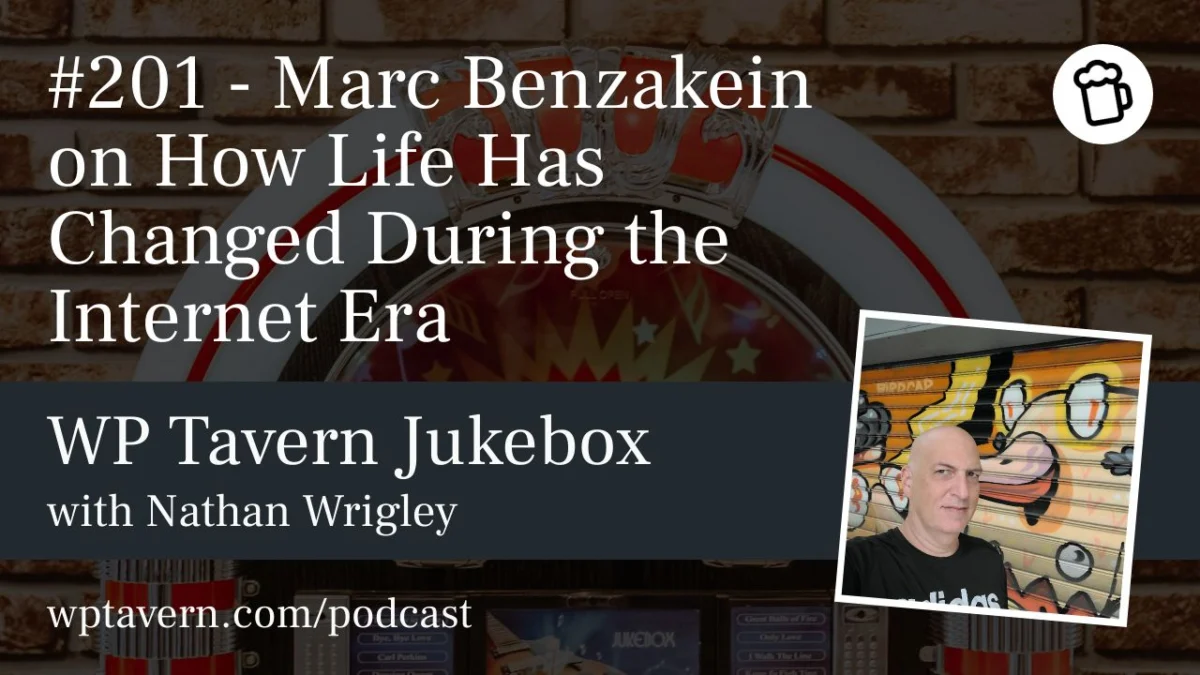
In a recent episode of the Jukebox Podcast from WP Tavern, host Nathan Wrigley sat down with industry veteran Marc Benzakein to explore this transformation. Moving away from the typical discussions of WordPress plugins and web development, the conversation served as a reflective "walk down memory lane," examining how the internet evolved from a niche hobby for the technically inclined into an invisible, essential utility that defines modern society.
The Frontier Days: Modems, BBS, and the "Elite" Hobbyist
To understand the current digital landscape, one must look back to the mid-1990s. For Marc Benzakein, the internet was not a workplace—it was an uncharted territory.
The Era of the Bulletin Board System (BBS)
Before the World Wide Web became a household name, the internet was largely the domain of bulletin board systems. Benzakein recalls running his own BBS from his apartment, a setup that felt primitive by today’s standards but was revolutionary at the time. "I was the first BBS in our region to have a one-gigabyte SCSI hard drive," Benzakein noted, highlighting the ‘badge of honor’ associated with such hardware. In an age where most users were tethered to 2,400-baud modems, having a high-capacity drive and a reliable connection made one a local authority in a nascent, digital subculture.
The Transition to Public Connectivity
Benzakein’s transition from a coffee importer—using fax machines and snail mail—to an internet pioneer was spurred by the rise of early service providers like Netcom. "We didn’t have interfaces to guide us," he explained. Users had to navigate Gopher protocols and learn the intricacies of TCP/IP. It was a time of "pioneering," where connecting schools to the internet meant working with 14.4K modems and grappling with the complexities of early networking hardware like Token Ring systems and Novell networks.
Chronology: A Rapid Acceleration of Progress
The timeline of the internet’s growth is characterized by a compression of time. What took years to develop in the early stages now happens in mere months.
- 1995–1996: The emergence of consumer-facing ISPs (AOL, Prodigy, Netcom). The internet is a "hobby" reserved for nerds and enthusiasts.
- The Late 90s: The shift from dial-up to ISDN and eventually early broadband (DSL and cable). The internet begins to bleed into the professional sphere.
- The 2000s: The "always-on" revolution. As high-speed connections became standard, the internet transitioned from an intentional activity—something you "went on"—to an omnipresent background utility.
- The 2010s to Present: The era of mobile ubiquity and social media. The internet is no longer a tool; it is the environment in which we live, work, and socialize.
Supporting Data: The Cost of Efficiency
While the internet was marketed as a tool to increase productivity—promising to accomplish in two hours what previously took eight—the reality proved more complex. Benzakein and Wrigley discussed the "paradox of efficiency."
The promise of the digital revolution was that technology would free up human time. Instead, the opposite occurred. As communication became instantaneous via email and later instant messaging, the workday began to expand. Technology allowed work to follow individuals into their homes, leading to 14- and 16-hour workdays. The "efficiency" gained was simply consumed by an increased volume of tasks.
The Decline of Slow Thought
A critical implication discussed in the podcast is the erosion of "slow time." Drawing a parallel to 19th-century magic lantern shows—where viewers would wait minutes between slide changes—Wrigley noted that modern culture has lost the capacity for patience. Today, users consume podcasts at 2x speed and demand instant access to content. This "constant-input" culture, according to Benzakein, may be contributing to an increase in ADHD-like symptoms, as individuals feel the need to keep their mental bandwidth occupied at 100% capacity at all times.
Official Perspectives: Responsibility and Regulation
Throughout the podcast, a recurring theme is the lack of "digital maturity" in society. When asked if there were missteps in the internet’s evolution, Benzakein emphasized that the internet was not built with a blueprint for morality or regulation.
The "Wild West" Dilemma
The internet’s greatest strength—its freedom and openness—was also its primary liability. In the early days, there was a widespread hope that "open standards" would prevail. However, the rise of walled gardens and massive social media conglomerates shifted the power dynamic.
Government regulation, according to Benzakein, has historically struggled because policymakers often lacked the technical literacy to understand the platforms they were attempting to govern. "The internet represents freedom," Benzakein stated. "It represents the freedom to do what you want, when you want, how you want." The challenge remains how to preserve that freedom while mitigating the societal damage caused by the lack of human discipline and corporate accountability.
Implications: The Future and the Pushback
Looking toward the future, particularly with the advent of Artificial Intelligence (AI), the participants expressed a mixture of excitement and caution.
The Rise of Digital Minimalism
Perhaps the most optimistic note of the discussion was the observed shift among the younger generation. Benzakein noted that his own son and his peer group are actively turning away from constant connectivity. They prioritize analog experiences—reading physical books, hiking, and engaging in face-to-face interaction.
This "groundswell" of digital minimalism suggests that society is beginning to recognize the diminishing returns of hyper-connectivity. Whether through the resurgence of vinyl records or a preference for simpler phones, there is a clear, emergent trend of reclaiming the "analog life."
A Level Playing Field?
Despite the challenges of monopolization by tech giants, the internet remains, in Benzakein’s view, the "eighth wonder of the world." It has the unique ability to level the playing field for small businesses and provide universal access to knowledge. While search engines and algorithms now favor large corporations, the underlying architecture of the internet still offers the potential for individual agency.
Final Reflections
The conversation concluded with a sobering but hopeful realization: the rate of change is not slowing down. As we move further into the age of AI, the ability to adapt—and, more importantly, the ability to disconnect—will be the defining skill of the next generation.
"We are at a rate of change which is very difficult to keep track of," Wrigley observed. "But it’s exciting. It’s a time when everything is up for grabs."
For those interested in hearing more of these reflections, the full episode with Marc Benzakein can be found at wptavern.com/podcast. As the digital world continues to evolve, the lessons from its early, modem-humming days remain more relevant than ever.