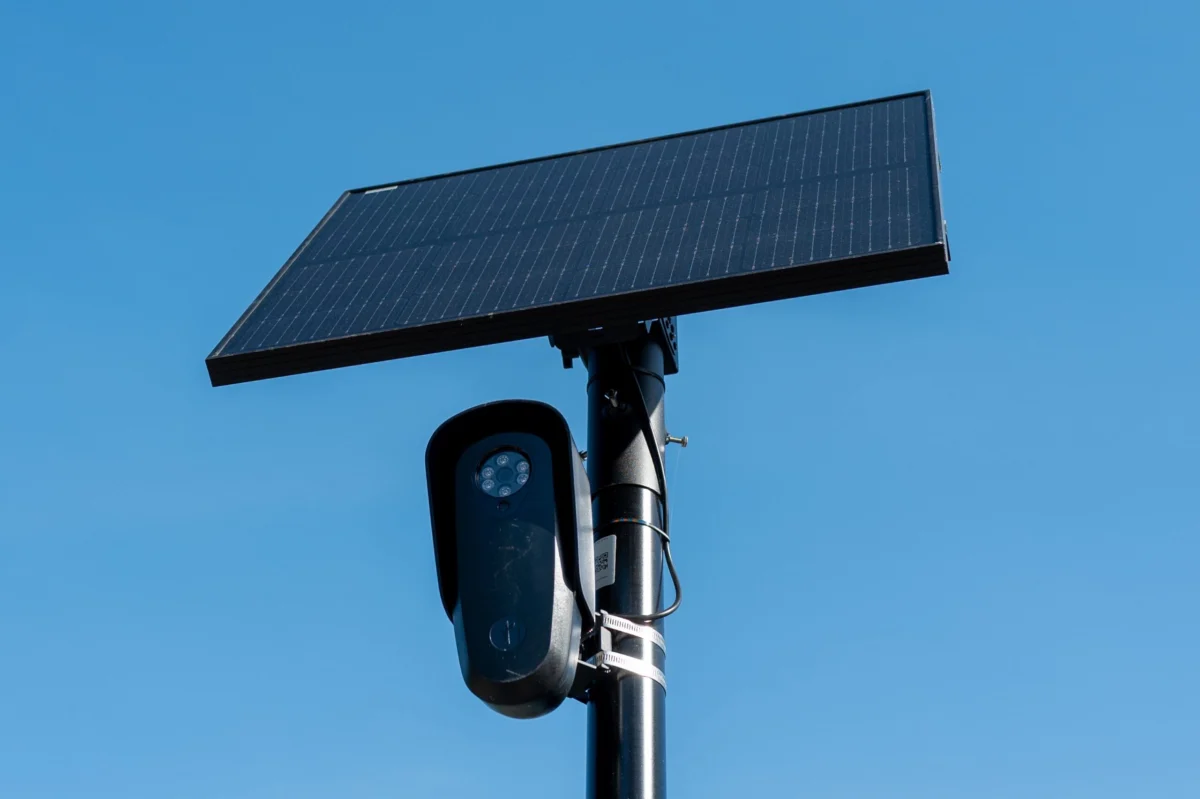
In a watershed moment for digital privacy and the Fourth Amendment, a federal judge in Oklahoma has issued a stinging rebuke of law enforcement’s use of mass surveillance technology. U.S. District Judge Sara Hill ruled this week that a Tulsa County sheriff’s deputy violated the constitutional rights of a motorist by using the "Flock Safety" automated license plate reader (ALPR) system to track her vehicle without a warrant.
While the ruling does not immediately establish binding national precedent, it represents one of the first times a federal court has explicitly declared the use of Flock—a ubiquitous network of network-connected cameras used by police departments nationwide—to be unconstitutional. The decision provides a roadmap for future legal challenges against the rapid expansion of passive, indiscriminate surveillance tools in the United States.
The Facts of the Case: A "Poisonous Tree"
The incident began when a Tulsa sheriff’s deputy utilized the Flock database to query the license plate of a woman driving through the area. According to Judge Hill’s ruling, the deputy had no articulable suspicion or criminal justification for the search. The sole catalyst for the investigation was the fact that the vehicle bore a California license plate.
The deputy used the vehicle’s travel history, compiled by Flock’s network of cameras, to justify a stop and subsequent search of the woman’s car. During that search, officers allegedly discovered 91 pounds of methamphetamine. However, the legal victory for the defendant centers on the "fruit of the poisonous tree" doctrine. Judge Hill ruled that because the initial search of the Flock database was unconstitutional—a warrantless intrusion into the driver’s privacy—any evidence derived from that search must be suppressed. Without the data provided by the surveillance network, the deputy lacked the legal standing to search the vehicle, effectively rendering the state’s case against the driver untenable.
A Chronology of Surveillance Expansion and Backlash
The rise of Flock Safety represents a paradigm shift in how law enforcement conducts investigations. Historically, police surveillance was targeted, resource-intensive, and limited by manpower. Automated systems have eliminated those friction points.
- The Proliferation Phase (2020–2024): Flock Safety rapidly scaled its operations, partnering with thousands of law enforcement agencies and private entities (like HOAs and retail centers) to create a "connected" grid of surveillance that records vehicle movements in real-time.
- The Privacy Tipping Point (2025): As reports of law enforcement using the system to track political protesters, ex-partners, and random citizens surfaced, public and political scrutiny intensified.
- The Legislative Response (2026): States such as Florida and Texas began moving to restrict or outright block the use of such cameras, citing persistent privacy concerns.
- The Federal Intervention (October 2026): Senator Bernie Sanders (D-VT) introduced the "Block Flock Act," seeking to impose a federal ban on the use of automated license plate readers by federal agencies, signaling that the issue had moved from local civil liberties boards to the halls of Congress.
- The Judicial Reckoning (November 2026): Judge Hill’s ruling marks the first time a federal court has directly tied the technology to Fourth Amendment violations, potentially triggering a cascade of similar motions to suppress evidence across the country.
Indiscriminate Surveillance: Why the Court Intervened
Judge Hill’s written opinion offered a scathing critique of how technology has outpaced constitutional protections. She argued that while the Supreme Court’s Carpenter v. United States ruling dealt with cell-site location information, the principles of privacy apply to the "digital dragnet" created by Flock.
"This is a type of indiscriminate mass surveillance," Judge Hill wrote. "It is not targeted on a single individual… It is a tool that collects information about all vehicles that pass by any network-connected camera at all times, and it serves up the information to law enforcement on demand."
The core of the legal argument rests on the "expectation of privacy." While driving on a public road is generally considered a public activity, the judge argued that when law enforcement can "indiscriminately and passively catalog your whereabouts over an extended period of time and then use that information for any purpose whenever convenient," it becomes "constitutionally problematic."
This distinction is crucial. It suggests that while a single officer witnessing a car on a road is constitutionally permissible, the aggregation of that data into a searchable, historical database transforms public movement into a private profile, which requires the oversight of a warrant.
Official Responses and Industry Turmoil
The ruling comes at a precarious time for Flock Safety. The company, once the darling of the "smart city" movement, is now grappling with a dual-front crisis: a shrinking customer base and a collapsing public image.
Flock Safety’s Stance
Flock CEO Garretty Langley has attempted to navigate the backlash by advocating for a "compromise" between public safety and individual privacy. In recent months, Langley has issued public apologies regarding instances where officers used the system to stalk individuals, acknowledging that the technology has been misused. However, critics argue that the company’s business model—which relies on the massive collection of data—is fundamentally at odds with the privacy protections the courts are now beginning to enforce.
Corporate Retrenchment
The financial fallout of the backlash is already visible. Amid reports of state-level cancellations and mounting litigation, Flock has reportedly moved to shrink its workforce, offering voluntary employee buyouts. This suggests that the company is bracing for a future where its primary product—unrestricted, warrantless data access—may soon be heavily regulated or legally curtailed.
The Legislative Push
Senator Bernie Sanders’ proposed "Block Flock Act" underscores the growing bipartisan discomfort with the technology. On the left, concerns center on civil liberties, the potential for systemic bias, and the chilling effect on free speech. On the right, concerns often focus on the "surveillance state" and the potential for government overreach. This unlikely alignment suggests that the legal environment for companies like Flock is likely to become significantly more restrictive in the coming years.
Broader Implications: What Happens Next?
The Tulsa ruling is a harbinger of what could become a nationwide legal trend. Defense attorneys across the United States are already citing the decision in motions to suppress evidence in drug trafficking, auto theft, and other criminal cases where Flock data served as the "investigative lead."
1. The Death of "Passive" Investigations
If other courts adopt Judge Hill’s reasoning, the era of "fishing" through license plate databases will come to a screeching halt. Law enforcement will be forced to treat Flock data with the same procedural rigor as a wiretap or a GPS tracking warrant. This will significantly increase the workload for prosecutors and judges, potentially slowing down investigations—a trade-off that privacy advocates argue is a necessary price for preserving the Fourth Amendment.
2. A Shift in Technology Policy
Municipalities that have rushed to sign contracts with surveillance vendors may now find themselves liable for constitutional violations. We are likely to see a "chilling effect" on new contracts, with city councils and police chiefs demanding more robust privacy safeguards, data expiration protocols, and strict warrant requirements before agreeing to deploy or renew camera systems.
3. The Constitutional Evolution
This case highlights a classic struggle in American jurisprudence: the attempt to apply 18th-century constitutional protections to 21st-century digital realities. As sensors, AI, and facial recognition become more integrated into the urban landscape, the judiciary is being forced to define the boundary between "public observation" and "indiscriminate surveillance." Judge Hill’s ruling provides a strong, clear standard: when technology removes the human element of observation and turns it into a permanent, searchable record of a citizen’s life, the state must obtain judicial approval.
Conclusion
The ruling in Oklahoma is more than just a procedural victory for a single defendant; it is a signal that the courts are beginning to recognize the unique threat posed by modern surveillance architectures. By framing the issue as one of "indiscriminate mass surveillance," Judge Hill has challenged the status quo that has allowed police departments to build vast, searchable dossiers on the American public without a single warrant.
As the legal battles mount and federal legislation looms, the future of automated surveillance remains in flux. One thing, however, is clear: the days of law enforcement operating under the assumption that "what happens in public is fair game for permanent digital storage" are rapidly coming to an end. The Fourth Amendment, it seems, is finally catching up to the cameras.