The modern marketing department is currently caught in a frantic cycle of adoption. Teams are being inundated with promises that AI will help them draft faster, publish more, and automate the "busywork" that clutters their daily calendars. However, a growing chorus of industry leaders is suggesting that this focus on speed and volume is a fundamental misunderstanding of the technology’s potential.
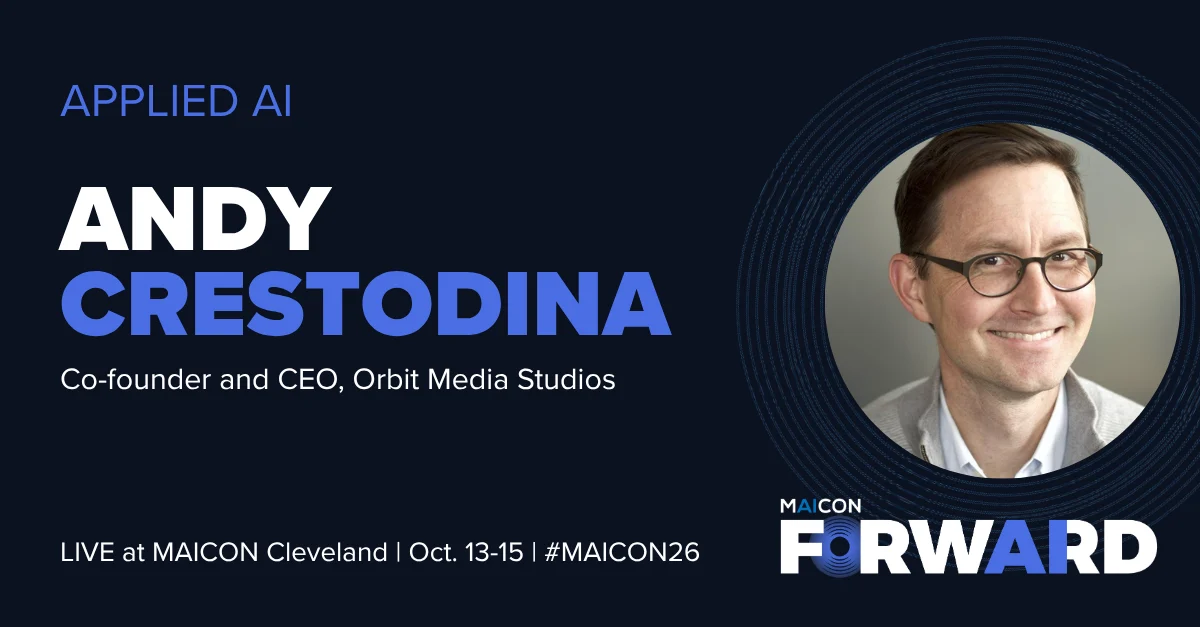
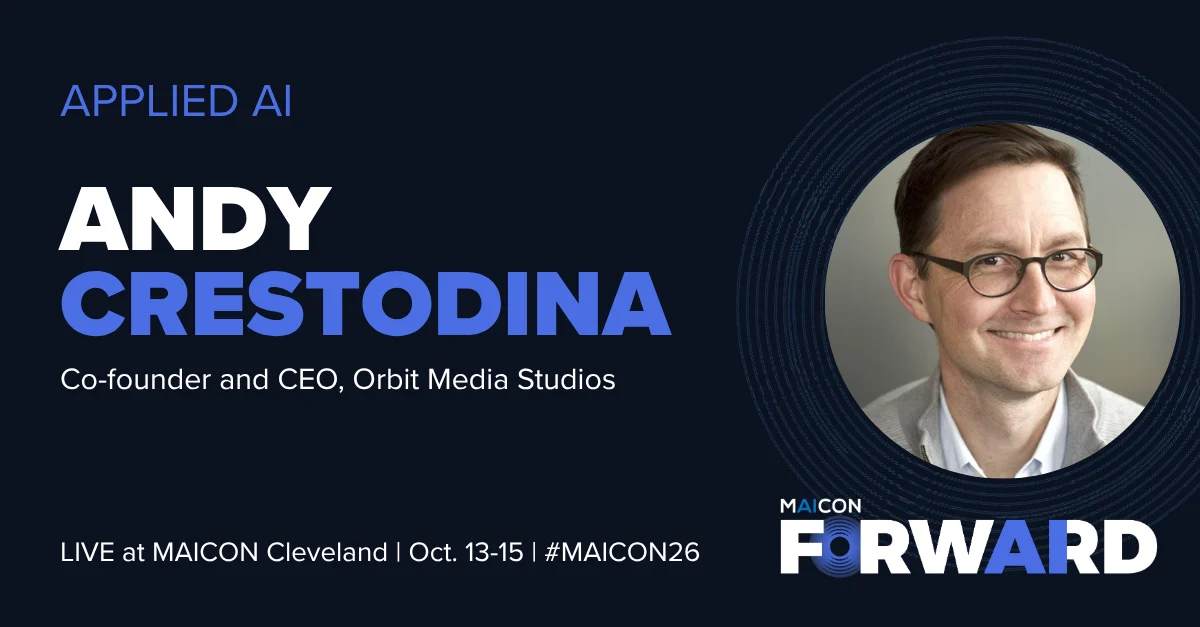
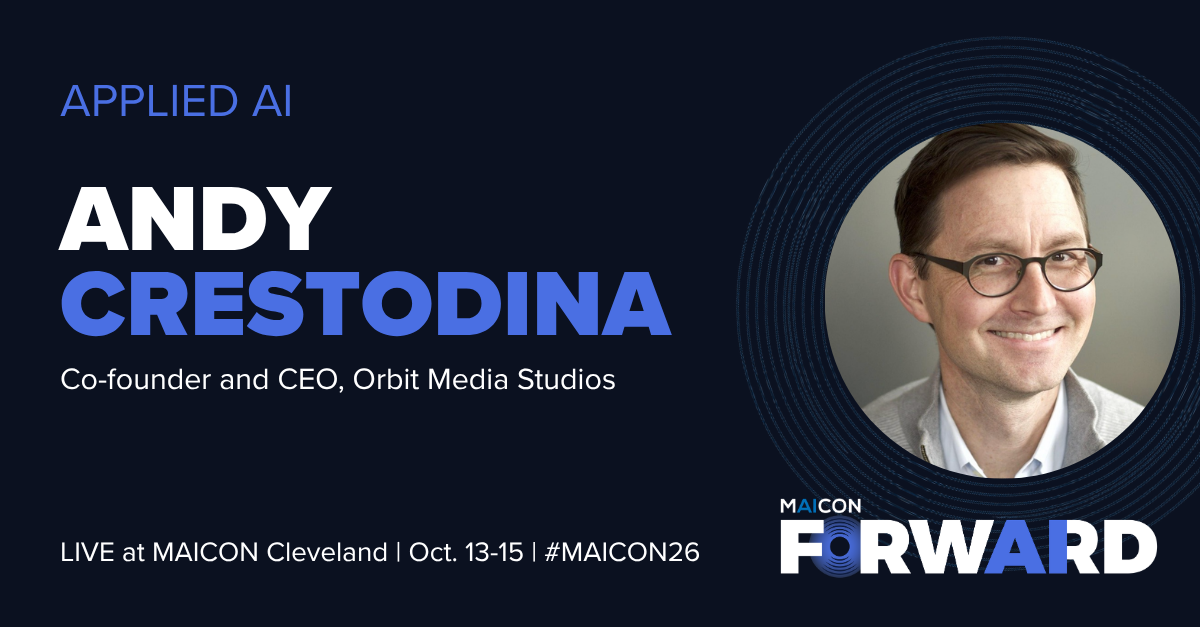
The true opportunity for marketing professionals does not lie in using AI to simply perform a job faster; it lies in the ability to turn parts of that job into autonomous tools that perform the work on your behalf. This pivotal shift in perspective will be the centerpiece of a featured session at the Marketing Artificial Intelligence Conference (MAICON) 2026, led by Andy Crestodina, co-founder and CMO of Orbit Media.
The Paradigm Shift: Moving Beyond "One-Off" Prompts
Crestodina’s upcoming session, titled "From Process to Prompt to Automation: How a Marketing Job Becomes a Marketing Tool," targets a specific audience: marketers who have moved past the initial "wow" factor of ChatGPT and Midjourney but have yet to transition from experimental, one-off prompts to robust, scalable systems.
"The work of marketing has changed," Crestodina explains. "Modern marketing workflows evolve in a specific sequence—from 100% done by human hands to 100% done by assistants, and then reviewed by humans."
For many, the mistake is expecting immediate, high-quality output from a single prompt. Crestodina argues that this is an unrealistic expectation. "My most powerful assistants evolved gradually," he notes. "I don’t think you can one-shot a great AI worker bee." This requires a shift in mindset: seeing AI not as a shortcut, but as a digital apprentice that requires training, refinement, and iterative development.
The Chronology of Workflow Evolution
To understand how a job becomes a tool, one must look at the lifecycle of a marketing task. Crestodina posits that the progression toward automation follows a distinct, logical path that teams often ignore in their rush for efficiency.
- The Manual Phase: The task is performed entirely by a human expert. This is the "knowledge capture" stage where the expert defines the parameters, the tone, and the strategic goal of the work.
- The Prompt-Driven Prototype: The expert begins to codify their process into a series of instructions. This is where the "English as a programming language" theory takes root.
- The Iteration Loop: The output is tested, reviewed, and criticized. The human expert identifies where the AI failed, why it failed, and how the prompt must be rewritten to prevent that failure in the future.
- The Scalable Assistant: The prompt is polished, shared, and integrated into a broader workflow, potentially combined with other automated systems, to the point where it functions reliably as a "tool" rather than a chat interface.
This chronology suggests that those who skip the "manual" and "iteration" phases—often by blindly trusting templates or generic prompts—are building their AI strategies on sand.
The Expert as the Architect
Perhaps the most provocative stance Crestodina takes is regarding who should be building these AI-driven systems. In many organizations, the task of "AI implementation" is handed to junior staff or specialized tech departments. Crestodina argues this is a profound missed opportunity.
"The best assistants are built by people who already do that job well," he asserts. "The expert at the job is the best suited to evaluate AI’s output, judge it, and make improvements."
AI is effectively the world’s most powerful skill-transfer tool. When an expert in SEO, copywriting, or data analysis spends the time to refine a prompt until it achieves a perfect result, they are effectively "bottling" their expertise. That prompt can then be handed to a less-skilled professional or a junior team member, effectively democratizing high-level performance across the organization.
Prompts as Code: The New Programming Language
In the tech industry, a famous quote from Andrej Karpathy, co-founder of OpenAI, has become a mantra for the generative AI era: "The hot new programming language is English."
Crestodina believes marketers need to treat this literally. "In other words, your prompts are code. They are functions. They are tools. Work hard on them," he says. This reframing changes the way teams should manage their internal documentation. Instead of keeping a spreadsheet of "cool prompts," companies should be building a library of "functional code."
This involves:
- Version Control: Treating prompts like software updates, iterating based on new data or changing brand guidelines.
- Modular Design: Looking for novel inputs to combine with prompts. Can you feed a transcript into a prompt to generate a blog post? Can you feed that blog post into another prompt to generate a social media thread?
- Centralized Repositories: Teams should keep these refined prompts in a shared, central location where they can be audited, combined, and improved by other team members.
Implications for the Future of Marketing Teams
The implications of this transition are significant. If marketers stop "shopping" for new tools and start "building" their own, the competitive advantage will shift toward companies that have the best internal process-coders.
This approach addresses a critical failure point in modern marketing: the gap between strategy and execution. Many websites and campaigns fail because they are not executed with the consistency required to drive qualified leads. By codifying expertise into AI assistants, organizations can ensure that the "best version" of their marketing strategy is applied every single time, without human fatigue or variance.
What to Expect at MAICON 2026
Drawing on 25 years of experience in the digital space, Crestodina’s presentation at MAICON 2026 is designed to be highly tactical. Attendees can expect a deep dive into:
- Identifying "Automation-Ready" Workflows: Not every task should be automated. Crestodina will provide a framework for auditing a team’s current workload to see which tasks provide the highest ROI for AI development.
- The Architecture of a "Great" Prompt: Moving beyond basic requests to structured, context-rich, and multi-step prompt engineering that yields professional-grade outputs.
- Building an AI-First Culture: How to encourage team members to document their expertise and build tools that empower the entire organization rather than hoarding their "AI tricks."
Attendees will leave the session with more than just theory; they will have a clear, repeatable framework for moving a process from a manual, time-consuming task to a scalable, AI-driven asset.
Conclusion: The Only Gap is Imagination
As the marketing industry continues to grapple with the rapid advancement of artificial intelligence, the noise surrounding "AI tools" is only going to grow. New SaaS platforms and plugins will appear daily, promising to solve all marketing woes.
Crestodina’s message is one of calm, deliberate focus: "Don’t look for new tools. Make your own tools. The only gap is our own imaginations."
For those ready to move past the hype and into the era of practical, expert-driven automation, the road leads to MAICON 2026. Join Andy Crestodina and over 50 other AI and business leaders to explore the strategies that are defining the next decade of marketing excellence.
Cathy McPhillips, Chief Marketing Officer at the Marketing AI Institute, emphasizes that the goal of these conferences is to provide actionable, real-world strategy for leaders who want to lead the change, not just react to it. To learn more about the upcoming event and to secure your spot, visit the official Marketing AI Institute website.