SAN FRANCISCO — In the modern digital economy, the most resilient software-as-a-service (SaaS) businesses rarely begin in corporate boardrooms or venture capital pitch meetings. Increasingly, they are born out of solitary frustration.
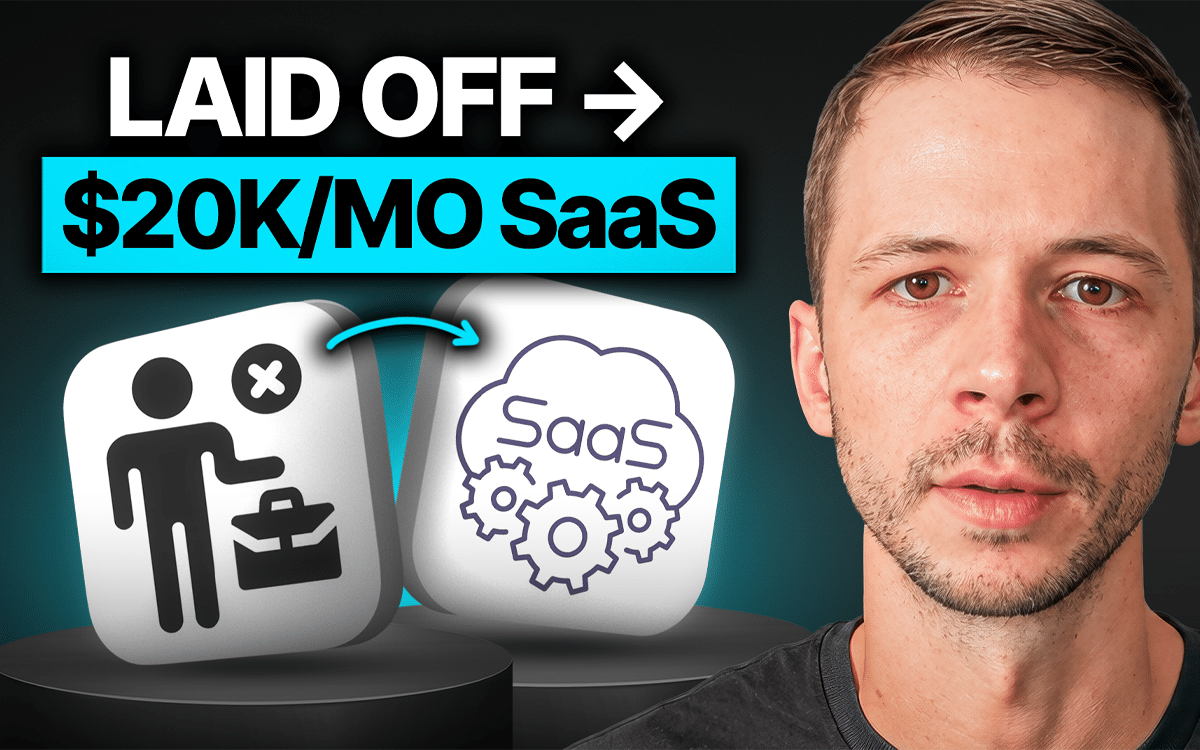
This is the central narrative behind the latest episode of the Niche Pursuits podcast, featuring Ben Bozzay, the solo founder of Tech Lockdown. What began as a personal quest to curb late-night screen time during the 2020 COVID-19 lockdowns has quietly evolved into a bootstrapping success story, generating $20,000 in monthly recurring revenue (MRR) without outside funding or a sprawling team.
Bozzay’s journey offers a masterclass in organic growth, demonstrating how an entrepreneur can systematically pivot from free content to gated information, introduce physical utilities, and ultimately scale into a sophisticated enterprise-grade SaaS model.
The Main Facts: The Anatomy of Tech Lockdown
At its core, Tech Lockdown is a specialized digital privacy and device-restriction platform designed primarily for adults seeking robust guardrails against internet distractions. However, its financial metrics and operational structure are just as compelling as its product utility:
- Current Revenue: $20,000 in Monthly Recurring Revenue (MRR).
- Team Composition: Primarily a solo operation, supplemented by specialized freelance contractors for customer support.
- Core Offerings: Premium guides, community memberships, DNS filtering systems, and specialized device management solutions (alongside a secondary AI-driven visibility app called LivingRoom).
- Primary Acquisition Channel: Highly technical, long-form Search Engine Optimization (SEO), peaking at approximately 70,000 organic monthly visitors.
- Foundational Innovation: Adapting corporate-grade enterprise device controls for personal, consumer use.
The Chronology: Evolution of an Accidental Startup
Bozzay’s path to profitability was completely unplanned. Rather than executing a rigid product roadmap from day one, he allowed the market to pull him through a multi-stage metamorphosis.
1. The Intersection of Experience (Pre-2020)
Before founding Tech Lockdown, Bozzay’s professional background sat squarely at the intersection of software engineering, cybersecurity, and SEO. Having worked in engineering roles at cybersecurity firms and run his own marketing agency, he possessed a rare combination of technical competence and search traffic fluency.
2. The COVID-19 Catalyst (2020)
Like millions of knowledge workers confined to their homes during the early days of the pandemic, Bozzay noticed his own digital habits fraying. He found himself spending excessive time online and resolved to build tighter personal guardrails.
Because of his technical background, standard consumer-grade website blockers proved useless; he knew how to easily bypass them using Task Manager or command-line tools. Consequently, he began implementing enterprise-level controls—systems typically reserved for corporate fleets of work laptops—on his personal machines.
3. The Content Experiment Phase (2020–2021)
Without any commercial intent, Bozzay documented his experiments. He published posts on Medium, engaged on Reddit, and uploaded YouTube videos explaining how he secured his devices. The response was immediate and overwhelming. Readers began flooding his comment sections and inbox with questions, proving that his personal problem was a widespread systemic pain point.
4. Monetization via Paid Content (2021)
As Google began indexing his burgeoning library of articles, traffic surged. To capitalize on this, Bozzay launched a paid membership section. Rather than offering software immediately, he sold productized consulting and comprehensive setup guides that saved users hours of frustrating configuration. The trust built through his free content made this transition seamless.
5. The Transition to SaaS (2022)
While paid content generated early revenue, it had an inherent ceiling: once customers successfully configured their devices, they cancelled their subscriptions. To secure recurring income, Bozzay introduced a DNS filtering product in 2022. This transformed the business from an informational resource into a dynamic software tool.
6. The Layoff and Full-Time Leap (2023)
In 2023, following corporate overexpansion, Bozzay was laid off from his day job. At that time, Tech Lockdown had roughly 300 customers and was generating less than $2,000 in monthly profit—barely enough to cover newly acquired private health insurance costs. Faced with a lucrative corporate job offer, Bozzay—backed by the encouragement of his wife—chose the uncertain path of bootstrapping his side project full-time.
Supporting Data: The Mechanics of Organic Growth
While many digital publishers struggled through volatile Google core updates and the rise of AI-generated summaries, Tech Lockdown scaled to 70,000 monthly organic visitors through a rigorously targeted SEO strategy.
The Power of Granular Search Intent
Bozzay avoided broad, hyper-competitive keywords like "best website blocker." Instead, he targeted highly specific, technical queries that standard SEO tools often dismissed due to low projected search volume. For instance, he wrote detailed guides on how to prevent users from terminating a blocking application via the Windows Task Manager.
Because these articles addressed acute, high-intent problems, they captured highly qualified traffic. Bozzay arranged these articles into content trees—linking broad overview pages to deeply technical sub-guides—which signaled clear topical authority to search engines.
Demographics: Targeting Adults Over Parents
While the vast majority of device-control software targets parents managing children’s internet usage, Bozzay identified an underserved market: adults managing themselves.
This distinction is critical from an engineering standpoint. A parent can easily confiscate a child’s phone or establish rigid administrative controls. Conversely, an adult user possesses full administrator access, passwords, and recovery options, making self-restriction significantly more difficult. By building solutions for recovering addicts, remote workers, and productivity-focused professionals, Tech Lockdown carved out a unique, loyal niche.
Official Responses and Founder Insights
Reflecting on his journey during the podcast, Bozzay emphasized the psychological and strategic hurdles of scaling a business without venture backing.
"You don’t need to serve every audience at once. You don’t need to launch with the final product," Bozzay noted during the interview. "You can start by solving a painful problem, documenting the process, and improving the offer as customers show you what they need next."
Discussing the modern search landscape and the proliferation of AI-generated search summaries, Bozzay highlighted the rising importance of branded terminology. As search engines increasingly aggregate information, companies that build recognizable, proprietary language around their product categories stand a much better chance of capturing high-value traffic downstream.
Furthermore, Bozzay addressed the slow reality of entrepreneurship. Rejecting the overnight success myth, he noted that the first few months after transitioning to full-time status were defined by flat revenue curves and intense financial pressure. Growth did not arrive instantly; it was the cumulative result of continuous product iteration and rigorous content expansion.
Implications for the Broader SaaS and Creator Economy
The trajectory of Tech Lockdown holds several critical takeaways for modern solo founders, indie hackers, and niche site operators:
- Documentation as Product Validation: Writing about a problem before building a product acts as a low-risk mechanism for validating market demand. If audiences actively request help replicating your solution, a viable business model likely exists.
- The Hybrid Content-to-Software Funnel: Information products can successfully bridge the gap to SaaS. By using free content to build trust and paid guides to fund early operations, founders can finance software development without outside capital.
- Enterprise Tech for Consumer Markets: There is a vast, untapped opportunity in translating complex enterprise security concepts (such as Mobile Device Management profiles and un-bypassable DNS filters) into consumer-friendly packages.
- Patience in the Face of Stagnation: Bootstrapping often requires enduring months of flat growth post-launch. Financial and emotional resilience remains one of the most critical traits of successful indie founders.
As Tech Lockdown continues to expand—pioneering new iOS management tools that eliminate the need for hard device resets, and scaling its sister application, LivingRoom—Ben Bozzay’s enterprise stands as proof that sustainable software empires can still be built one solved problem at a time.