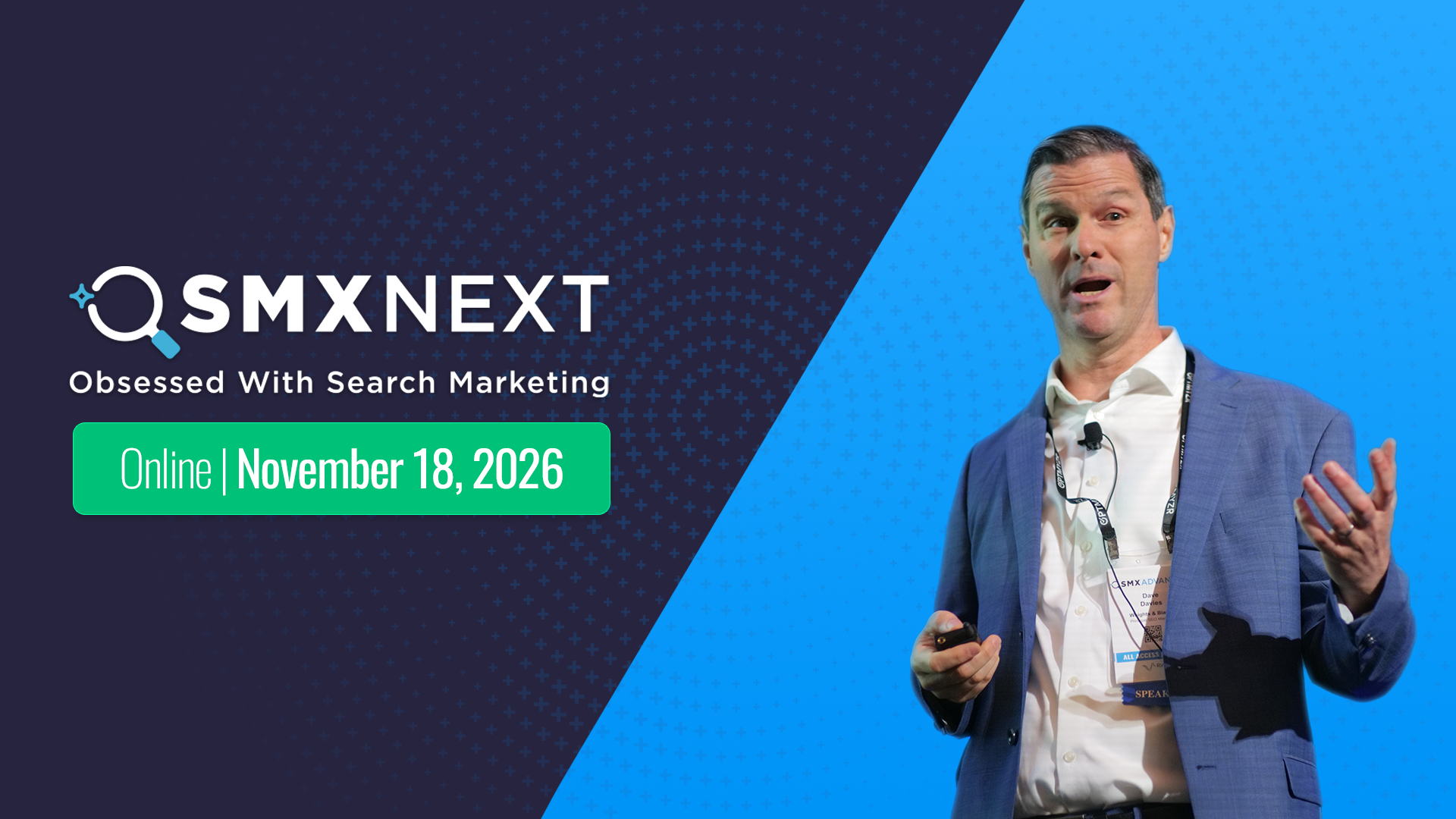
Main Facts: SMX Next Sets Date and Calls for Speakers Amid Search Industry Upheaval
The premier search marketing conference, SMX Next, is scheduled to return to its virtual stage on November 18, 2024. Organized by Third Door Media—the parent company of Search Engine Land, which was acquired by marketing software giant Semrush—the upcoming event arrives at a critical juncture for the digital marketing industry. The central focus of this year’s conference is navigating today’s increasingly complex search ecosystem and equipping search engine optimization (SEO) and pay-per-click (PPC) practitioners with the actionable tactics required to succeed in 2027 and beyond.
In tandem with the event announcement, conference organizers have officially opened the call for speakers. The deadline for submitting session pitches is August 7, 2024. Organizers are actively seeking subject matter experts, seasoned agency professionals, and in-house practitioners to share real-world strategies, proprietary methodologies, and forward-looking insights.
Key Dates and Deadlines
- Speaker Submission Deadline: August 7, 2024
- Speaker Notification Period: Late August to September 2024
- Event Date: November 18, 2024 (Online)
- Target Strategic Horizon: 2027 and beyond
The Core Theme: Preparing for Search 2027
The overarching thesis of SMX Next 2024 is that search marketing has ceased to be an evolutionary discipline; instead, it has mutated into an entirely new paradigm. The traditional mechanics of search—characterized by blue links, predictable organic click-through rates, and straightforward keyword bidding—are being systematically dismantled. By centering the programming on "Search 2027," the conference aims to move past temporary workarounds and instead establish long-term, sustainable strategies for an era defined by artificial intelligence, zero-click queries, and privacy-first tracking.
Chronology: From Submission to the Virtual Stage
The road to SMX Next 2024 follows a structured timeline designed to curate high-quality, non-commercial educational content for attendees. Understanding this timeline is crucial for prospective speakers and industry observers tracking how the conference program is constructed.
[June/July 2024] Call for Speakers Opens -> [August 7, 2024] Pitch Submission Deadline -> [August-September 2024] Editorial Review & Curation -> [October 2024] Agenda Announcement -> [November 18, 2024] SMX Next Virtual EventThe Path to SMX Next: Key Milestones
- Call for Speakers Launch (June/July 2024): Organizers invite the global search marketing community to submit detailed session proposals. Pitches must be submitted via the official Third Door Media speaker portal.
- The August 7 Deadline: All pitches must be finalized and submitted by 11:59 PM PT on August 7, 2024. No late entries are accepted, as the editorial team immediately transitions into the evaluation phase.
- Editorial Review and Selection (August–September 2024): Led by Kathy Bushman, Director of Event Content at Third Door Media, a panel of search industry experts reviews each submission. Proposals are evaluated based on relevance, originality, actionable takeaways, and speaker credibility.
- Agenda Release (October 2024): The finalized agenda is published, detailing the tracks for SEO, PPC, and cross-functional search strategy.
- The Live Event (November 18, 2024): SMX Next broadcasts online, delivering multi-track sessions, interactive Q&As, and networking opportunities to a global audience of digital marketers.
Historical Context of SMX’s Evolution
Search Marketing Expo (SMX) has served as a cornerstone of the digital marketing industry for nearly two decades. Originally launched as an in-person conference series, SMX adapted to the global shift toward virtual events in 2020.
Rather than returning entirely to physical venues, Third Door Media found that the virtual format of "SMX Next" democratized access, allowing tens of thousands of international marketers to participate without travel budgets. This digital-first approach aligns with the rapid, real-time nature of modern search marketing, where algorithmic shifts require immediate, widespread dissemination of tactical adjustments.
Supporting Data: The Forces Redefining Search Marketing
The urgency surrounding the "Search 2027" theme is supported by macroeconomic, regulatory, and technological data points that indicate a permanent departure from legacy search practices.
+-------------------------------------------------------------------------+
|                    THE DUAL FORCES RESHAPING SEARCH                     |
+-------------------------------------------------------------------------+
|  TECHNOLOGICAL DISRUPTION               |  REGULATORY & PRIVACY SHIFTS  |
|  - Google AI Overviews (SGE)            |  - Cookie Deprecation (Chrome)|
|  - OpenAI SearchGPT & Perplexity        |  - GDPR, CCPA, DMA Compliance |
|  - Multi-Modal Queries (Lens, Voice)    |  - Zero-Party Data Mandate    |
+-------------------------------------------------------------------------+
The Generative AI Disruption
The introduction of generative AI search experiences—most notably Google’s AI Overviews (formerly Search Generative Experience, or SGE)—has fundamentally altered user behavior. According to industry studies:
- Organic Visibility Declines: Early analyses of AI-generated answers indicate that traditional organic listings are pushed significantly below the fold, leading to projected organic traffic drops of 15% to 40% for informational queries.
- The Rise of Alternative Search Engines: The rise of conversational AI platforms like Perplexity, ChatGPT (and its experimental SearchGPT prototype), and TikTok as search engines for younger demographics has fragmented the search landscape. Google’s dominant market share, while still massive, faces long-term erosion.
Cookie Deprecation and Privacy-First Measurement
The digital advertising landscape is navigating a protracted transition away from third-party tracking cookies. Despite shifts in Google’s timeline for Chrome deprecation, the broader regulatory environment—anchored by Europe’s General Data Protection Regulation (GDPR) and the California Consumer Privacy Act (CCPA)—has made user privacy paramount.
- Measurement Gaps: Marketers are experiencing severe attribution challenges. Legacy multi-touch attribution models are failing, forcing PPC advertisers to rely on modeled conversions, first-party data integration, and advanced marketing mix modeling (MMM).
- First-Party Data Imperative: Successful campaigns in 2027 will rely heavily on robust first-party data pipelines. Advertisers must learn to feed clean, consent-compliant customer data back into ad networks’ machine learning algorithms to maintain targeting efficiency.
The Converging Worlds of SEO and PPC
Historically treated as distinct silos within marketing departments, organic and paid search have converged. High ad costs, driven by intense competition and automated bidding inflation, mean brands can no longer afford to run isolated PPC campaigns. Simultaneously, declining organic real estate requires SEOs to understand how paid search can defend brand terms and capture high-intent traffic.
Official Perspectives: What SMX Organizers Are Looking For
The curation of SMX Next 2024 is overseen by Kathy Bushman, Director of Event Content at Third Door Media. Bushman brings over 25 years of experience in marketing communications, event management, and instructional design to the conference.

Insights from Kathy Bushman and Third Door Media
Having previously directed content and training for the Digital Summit series and MarketingProfs, Bushman applies adult learning theory to ensure that SMX sessions are highly educational rather than promotional.
In her call for proposals, Bushman emphasized the need for diverse voices and practical, real-world experience:
"Whether you’ve been speaking for years or you are a practitioner ready to share something new you’ve developed, we welcome your voice. We are actively seeking new speakers with diverse points of view and real-world experience."
This approach reflects a broader industry demand for authenticity. Attendees are increasingly fatigued by high-level, theoretical presentations on AI; instead, they require granular case studies, step-by-step workflows, and transparent data sharing.
Crafting a Winning Proposal: Guidelines for Applicants
To maintain the editorial integrity of the event, Third Door Media enforces strict guidelines for prospective speakers:
- Actionable and Tactical Focus: Sessions must provide attendees with "how-to" steps that can be implemented immediately. Theoretical prognosticating is discouraged in favor of concrete methodologies.
- No Sales Pitches: Editorial sessions are strictly educational. Presentations designed to pitch a product, service, or software platform are disqualified. (Sponsorship opportunities exist separately for commercial presentations).
- Originality and Depth: Proposals should address advanced or intermediate concepts. Basic explanations of SEO or PPC fundamentals are rarely selected, as the SMX audience typically comprises experienced professionals.
- Diversity of Thought: The selection committee prioritizes proposals that offer unique perspectives, address underserved niches, or challenge prevailing industry dogmas with empirical evidence.
Implications: Shifting Strategies for the 2027 Search Landscape
The decisions made by search marketers today will dictate their market position in 2027. The topics debated and taught at SMX Next 2024 will likely set the benchmark for enterprise and agency strategies over the next three years.
+--------------------------------------------------------------------------+
|                       ESTIMATED STRATEGIC TIMELINE                       |
+--------------------------------------------------------------------------+
|  PHASE 1 (2024)      | Audit current organic & paid dependencies;        |
|                      | Experiment with AI-assisted workflows.            |
+----------------------+---------------------------------------------------+
|  PHASE 2 (2025-2026) | Deploy first-party data hubs; Optimize for LLM    |
|                      | engine discovery (GEO); Unify SEO & PPC data.     |
+----------------------+---------------------------------------------------+
|  PHASE 3 (2027+)     | Fully autonomous bid management; Conversational   |
|                      | search monetization; Zero-click content dominance.|
+--------------------------------------------------------------------------+
The Changing Role of the Search Marketer
The traditional definition of a search marketer is rapidly expanding. To remain viable by 2027, practitioners must evolve from channel specialists into interdisciplinary digital strategists.
- SEOs as "Information Architects" and LLM Optimizers: SEO is shifting from technical site audits and keyword density toward Generative Engine Optimization (GEO). Marketers must understand how Large Language Models (LLMs) crawl, synthesize, and cite information.
- PPC Marketers as Data Scientists: With Google’s Performance Max and Meta’s Advantage+ taking over tactical bid adjustments and creative testing, paid search managers must transition into data strategists. Their primary value will lie in audience segmentation, creative direction, conversion rate optimization (CRO), and direct business-revenue attribution.
Agency and Enterprise Preparedness
For agencies, the evolution of search represents both an existential threat and an unprecedented opportunity. Clients are seeking guidance through the confusion caused by AI integrations and shifting attribution metrics. Agencies that continue to report solely on superficial metrics like keyword rankings or impressions will likely face high churn rates.
Conversely, agencies that position themselves as partners in business transformation—integrating CRM data, optimizing for multi-platform search (including YouTube, Amazon, and TikTok), and building custom AI workflows—will secure their place in the 2027 marketing landscape.
As the industry prepares for these shifts, the insights compiled at SMX Next 2024 on November 18 will serve as an essential roadmap for organizations aiming to secure their digital visibility in the next generation of search.