By Ann Smarty
As traditional organic search traffic faces ongoing headwinds and shifting algorithms, businesses are aggressively diversifying their digital marketing footprints. Social media has long served as a vital cornerstone for building brand awareness, cultivating communities, and driving top-of-funnel sales. However, a persistent friction point for digital marketers has been the siloed nature of analytics. While prominent social media networks offer robust native analytics tools to measure follower growth, likes, shares, and immediate engagement, those dashboards inevitably stop at their own digital borders. They fail to reveal how social content performs in the broader ecosystem of organic web search.
That operational blind spot is now shrinking. Following a measured and deliberate rollout, Google Search Console has officially expanded its capabilities, making a powerful new tracking option available to all account holders. This update allows brands and creators to seamlessly monitor organic search activity for their professional social media profiles across major platforms, including YouTube, TikTok, X (formerly Twitter), and Instagram.
By treating social profiles as standalone digital entities—dubbed "platform properties"—Google is fundamentally reshaping how businesses measure the cross-pollination between social media publishing and organic search engine visibility.
Main Facts: What Are "Platform Properties" in Search Console?
At its core, the newly deployed feature allows Search Console to treat verified social media profiles much like traditional websites. Instead of being restricted to standard domain-level tracking, account holders can now add social accounts directly into their Search Console portfolios.
How to Activate Social Properties
Activating your social profiles within Search Console is a straightforward process designed to mirror traditional website verification:
- Navigate to your Google Search Console dashboard.
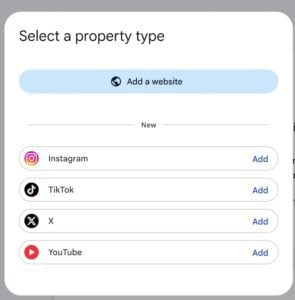
- Click the "Add property" option located in the top-left drop-down menu.
- Select the newly added icon corresponding to your desired social network (Instagram, TikTok, X, or YouTube).
- Follow the on-screen authentication steps to verify ownership of the professional account.
- Data Delivery: Once successfully authenticated, the system begins processing data, with initial metrics populating within approximately 36 hours.
Once activated, Search Console generates a streamlined dashboard for each social property, focusing specifically on two core areas: the Insights tab and the Performance section.
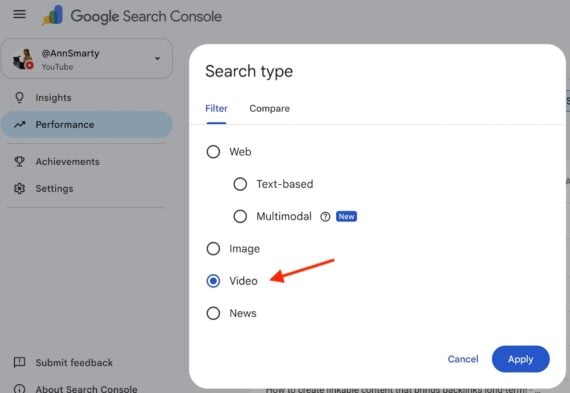
The Performance section is where the real analytical power lies. It includes granular search metrics that can be filtered by text-based or multimodal web search, image search, video search, and Google News, alongside visibility tracking for Google Discover.
Chronology: The Evolution Toward Unified Search Analytics
The journey toward integrated search and social analytics has been gradual, reflecting the changing ways users discover content online.
- The Siloed Era: For over a decade, Google Search Console remained strictly focused on websites, web domains, and mobile apps. Marketers relied on third-party tools or disjointed platform-specific analytics (such as YouTube Studio or Meta Business Suite) to guess how social content influenced search behavior.
- The Rise of Multimodal and AI Search: As Google integrated multimodal search, AI Overviews, AI Mode, and Gemini into its core search experience, video content (especially from YouTube) and rich media began appearing more frequently in prominent search results. Tracking these individual assets became an increasingly cumbersome manual chore.
- The Quiet Rollout: Google initiated a slow, phased rollout of social profile integration, testing the infrastructure with select enterprise accounts to ensure stability and accurate data attribution.
- General Availability: Following successful beta testing, the feature has now completed its rollout, making platform property tracking universally available for all professional accounts across YouTube, TikTok, X, and Instagram.
Supporting Data and Technical Deep Dive: Unlocking Video and Image SEO
The inclusion of social platform properties introduces advanced filtering capabilities that provide unprecedented clarity into content discovery.
Mastering YouTube Video SEO
For digital marketers, the addition of YouTube as a trackable platform property is arguably the most impactful element of the update. Because YouTube content ranks exceptionally well in traditional Google Search and is now routinely cited within AI Overviews, AI Mode, and Gemini, tracking video performance is more critical than ever.
To leverage this data:
- Add your YouTube channel as a platform property in the drop-down menu.
- Navigate to the Performance dashboard section.
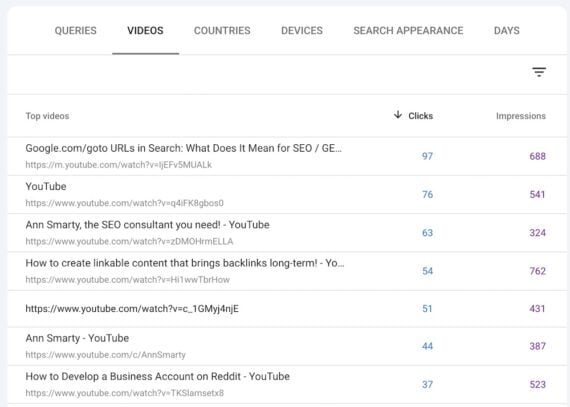
- Select the "Videos" search type filter.
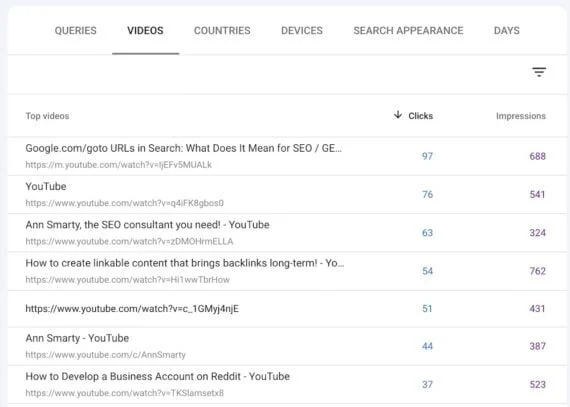
- Review the auto-generated list of top-performing videos, complete with clicks and impressions.
- Click on individual video links to inspect the exact search queries driving traffic to that specific asset.
Actionable Optimization Strategy:
Smarty notes that traditional optimization tactics can be significantly supercharged using this data. For instance, marketers should look for search queries where a video has high impressions but low clicks, and where the average ranking position is lower than 4. By intentionally weaving those specific queries into the video title, creators can capture higher click-through rates. Similarly, analyzing top-ranking queries allows publishers to experiment with alternative titles and descriptions to push their videos even higher up the search results page.
Multimodal Search and Instagram
Ecommerce brands and visual creators who rely heavily on Instagram can now monitor the "Multimodal search" performance filter for their Instagram property. This specific filter reveals whether and how often published product photos and visual posts successfully appear in Google Image Search results, bridging the gap between social visual merchandising and visual search engines.
It is worth noting that while Search Console’s dedicated Branded search filter is not natively included in these new social metrics, marketers can easily achieve the same result by manually filtering queries to evaluate how their social profiles and specific updates rank for brand names and keyword variations.
Official Responses and Industry Perspectives
While Google’s engineering and product teams framed the rollout as a natural extension of their mission to organize comprehensive digital information, digital marketing experts and SEO professionals have been quick to praise the strategic value of the update.
Industry analysts emphasize that this move acknowledges a profound shift in consumer behavior: modern audiences do not search in straight lines. A consumer might see an Instagram post, encounter a YouTube video in an AI Overview, and later click a traditional web link.
By unifying these touchpoints under one roof, Google is providing marketers with the empirical data needed to justify multi-platform content budgets. Early feedback from enterprise SEO leads suggests that the ability to group and analyze these disparate channels is already altering how agencies report ROI to executive stakeholders.
Implications for Modern Marketers and Ecommerce Businesses
The launch of social platform properties in Search Console has wide-ranging implications for cross-channel marketing strategies, content planning, and keyword research.
1. Elevated Cross-Channel Marketing
The most profound workflow shift involves synchronized content creation. Imagine a digital merchant launching a new product line. Instead of treating tasks as isolated silos, the marketer can:
- Publish a comprehensive product-focused article on the brand’s website.
- Produce a detailed demonstration video on YouTube addressing the same core topic.
- Share high-resolution product imagery and lifestyle reels on Instagram.
- The Search Console Advantage: The marketer can now annotate their Search Console timeline with the exact go-live dates for each asset. By tracking organic search performance across the website, YouTube, and Instagram properties side-by-side, they gain a holistic view of how a synchronized campaign lifts overall organic visibility.
2. Uncovering Untapped Target Keywords
As AI-driven search expands and query phrasing becomes more conversational, finding niche target keywords has grown increasingly difficult. The social properties update is poised to unlock fresh keyword opportunities by surfacing long-tail search queries that successfully direct users to a brand’s YouTube videos or social profiles. These insights can then be fed back into broader content strategies, inspiring new blog posts, landing pages, and ad copy.
3. A New Standard for Accountability
As marketing budgets face tighter scrutiny, proving the organic value of social media efforts is paramount. Relying solely on platform-specific metrics like "vanity likes" is no longer sufficient in boardrooms demanding hard revenue attribution. By linking social content directly to organic search impressions, clicks, and discoverability, Search Console empowers marketers to demonstrate tangible search-engine value derived from social media investments.
Conclusion
Google Search Console’s integration of social media "platform properties" marks a milestone in digital marketing analytics. By breaking down the traditional walls separating social media engagement from organic search performance, Google has given businesses a powerful instrument to navigate the modern, AI-influenced search landscape.
Whether you are an ecommerce merchant optimizing Instagram product photos, a video creator refining YouTube SEO strategies, or a cross-channel strategist looking to unify your reporting, mastering these new platform properties is no longer optional—it is the next frontier of organic growth.