By Global Commerce Desk
Published: August 2026
1. Executive Summary & Main Facts
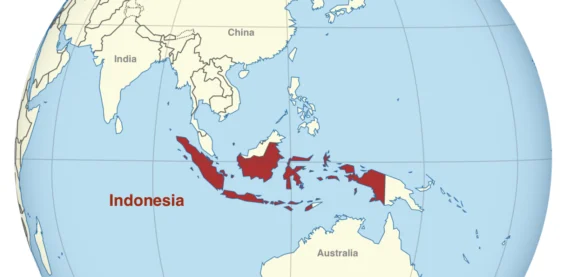
As the global retail landscape shifts away from saturated Western markets, multinational brands and agile direct-to-consumer (DTC) companies are increasingly turning their gaze toward Southeast Asia. At the vanguard of this regional expansion is Indonesia—a sprawling archipelagic nation that the United Nations lists as the fourth most populous country in the world, home to roughly 288 million residents. It trails only India (1.46 billion), China (1.41 billion), and the United States (345 million).
Despite its massive population and a digitally engaged consumer base of over 230 million internet users, Indonesia’s total consumer spending remains low relative to its demographic weight. According to World Bank economic metrics, this disparity between high connectivity and developing retail consumption highlights an extraordinary growth opportunity. However, entering this market is far from straightforward. Foreign businesses face a complex matrix of regulatory hurdles, stringent compliance frameworks, geographical hurdles across thousands of islands, and mandatory localization rules—most notably the strict enforcement of Bahasa Indonesia for all digital product descriptions.
For brands willing to navigate these complexities, the rewards are immense. Driven by a powerful combination of dominant e-commerce marketplaces (such as Shopee, Tokopedia, and Lazada) and a vibrant social commerce ecosystem, Indonesia represents the next frontier for international retail expansion.
2. Chronological Evolution of Indonesia’s Digital Economy
To understand how Indonesia arrived at its current position as a premier e-commerce frontier, it is vital to examine the chronological development of its digital infrastructure and regulatory environment over the past decade.
Phase 1: The Mobile-First Awakening (2015–2019)
Unlike Western markets, which transitioned gradually from desktop computing to mobile e-commerce, Indonesia bypassed the desktop era entirely. The proliferation of affordable smartphones manufactured by brands like Xiaomi, Oppo, and Samsung served as the primary catalyst for internet adoption. During this period, homegrown startups and foreign-backed platforms began pouring capital into logistics and consumer acquisition. Local pioneers like Tokopedia and Bukalapak established trust among a largely unbanked population through innovative cash-on-delivery (COD) mechanisms and partnerships with local convenience stores.
Phase 2: Consolidation and Super-Apps (2020–2023)
The COVID-19 pandemic catalyzed an unprecedented acceleration of digital adoption across the archipelago. Millions of consumers and micro, small, and medium enterprises (MSMEs) were forced online overnight. This era was defined by fierce market consolidation. Singapore-based Sea Limited’s Shopee rapidly gained ground, while Gojek and Tokopedia merged to form GoTo, creating an Indonesian "super-app" ecosystem spanning ride-hailing, food delivery, fintech, and e-commerce. Simultaneously, social media platforms like TikTok introduced in-app purchasing features, merging entertainment with transaction capabilities.
Phase 3: Regulatory Tightening and Protectionism (2024–2026)
As the digital economy matured, the Indonesian government implemented aggressive policies to protect domestic MSMEs from cheap, cross-border foreign imports. Regulatory bodies imposed stricter bans on predatory pricing, separated social media platforms from direct e-commerce transactions to curb monopolistic behavior, and instituted higher minimum valuation thresholds for cross-border shipments. By 2026, foreign brands could no longer rely on low-friction, low-cost cross-border shipping models; instead, they were compelled to establish local entities, partner with domestic distributors, or utilize licensed local fulfillment enablers.
3. Supporting Data and Comparative Market Metrics
Evaluating retail sales across international borders is notoriously difficult due to varying definitions of retail, informal economies, and conflicting statistical sources. To establish a standardized benchmark, economists frequently rely on the World Bank’s Household Final Consumption Expenditure metric, which measures the total market value of all goods and services purchased by domestic households.
Macroeconomic and Consumption Comparisons
The most recent comprehensive data underlines the massive gap between mature Western markets and developing Asian powerhouses:
- United States: $19.8 trillion (Household Final Consumption Expenditure)
- China: $7.48 trillion
- India: $2.4 trillion
- Indonesia: $773.6 billion
While Indonesia’s absolute consumption figure of $773.6 billion appears modest when compared to the U.S. or China, its growth trajectory tells a different story.
Internet Penetration and Digital Adoption
Online-only retail sales data remains fragmented, relying largely on individual government reporting and aggregated digital research. DataReportal’s global overview reports outline the stark reality of internet penetration across the world’s most populous nations:

| Country | Estimated Population (2026) | Internet Users | Internet Penetration Rate |
|---|---|---|---|
| China | 1.41 billion | 1.3 billion | 92% |
| United States | 345 million | 323.9 million | 94% |
| India | 1.46 billion | 1.0 billion | 68% |
| Indonesia | 288 million | 230.4 million | 80% |
Indonesia’s 80% internet penetration rate—representing over 230 million active users—contrasts sharply with its relatively low retail expenditure. This inverse relationship points directly to a classic "whitespace" market: a population deeply connected to the digital world, whose purchasing power and online basket sizes are projected to expand rapidly over the coming decade.
4. Official Responses and Industry Stakeholder Perspectives
As foreign multinational corporations and local regulators clash over market access, compliance, and consumer protection, various stakeholders have articulated their strategies for navigating the Indonesian digital economy.
The Retail Giants and Marketplace Dominance
According to research from Australia-based consultancy Asialink, online consumers in Indonesia are highly concentrated on a handful of dominant platforms. Shopee Indonesia, Tokopedia, and Lazada collectively capture an overwhelming 76% of all online retail sales in the country. Both Shopee and Lazada operate robust first-party retail models alongside their third-party marketplace structures.
International conglomerates have taken note. Household global brands such as L’Oréal Paris, Nivea, Garnier, La Roche-Posay, Maybelline, Adidas, Puma, Samsung, Xiaomi, Philips, Tefal, Nestlé, and Kellogg’s maintain a heavy presence across these digital storefronts.
Government Regulators and Compliance Enforcers
Indonesian trade and customs authorities have maintained a resolute stance regarding foreign entities operating within their borders. Ministry of Trade officials have repeatedly emphasized that foreign investments must contribute directly to the local economy, create jobs for Indonesian citizens, and protect local MSMEs from unfair external competition.
Consequently, the government has instituted stringent compliance mandates. For foreign ecommerce brands, cross-border shipping is heavily disincentivized by a mandatory minimum wholesale value of $100 per unit on incoming goods. Furthermore, the Indonesian government strictly mandates that all product descriptions, user manuals, and customer-facing digital assets on e-commerce platforms must be rendered in Bahasa Indonesia. Non-compliance risks severe penalties, website blocks, or revocation of operating licenses.
5. Strategic Implications and Entry Pathways for Foreign Brands
Entering the Indonesian market requires a nuanced, multi-layered strategy. Because of geographical fragmentation—spanning over 17,000 islands—and strict legal frameworks, a one-size-fits-all approach guarantees failure.
Corporate Structuring: The PT PMA Route
Foreign brands looking to establish a permanent, independent footprint must navigate corporate legal structures. While various proxy arrangements exist, a PT PMA (Penanaman Modal Asing, or Foreign-Owned Limited Liability Company) is the only legal structure that grants a foreign brand direct, independent control over its operations.
Setting up a PT PMA involves strict requirements:
- A minimum of two shareholders, at least one of whom must be a foreign entity or individual.
- A substantial minimum paid-up capital requirement of $150,000 USD.
- Compliance with the Indonesian Negative Investment List (though retail and e-commerce rules have loosened in specific sectors, foreign ownership caps can still apply depending on the exact classification of goods).
Successful registration yields a Business Identification Number (NIB or Nomor Induk Berusaha), which serves as the master key required to legally operate any digital or physical retail enterprise in the country.
Operational Frameworks: Omnichannel and Partnerships
To balance market reach with compliance realities, successful foreign brands typically deploy a hybrid omnichannel strategy:
- Local Distributors: For physical retail and wholesale distribution, brands partner with established local networks such as DKSH Indonesia or Enseval. These distributors purchase sector-specific inventory wholesale, manage customs clearance, and distribute goods through traditional retail and regional supply chains.
- E-Commerce Enablers: Managing logistics, customer service, and digital marketing across sprawling island chains presents a logistical nightmare. To solve this, brands contract specialized "e-commerce enablers" like Jet Commerce or SCI Group to manage official flagship stores, performance marketing, and localized fulfillment operations on platforms like Shopee and Tokopedia.
- Social Commerce Integration: Beyond traditional marketplaces, social commerce remains a powerhouse in Indonesia. Platforms like WhatsApp, Instagram, Facebook, and TikTok Shop capture immense consumer attention, particularly among younger demographics in urban hubs like Greater Jakarta—home to 32 million residents and serving as the nation’s prime economic engine.
Conclusion
Indonesia is no longer an overlooked e-commerce market; it is a high-stakes arena demanding strategic patience and capital commitment. Brands that master the regulatory environment, respect local linguistic and cultural nuances, and build resilient omnichannel supply chains will unlock the vast potential of Southeast Asia’s most dynamic digital economy.