As artificial intelligence rapidly transitions from a novelty tool into the primary digital destination for hundreds of millions of users, the landscape of digital marketing is undergoing a seismic shift. ChatGPT—boasting upwards of 800 million monthly active users, representing nearly a tenth of the global population, and processing roughly two billion prompts daily—has established itself as the undisputed heavyweight of AI assistant traffic, commanding a staggering 70% market share.
More importantly for marketers, user intent on the platform is deeply transactional. Recent usage data indicates that 63% of ChatGPT users leverage the AI for research and discovery, while 53% use it actively to compare products and prices. This evolution means that critical stages of the consumer consideration funnel are now happening inside a conversational chat interface—a space where commercial brands previously had virtually no direct presence.
To understand the mechanics, costs, and strategic value of this emerging channel, industry researchers have begun testing native advertising units within ChatGPT. The findings offer a rare glimpse into the future of conversational search monetization.
Main Facts: How ChatGPT Ads Currently Operate
The reality of advertising inside ChatGPT is defined by a paradox: while the platform represents massive, high-intent reach, the ad infrastructure itself is currently in a nascent, almost rudimentary stage.
The Ad Unit Structure
When an ad is triggered, it appears directly beneath the AI-generated response in a clearly demarcated box labeled "Sponsored." The creative footprint is minimalist, consisting of:
- A single 1×1 image
- A concise headline
- A short descriptive text block
- A direct click-through URL to the advertiser’s landing page
Targeting Limitations
Unlike modern programmatic ecosystems that boast deep audience segmentation, demographic overlays, and extensive behavioral tracking, ChatGPT’s current ad targeting is refreshingly—and frustratingly—blunt.
The system relies almost entirely on contextual relevance tied directly to the user’s individual prompt, rather than the broader conversational context or the specific semantic reply generated by the AI model. Geographic control is sparse, and audience-based retargeting is non-existent. In this environment, hyper-specific relevance to the user’s prompt is the single greatest determinant of whether an ad successfully serves.

Chronology: The Emergence of Conversational Commerce
The rollout of advertising inside generative AI platforms marks the latest milestone in a multi-year technological evolution that has steadily disrupted traditional search engine marketing (SEM) and social media advertising.
- Late 2022 to 2023: OpenAI launches ChatGPT, sparking a global generative AI boom. Millions of users begin shifting their search and informational queries away from traditional search engines like Google and Bing toward conversational AI.
- 2024 to 2025: As user acquisition scales into hundreds of millions, monetization becomes an institutional priority for AI developers. Brands begin experimenting with organic visibility strategies (Generative Engine Optimization, or GEO) to influence LLM outputs.
- Late 2025 to Early 2026: OpenAI introduces initial testing frameworks for native sponsored placements, partnering with select ad tech platforms and enterprise buyers to test real-world campaign performance.
- Mid-2026: Early-adopter marketing agencies and brands publish initial performance data, revealing unique pricing dynamics, measurement hurdles, and entry-tier pricing requirements for the channel.
Supporting Data: Costs, Pricing, and Efficiency
Pricing within the ChatGPT ecosystem is dictated by an opaque relevancy model layered on top of a proto-auction system. Early testing data reveals stark pricing tiers depending on the competitiveness of the targeted prompts.
CPM Breakdowns
- Niche Prompts ($15 CPM): When bidding on specialized queries with little to no competing brand interest, costs hover around a modest $15 Cost Per Mille (CPM).
- Contested Prompts ($60 CPM): When multiple brands fight for visibility on high-intent, highly competitive consumer prompts, CPMs climb aggressively toward $60.
- Average Blended Rates ($25–$40 CPM): Across most active brand tests, CPMs generally land between $25 and $35, though rigorous testing environments report effective rates closer to $40.
Bidding Strategy Insights
Industry analysts strongly advise marketers to steer away from Cost-Per-Click (CPC) bidding models where available, citing an opaque methodology that lacks transparency. Instead, bidding on a CPM basis and allowing clicks to flow naturally has proven to yield a much healthier and more predictable effective CPC (eCPC).
Crucially, creative precision remains the ultimate cost-control mechanism. Brands whose ad creative maps seamlessly and contextually to the underlying prompt experience significantly better efficiency and lower waste.
Official Responses and Ecosystem Access: Three Routes In
For brands looking to secure inventory within ChatGPT, access is currently channeled through distinct partner tiers, each requiring substantial financial commitments. Currently, there are three primary pathways to entry:
- The Criteo Route (Commerce-Focused): Ideal for Consumer Packaged Goods (CPG) and retail brands, Criteo integrates directly with product feeds, allowing advertisers to dynamically stand up thousands of product-specific ads simultaneously. Recommended monthly budgets hover between $50,000 and $100,000.
- The StackAdapt Route (Mid-Tier & Enhanced Controls): StackAdapt offers an alternative programmatic gateway at roughly $50,000 a month, sweetening the package with minor promotional incentives and slightly enhanced geographic targeting capabilities.
- Direct with OpenAI (Enterprise Level): Brands can go straight to the source by negotiating direct partnerships with OpenAI, though this pathway requires a substantial commitment, with spending minimums sitting near $250,000 a month.
Because the data on which verticals perform best is still maturing, platform experts recommend establishing a clear evaluation framework before committing capital. Brands must determine how they intend to guide conversational traffic through their conversion funnel and how they will measure post-click behavior relative to legacy channels.
Implications: The Measurement Problem and Future Outlook
Despite the excitement surrounding ChatGPT ads, marketers face significant operational hurdles—chief among them being a stark lack of comprehensive measurement tools.

The Attribution Gap
Currently, advertisers receive standard impressions and click metrics, but little else. The platform lacks native conversion optimization features, meaning algorithms cannot yet be instructed to automatically chase lower-funnel user outcomes or sales.
To bridge this gap, brands must rely heavily on first-party pixel data, sharing conversion metrics with media partners to evaluate whether traffic originating from ChatGPT exhibits higher intent than visitors arriving via native display, social, video, or traditional search channels. Early indicators are promising, with click-through rates (CTRs) rivaling traditional native advertising formats—a remarkable feat for a channel in its infancy.
The Trajectory of Maturity
The current state of ChatGPT advertising bears a striking resemblance to the early days of programmatic display and social media advertising:
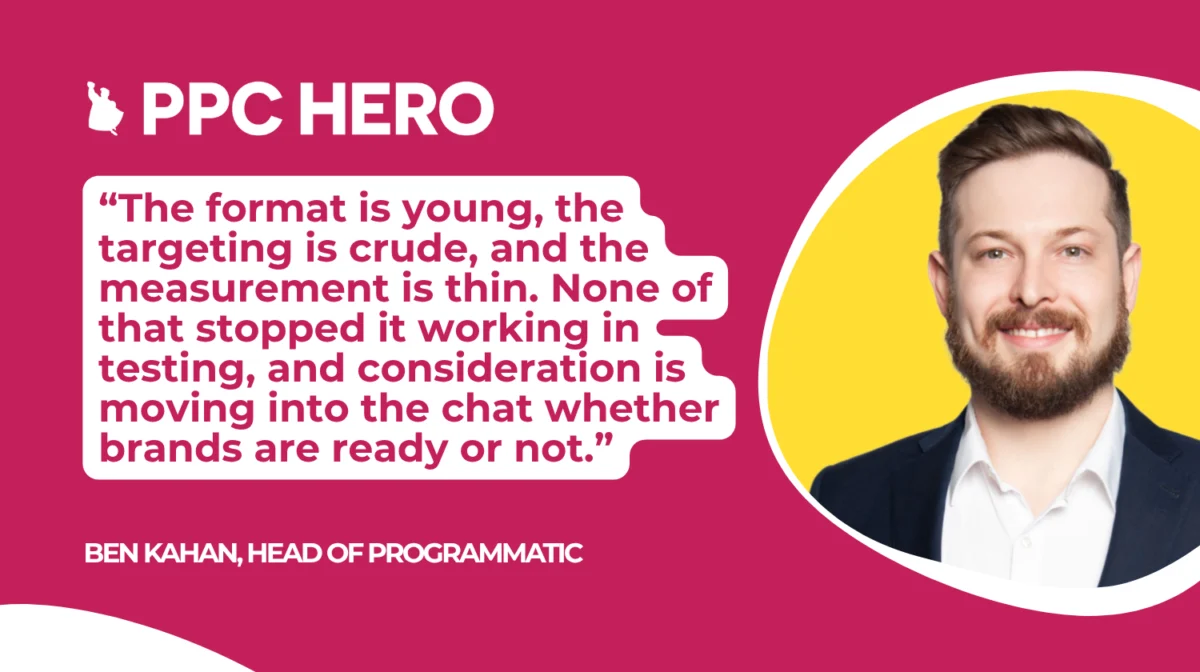
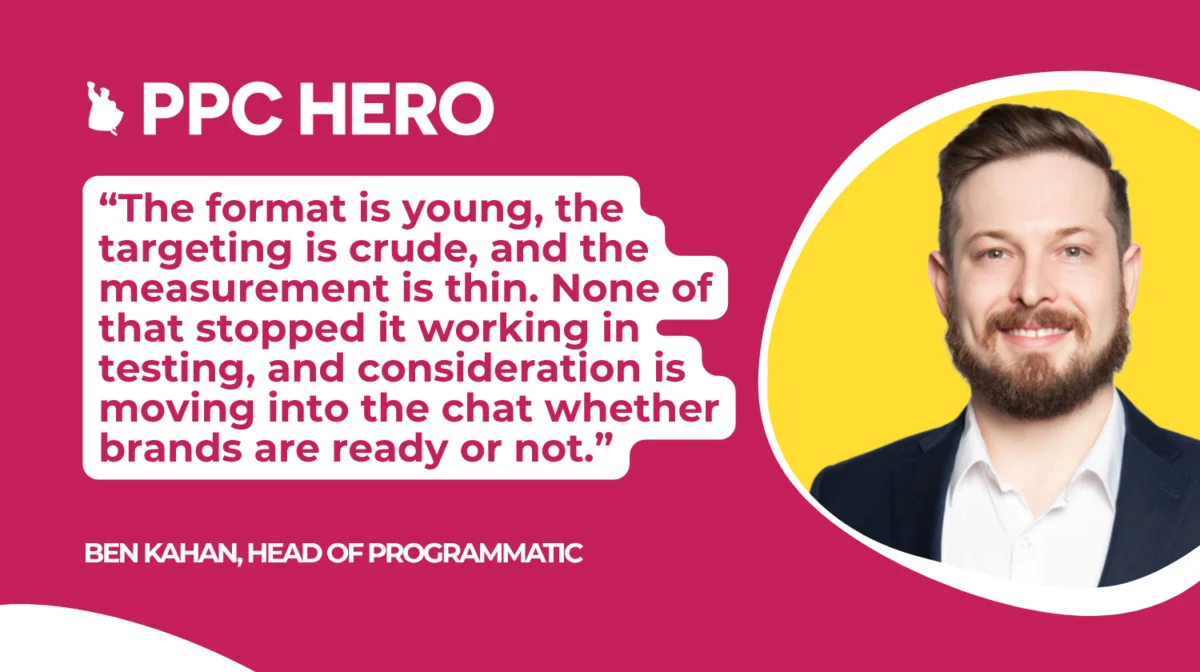
- Crude Targeting: Advanced audience segmentation is currently missing.
- Thin Measurement: Attribution relies heavily on external analytics rather than native platform optimization.
- Opaque Auctions: Pricing mechanics are still developing.
However, industry veterans recognize the writing on the wall. OpenAI possesses an immense repository of user data and behavioral insights. It is only a matter of time before sophisticated audience targeting, native conversion tracking, and automated bidding algorithms are integrated into the platform.
As more brands pile into the ecosystem, competition will intensify, auction dynamics will clear up, and CPMs will inevitably rise. Brands that choose to test the waters now—building foundational measurement frameworks and refining their prompt-matching creatives—will secure an invaluable head start before the channel reaches full commercial maturity.