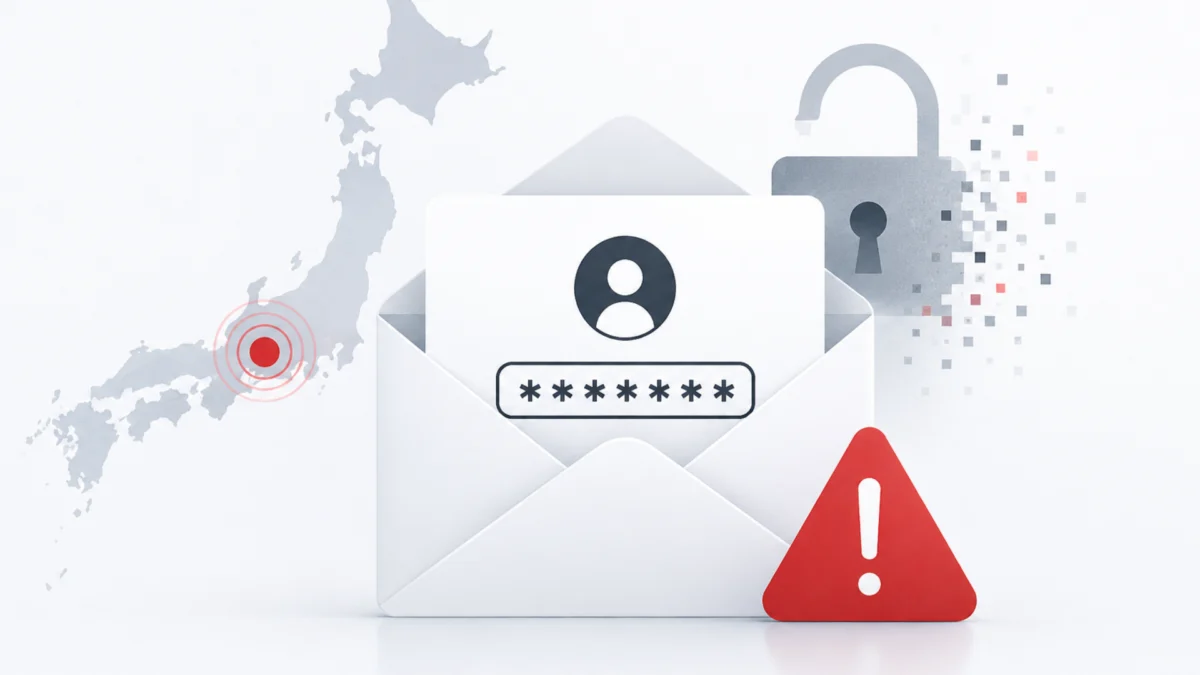
In a significant security incident that underscores the precarious nature of shared digital infrastructure, Japanese telecommunications giant KDDI has confirmed a major data breach impacting its internal email platform. The intrusion, which potentially exposes the sensitive information of up to 14.22 million users, has sent shockwaves through the Japanese ISP landscape. By exploiting a vulnerability in unnamed third-party software, attackers gained unauthorized access to a centralized system that services not only KDDI’s own customer base but also those of five other major regional internet service providers (ISPs).
The breach, identified on June 17, 2026, and publicly disclosed on June 23, represents a critical failure in supply chain security. Because the platform served multiple entities, the "blast radius" of a single software flaw was amplified, turning a localized system compromise into a widespread privacy crisis.
Chronology of the Incident
The timeline of the breach reveals a rapid response from KDDI, though significant questions remain regarding the window of exposure prior to the intrusion.
- June 17, 2026: KDDI security operations centers detected unauthorized activity within the shared email infrastructure. The company’s security teams immediately moved to isolate the threat, successfully blocking the attackers’ access within the same day.
- June 17–22, 2026: In the immediate aftermath, KDDI initiated an internal forensic investigation and established communication channels with the five affected ISP partners. During this period, the company notified Japan’s Personal Information Protection Commission (PPC) and the Ministry of Internal Affairs and Communications (MIC) to comply with regulatory requirements.
- June 23, 2026: KDDI issued a formal public disclosure acknowledging the breach. The statement confirmed that the intrusion was facilitated by a previously unknown vulnerability in a third-party software component embedded within their email management system.
- Post-June 23, 2026: Ongoing efforts are focused on forensic analysis to determine the full extent of the data exfiltration and to patch the underlying vulnerability. KDDI continues to coordinate with the affected ISPs to manage customer communication and mitigation strategies.
The Scope of Exposed Data: A "Worst-Case" Estimate
The figure of 14.22 million records is currently classified by KDDI as a "worst-case ceiling." This total encompasses a broad demographic of users, including active subscribers, former customers whose accounts remain in the database, and dormant accounts that have not been accessed for years.
The gravity of this breach lies in the specific nature of the data involved: email addresses paired with account passwords. While many modern data leaks are limited to names, physical addresses, or partial contact information, this incident involves full login credentials. When an attacker gains access to both an email address and its corresponding password, the barrier to account takeover (ATO) is effectively removed.
The Problem of Hashing and Plaintext
KDDI has attempted to mitigate public concern by noting that a "portion" of the exposed passwords were stored using cryptographic hashing or encryption. However, this disclosure is paradoxically vague. The company has failed to specify:
- The percentage of data that remained in plaintext versus hashed.
- The strength of the algorithms used. In 2026, outdated hashing methods (such as MD5 or SHA-1) are considered effectively insecure, providing little more than a "speed bump" for modern computing power.
Without a transparent audit of how these passwords were protected, security experts warn that the public must assume the worst. If a significant subset of these credentials was stored in a vulnerable state, the entire database must be treated as compromised.
The Danger of Shared Infrastructure
The KDDI breach serves as a case study for the risks inherent in consolidated service models. In the telecommunications sector, it is standard practice for ISPs to leverage shared or "white-label" mailbox infrastructure to reduce overhead and streamline technical maintenance. While efficient, this model creates a single point of failure.
When a single third-party component—such as a mail-server administration panel, a database management interface, or an authentication gateway—is found to be vulnerable, the risk is not limited to one company. In this instance, the flaw allowed attackers to pivot across the entire platform, compromising the customer bases of six different ISPs simultaneously. This demonstrates a systemic fragility: the security of the end user is only as strong as the weakest software dependency within the service provider’s supply chain.
The "Silent" Vulnerability: A Transparency Deficit
Perhaps the most troubling aspect of the KDDI incident is the company’s refusal to name the third-party software vendor or the specific nature of the flaw. As of late June, no Common Vulnerabilities and Exposures (CVE) entry has been published regarding this incident.
For the global cybersecurity community, this lack of transparency is a major obstacle. Without knowing which software component was exploited, other ISPs and organizations that rely on the same third-party ecosystem are left in the dark. They cannot perform "impact assessments" to see if their own systems are susceptible to the same exploit. In the context of a zero-day or near-zero-day vulnerability, the withholding of technical details effectively prevents the wider industry from defending itself.
Implications for Subscribers and the Email Industry
The downstream consequences of a credential-based breach are severe and well-documented. Once these email addresses and passwords enter the criminal ecosystem, they become the primary fuel for "credential stuffing" attacks.
The Ripple Effect of Credential Stuffing
Because users frequently reuse passwords across multiple platforms, the compromise of an ISP email account rarely stops at the inbox. Attackers will inevitably use these credentials to attempt unauthorized logins on banking, retail, social media, and healthcare portals. Even if a user believes their ISP email is "unimportant," its compromise acts as a master key for their entire digital identity.
Reputation and Inbound Abuse
For the ISPs involved, the breach is not just a privacy failure—it is an operational nightmare. Compromised mailboxes are immediately repurposed by botnets to send massive volumes of spam and phishing emails. This creates a cycle of abuse where the ISP’s mail servers become blacklisted by global spam filters, severely damaging the deliverability of legitimate mail for all other users on the network.
Official Recommendations and Mitigation
KDDI has officially advised all affected customers to take immediate remedial actions:
- Mandatory Password Resets: Users are urged to change their passwords immediately. Crucially, they must ensure the new password is unique and not reused on any other platform.
- Two-Factor Authentication (2FA): KDDI recommends enabling 2FA wherever possible. However, the company acknowledges that many consumer ISP webmail interfaces still lack robust 2FA support, leaving a significant portion of the user base vulnerable even after a password change.
- Vigilance Against Phishing: Customers should expect a spike in targeted phishing attacks. Attackers often use the data from a breach to craft personalized messages, masquerading as the ISP to solicit further sensitive information or financial details.
Conclusion: A Call for Accountability
The KDDI breach of 2026 is a stark reminder that in an interconnected digital economy, security is a collective responsibility. While KDDI’s internal response—blocking the attacker and notifying authorities—was swift, the company’s silence regarding the root cause of the vulnerability leaves the broader digital ecosystem exposed.
Until the specific third-party software is identified and a formal CVE is issued, the 14.22 million affected individuals must operate under the assumption that their digital identity is currently in circulation among malicious actors. This incident should serve as a catalyst for a more rigorous standard of supply-chain transparency. ISPs can no longer hide behind "third-party vendors" when the security of millions of users is at stake. True security requires the courage to name the flaw, share the data, and allow the industry to harden itself against the next inevitable intrusion.