As artificial intelligence fundamentally transforms how consumers discover products, services, and information, digital marketing is undergoing its most radical evolution in decades. Traditional Search Engine Optimization (SEO)—long anchored in keyword stuffing, backlink profiles, and on-page technical optimization—is rapidly sharing the stage with Answer Engine Optimization (AEO).
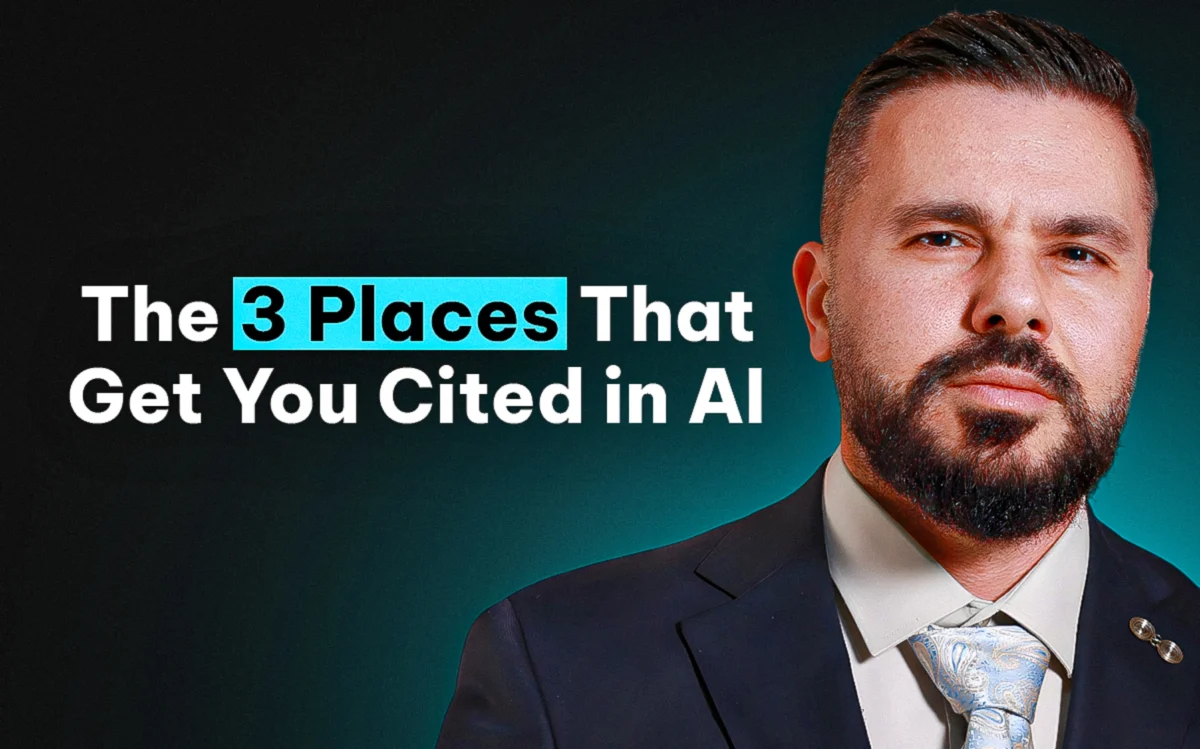
In a recent comprehensive discussion, digital marketing veteran and ZeroRank founder Besmir Bregasi sat down to analyze what truly drives brand citations in LLM-driven search experiences such as ChatGPT and Google AI Overviews. Drawing from proprietary visibility data across millions of prompts, platforms, and geographies, Bregasi reveals how off-site chatter, content freshness, and hyper-targeted community engagement are redefining digital dominance.
Main Facts: The Shift to Answer Engine Optimization (AEO)
The core thesis of ZeroRank’s visibility data is straightforward: Large Language Models (LLMs) do not rank websites the way traditional search engines do. Instead of merely crawling metadata and keyword densities, AI systems synthesize answers by evaluating where and how a brand is discussed across the broader digital ecosystem.
- The Decline of Pure On-Site SEO: While a technically sound website remains a mandatory baseline requirement, on-site tweaks no longer guarantee visibility. LLMs rely heavily on third-party validation.
- The Dominance of Off-Site Signals: Approximately 60% to 70% of an LLM’s brand citation weight is driven by off-site user-generated content (UGC), editorial mentions, and community discussions. Traditional search and on-site architecture account for the remaining 30%.
- The Power of the Big Three Platforms: ZeroRank’s data consistently highlights Reddit, X (formerly Twitter), and YouTube as the most influential citation sources powering AI search engines and Google AI Overviews.
- Rapid Scale: Bregasi and co-founder Kelvin Çobanaj built ZeroRank in just three months, leveraging AppSumo as a hyper-growth customer acquisition channel to scale past mid-six figures in Annual Recurring Revenue (ARR) within its first year.
Chronology: From 20 Years of SEO to Building ZeroRank
Bregasi’s journey into AEO is rooted in nearly two decades of digital marketing evolution.
- Early 2000s: Bregasi began his career in traditional SEO, experiencing the foundational era of search algorithms.
- Mid-2000s to 2010s: For roughly 15 years, he shifted his primary focus to paid advertising, affiliate marketing, and scaling online communities and live events. This period gave him deep insight into user psychology and cross-channel traffic acquisition.
- The AI Inflection Point (2024–2025): As LLM traffic began surging, Bregasi recognized a familiar pattern. The transition to AI-driven search mirrored the early days of SEO—a nascent channel characterized by massive opportunity and relatively low competition.
- The Birth of ZeroRank: Teaming up with Kelvin Çobanaj, a seasoned engineering leader who previously served as CTO for a major conference company and a crypto enterprise, the duo committed to building an AI visibility tracking tool. Working under an aggressive timeline, they launched the first version of ZeroRank within three months.
- The AppSumo Growth Surge: To rapidly stress-test the product and gather user feedback, ZeroRank launched on AppSumo. The platform crossed 1,000 customers rapidly, became a top-selling product in its launch month, and provided the momentum needed to expand the team and scale ARR to mid-six figures.
Supporting Data: What the Numbers Tell Us About LLM Citations
Tracking AI visibility presents a unique technical hurdle: personalization. Two users entering identical prompts can receive entirely different answers based on geographic location, search history, device type, and account variables.
To combat this, ZeroRank approaches measurement through scale. Rather than treating a single LLM response as gospel, the platform runs massive batches of queries across varied accounts, locations, and parameters to establish a reliable average visibility baseline.
The Freshness Advantage
ZeroRank’s data demonstrates that content freshness often supersedes historical authority. An extensive archive of older, static brand mentions carries significantly less weight with LLMs than a recent, highly engaging discussion that garners immediate interaction. In a controlled experiment on X, ZeroRank proved that sparking rapid engagement on fresh material triggers algorithmic amplification, making the brand infinitely more visible to crawling LLMs.
The Power of Local and Niche Relevance
In one compelling case study highlighted by Bregasi, a vacation rental company struggling to outrank legacy competitors through traditional local SEO pivoted its strategy. Instead of fighting for conventional keywords, the business flooded local Reddit communities and X discussions in targeted languages (such as Italian). By aligning its off-site footprint with localized, conversational phrasing, the brand successfully broke into LLM recommendations for regional travel queries.
Official Responses and Industry Implications
As AI search engines redefine digital real estate, marketers are forced to reevaluate their allocation of time and capital. The implications for site owners, publishers, and enterprises are profound.
1. Reallocating Marketing Budgets
The conventional playbook of publishing endless blog posts optimized solely for Google’s crawlers is yielding diminishing returns. While editorial content remains valuable, marketers must redirect resources toward digital PR, community building, and active participation in niche forums.
2. Redefining Brand Safety and Control
Because LLM citations are heavily influenced by third-party platforms, brands can no longer rely entirely on controlled channels like their own blog or corporate LinkedIn page. Cultivating positive sentiment on uncontrollable platforms like Reddit and YouTube is now a core operational necessity.
3. The Symbiosis of SEO and AEO
Abandoning traditional SEO entirely would be a strategic misstep. Conventional search engines still form a vital part of the information retrieval layer that feeds LLMs. AEO builds upon a strong technical SEO foundation rather than replacing it.
Implications: How Businesses Can Adapt to AEO
For businesses looking to secure their place in future AI-driven search results, Bregasi’s insights offer a clear operational roadmap:
- Prioritize Off-Site Engagement: Actively participate in credible, relevant conversations on Reddit and X. Do not spam promotional links; instead, add genuine value to discussions that LLMs frequently index.
- Invest in Video and Visuals: With YouTube playing an outsized role in Google AI Overviews, publishing fresh, engaging video content with active comment sections is essential for capturing AI citations.
- Embrace Niche Editorial Mentions: A citation from a hyper-targeted industry blog or niche news source carries exponentially more weight with an LLM than a generic mention from a high-authority, unrelated domain.
- Treat AI Visibility as an Experiment: Because LLM responses fluctuate based on user behavior and platform updates, brands must establish visibility baselines, implement strategic changes, and continuously measure directional improvements.
Ultimately, the rise of answer engines proves that the best way to get recommended by an AI is to become a brand that real people are actively talking about.