Main Facts
Microsoft released its September 2026 security updates for Exchange Server, addressing a total of nine distinct vulnerabilities. While Microsoft has rated all nine of these flaws as "Important" rather than "Critical," the update package contains severe architectural risks. Most notably, two of the addressed vulnerabilities carry Common Vulnerability Scoring System (CVSS) scores exceeding 9.0.
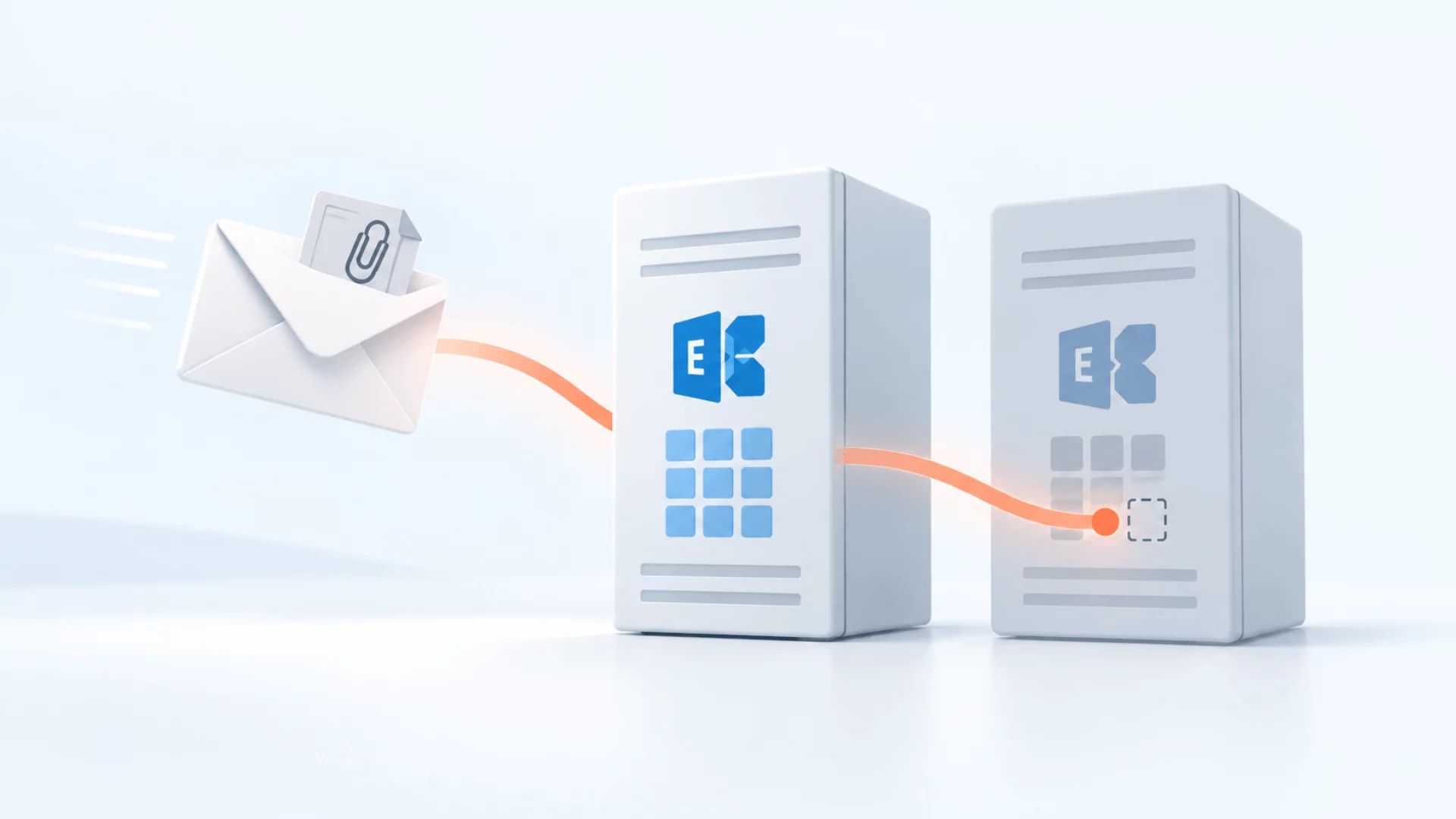
The update covers a wide attack surface, including remote code execution (RCE), cross-site scripting (XSS), privilege escalation, denial of service (DoS), and information disclosure vectors. Chief among them is CVE-2026-55007, an unauthenticated remote code execution vulnerability triggered simply by sending an email with a crafted Visio attachment. Although Microsoft downgraded its general urgency rating due to environmental constraints—specifically requiring sustained low-memory conditions—cybersecurity analysts, including Trend Micro’s Zero Day Initiative (ZDI), have flagged it as the most critical patch of the release cycle.
Compounding the risk profile is CVE-2026-69356, a high-severity cross-site scripting (XSS) spoofing vulnerability bearing a CVSS score of 9.3. This flaw allows malicious scripts to execute within active Outlook on the web (OWA) sessions, exposing sensitive mailbox and session data. Other notable vulnerabilities in the September batch include CVE-2026-69641 (elevation of privilege, CVSS 9.1) and CVE-2026-69380 (user impersonation, CVSS 8.1).
The release highlights a critical lifecycle inflection point for enterprise messaging infrastructure. The patches are natively engineered for the Exchange Server Subscription Edition (SE). Organizations running legacy environments such as Exchange Server 2016 and 2019 face severe compliance and security hurdles. Under Microsoft’s support matrix, legacy systems require enrollment in the Period 2 Extended Security Update (ESU) program to receive updates spanning May to October 2026. Furthermore, technical architectural limitations mean that even ESU-enrolled Exchange Server 2016 deployments do not receive the complete patch set; specifically, CVE-2026-55007 remains unpatched on Exchange 2016, leaving an active, unauthenticated mail-based code execution vector wide open.
Chronology
Understanding the lifecycle of these vulnerabilities requires tracking the sequence of events leading up to and immediately following the September 8, 2026 patch release:
- May 2026: Microsoft issues cumulative security updates that include CVE-2026-42897, a cross-site scripting vulnerability confirmed to have been actively exploited in the wild. This serves as the operational baseline for the XSS mechanics seen later in the year. Concurrently, support officially expires for mainstream deployments of Exchange Server 2016 and 2019, transitioning remaining users into the strict dependency of the Extended Security Update (ESU) framework.
- June 2026: A post-update operational glitch surfaces where wrapper messages inadvertently appear inside shared mailboxes following routine patch installations.
- August 2026: Hybrid deployments utilizing the Graph API experience scheduling anomalies, specifically where free/busy lookups shift busy times dynamically based on the requester’s localized time zone.
- September 8, 2026: Microsoft officially rolls out the September Exchange Server security updates. The bulletin discloses nine vulnerabilities, including the headline-grabbing Visio attachment RCE (CVE-2026-55007) and the high-severity OWA cross-site scripting flaw (CVE-2026-69356).
- Post-Release (September 8–9, 2026): Trend Micro’s Zero Day Initiative publishes its comprehensive threat review, sharply contradicting Microsoft’s "Important" classification by naming CVE-2026-55007 the paramount patch of the month due to its zero-interaction delivery mechanism. Independent analyses, such as reports from Franky’s Web, confirm that Exchange Server 2016 CU23 installations are incapable of receiving the CVE-2026-55007 patch, splitting the defense posture of legacy enterprises.
- Immediate Remediation Phase: Administrators begin deploying update KB5121608, quickly encountering documented known issues involving published
.icscalendar files throwing HTTP 500 errors and delegated mailbox free/busy failures in Graph API hybrid configurations.
Supporting Data
The technical metrics and vector classifications released in the September 2026 patch cycle demonstrate a diverse and sophisticated threat landscape targeting on-premises enterprise messaging infrastructure. The table below outlines the core vulnerabilities addressed in this cycle:
| CVE Identifier | Vulnerability Type | CVSS Score | Severity Rating | Attack Vector / Notes |
|---|---|---|---|---|
| CVE-2026-55007 | Remote Code Execution | 8.1 | Important | Unauthenticated; triggered via crafted Visio email attachment processed by content-indexing engine. Requires low-memory state. |
| CVE-2026-69356 | Spoofing (Cross-Site Scripting) | 9.3 | Important | Executes script in OWA session, exposing mailbox and session data. |
| CVE-2026-69641 | Elevation of Privilege | 9.1 | Important | Internal privilege escalation vector within Exchange components. |
| CVE-2026-69380 | Improper Authorization | 8.1 | Important | Allows low-privileged authenticated users to impersonate any user across the organization. |
| Unspecified | Remote Code Execution | 8.8 | Important | Requires authenticated access; targets internal component execution paths. |
| Unspecified | Denial of Service | 7.5 | Important | Disrupts server processing availability. |
| CVE-2026-69361 | Spoofing | 6.5 | Important | Secondary spoofing vector affecting message metadata validation. |
| Unspecified | Tampering | 6.5 | Important | Compromises data integrity within message transport layers. |
| Unspecified | Information Disclosure | 5.9 | Important | Leaks internal system or user configuration telemetry. |
Deep Dive: The Mechanics of CVE-2026-55007
The mechanism behind CVE-2026-55007 relies on the internal handling of Microsoft Visio file attachments by the Exchange content-indexing engine. When an email containing a maliciously crafted Visio file traverses the mail transport pipeline, the server indexes the message content automatically. During this automated parsing phase, memory corruption or improper object handling triggers arbitrary code execution.
Crucially, this vulnerability requires zero user interaction. The target does not need to open an email, click a preview pane, or authenticate with the server. However, Microsoft’s security advisory highlights a mitigating architectural prerequisite: exploitation demands that the host server operate under sustained low-memory conditions. While Microsoft characterizes such memory states as "uncommon in normal operation," security researchers emphasize that heavily loaded enterprise mail servers experiencing peak workloads or resource starvation frequently brush against low-memory thresholds, effectively turning an edge-case constraint into a viable attack window for determined threat actors.
Deep Dive: OWA Script Injection (CVE-2026-69356)
Carrying the highest CVSS score in the September release (9.3), CVE-2026-69356 highlights the ongoing challenges of securing web-based mail interfaces. Labeled broadly as a spoofing vulnerability, its underlying root cause is classic cross-site scripting (XSS). This flaw mirrors earlier vulnerabilities, such as May 2026’s CVE-2026-42897 (which was exploited in the wild). When an attacker successfully injects malicious scripts into an Outlook on the web session, the client browser executes the payload within the trusted context of the user’s active session. This grants the attacker unauthorized access to session tokens, local storage, and real-time mailbox data without needing to bypass SMTP authentication layers.
Official Responses
Microsoft’s official stance on the September 2026 update emphasizes risk management through standard servicing channels, while independently managed security organizations have expressed distinct alarm regarding the disconnect between official CVSS ratings and real-world exploit dynamics.
Microsoft’s Advisory Guidance
In its official documentation and update summaries (KB5121608), Microsoft maintains that none of the nine vulnerabilities meet the threshold for a "Critical" severity rating, primarily because several require specific environmental conditions (such as low memory for CVE-2026-55007) or prior authentication. Microsoft strongly encourages administrators to prioritize environments running the Exchange Server Subscription Edition (SE) and reiterates that legacy platforms like Exchange 2016 and 2019 are strictly out-of-support unless covered under the Period 2 Extended Security Update (ESU) agreement.
To assist administrators navigating post-installation anomalies, Microsoft officially recommends executing the Exchange Health Checker script immediately following patch deployment to identify misconfigurations or lingering deployment bottlenecks. Furthermore, Microsoft acknowledges and documents active regressions introduced by the update—specifically the HTTP 500 errors returned on published .ics calendar files and delegated mailbox free/busy lookup failures within hybrid Graph API architectures—while noting that the patch successfully resolves prior time-zone shifting bugs from the August servicing cycle.
Independent Security Analysis: Trend Micro and the Zero Day Initiative
Pushing back against Microsoft’s "Important" designation, Trend Micro’s Zero Day Initiative (ZDI) published a starkly contrasting assessment. ZDI ranked CVE-2026-55007 as the single most critical patch in the September release, actively outranking concurrent Windows zero-day patches confirmed to be under active exploit.
ZDI’s rationale centers on the asymmetry of risk: because CVE-2026-55007 is an unauthenticated, zero-click remote code execution vulnerability processed automatically by backend indexing services, an attacker only needs to "get it right once" against an internet-facing mail server to establish an initial foothold. Security researchers have urged enterprise defense teams to ignore the "Important" label and treat mail-path RCE vectors with the utmost urgency, regardless of Microsoft’s theoretical low-memory prerequisites.
Implications
The release of the September 2026 Exchange Server updates carries sweeping implications for IT governance, enterprise risk management, and the architectural lifecycle of on-premises messaging infrastructure.
1. The End-of-Life Security Gap and ESU Realities
The most alarming implication of this patch cycle is the glaring security gap facing organizations running legacy versions of Microsoft Exchange. With Exchange Server 2016 and 2019 out of mainstream support, organizations failing to enroll in the Period 2 Extended Security Update (ESU) program have been left entirely unprotected since May 2026.
Even more troubling is the revelation from independent researchers (such as Franky’s Web) that Exchange Server 2016—even when properly enrolled in the ESU program—cannot receive the patch for CVE-2026-55007. Because Cumulative Update 23 (CU23) for Exchange 2016 closes eight of the nine vulnerabilities but structurally omits the Visio-based RCE patch, organizations relying on Exchange 2016 are left with an unpatchable, unauthenticated remote code execution vector facing the public internet. This forces a hard operational ultimatum: organizations must immediately accelerate their migration paths to Exchange Server Subscription Edition (SE) or completely isolate their legacy on-premises mail paths from external internet traffic.
2. Operational Overhead and Deployment Friction
Enterprise administrators face a difficult balancing act between security posture and operational stability. Deploying update KB5121608 introduces immediate functional regressions, including broken .ics calendar publishing (returning HTTP 500 errors) and hybrid Graph API free/busy lookup failures for delegated mailboxes.
These known issues complicate the standard patch-management lifecycle, often forcing IT teams to delay critical security deployments while waiting for hotfixes or manually implementing workarounds. This friction highlights the operational hazards of maintaining complex hybrid messaging environments where on-premises components tightly interlock with cloud-based APIs like Microsoft Graph.
3. Strategic Recommendations for Enterprise Security Teams
In light of the September 2026 Exchange Server security updates, enterprise security and infrastructure teams should immediately execute the following strategic countermeasures:
- Prioritize Internet-Facing Mail Paths: For organizations running supported versions on Exchange Server Subscription Edition, CVE-2026-55007 must be treated as the primary remediation target. Perimeter defenses, web application firewalls (WAFs), and email gateways should be audited to inspect incoming attachments for anomalous Visio file structures.
- Audit Legacy Dependencies: Organizations still operating Exchange Server 2016 must recognize that ESU enrollment is insufficient to achieve full risk mitigation. Immediate migration planning toward Exchange Server SE is mandatory to eliminate unpatchable vectors like CVE-2026-55007.
- Post-Update Validation: Administrators must run the official Exchange Health Checker script following the deployment of KB5121608 to verify system integrity and proactively catch known servicing regressions related to
.icscalendars and Graph API free/busy lookups. - Monitor OWA Attack Surfaces: Given the high CVSS score (9.3) attached to the OWA cross-site scripting flaw (CVE-2026-69356), security teams should enforce strict conditional access policies, multi-factor authentication (MFA), and session timeouts to minimize the window of exposure for web-based mail sessions.