As artificial intelligence continues to fundamentally reshape how consumers discover, evaluate, and purchase products online, digital marketing strategies that dominated the past decade are rapidly losing their edge. Traditional search engine optimization (SEO) focused primarily on keyword stuffing and basic backlink acquisition is no longer enough. Today, e-commerce startups face a new digital landscape dictated by Large Language Models (LLMs), AI-driven search agents, and automated product discovery engines.
To understand how modern brands can cut through the noise, Eric Bandholz recently sat down with Kenny Trusnik, founder of Cleveland, Ohio-based marketing agency Forest City Digital. Trusnik, whose agency specializes in search, social, and retention marketing, offered a masterclass on how e-commerce merchants can optimize their technical infrastructure to capture valuable traffic and revenue from generative AI platforms.
Main Facts: The New Rules of AI-Driven E-Commerce Visibility
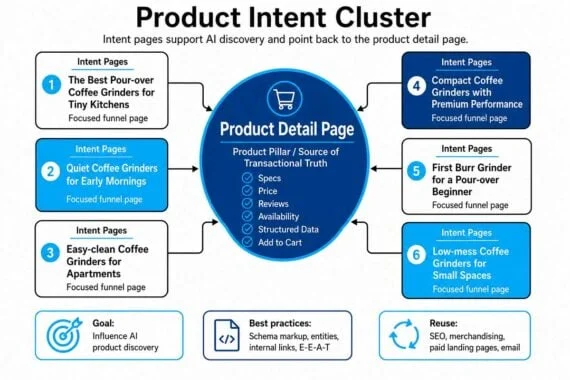
The core takeaway from the discussion is clear: e-commerce survival in the era of generative AI hinges on deep, clean, structured product data and technical accessibility.
- The Rise of LLM Revenue: Forest City Digital reports that some of its clients are already generating up to 10% of their total online revenue directly from LLM citations and referrals.
- The Power of Agentic Storefronts: Platforms like Shopify are actively rolling out features—such as Agentic Storefronts—that expose a merchant’s entire product catalog directly to prominent generative AI engines like ChatGPT, Claude, and Gemini.
- Technical Prerequisites: Simple oversights, such as misconfigured
robots.txtfiles that accidentally block AI crawlers, can completely erase a brand from the consideration sets of modern AI shoppers. - The Blueprint for Startups: If launching an e-commerce brand today, foundational efforts should focus heavily on structured metadata, Schema.org markup, and securing placements in authoritative listicles or "best-of" articles, which serve as primary training and citation sources for LLMs.
Chronology: From Corporate Marketing Roots to AI Specialization
To contextualize Trusnik’s modern approach to digital marketing, it helps to examine his professional journey and the evolution of Forest City Digital.
Early Career and Corporate Foundation
Kenny Trusnik began his professional career in corporate America, holding marketing roles at major global enterprises including Toyota and Sherwin-Williams. Working within these massive corporate ecosystems instilled in him a strict adherence to metrics, accountability, and goal-oriented execution.
The Creator Economy and Startup Shift
Seeking a faster-paced environment, Trusnik transitioned to a boutique startup. In this role, he helped independent content creators monetize their engaged audiences through targeted e-commerce ventures. This experience provided him with a ground-level understanding of direct-to-consumer (DTC) sales funnels, audience loyalty, and the operational hurdles facing lean online retailers.
Founding Forest City Digital (2020)
In 2020, Trusnik launched Forest City Digital in Cleveland, Ohio. Observing that many traditional marketing agencies often operated in silos disconnected from true business outcomes, he established his agency around a core corporate philosophy: aligning digital marketing initiatives directly with a client’s overarching financial and strategic goals.
Expanding into AI Visibility (2024–2026)
As generative AI transformed search behavior, Forest City Digital adapted its service offerings. Moving beyond traditional Google and Bing organic search, the agency integrated AI visibility optimization into its core search practice. Today, the agency manages comprehensive search, social, and retention campaigns, alongside fractional e-commerce and strategic consulting for growing brands.
Supporting Data and Technical Insights
Modern e-commerce optimization requires a dual focus: satisfying human consumers and ensuring machine-readable clarity for algorithms. Trusnik broke down the tactical layers required to achieve this balance.
1. Optimizing for Agentic Storefronts and LLM Crawlers
With Shopify introducing Agentic Storefronts earlier this year, merchant product catalogs can now be directly queried by conversational AI agents. When a consumer asks an AI assistant to recommend a specific product based on niche criteria—such as material, dimensions, or specialized features—the AI pulls from structured feeds.
"All Shopify product fields are now visible to LLM crawlers," Trusnik explains. "Examples include categories, colors, sizes, features, and materials. The aim is for genAI platforms to recommend merchants’ products when shoppers search for those features or characteristics."
To capitalize on this, merchants must ensure their backend metadata is pristine. Furthermore, structured data implementation—specifically Schema.org markup—acts as a universal translator, helping crawlers instantly understand a website’s architecture, product specifications, and brand purpose.
2. The Practical Checklist for E-Commerce Merchants
For brands looking to audit their current readiness for AI-driven commerce, Trusnik recommends the following sequential steps:
- Check the
robots.txtFile: Verify that your site’s code is not actively blocking crawlers from top generative AI platforms. - Deepen Product Data: Fill out every available product attribute field on your e-commerce platform (e.g., Shopify, WooCommerce, Adobe Commerce). Vague descriptions result in zero AI visibility.
- Earn High-Authority Listicles: AI models heavily rely on comparative roundups and authoritative "best-of" lists to determine product authority. Securing mentions in these articles acts as a powerful trust signal for LLMs.
- Invest in Top-of-Funnel Paid Media: For brands with adequate capital, targeted Meta ad campaigns remain a reliable engine for building baseline brand awareness and driving initial discovery.
Official Responses and Strategic Perspectives
During their conversation, Bandholz and Trusnik explored the nuances of product innovation, distinguishing between disruptive novelty and iterative improvement.
When Bandholz asked about the ideal strategy for launching a hypothetical e-commerce company in 2026, Trusnik emphasized resource efficiency:
"I would focus on getting the product data as deep and clean as possible in a structured environment. On Shopify, I would opt into Agentic Storefronts. I would try to acquire links in prominent listicles or best-of articles. Those are strong signals for the LLMs."
The Grüns Gummies Phenomenon: Iterative Novelty
Discussing product positioning, Bandholz pointed to the success of Grüns gummies as a prime example of "iterative novelty." Gummy vitamins were already a saturated, highly commoditized market. However, Grüns differentiated its product by incorporating dozens of additional superfood ingredients, effectively repositioning a standard vitamin into a comprehensive health supplement.
Trusnik echoed this philosophy, pointing to another booming sector:
"Yes, don’t get too novel. We work a lot with hemp beverage companies. That space has exploded as an alternative to alcohol. It’s still hemp, but the novelty is that it replaces alcohol in social settings."
By solving an existing, relatable consumer pain point—such as seeking a social beverage without the hangover—brands can achieve market traction without needing to invent an entirely new product category.
Implications: What This Means for the Future of Retail
The structural shift from keyword-based search engines to conversational, AI-driven discovery carries profound implications for online retailers, digital marketers, and software developers alike.
1. The Death of Superficial SEO
For years, brands could get away with thin product descriptions, keyword-stuffed meta tags, and low-effort content designed solely to game traditional search algorithms. In the age of LLMs, this strategy is obsolete. Generative AI models synthesize information contextually; they summarize specs, cross-reference reviews, and analyze deep metadata. Brands that fail to maintain exhaustive, accurate product data will simply disappear from AI-generated shopping recommendations.
2. The Shift in Content Marketing Value
AI-generated content has flooded the internet, creating a vast sea of repetitive, repurposed text. Trusnik notes that true content value now lies exclusively in original information—proprietary data, unique industry insights, and first-hand expertise that cannot be synthesized by an algorithm scraping existing web pages.
3. The Omnichannel Necessity
While AI visibility and organic search are critical, successful brands cannot rely on a single acquisition channel. Forest City Digital’s model emphasizes a balanced ecosystem:
- Search: Organic Google/Bing traffic combined with AI LLM visibility.
- Social: Influencer partnerships and paid performance marketing to drive top-of-funnel discovery.
- Retention: Sophisticated email and SMS marketing via platforms like Klaviyo and Brevo to plug leaky sales funnels and maximize customer lifetime value (LTV).
Conclusion
As e-commerce continues to navigate the turbulent waters of artificial intelligence, the brands that thrive will not be those that shout the loudest, but those that structure their data the best. By embracing technical rigor, optimizing for Agentic Storefronts, and focusing on genuine product differentiation, startups can position themselves to win not just human shoppers, but the AI algorithms that guide them.
To learn more about Forest City Digital or to connect with Kenny Trusnik, visit ForestCityDigital.com or reach out via his LinkedIn profile.