In the modern digital landscape, artificial intelligence has fundamentally altered how professionals create and consume content. Nowhere is this tension more palpable than on LinkedIn, a platform traditionally prized for professional networking, thought leadership, and authentic B2B relationships. As automated tools flood the network with generated text, LinkedIn has initiated a quiet yet aggressive crackdown on generic AI-driven content.
For marketers, creators, and corporate leaders, the message is clear: using AI is no longer optional for maintaining a competitive edge, but executing it poorly is a fast track to algorithmic obscurity. Insights from LinkedIn Ads expert AJ Wilcox, shared alongside discussions with platform authorities, reveal a comprehensive blueprint for utilizing AI strategically while preserving the irreplaceable core of human expertise.
Main Facts: The Shift in LinkedIn’s AI Ecosystem
The platform’s war on automated noise is real, measurable, and escalating. Over recent months, LinkedIn’s automated infrastructure has blocked hundreds of thousands of illegitimate comment attempts daily and billions of posting attempts.
Beyond backend filters, the platform has empowered its user base. Members can now flag content they suspect to be "AI slop," and LinkedIn’s analytics dashboard actively provides creators with feedback on how their audience perceives the authenticity of their posts.
Significantly, LinkedIn is modifying its own internal features. The platform is phasing out its old "enhance your post" tool—which frequently rewrote content in an unmistakable, generic AI voice—in favor of a proofreading-only assistant designed strictly to preserve the author’s natural tone.
According to AJ Wilcox, user reports regarding AI content are currently acting as a training mechanism for the platform’s detection models rather than immediate penalties. However, as these systems mature, direct algorithmic suppression is widely anticipated. In the interim, AI-generated comments that are flagged by users naturally struggle for traction, receiving minimal engagement and sinking silently to the bottom of comment threads.
Chronology and Evolution of LinkedIn’s Feature Rollouts
Understanding how to leverage LinkedIn successfully requires tracking the platform’s recent infrastructural updates across text, comments, live streaming, and advertising:
- One Year Ago: LinkedIn rolled out visible comment impressions, allowing everyday users and creators to measure the reach of their comments just as they would an original post. This fundamentally transformed the platform, making strategic commenting a viable stand-alone growth hack.
- Six Months Ago: LinkedIn announced that it would extend the lifespan of posts in the feed. While older posts occasionally continue to accumulate impressions, the practical reality remains unchanged: the most recent post captures the vast majority of daily engagement.
- Recent Months: The platform intensified its battle against automation by blocking billions of automated posting attempts and introducing user-facing "AI slop" reporting tools. Concurrently, LinkedIn began replacing generic "top comment" labels with personalized "top comment for you" recommendations, driving a remarkable 18% year-over-year increase in platform-wide comment interaction.
- Present Day: LinkedIn has introduced global, AI-powered live-stream tools (currently optimized for Company Pages) that automatically generate short clips and chapter replays, solving the historical discoverability problem that plagued long-form video archives.
Supporting Data and Engagement Metrics
Data from recent platform trends underscore the changing mechanics of LinkedIn engagement:
- Comment Density over Volume: The platform’s company pages team prioritizes "comment density"—measuring the depth and substance of conversations rather than mere back-and-forth frequency or superficial length.
- The Power of Curiosity: Follow-on prompts like "Am I wrong?" or "What am I missing?" reliably generate diverse, multi-contributor threads that heavily favor algorithmic distribution.
- The Golden Window: The highest-impact time to comment on a high-value post is within the first 1 to 2 hours of publication.
- Optimal Posting Schedules: For creators publishing twice a week, Tuesdays and Thursdays yield the strongest results. For a single weekly post, Wednesday remains the peak day. Mondays and Fridays suffer from depressed engagement as users transition into or out of the workweek. Furthermore, publishing twice in a single day actively cannibalizes a creator’s own reach.
- The Ad Frequency Trap: While LinkedIn’s ad platform recommends running five or more ad variations per campaign to achieve a claimed 20% increase in click-through rates, this advice breaks the platform’s frequency cap. Running more than four creatives forces the auction system to treat each variant as a distinct ad, showing identical creative to the same users repeatedly and artificially inflating acquisition costs. Wilcox recommends sticking to a strict limit of 2 to 4 creative variants per ad set.
Official Responses and Strategic Frameworks
To navigate this tightening regulatory and algorithmic environment, marketers must adopt structured methodologies. Wilcox outlines several core frameworks designed to bridge the gap between efficiency and authenticity.
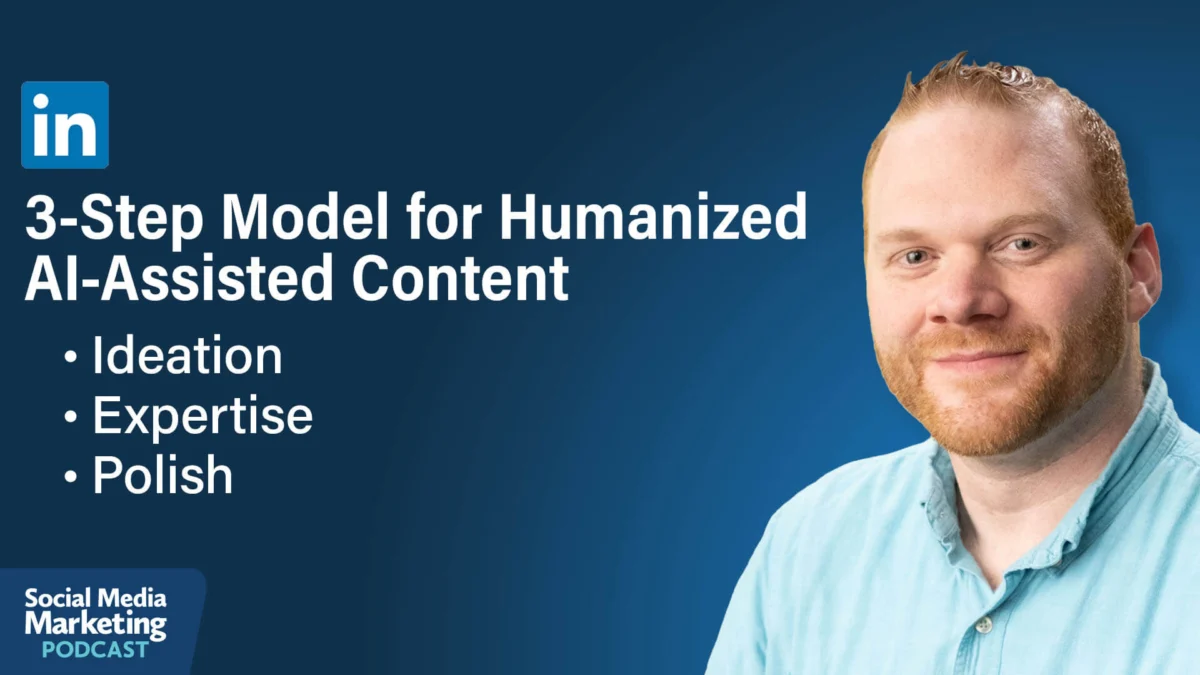
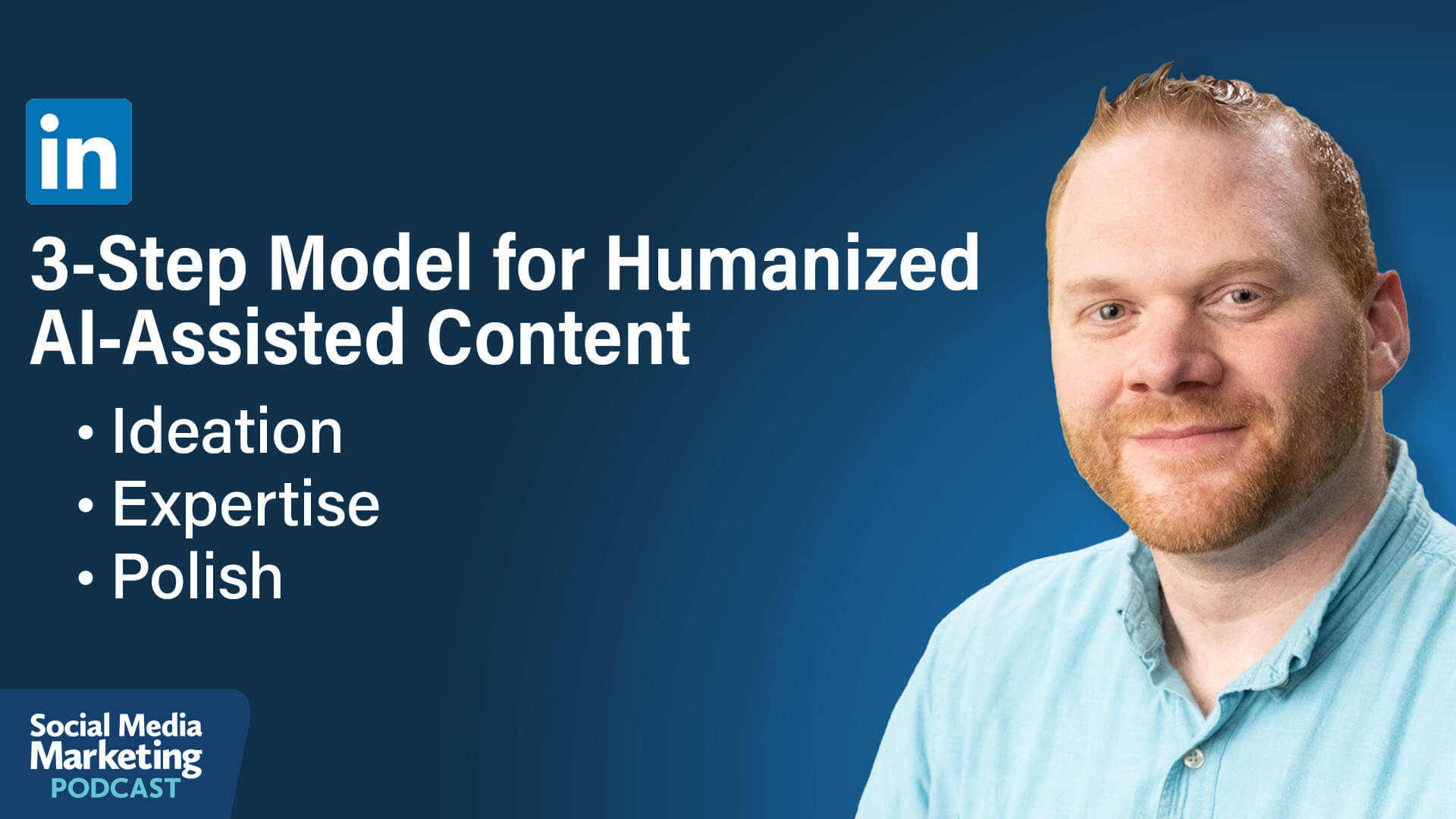
1. The Ideation-Expertise-Polish (IEP) Model
The most reliable method for incorporating AI into a LinkedIn workflow is the "sandwich" approach:
- Ideation (AI): Use AI models at the very beginning of the process to brainstorm angles, frameworks, and supporting points. This stage focuses entirely on volume and possibility, not final prose.
- Human Expertise (Human): The middle layer must consist entirely of the creator’s original experience, industry-specific insights, and nuance. Skipping this step turns content into hollow "slop."
- Polish (AI): Once the core message is written in the author’s voice, AI can be deployed to tighten sentences, fix grammatical errors, and optimize readability.
2. Identifying and Eradicating AI "Tells"
Audiences and detection algorithms have become hyper-sensitive to specific linguistic signatures common to large language models. Red flags include:
- Overuse of em dashes.
- Uncharacteristic or out-of-context emoji placement.
- Overly dramatic catchphrases (e.g., "guard your mental faculties" or "this is silently killing you").
While some creators attempt to inject artificial imperfections—such as intentional typos—Wilcox cautions that this is an unreliable defense, as AI can easily be prompted to replicate typos as well. Ultimately, substance trumps style: content that delivers genuine value rarely gets flagged, regardless of how cleanly it is edited.

3. The Comment-First Growth Strategy
For accounts lacking an established audience, investing time into strategic commenting on major industry players’ posts yields high impressions without requiring the heavy lift of original content creation. Success here relies on nurturing deep, respectful discussions rather than dropping empty platitudes like "great post."
When respectfully disagreeing, Wilcox advocates the Ted Lasso principle ("Be curious, not judgmental"), structured around a three-step formula: open with a sincere compliment, state "I have a slightly different take," and close by asking for the author’s perspective.
4. Maximizing AI Live Stream Tools
For executive leadership teams struggling with the production overhead of traditional video content, LinkedIn’s AI-powered live-stream tools offer a streamlined solution. By hosting unscripted, interview-style conversations recorded in high resolution, creators can let LinkedIn’s AI automatically extract the strongest 30- to 60-second clips and organize replays into searchable chapters. Because LinkedIn keeps live replays accessible for roughly six months, this format provides long-tail discoverability that far exceeds competing social platforms.
Implications for Marketers and B2B Brands
The overarching implication for the professional world is that authenticity is now the ultimate currency on LinkedIn. The era of mass-producing unedited, prompt-engineered text has hit a brick wall.
Brands that attempt to game the system with high volumes of low-effort AI content or bloated ad variations will find their metrics penalized by both discerning human audiences and tightening platform algorithms. Conversely, marketers who embrace AI strictly as an operational assistant—reserving the heavy lifting for human insight, strategic commenting, and authentic video formats—will capture disproportionate share of voice.
As LinkedIn continues to refine its ecosystem, the mandate for professionals is clear: leverage artificial intelligence to scale your productivity, but never outsource your expertise.