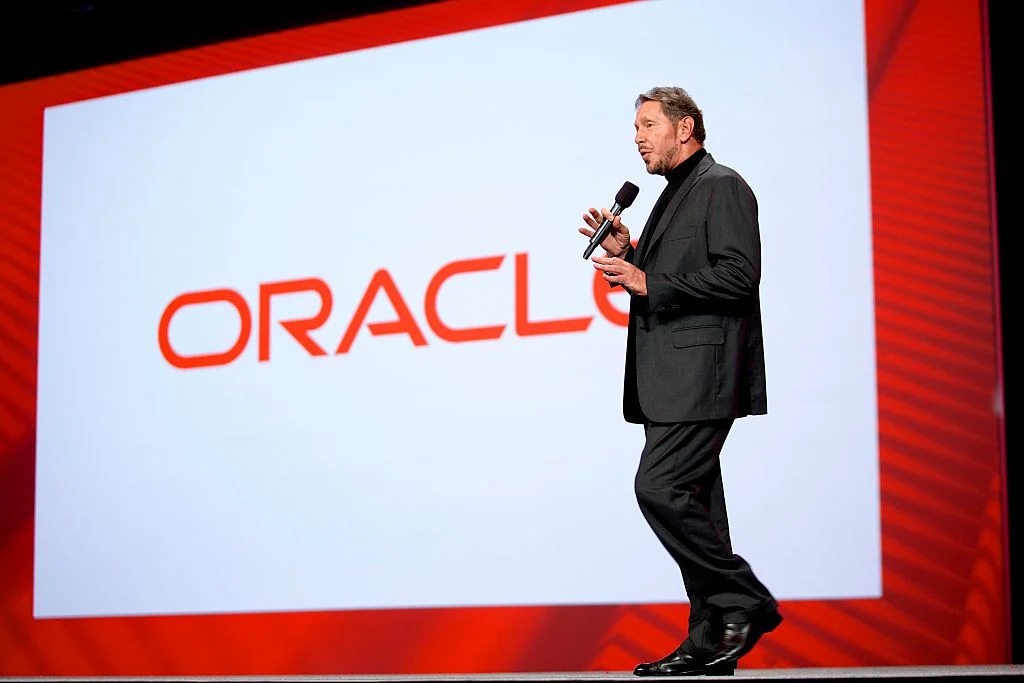
In a surprise development that has rippled through financial markets and corporate boardrooms, Oracle co-founder and executive chairman Larry Ellison has officially canceled his previously disclosed plan to divest a significant portion of his holdings in the software giant. The announcement, released by Oracle on Saturday, marks a stark reversal of strategy for one of the technology industry’s most prominent figures.
The move comes at a tumultuous time for Oracle, as the company navigates aggressive expansion into artificial intelligence infrastructure, high-stakes geopolitical partnerships, and the broader, often volatile, fluctuations of the tech sector.
The Core Facts: A $7.5 Billion Reversal
The decision to scrap the sale—which involved approximately 50 million shares of Oracle common stock—was communicated via a brief regulatory update. Had the sale proceeded as originally outlined in earlier filings, it would have liquidated an estimated $7.5 billion worth of equity, representing a massive shift in Ellison’s personal portfolio.
"No Oracle stock was sold under that plan, and he has no other plans to sell any of his Oracle stock," the company stated in its official press release.
While Oracle provided no specific justification for the cancellation, the sudden withdrawal of such a massive sell order often signals a change in internal confidence or a strategic recalibration regarding liquidity needs. For investors, the announcement serves as a vote of confidence; by holding onto his shares despite the company’s recent market performance, Ellison is signaling that he expects the firm’s long-term value to significantly outperform current trading levels.
Chronology of the Planned Divestment
The timeline of this decision highlights the rapid pace of change within Oracle’s corporate governance.
- Initial Disclosure: Earlier in the fiscal year, regulatory filings revealed that Ellison had established a structured plan to divest 50 million shares. At the time, market analysts viewed this as a routine diversification move, common among ultra-high-net-worth tech founders.
- Market Turbulence: Throughout the summer of 2026, Oracle’s stock faced significant headwinds. As broader tech indices wavered, ORCL saw a decline of approximately 22% year-to-date. This downturn created a challenging environment for a high-volume sell-off.
- The Regulatory Spotlight: As the planned sale dates approached, increased scrutiny from institutional investors regarding the impact of the sale on the stock price began to mount.
- The Saturday Announcement: On September 12, 2026, Oracle preemptively addressed the impending sale by announcing its total cancellation, effectively ending the market’s speculation about an imminent supply glut of ORCL shares.
Supporting Data: Oracle’s Financial and Strategic Landscape
To understand why a $7.5 billion sale would be so significant, one must look at the current state of Oracle’s capital allocation. The company is currently engaged in a massive, capital-intensive transition.
Infrastructure Spending
Oracle has been pouring billions of dollars into the construction of next-generation data centers. These facilities are designed to support the massive computational requirements of Generative AI, a sector where Oracle is competing head-to-head with cloud titans like Amazon Web Services (AWS), Microsoft Azure, and Google Cloud. This "arms race" for AI capacity has strained the company’s short-term cash flow, making the stock’s stability vital for maintaining favorable borrowing terms.
The TikTok Partnership
Beyond traditional cloud services, Oracle has solidified its position as a major security partner and infrastructure host for TikTok’s U.S. operations. This partnership, while lucrative, has placed Oracle at the center of a complex geopolitical web, requiring constant oversight and high-level engagement from the executive suite, including Ellison himself. The operational demands of this deal mean that Oracle’s leadership must remain fully aligned with the company’s long-term success.
Market Performance
The 22% decline in ORCL stock since the beginning of 2026 serves as the backdrop for this decision. While the broader market has been hesitant toward legacy tech firms pivoting into AI, Oracle’s valuation reflects a tug-of-war between its massive historical revenue base and the high costs of its current modernization phase. Ellison’s decision not to sell suggests he believes the market has currently undervalued the firm’s future earnings potential.
The Ellison Factor: Wealth, Influence, and External Ventures
Larry Ellison’s financial decisions are rarely confined to Oracle alone. As one of the world’s wealthiest individuals, his personal capital is often deployed across a wide range of industries, from healthcare to media.
The Warner Bros. Connection
A key area of interest for market observers is Ellison’s involvement in his son David Ellison’s acquisition of Warner Bros. The deal, which involved a $40 billion backing, has been a significant drain on liquid capital and has faced intense legal scrutiny.
The initial plan to sell Oracle stock was widely interpreted by analysts as a way to provide liquidity for these family-led ventures. The fact that he has now canceled the sale suggests either that the Warner Bros. acquisition has reached a new financial milestone that no longer requires his immediate cash injection, or that he has found alternative sources of funding that do not require diluting his stake in his primary legacy—Oracle.
The legal battles currently surrounding the Warner Bros. deal—which have reached the California courts—add a layer of complexity to Ellison’s financial planning. Any further divestment from Oracle could have been perceived by shareholders as a lack of focus on the core business, a perception Ellison clearly wants to avoid.
Implications: What This Means for Shareholders
The cancellation of the sale has several immediate and long-term implications for the market.
1. Market Stability and Confidence
For retail and institutional investors, the primary takeaway is stability. The market was prepared for a $7.5 billion influx of supply, which likely pressured the stock price downward. The cancellation removes this "sell pressure" overnight, providing a cleaner path for the stock to recover should the company’s next quarterly earnings report show positive momentum in its AI and cloud divisions.
2. Leadership Commitment
By retaining his shares, Ellison is effectively doubling down on Oracle. In the world of executive leadership, the "skin in the game" principle is paramount. Investors want to see that the person who built the company remains fully invested in its future. By declaring that he has "no other plans to sell," Ellison is signaling that he believes the company is at a valuation trough and that the growth trajectory for the next 24 to 36 months is favorable.
3. Future Capital Allocation
While this sale is canceled, the underlying need for liquidity in the Ellison family office likely remains. Future financial moves by Ellison will now be watched with even greater intensity. Investors will be looking to see if he uses other, less public methods of financing, or if he intends to increase his stake in the company as a signal of strength.
4. Strategic Focus
The cancellation also suggests that Oracle’s leadership is looking to minimize distractions. By putting an end to the speculation surrounding his personal holdings, Ellison allows the company to focus exclusively on its operational goals: winning market share in the cloud, scaling its AI infrastructure, and managing the regulatory complexities of its high-profile enterprise partnerships.
Conclusion
Larry Ellison’s decision to halt his $7.5 billion Oracle stock sale is more than just a financial maneuver; it is a strategic signal. At a time when Oracle is undergoing one of the most significant transformations in its history, the executive chairman’s decision to remain fully invested provides a much-needed boost of stability.
As the company continues to navigate the high-stakes world of AI, global cloud infrastructure, and complex media acquisitions, the alignment between Ellison’s personal interests and Oracle’s corporate performance will remain the primary lens through which investors view the company. For now, the "Oracle of Oracle" has spoken, and the message is clear: he is not cashing out—he is digging in for the long haul.
As the markets react to this news in the coming weeks, analysts will be looking closely at the next set of earnings disclosures to see if the company’s heavy investments in data centers begin to yield the competitive advantage Ellison clearly anticipates. Until then, the stock sits in a precarious, yet potentially promising, position, supported by the firmest of commitments from its founder.