By Global Business Insights Desk
Published: Autumn 2026
Main Facts
Artificial intelligence has officially crossed the threshold from an experimental tech novelty into the foundational infrastructure of modern commerce. According to the newly released 2026 AI Marketing Industry Report by Social Media Examiner, daily utilization of AI tools among marketers has nearly doubled in a span of 24 months, surging from approximately 37% in 2024 to a staggering 73% today.
Crucially, this sweeping transformation is not being driven by deep-pocketed multinational corporations or sprawling enterprise training divisions. Over 60% of respondents in the comprehensive study operate inside organizations with 10 or fewer employees. Far from being left behind by Silicon Valley’s rapid pace of innovation, small business owners and lean marketing teams are spearheading everyday AI integration.
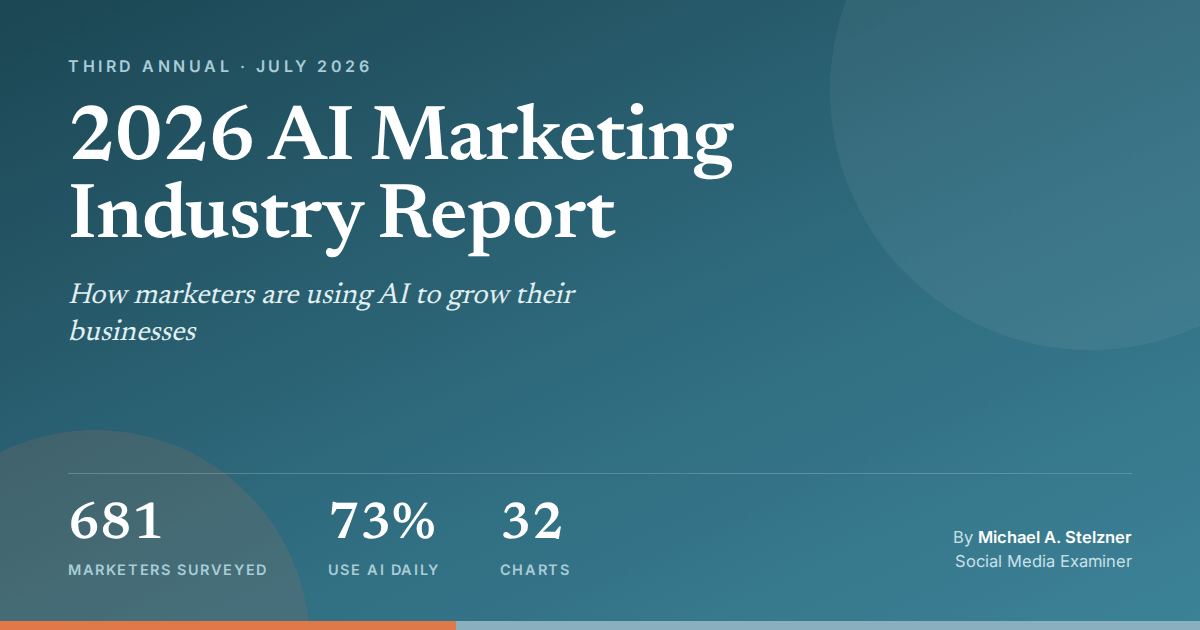
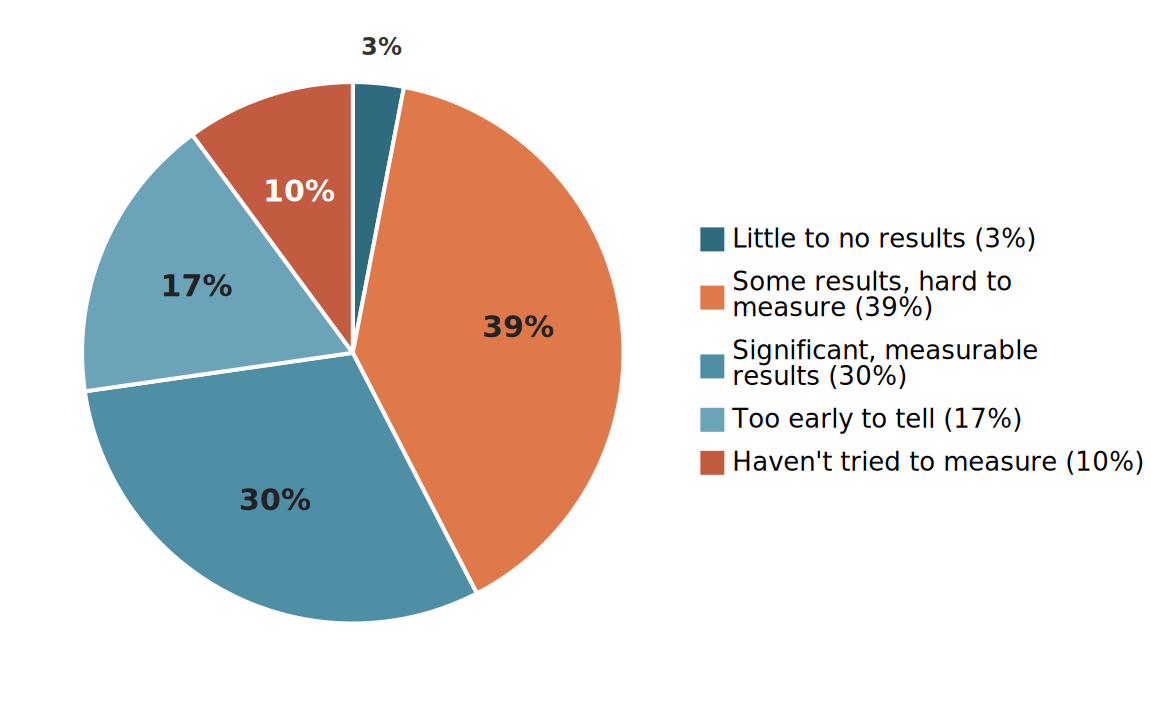
Yet, the report uncovers a complex operational reality. While nearly 90% of professionals report immediate gains in productivity and time management, a staggering measurement gap persists: only 30% of businesses can definitively tie these tools to hard financial metrics. As the industry enters a more mature phase defined by paid software tiers, autonomous AI agents, and a push toward visual and video content, the data provides a definitive playbook—and a stark warning—for independent enterprises navigating the digital frontier.
Chronology: The Evolution of AI in Small Business Marketing
To understand where small business marketing stands today, industry analysts look back at a remarkably compressed timeline of technology adoption:
- The Pre-2024 Era (The Hype Cycle): AI was largely viewed as an exotic novelty or a contentious shortcut. It was dominated by early adopters experimenting with rudimentary text generators. Roughly 23% of marketers actively avoided or rarely touched the technology.
- 2024–2025 (The Free-Tier Boom): Driven by the mainstream proliferation of conversational models like ChatGPT, daily usage ticked upward to roughly one-third of marketing professionals. Businesses experimented heavily with free tools to draft blog posts, brainstorm campaign ideas, and handle baseline copywriting.
- 2025–2026 (The Institutional Shift): The landscape shifted dramatically toward paid ecosystems and specialized software. The friction of the learning curve was absorbed entirely by individual initiative. Non-users plummeted to a mere 7%, while weekly and daily usage rates skyrocketed to near-universal adoption levels. Today, the conversation has shifted away from simple text creation toward multi-modal capabilities like video generation and autonomous agent workflows.
Supporting Data: 5 Eye-Opening Findings from the 2026 Report
The 2026 research encompasses dozens of data points tracking year-over-year operational habits. Five core findings illuminate how lean businesses are managing this paradigm shift:
1. AI is the New Normal, Not a "Nice-to-Have"
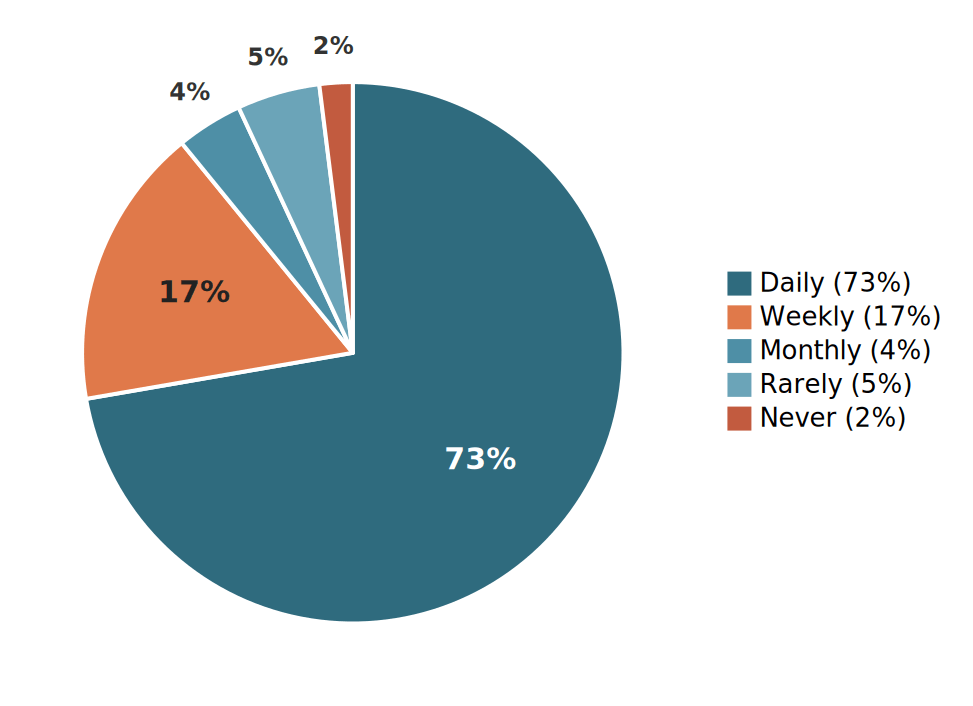
The days of debating whether to adopt AI are officially over. The report reveals that 73% of marketers utilize AI on a daily basis, while a cumulative 90% engage with the technology at least once a week.
- The Momentum: 84% of professionals stated that their overall AI usage increased over the past 12 months.
- The Future Outlook: 78% expect their dependency and utilization to continue climbing through the remainder of the decade.
- The Takeaway: The window for casual experimentation is slamming shut. Businesses that have remained on the sidelines face an increasingly steep competitive disadvantage.
2. The Death of Corporate Training Budgets
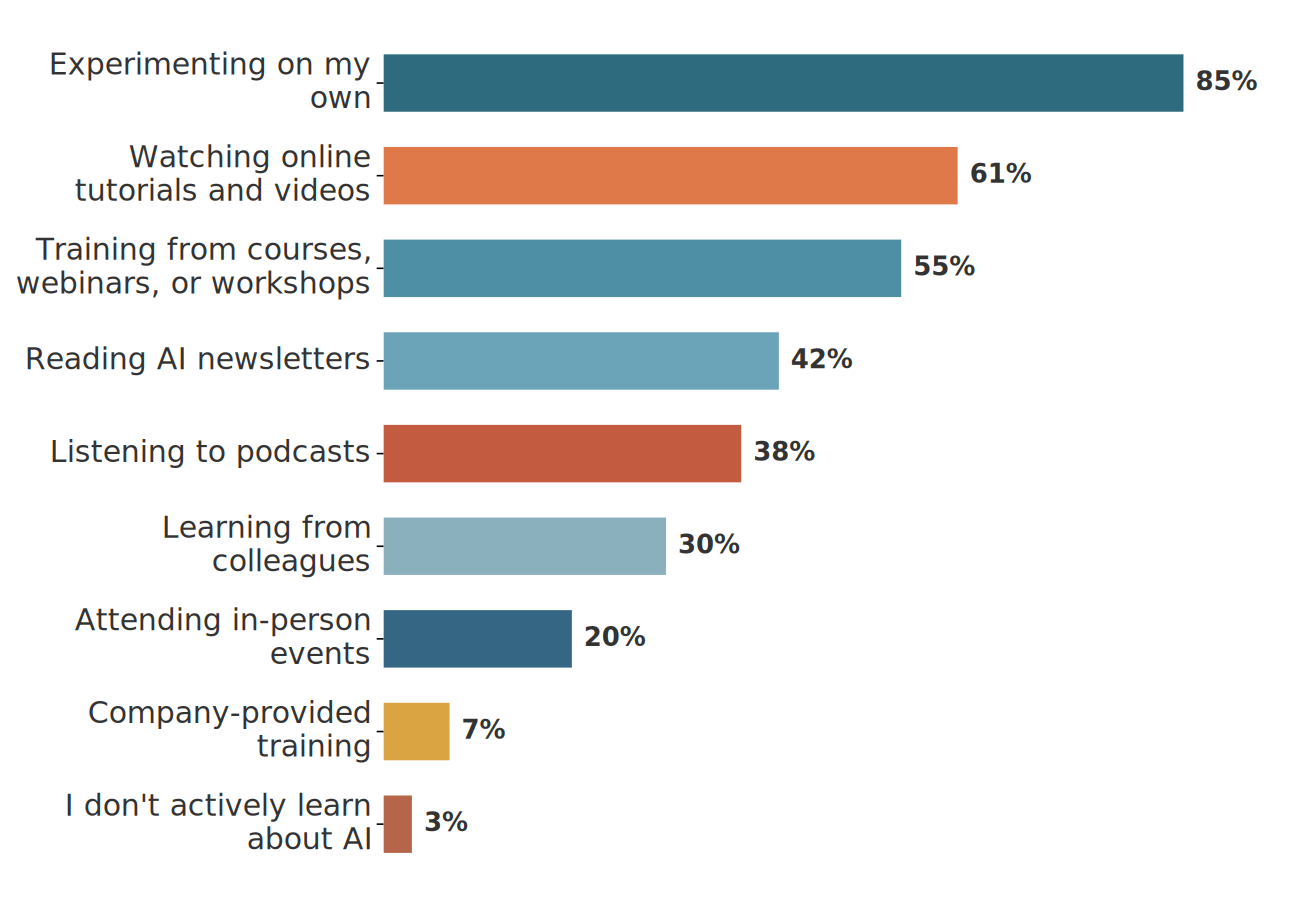
One of the most revealing insights involves how modern marketers acquire these high-tech skills.
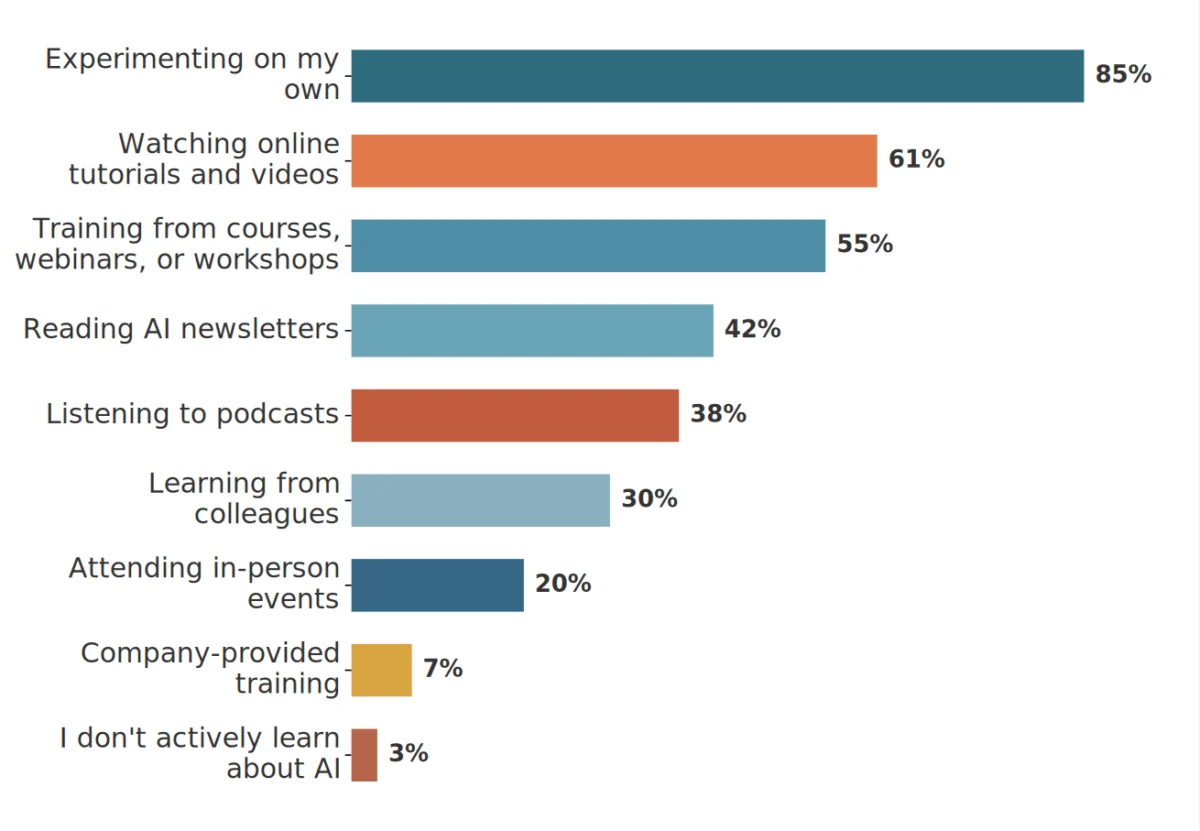
- Self-Taught Independence: A massive 85% of professionals learn to use AI entirely through independent experimentation.
- The Corporate Void: Only 7% of respondents reported receiving formal training sponsored by their employers.
- Financial Investment: The era of free software tiers is fading; 85% of marketers now pay for AI tools out-of-pocket or via corporate software budgets, with 53% directly spending their own funds. When asked who drives AI integration within their structures, 55% of respondents pointed directly to themselves ("me"), cementing the reality that small business agility is the ultimate vehicle for technological adoption.
3. The Productivity-Proof Gap
While the subjective value of AI is universally acknowledged, objective verification remains elusive.
- Perceived Efficiency: 86% of survey participants strongly agree that AI tools save them significant time. An identical 86% report measurable boosts in everyday productivity and creative confidence.
- The Accountability Void: When asked to prove these gains through hard data, only 30% could point to significant, quantified results. Another 39% acknowledged seeing positive outcomes but admitted they lack the framework to measure them, while 10% have made no attempt at tracking return on investment (ROI).
- The Takeaway: This discrepancy represents a massive competitive opportunity. Small businesses that implement basic tracking frameworks—such as measuring hours saved per week or increases in content output volume—will instantly outpace the 70% of competitors operating in the dark.
4. AI Video: The Ultimate Untapped Frontier
While textual AI utilization has reached near-saturation at 95% adoption, visual and motion media lag significantly behind.
- The Adoption Lag: Only 37% of marketers currently utilize AI for video creation.
- The Demand Surge: Conversely, 74% of respondents stated that video is the number one content type they want to learn to create using AI.
- The Gap: This represents a massive 37-point deficit between market desire and practical execution—the largest gap measured in the report. Meanwhile, AI image creation has surged, nearly doubling from 39% to 67% since 2024. Early movers who master basic AI video generation tools stand to capture outsized audience attention in crowded digital marketplaces.
5. The Rise of Autonomous AI Agents
As artificial intelligence evolves past simple chat prompts, a new class of utility is emerging: AI agents capable of executing multi-step, complex tasks autonomously.
- Current Usage: Only 11% of marketers currently use AI agents regularly, with an additional 24% experimenting.
- Future Intent: However, 44% plan to adopt agents soon, bringing total current or intended adoption to 79%. Furthermore, learning how to deploy agents is the single most requested educational topic among marketers (74%).
- The Impact: For small teams, this technology promises to bridge the labor gap, enabling automated systems to manage email sequences, parse data analytics, and handle routine customer interactions without constant human intervention.
Official Responses and Industry Commentary
Michael Stelzner, founder of Social Media Examiner and architect of the 2026 study, emphasized that the research was deliberately designed to cut through industry hype and deliver grounded, actionable insights for independent operators.
"We surveyed marketers to find out how they’re actually using AI. Not the hype. Not the headlines. The real story," Stelzner noted in the report’s foreword.
"Since 60% of our respondents come from businesses with 10 or fewer people, this isn’t enterprise research. This is your world. The marketers who are furthest ahead didn’t get there through corporate training programs or massive budgets. They got there the same way you would—by rolling up their sleeves and figuring it out."
Industry analysts point out that the shift away from broad enterprise platforms toward specialized, consumer-grade and indie-friendly tools reflects a broader democratization of technology. Rather than waiting for top-down mandates, independent entrepreneurs are treating generative AI as a virtual extension of their own workforce.
Implications for Small Business Owners
The 2026 data carries profound implications for independent business owners, solopreneurs, and lean marketing agencies:
- Leveling the Playing Field: The democratization of AI tools means micro-businesses can now produce content volumes, marketing strategies, and customer service frameworks that previously required an entire corporate department.
- The Necessity of Upskilling: Because formal corporate training is practically nonexistent, business owners must cultivate a culture of continuous, hands-on experimentation. Allocating even an hour a week to testing new software categories—such as AI video suites or automated workflow agents—yields disproportionate long-term dividends.
- Moving Beyond "Gut Feeling" Productivity: To justify subscription costs and optimize workflows, businesses must implement rudimentary tracking metrics. Documenting time savings and conversion lifts transforms AI from an interesting gadget into a quantifiable business asset.
- Seizing the Video Opportunity: With 74% of marketers eager to break into AI video but only 37% actually doing it, early adoption in this medium offers a clear pathway to differentiation in saturated digital feeds.
As the AI ecosystem matures through 2026 and beyond, the data demonstrates that success does not belong to those with the largest budgets, but to those with the greatest adaptability. For small businesses ready to embrace the shift, the modern digital economy has never offered more leverage.