Main Facts
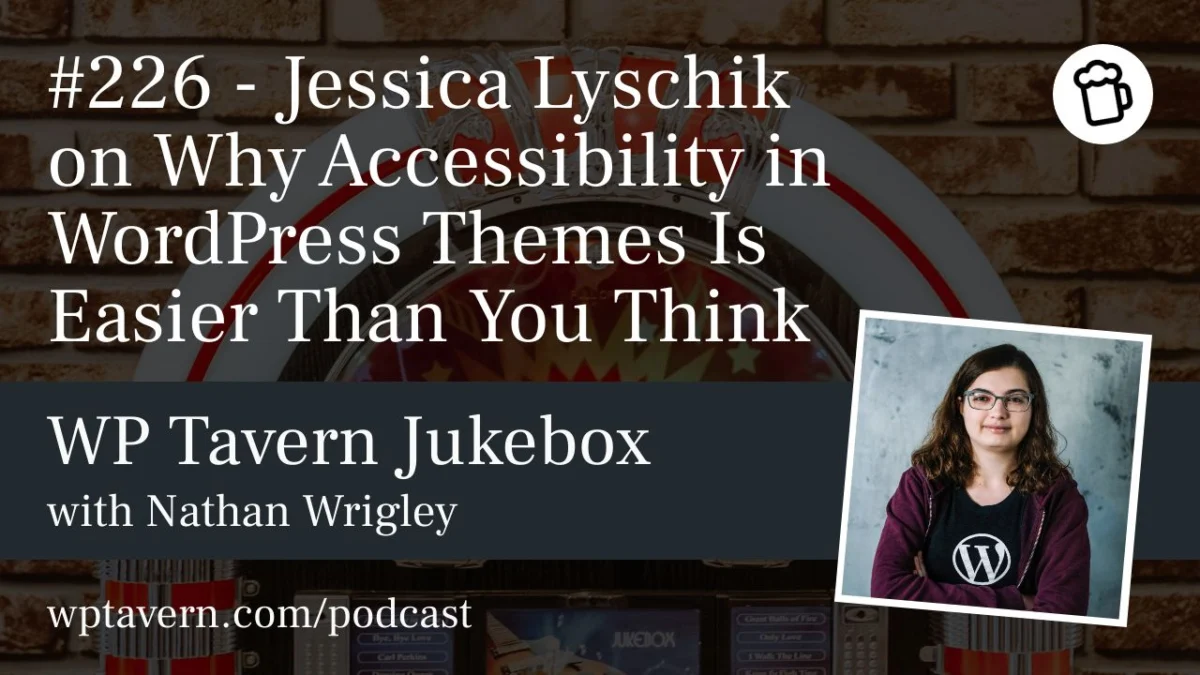
In the modern digital landscape, web accessibility is often perceived as an intimidating, highly technical mountain to climb. For many developers and agency workers, the prospect of adhering to strict compliance standards triggers a sense of dread. However, during a standout presentation at WordCamp Europe 2026, longtime WordPress community member and developer Jessica Lyschik set out to demystify these requirements.
Titled "Accessibility in Themes: Easier Than You Think," Lyschik’s session focused on breaking down the accessibility-ready criteria for WordPress themes. She demonstrated that with a foundational understanding of HTML, standard CSS practices, and the modern capabilities of WordPress block themes, achieving accessibility is far more straightforward than most creators assume.
Key takeaways from Lyschik’s insights include:
- Low-Hanging Fruit: Simple adjustments, such as using correct HTML5 semantic tags, incorporating descriptive alternative text for images, and implementing underline text styles for links, instantly elevate a site’s inclusivity.
- The Power of Block Themes: Core WordPress block themes automate much of the heavy lifting. Using features like the main landmark group settings or leveraging built-in template parts can automatically configure features like "skip-to-content" links.
- The AI Connection: As automated AI agents increasingly interact with the web on behalf of human users, correctly structured, accessible HTML will become critical for ensuring machines can successfully navigate and transact on digital platforms.
Chronology: From 2005 Beginnings to 2026 Accessibility Advocacy
Lyschik’s journey into web development and advocacy spans two decades, mirroring the broader evolution of the WordPress ecosystem itself.
Early Days and Professional Entry (2005–2015)
Lyschik first dipped her toes into WordPress around 2005 and 2006, playing with the platform to understand its mechanics. By 2015, she transitioned to professional work within the ecosystem, joining the WordPress agency Syde. Reflecting on her early career, Lyschik notes that web accessibility was rarely discussed; developers largely took standard web navigation for granted without considering users with visual, auditory, or physical impairments.
The Shift Toward Inclusivity and Community Involvement (Recent Years)
Over the past several years, accessibility evolved from an afterthought to a core pillar of Lyschik’s professional philosophy. Through continuous learning, participating in theme reviews, and collaborating with accessibility advocates, she began integrating inclusive practices into her everyday coding routine.
WordCamp Europe 2026 Presentation
At WordCamp Europe 2026, despite a brief technical hiccup involving missing presentation slides, Lyschik delivered a packed talk that resonated deeply with attendees. The unexpectedly large turnout highlighted a growing appetite within the WordPress community to demystify compliance standards. Following her session, Lyschik sat down with WP Tavern’s Nathan Wrigley in the media room to discuss the practicalities of theme development, the moral imperatives of accessible design, and the emerging intersection of AI and web standards.
Supporting Data and Theme Repository Statistics
To understand the current state of accessibility in the WordPress ecosystem, it is helpful to look at the numbers governing the official theme repository.
- Total Themes in the Repository: Public data reveals there are currently over 14,700 themes available in the official WordPress.org theme repository.
- Accessibility-Ready Tags: Out of those thousands of choices, a mere 270 themes carry the coveted "accessibility ready" tag—representing roughly 1.5% of the entire directory.
- Core Requirements: To secure this tag, theme authors must successfully navigate 18 distinct requirements outlined by the WordPress community. These guidelines incorporate subsets of the Web Content Accessibility Guidelines (WCAG).
- Recent Updates: The official accessibility requirements for themes recently underwent their first major update in over a decade, introducing modern considerations such as verifying that recommended plugins are also accessible and adding an
accessibility.txtdocumentation file within themes.
Official Responses and Perspectives on Compliance
During their discussion, Wrigley and Lyschik explored the tension between regulatory enforcement, community guidelines, and individual responsibility.
The Carrot vs. The Stick Approach
When asked whether WordPress should enforce accessibility by barring non-compliant themes from the repository entirely, Lyschik urged caution. Given that only 1.5% of themes currently hold the accessibility-ready designation, imposing strict mandates overnight would alienate developers. Instead, Lyschik advocates for a gradual, educational approach:
"I think it would be extremely hard to force sort of, if you want to flip that, force that onto people… We do not like to be forced to things we do not understand. And that’s why I’m sharing my knowledge because I think it is not that hard."
The Moral Journey vs. The Legal Reality
While governments worldwide—particularly in Europe via the European Accessibility Act—are tightening legal requirements for digital compliance, Lyschik’s personal motivation remains rooted in empathy. Hearing firsthand accounts from blind developers and users who struggle against poorly coded websites serves as a powerful moral compass.
Implications: The Future of Accessible Web Development
The conversations at WordCamp Europe 2026 point toward significant shifts in how developers, agencies, and autonomous technologies will approach the web in the coming years.
1. Shift-Left Mentality Saves Time
One of Lyschik’s core technical arguments centers on efficiency. Developers often view accessibility as a tedious checklist item to complete right before launching a site. However, retrofitting hundreds of buttons with missing ARIA labels or rewriting heading hierarchies at the eleventh hour breeds frustration. By baking accessibility into the initial design phase—and leveraging the inherent semantic strengths of block themes—developers save countless hours of manual remediation.
2. The Rise of Interdisciplinary Awareness
True accessibility cannot be the sole responsibility of the developer. Building a truly inclusive digital experience requires interdisciplinary collaboration. Content writers must structure headings logically (from H1 down through H6), SEO specialists must prioritize clear alternative text, and designers must ensure adequate color contrast. Everyone touching a website project holds a piece of the puzzle.
3. AI Agents and the Accessibility Paradigm
Perhaps the most forward-looking implication discussed in the interview is the relationship between web accessibility and artificial intelligence. Autonomous AI agents navigating the web function similarly to screen readers. They do not "see" a website visually; they rely entirely on clean, semantic HTML, proper button labeling, and correct structural elements to execute tasks like online shopping or form submission.
As AI agents become ubiquitous assistants, sites built with strict accessibility standards will naturally perform better, yield higher conversion rates, and allow machines to seamlessly interact on behalf of users. As Lyschik noted, accessibility is no longer just about helping human users navigate physical or sensory barriers—it is rapidly becoming the foundational language through which all digital systems, human and artificial alike, understand the web.