The modern marketing landscape has undergone a seismic shift. If you can name a business process—from predictive lead scoring and hyper-personalized email campaigns to real-time content generation and complex data analytics—there is almost certainly an artificial intelligence (AI) tool designed to execute it.
We are currently witnessing a "Cambrian explosion" of marketing technology. Every day, new platforms emerge, promising to streamline search, automate personalization, refine account intelligence, and optimize campaign performance. However, for the modern marketing leader, the challenge is no longer a lack of options; it is a profound dilemma of choice. The true competitive advantage does not lie in adopting every "shiny object" that hits the market. Rather, it lies in the strategic ability to discern which technologies possess the genuine power to disrupt, transform, and elevate daily operations.
As we look toward the future of the industry, the most intriguing AI tools are not merely those that help us complete existing tasks faster. They are the platforms that augment human capabilities, expanding the boundaries of what is possible and allowing marketers to reimagine their professional roles in a new, more strategic light.
The State of the Industry: A Crowded Horizon
The current state of the AI marketing ecosystem can best be described as "hyper-active." Venture capital is flowing into generative AI, predictive modeling, and machine learning at an unprecedented rate. This influx of capital has created a crowded marketplace where platforms often overlap in functionality.
For the average CMO or marketing director, the sheer velocity of change is dizzying. The shift from traditional software-as-a-service (SaaS) to AI-native platforms means that tools are no longer just repositories for data; they are active agents that can make autonomous decisions based on patterns that would take a human analyst weeks to uncover.
However, the proliferation of these tools brings a significant risk: "Tool Fatigue." Organizations that attempt to layer AI onto every process without a unified strategy often find themselves managing a fragmented tech stack that hinders, rather than helps, productivity. The key to successful implementation is a focus on high-impact, low-friction integration.
Chronology: How We Reached the AI Tipping Point
To understand where we are going, we must look at how we arrived at this moment of technological acceleration.
- 2012–2016: The Era of "Big Data" and Basic Automation. Marketing technology was defined by rules-based systems. If a user did X, send email Y. It was rigid and required significant human manual input to design the workflows.
- 2017–2020: The Rise of Machine Learning. During this period, platforms began to incorporate predictive analytics. AI was used to score leads and optimize ad spend, but it was largely hidden "under the hood" of existing platforms.
- 2021–2023: The Generative AI Boom. The public release of Large Language Models (LLMs) changed everything. Marketing went from being data-driven to being both data-driven and creative-driven. AI could now write, design, and code.
- 2024–Present: The Era of Integration and Agentic AI. We are currently in the phase where standalone tools are being replaced by integrated AI agents. These systems don’t just assist with a task; they understand the goal and execute multi-step workflows with minimal human oversight.
Supporting Data: Why AI Adoption is No Longer Optional
The data regarding AI adoption in marketing is compelling. According to recent industry surveys, over 70% of high-performing marketing teams have integrated at least one form of AI into their daily workflow. But why?
- Efficiency Gains: Early adopters report a 30% to 50% reduction in time spent on routine content creation and data entry tasks.
- Scalability: AI allows small, lean teams to operate with the output capacity of much larger departments.
- Personalization at Scale: Traditional manual personalization is limited by human bandwidth. AI models can process thousands of data points per second to provide hyper-personalized content to thousands of individual prospects simultaneously.
- Cost Reduction: By automating repetitive tasks, companies are reallocating budget from administrative overhead to strategic, high-value creative initiatives.
Official Perspectives: Expert Insights on the AI Shift
Cathy McPhillips, Chief Marketing Officer at SmarterX and the Marketing AI Institute, emphasizes that the goal is not to replace the marketer, but to evolve the craft. "The most intriguing AI tools aren’t just helping us do existing jobs faster," she notes. "They are augmenting our capabilities and expanding what’s possible."
When we talk to industry practitioners, a recurring theme emerges: The Human-in-the-Loop. While AI can handle the "heavy lifting" of data analysis and content drafting, the final strategic layer remains a human responsibility. Ethics, brand voice, and emotional intelligence—the pillars of high-end marketing—are still uniquely human traits that AI can emulate but not replace.
Furthermore, sponsors of major industry events like the Marketing AI Conference (MAICON) are consistently reporting that their most successful clients are those who treat AI as a long-term strategic partnership rather than a quick fix for a quarterly goal.
The Implications: A New Era of Marketing Leadership
The widespread adoption of AI has profound implications for the structure of marketing departments and the skills required for success.
The Shift in Required Skills
The "Marketing Generalist" is evolving into the "Marketing Orchestrator." The ability to write code or draft copy is becoming less important than the ability to prompt AI, interpret its output, and maintain data hygiene. The modern marketer must become a "Prompt Engineer" and a "System Thinker."
The Ethical Imperative
As AI becomes more integrated into customer interactions, the question of transparency becomes paramount. Organizations must decide how much of their content is AI-generated and how they will handle privacy concerns regarding the data fed into these models. Trust is the new currency of the digital age.
Redefining the Creative Process
AI has removed the "blank page" syndrome. Marketers can now ideate with AI, using it as a collaborative partner to brainstorm, iterate, and refine concepts in real-time. This moves the creative process from a solitary endeavor to a rapid-fire, collaborative loop.
The Road Ahead: Seeing the Future in Cleveland
Reading about AI marketing tools is one thing; witnessing their application in a live environment is entirely different. The theoretical potential of AI becomes practical reality when you see it applied to real-world business challenges.
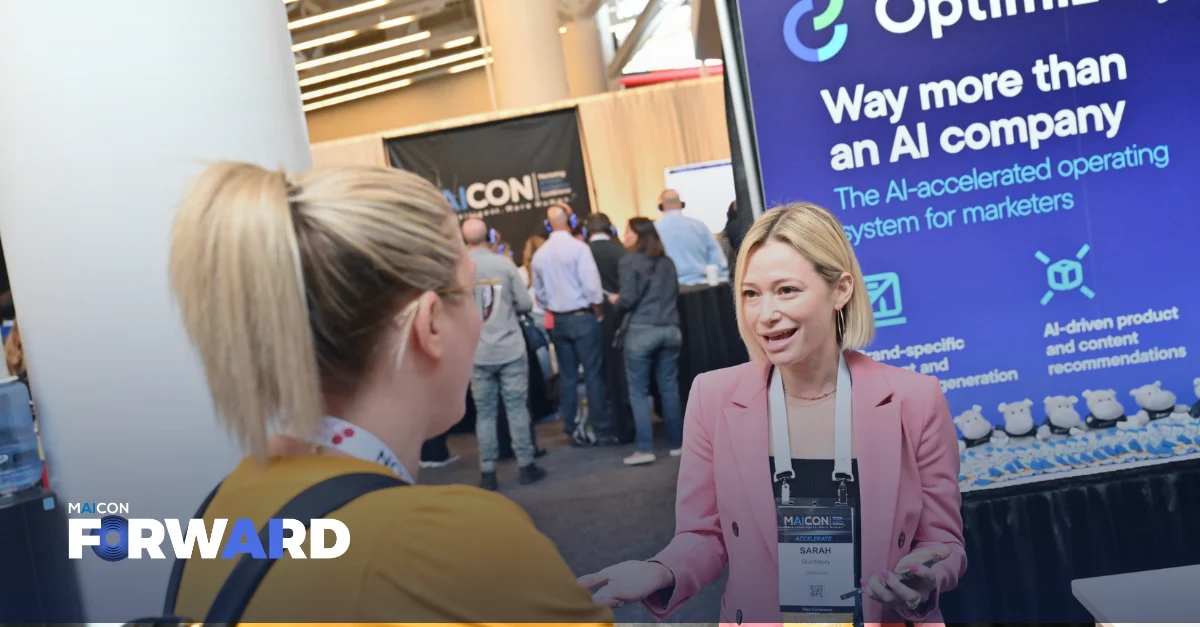
This is why events like MAICON (The Marketing AI Conference) are critical for the industry. Rather than a series of abstract lectures, conferences provide a hands-on environment where marketers can get live demos, hear from practitioners who have failed and succeeded, and explore how organizations are putting AI to work across the entire marketing function.
As we look toward the 7th annual Marketing AI Conference, taking place October 13–15, 2026, in Cleveland, Ohio, the focus will be on the transition from "what is AI" to "how do I scale AI in my specific organization."
Conclusion: The Path Forward
The AI revolution is not a transient trend; it is a fundamental shift in the infrastructure of global marketing. We are only just getting started. The tools available today are the "Model T" versions of what we will see in the next decade.
For the marketing leader, the mandate is clear:
- Audit: Identify the most tedious, time-consuming tasks in your department.
- Experiment: Start with one or two tools that offer high-leverage solutions to those problems.
- Educate: Ensure your team is trained not just on how to use the tools, but on how to critically evaluate their output.
- Connect: Engage with the community of practitioners who are navigating these same waters.
The future of marketing is not AI versus human; it is human plus AI. By leveraging these technologies to handle the data-heavy, repetitive, and analytical aspects of our work, we free ourselves to focus on the one thing that will always matter: building authentic, human connections with our audiences.
The landscape is crowded, yes. But for those who are willing to curate their tech stack with precision and purpose, the opportunity to redefine what is possible has never been greater. We look forward to seeing how these technologies—and the professionals who wield them—shape the industry in the years to come.