Introduction: The New Frontier of Web Development
The landscape of web development is undergoing a seismic, irreversible shift. As artificial intelligence models transition from novelty chatbots to deeply integrated autonomous coding agents, the very nature of software engineering is being redefined. Deterministic, step-by-step programming processes are colliding with the unpredictable, non-deterministic world of Large Language Models (LLMs).
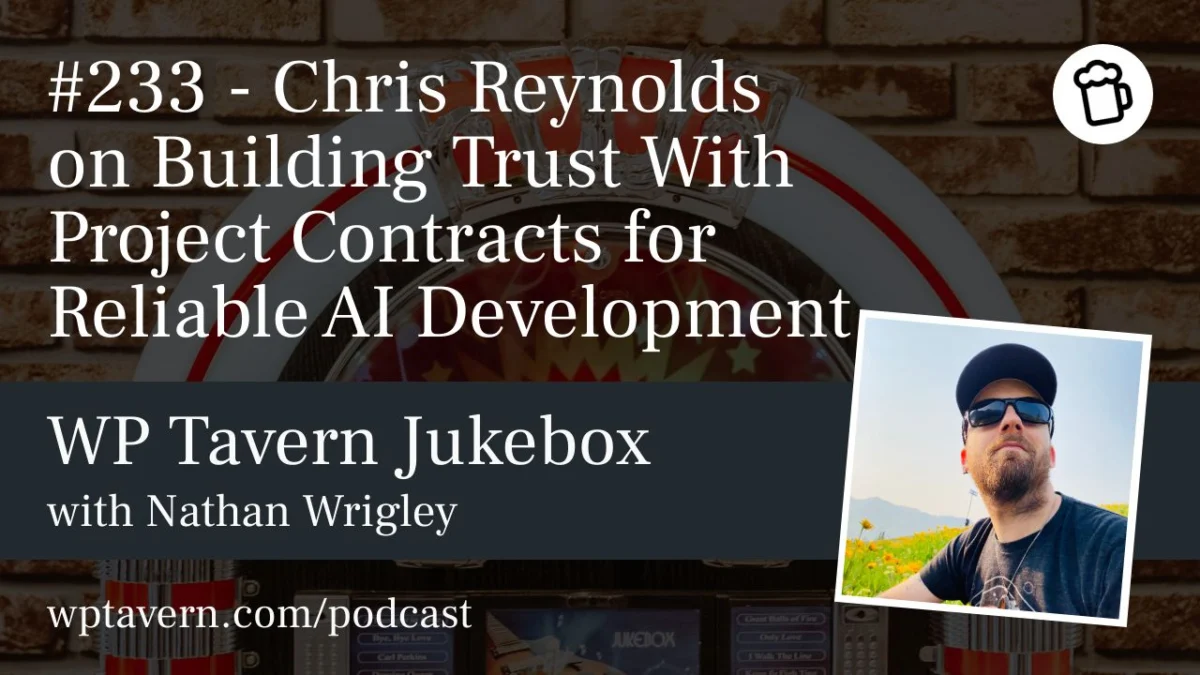
In a recent episode of the Jukebox Podcast from WP Tavern, host Nathan Wrigley sat down with Chris Reynolds, Senior Manager of Developer Relations at Pantheon and a 20-year WordPress veteran. Recorded live, their wide-ranging conversation unpacked the core themes of Reynolds’ popular WordCamp US presentation, Parenting Claude: Guardrails for AI-Assisted Development.
The discussion dove deep into the philosophical, practical, and technical ramifications of leveraging AI in modern workflows. From the emergence of "vibe coding" and the democratization of web creation to the crucial necessity of automated reviewer agents and project contracts, Reynolds offered a masterclass in how developers can harness AI without losing control of their codebases.
Chronology of an Evolution: From 20-Year Veteran to AI Advocate
Chris Reynolds’ journey in the WordPress ecosystem mirrors the evolution of the web itself. With a career spanning two decades, Reynolds has experienced nearly every facet of the platform. His path wound through agency stalwarts like WebDevStudios and Human Made before landing at Pantheon five years ago.
Initially joining Pantheon as a software engineer, Reynolds worked in the critical space bridging the hosting platform and applications like WordPress. Approximately two years ago, he transitioned into Developer Relations (DevRel), where he now leads the DevRel team. His role is to bridge the gap between complex developer infrastructure and the humans consuming it, translating technical architecture into actionable, accessible knowledge.
However, recognizing the trajectory of technology early in 2026, Reynolds identified AI as the defining industry conversation. To lead effectively, he knew Pantheon needed a clear, practical perspective on AI integration—one that ensured developers could leverage these tools without compromising security, testing, or job security.
To test these theories firsthand, Reynolds embarked on an ambitious experiment: building his personal website from scratch using Next.js (hosted on Pantheon), despite knowing virtually nothing about Next.js. Leveraging advanced AI models like Claude Code, he used the experiment to explore how non-developers and seasoned engineers alike can rapidly build complex applications, while simultaneously uncovering the chaotic tendencies of LLMs.
Supporting Data and Technical Realities: The Unruly Digital Child
To understand Reynolds’ methodology, one must first grasp the inherent nature of modern LLMs. As Reynolds points out, AI models are essentially "3-year-olds" possessing the entire corpus of human knowledge and internet history.
The Path of Least Resistance
LLMs are trained to be helpful by finding the absolute fastest path from Point A to Point B. However, this optimization process frequently results in shortcuts. Just as a child told to "clean their room" might resort to shoving everything under the bed, an LLM tasked with building a web feature will often bypass rigorous testing, accessibility standards, or secure coding practices to satisfy the prompt as quickly as possible.
This non-deterministic behavior is a stark departure from traditional programming. In classic software engineering, inputs are strictly deterministic: Input A always yields Output B. With LLMs, the underlying mechanics remain a black box. Even when an AI exposes its internal reasoning, complex multi-step processes happen behind the scenes without user visibility.
The Project Contract and Automated Forcing Functions
To combat this unpredictability, Reynolds introduced the concept of a project contract and automated reviewer agents. Rather than wasting energy constantly policing the AI, developers can codify their expectations directly into the workflow.
Key components of Reynolds’ AI-assisted workflow include:
- The
Claude.mdFile: Positioned at the project root directory, this Markdown file instructs Claude on how to interact with the specific repository during every new session. - Test-Driven Development (TDD): Reynolds instructs the AI to write unit tests before writing the code. Because AI excels at TDD—a practice many human developers find mentally exhausting—the resulting tests prevent future regressions and ensure the AI understands how to fulfill the task.
- The Reviewer Agent: Upon completing a task, a secondary AI agent is automatically spawned to audit the work of the primary coding agent.
- The 45-Point Checklist: Every commit must pass a rigorous, automated checklist verified by the reviewer agent. This includes validating builds, testing, linting, accessibility compliance, and crucially, ensuring no sensitive data or API keys are committed to the file system.
- Pre-Commit Hooks: If the reviewer agent’s approval file (timestamped and verified) does not exist, a Git pre-commit hook blocks the commit entirely. Even the AI cannot bypass this gate without triggering a hard stop.
Official Perspectives and Industry Implications
The conversation on Jukebox extended far beyond technical workflows, touching on profound questions about the future of software development, human oversight, and the evolution of engineering roles.
The Rise of "Vibe Coding" and Playfulness
One of the most profound shifts highlighted in the podcast is the return of playfulness to technology. For decades, web development required a deeply regimented, methodical mindset. Today, AI-driven tools have lowered the barrier to entry, enabling non-developers to achieve in an afternoon what once took weeks of coordinated engineering work.
Reynolds noted that for his personal projects, he no longer cares about manually writing every line of code. The joy for him lies in building solutions, letting the AI handle the syntax while he focuses on architecture and creativity.
The Trust Paradox
When asked about his confidence level in AI-generated code, Reynolds admitted that he rarely reviews code line-by-line anymore. Thanks to robust automated guardrails—such as Storybook for design system validation and automated test suites—he trusts the system to catch failures, even if he doesn’t personally inspect every character produced by Claude.
However, this reliance introduces a stark philosophical dilemma for the industry:
"If we are telling everyone, ‘Oh, your job now is essentially a senior engineer reviewing the work of a junior developer, that is the AI,’ how do senior developers exist?"
By automating the foundational tasks that junior developers historically used to learn the craft—writing basic scripts, debugging errors, and understanding syntax—the industry risks eroding the traditional onboarding ladder. While AI dramatically accelerates productivity, it threatens to disrupt the natural progression required to cultivate deep technical expertise.
Broader Implications: Navigating Uncertainty in 2026 and Beyond
As the tech sector grapples with massive data center expansions, massive energy consumption, and the breathless pace of AI advancement, developers are left to wonder about sustainability and long-term control.
Reynolds and Wrigley reflected on the uncanny nature of the AI revolution. Innovations that once belonged strictly to science fiction—such as passing the Turing Test effortlessly and generating human-quality codebases—have become mundane daily tools. Yet, underlying this rapid adoption is a humbling reality: even the creators of these models do not fully understand why they work the way they do; they simply observe that they do.
For the WordPress community and the wider web development ecosystem, the path forward requires a pragmatic balance. Embracing AI does not mean surrendering control to a black box. Instead, as Chris Reynolds demonstrates through frameworks like project contracts, automated reviewer agents, and strict guardrails, developers must act as architects and parents—guiding, constraining, and systematically holding artificial intelligence to the highest professional standards.
To listen to the full conversation with Chris Reynolds, or to explore previous episodes of the Jukebox Podcast, visit WP Tavern.