In the realm of digital product development, language is our primary conduit for connection. Writers rely on syntax and vocabulary to convey narrative, while designers harness the power of visual language—fonts, color palettes, iconography, and spatial relationships—to facilitate seamless interaction. At its core, a robust visual design language (VDL) is the bedrock of intuitive user experience. It serves as the bridge between a brand’s identity and a consumer’s perception.
In 2016, designer Gleb Kuznetsov and his team at the creative agency Fantasy were tasked with a Herculean undertaking: to architect the visual foundation for Huawei’s EMUI 5 mobile operating system. This project serves as a definitive case study in how a cohesive visual system can transform a fragmented digital product into a unified, high-performing ecosystem.
The Genesis: Tackling the "Tower of Babel"
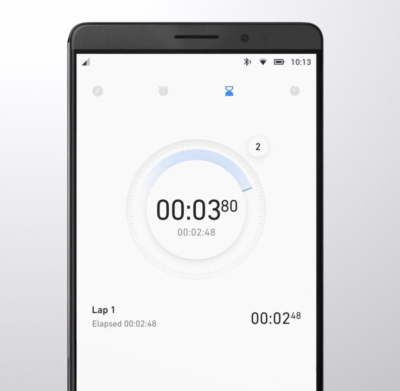
When the team at Fantasy first stepped into the Huawei ecosystem, they encountered a chaotic digital landscape. The company lacked a centralized design philosophy, relying instead on a heavily customized version of Android that suffered from extreme visual and functional inconsistency.
This fragmentation was not the result of a lack of talent, but rather a lack of coordination. Multiple teams—spanning UX, interaction, visual, and graphic design—were working in silos, each applying disparate styles to different sections of the OS. The result was a "Tower of Babel" scenario, where the user experience felt jumbled, and internal workflows were paralyzed by the difficulty of integrating changes into a system that lacked a common vernacular.
Kuznetsov recognized that without a shared system, the product could never achieve true scale or quality. The primary objective became clear: create a singular visual language that would unify teams, streamline communication, and provide a consistent, recognizable experience for millions of global users.
What a Design Language Truly Provides
A well-defined VDL is far more than an aesthetic preference; it is a strategic asset. By unifying teams under a single, shared language, projects gain three fundamental advantages:
1. Radical Consistency
Digital design lacks the physical constraints of industrial design, which is a double-edged sword. While it grants designers freedom, it often leads to disjointed interfaces. By establishing reusable, cross-platform components, designers can ensure that a button or a navigation element behaves identically across a smartphone, tablet, or wearable device. For a global titan like Huawei, this cross-platform harmony is non-negotiable.
2. Sharpened Brand Recall
In a saturated market, most products are indistinguishable. A strong VDL creates a "personality" for the software. By meticulously curating typefaces, color profiles, and motion patterns, a company can create a visceral, memorable identity. When users consistently encounter a brand’s unique visual style, it fosters trust and familiarity.
3. Purposeful Clarity
Minimalism is not merely a stylistic choice; it is a tool for focus. By reducing visual clutter and limiting the number of elements per screen, designers can direct the user’s attention to the most critical functional components, creating an experience that feels intentional and efficient.
The Methodology: Research, Ideate, Validate
Kuznetsov’s approach to building a VDL follows the same rigorous rubric as developing any consumer-facing product: Research, Ideate, Design, Validate, and Implement.
The UI Audit
Before creating a single new asset, the team performed a comprehensive UI audit of the existing Android implementation. They decomposed the OS into its atomic elements: shadows, line weights, color values, and transition speeds. This deconstruction allowed the team to see how these elements were failing to work in concert, forming the basis for a new, categorized library of components.
Understanding the User Perception
A design language is only effective if it resonates with its audience. The team categorized users based on demographics, lifestyle expectations, and cultural design sensibilities. By mapping these needs, the team could ensure the VDL felt as natural to a user in North America as it did to one in East Asia.
Competitive Analysis
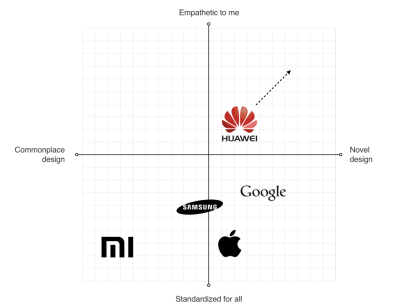
The team analyzed four major competitors, evaluating their strengths and weaknesses. By plotting these brands on a quadrant diagram, they identified "white space"—areas of innovation that were currently being underserved. For instance, while some competitors excelled in standardization, they were criticized for overusing "blur" effects or having inconsistent iconography. This analysis gave the team a strategic map for where they could differentiate the Huawei OS.
Rethinking Hierarchy: The "Thumb Zone" Innovation
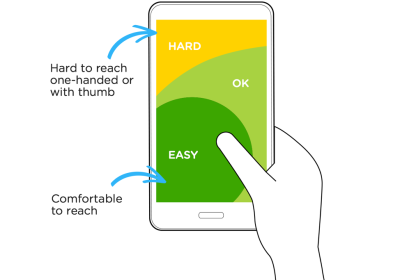
One of the most significant insights gained from the research phase was the misalignment between screen size and interaction design. In 2016, mobile screens were trending larger, yet most Android interfaces kept key functional elements at the top of the display. This forced users to stretch their fingers or shift their grip, leading to a degraded user experience.
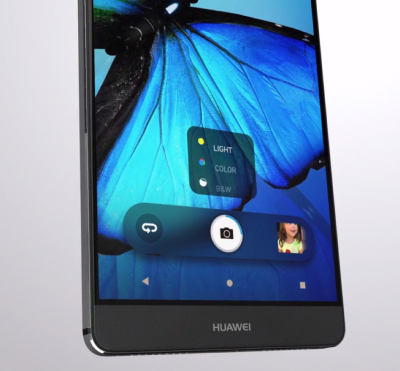
Kuznetsov and his team pushed for a fundamental shift: moving core controls to the bottom of the screen. While this seems like standard practice today, in 2016, it was a significant departure from convention. Through close collaboration with Huawei’s engineering team, they confirmed the feasibility of this change, effectively democratizing the "thumb zone" and setting a new standard for mobile interaction.
Defining a Philosophy: Organic Design
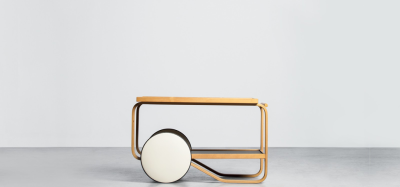
To build a globally resonant OS, the team adopted the philosophy of "Organic Design." Inspired by the work of Frank Lloyd Wright, the principle emphasizes harmony between people and their environment.
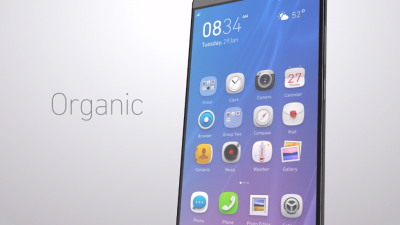
By incorporating natural, smooth curves and organic forms into the interface, the team sought to make the OS feel less like a rigid machine and more like an extension of the user. This philosophy influenced everything from button shapes to the animation curves of transitions.
Motion as a Language
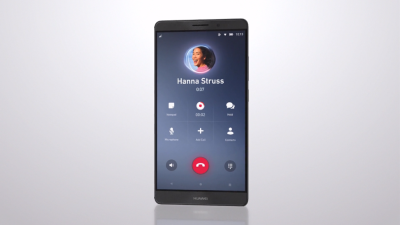
Motion was not treated as a decorative afterthought. The team authored a "Motion Design Manifesto," dictating that every animation must serve a functional or emotional purpose. These "magical moments"—subtle animations that provide feedback or transition between states—were designed to delight the user and mask the underlying complexity of the software.
The Challenges of Implementation
Despite the architectural success of the VDL, the transition from design concept to production remains the most perilous stage of any project. As Kuznetsov candidly notes, there is often a disconnect between the vision of the designers and the output of the engineering team.
In the case of EMUI 5, many of the nuanced design decisions were compromised during the implementation phase, as engineering teams often reverted to paths of least resistance to meet technical constraints. This is a common malaise in large-scale corporations: the "designers" often lose control of the vision once the "builders" take over.
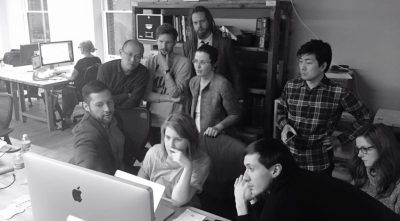
Kuznetsov argues that the success of a design system relies on leadership that is willing to fight for the details. He cites the legendary case of Steve Jobs at Apple, who famously demanded that the window minimization animation in macOS be perfected despite engineering protests. That animation eventually became a hallmark of the user experience, proving that what seems like a minor design detail can have a massive impact on brand perception and product success.
Implications for the Future of UX
The experience of designing for Huawei underscores a vital truth: a visual design language is the heart of a product. It is a living, breathing ecosystem that requires iterative validation and constant care.
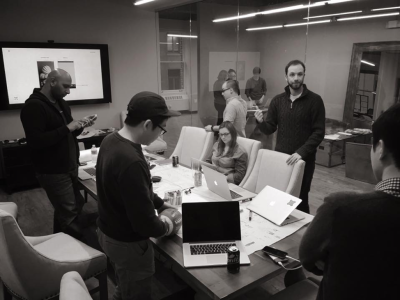
For design teams, the lesson is clear: your work does not end with the creation of a style guide or a pattern library. To ensure a coherent experience, designers must remain deeply embedded in the implementation process. They must act as stewards of the language, ensuring that the "organic" philosophy survives the transition to code.
When a product successfully marries form and function, it doesn’t just work—it delights. In 2018, when Huawei surpassed Apple in smartphone sales, it served as a testament to the importance of user-centric design. While hardware specs often grab the headlines, the invisible architecture of a visual design language is what ultimately dictates how a user feels about the device in their hand.
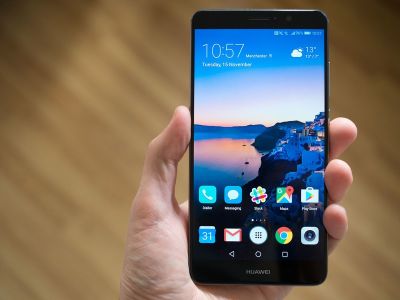
A robust VDL is not merely a collection of assets; it is the silent ambassador of a brand. By investing in this foundation, companies can move beyond mere utility and create products that are truly, and intuitively, human.