In the rapidly evolving landscape of artificial intelligence, a dangerous pattern has emerged among marketers and business operators: platform dependency. Many professionals have built their entire operational infrastructure—prompts, brand guidelines, data analysis routines, and custom agents—within the walled gardens of singular AI providers. While this approach offers initial convenience, it introduces a critical point of failure. If your primary platform experiences a service outage, adjusts its pricing models, or updates its underlying architecture in a way that degrades your specific output quality, your business continuity is instantly compromised.
To mitigate this risk, industry experts like Nicole Leffer are advocating for a paradigm shift: the development of platform-agnostic, portable AI workflows. By decoupling your operational logic from the interface of the AI itself, you gain the freedom to move your "digital brain" across models, ensuring that your business remains agile, resilient, and cost-effective.
The Strategic Imperative: Why Portability Matters
The shift toward portable AI workflows is not merely a technical preference; it is a fundamental risk-management strategy. The vulnerabilities of a platform-locked workflow fall into four distinct categories:

- Operational Stability: AI platforms are subject to server outages, API bottlenecks, and unexpected downtime. A business that relies entirely on a single tool for its day-to-day operations faces an immediate halt during these events.
- Output Consistency: AI models are "black boxes" that evolve constantly. A prompt that yields high-quality results today may produce degraded outputs after a model update. If your setup is hard-coded into one platform, you lose the ability to "shop around" for a more stable or effective alternative.
- Financial Leverage: While current AI pricing is competitive, it is not guaranteed to remain so. Lock-in creates a lack of leverage, leaving businesses vulnerable to predatory pricing models or sudden shifts in subscription costs.
- Functional Versatility: Different models possess unique "superpowers"—some excel at complex logic and coding, while others are superior in creative writing or image generation. True portability allows you to deploy the best tool for the specific task without needing to recreate your foundational context.
The Components of a Portable Workflow
Building a portable workflow does not require a total system overhaul. Instead, it involves reorganizing existing assets—skills, context files, and instructional logic—into a format that is readable by any modern AI environment. The objective is to ensure that no single provider holds your operational infrastructure hostage. By treating your AI instructions as a portable asset library rather than as ephemeral chat history, you gain the ability to "pick up and run" your business on any platform at any time.
1. Externalizing Your Knowledge Base
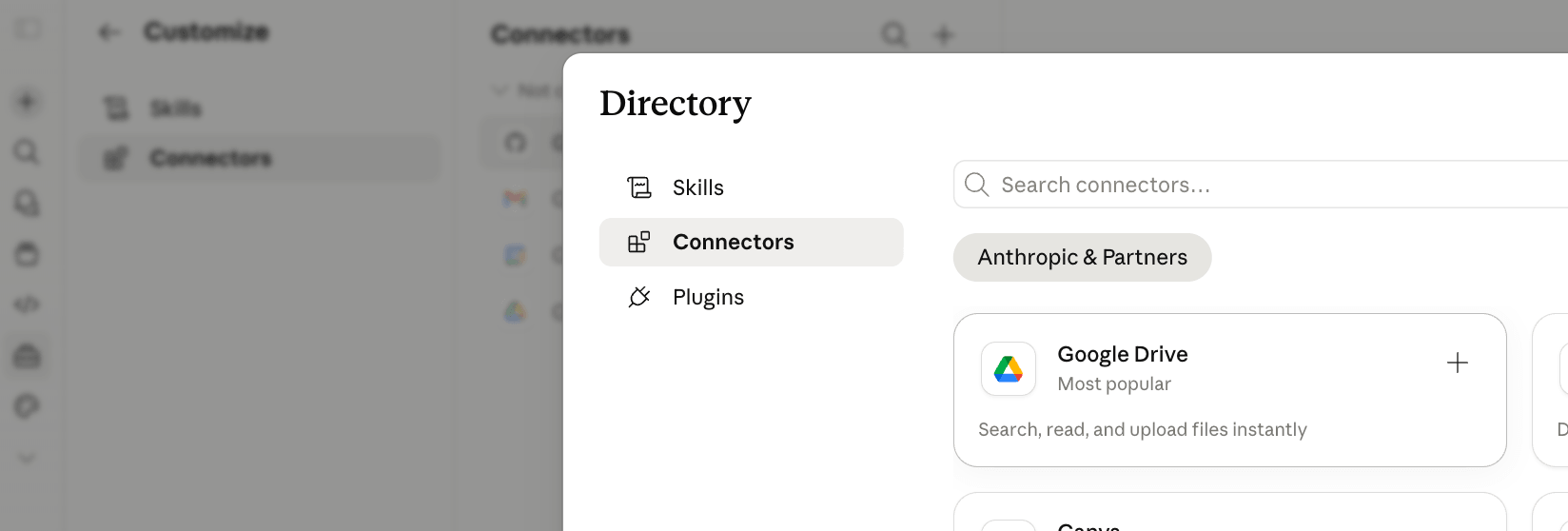
The first step toward portability is moving your instructions and context out of the "Chat" interface and into a centralized, external storage location—such as Google Drive, Dropbox, or a local secure server.
By utilizing Model Context Protocol (MCP) connectors, you create a bridge between your external storage and your AI tools. These connectors act as standardized APIs, allowing different models to query the same set of documents. This eliminates the need to re-upload files to every new tool you try.
The "Precision Over Volume" Rule:
A common mistake is assuming that "more context is better." Many users dump their entire document library into an AI, hoping it will find what it needs. However, AI performance typically degrades with excess noise. Instead, curate specific, task-oriented folders. Point your AI to the exact documentation it needs for a specific task, rather than your entire cloud drive. This practice also ensures that when you update a central file, every AI platform referencing that file receives the update simultaneously, eliminating version-control nightmares.
2. The Power of "Skills" as Portable Assets
Perhaps the most significant innovation in AI portability is the concept of the "Skill." A skill is a self-contained, zipped archive containing a SKILL.md file. This markdown file serves as the instruction manual for your AI agent, dictating its personality, constraints, and operational logic.
Think of a skill as a "downloadable consciousness." Much like the famous scene in The Matrix where Neo downloads martial arts training, a skill allows an AI to immediately understand how to execute a complex task without extensive trial-and-error prompting. Whether you are building a copywriter, a data analyst, or a brand-compliance officer, the SKILL.md file remains the standard format that can be uploaded into Claude, ChatGPT, or local LLM runners.
Creating and Validating Skills:
Most platforms now offer "Skill Creators" that allow you to generate these files conversationally. However, the true value lies in the refinement phase. After the AI generates the initial markdown code, you must test the skill against real-world tasks and refine the instructions. Once finalized, you have a proprietary asset that can be shared across your team or moved between different AI providers without losing your specific operational standards.
A Critical Security Warning:
As the ecosystem for shared skills grows, so does the risk of supply-chain attacks. Users must exercise extreme caution when downloading "pre-made" skills from the internet. Because a skill can contain executable code, it is theoretically possible for a malicious actor to create a prompt that exfiltrates your CRM data or sends sensitive information to an external server. Only trust skills developed within your own organization or provided by reputable, verified vendors.
The Case Study: The "Portable Excel Agent"
The most advanced implementation of this methodology is the creation of a "Self-Briefing Workbook." By using Microsoft Excel as the primary interface and connecting it to AI agents via plugins, you can create a workflow that is entirely platform-agnostic.

The Chronology of Deployment:
- Planning: Before building the spreadsheet, use an AI (like Claude or Codex) to map out the structure. Define the necessary tabs, formulas, and desired AI actions conversationally.
- Briefing: Ask the AI to export the entire project structure into a
briefing.mdfile and generate necessary JSON data sets. - Deployment: Open Excel, activate your preferred AI plugin, and drag the briefing files into the chat interface. Within minutes, the AI will build the workbook structure, complete with embedded prompt tabs.
- Memory Integration: Embed "instruction tabs" within the workbook. By prompting the AI to read these tabs at the start of every session, the spreadsheet becomes a "self-briefing" tool.
If your primary AI provider goes down, you simply switch to a different plugin. The new agent will open the workbook, read the embedded history and instructions, and pick up exactly where the previous model left off. This creates a resilient, long-term workflow that survives the volatility of the AI market.
Implications for the Future of Business
The rise of portable AI signifies a shift in how we view digital infrastructure. We are moving away from an era of "Platform Loyalty" and into an era of "Tool Agnosticism." This has profound implications for businesses:
- Vendor Negotiation: Because you are no longer locked into one platform, you have the power to rotate tools based on which one offers the best value or performance at any given moment.
- Organizational Scaling: By standardizing workflows into portable skills, companies can ensure that every employee is operating at the same high standard of quality, regardless of which specific tool they are using on their workstation.
- Future-Proofing: As the AI industry continues to consolidate and shift, companies with portable workflows will remain insulated from the shocks that will inevitably disrupt those who remain tethered to single-platform solutions.
In conclusion, the most effective way to harness the power of AI is not to find the "perfect" platform, but to build a framework that makes the platform irrelevant. By externalizing your context, packaging your skills, and centralizing your operational logic within your own files, you ensure that your business remains as flexible as the technology it utilizes. In the world of AI, the only way to stay ahead is to ensure your workflow can go wherever the innovation leads.