In the current digital marketing landscape, the most expensive mistake a brand can make isn’t poor ad creative or a lackluster social media presence. It is the silent, ongoing hemorrhaging of capital that occurs after a prospect has already been acquired. As customer acquisition costs (CAC) soar to record highs, the "brutal truth" facing marketing teams today is that they are obsessing over the wrong metric: volume.
While CMOs fight for larger budgets to pour more fuel into the top of the funnel, a quiet, high-impact revolution is taking place among top-performing teams. They are moving away from the "more traffic" fallacy and toward Conversion Rate Optimization (CRO)—a discipline that transforms existing landing pages into high-efficiency conversion machines.
The Financial Case: Why CRO is No Longer Optional
For years, the marketing playbook was simple: spend more to get more. However, as ad platforms become increasingly competitive and audiences more resistant to traditional outreach, that model is crumbling. CRO has shifted from a "nice-to-have" experiment to a foundational pillar of fiscal responsibility.
The Mathematics of Efficiency
Consider the fundamental math of a conversion funnel. If a company spends $10,000 to drive 1,000 visitors to a page with a 2% conversion rate, they acquire 20 customers at $500 each. If that same team optimizes the page to a 4% conversion rate, they now acquire 40 customers for that same $10,000.
The result is a 100% increase in output without a single extra cent in ad spend. In an era of shrinking margins and heightened scrutiny on marketing ROI, this ability to do more with less isn’t just a strategy—it is a survival mechanism.
The Ripple Effect on ROI
When conversion rates improve, the benefits cascade across the entire marketing ecosystem. Improved landing page performance lowers the cost-per-acquisition (CPA), which in turn allows for more aggressive bidding on high-value keywords. This creates a positive feedback loop: better pages lead to better ad performance, which signals to platforms like Google or Meta that your content is high-quality, potentially lowering your cost-per-click (CPC) over time.
A Strategic Timeline: The Evolution of CRO
The history of CRO has evolved from rudimentary, intuition-based changes to data-driven, scientific experimentation.
- The Early Days (2000s): Optimization was largely subjective. Marketers relied on "best practices" and hunches, changing button colors or headline fonts based on general industry trends rather than specific site data.
- The Data Inflection Point (2010s): The advent of accessible A/B testing software and heat-mapping tools allowed marketers to move from guessing to knowing. The focus shifted to granular analysis of user behavior.
- The Modern Era (2025 and beyond): CRO is now integrated into the fabric of the customer journey. It is no longer a "project" but a culture of continuous experimentation, where every page launch is treated as a hypothesis to be validated, not a final product.
The Five Pillars of High-Impact Optimization
To achieve consistent gains, top marketers are focusing on five distinct, actionable strategies that require minimal technical overhead.
1. The Mobile-First Imperative
Data consistently shows that mobile traffic now dominates the digital landscape. Yet, many landing pages remain designed for desktop users, with mobile experiences treated as an afterthought. This creates "friction points"—tiny tap targets, slow-loading assets, and forms that are impossible to navigate on a smartphone.
The Fix: Design for the smallest screen first. Ensure buttons are at least 44×44 pixels, simplify forms to the absolute minimum required fields, and ensure critical value propositions appear above the "thumb scroll" line.
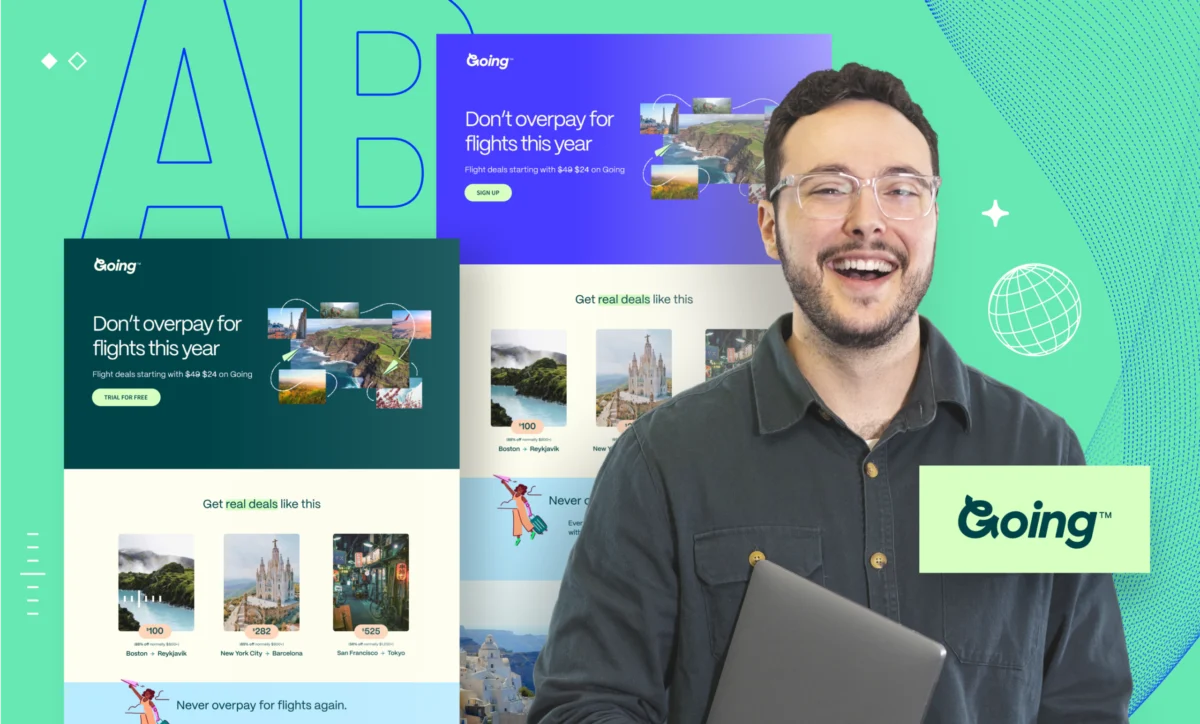
2. A/B Testing: Moving Beyond the Hunch
Guessing is the enemy of growth. Effective teams adopt a rigorous testing cadence. A standard test structure follows a simple hypothesis: "Changing [Variable X] will improve [Metric Y] because [Reason Z]." By isolating variables—such as headline copy, image choice, or CTA text—marketers can definitively prove what resonates with their unique audience rather than relying on generalized "best practices."
3. The Friction Audit
Every field in a form and every extra click required to reach a goal is a barrier to conversion. A "friction audit" involves a team member navigating the conversion path as a fresh user. If the process feels cumbersome, it is. Studies have shown that reducing form fields from 11 to 4 can increase conversions by over 120%. The goal is to remove every obstacle that stands between a motivated visitor and the "Submit" button.
4. Clarifying the Value Proposition
If a visitor cannot understand what you offer and why it matters within three seconds, they will leave. A strong value proposition must be specific, benefit-driven, and clearly differentiated from competitors. It should not be "clever"; it should be "clear." Headlines and subheads must act as a direct answer to the visitor’s primary pain point.
5. Leveraging Authentic Social Proof
Human beings are inherently social creatures; we look to others for validation before taking action. However, generic testimonials are no longer enough. The most effective social proof is highly specific: usage statistics, logos of recognizable clients, and testimonials that directly address specific objections or showcase measurable results. Placement is equally critical—social proof should be positioned near high-friction points, such as near the checkout button or beneath a sign-up form.

Implications for Future Growth
The shift toward CRO carries significant implications for the future of digital marketing. First, it forces teams to become more data-literate. Marketers are no longer just creative directors; they are analysts who must interpret statistical significance and user behavior.
Second, it democratizes growth. Small businesses with limited budgets can effectively compete with industry giants by simply being more efficient with the traffic they already have. You do not need a massive budget to win; you need the discipline to test and the humility to learn from the results.
Expert Insight: The Culture of Experimentation
Josh Gallant, founder of Backstage SEO and an expert in organic growth, notes that the most successful teams are those that view CRO as a mindset rather than a campaign. "The difference between teams that get occasional wins and those that transform their results comes down to one thing: making experimentation a habit," Gallant explains.
This culture of experimentation requires a change in how we define "failure." In a mature CRO environment, a failed test is not a setback—it is a vital piece of information. If a hypothesis is proven wrong, the team has learned something about their audience that they didn’t know before, which saves them from making larger, costlier mistakes down the line.
Conclusion: Building for Tomorrow
As the cost of digital traffic continues to climb, the ability to optimize for conversions will become the primary competitive advantage for SaaS companies, e-commerce brands, and lead-gen businesses alike. By focusing on mobile-first design, rigorous A/B testing, friction reduction, clear value propositions, and strategic social proof, teams can build a scalable, sustainable path to growth.
The era of "buying" growth is ending. The era of "earning" growth through optimization and efficiency has begun. For those willing to put in the work to refine their landing pages and listen to what their data is telling them, the rewards are clear: better ROI, lower acquisition costs, and a more resilient business model that can thrive in any market condition.
It is time to stop leaving conversions on the table. Start testing today, learn from every interaction, and transform your existing traffic into your greatest asset.