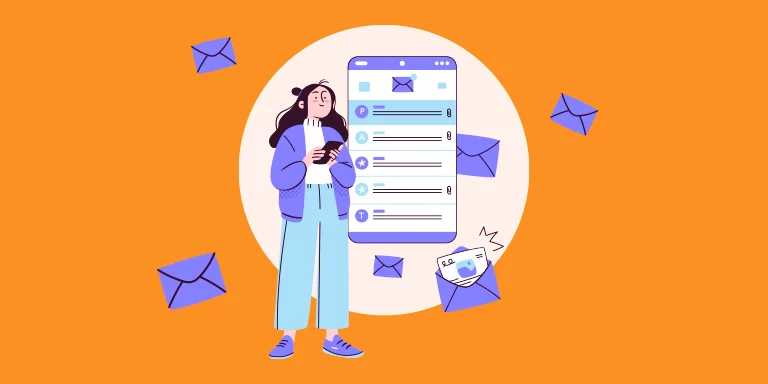
WASHINGTON & LONDON — For decades, the digital inbox has served as a digital wasteland, littered with corporate announcements, over-engineered newsletters, and calls to action (CTAs) duct-taped to the bottom of generic blog posts. For most consumers, opening the morning email app has become an exercise in aggressive deletion.
Yet, amid warnings that "email is dead," a quiet revolution is taking place. Successful creators, direct-to-consumer (DTC) ecommerce brands, and elite consultants are bucking the trend. They aren’t just surviving the algorithmic noise; they are turning their subscriber lists into predictable, high-converting income streams.
The secret? They have stopped writing like corporations and started writing like humans.
The Anatomy of Inbox Fatigue: Main Facts
To understand why modern email marketing is undergoing a renaissance, one must first look at why traditional campaigns fail. The average digital consumer is bombarded with dozens of promotional messages daily. Most of these messages suffer from fundamental design and psychological flaws:
- The Corporate Announcement Trap: Subject lines read like press releases, instantly triggering defense mechanisms in the reader’s brain.
- The Mini-Blog Mistake: Senders treat email like a long-form article, burying the core value proposition beneath three paragraphs of pleasantries and throat-clearing intros like, "In today’s newsletter, we will discuss…"
- The "Me-First" Mentality: Copy frequently focuses on what the brand is doing—launching a new feature, celebrating a milestone, or pushing a product—rather than addressing the immediate needs of the recipient.
According to digital marketing strategists, the modern reader has roughly a five-second attention span upon opening an email. If the copy fails to establish relevance, utility, or acute curiosity within that window, the subscriber swipes away, never to return.
The Evolution of Email Strategy: A Chronology
To appreciate how email marketing reached this inflection point, it is helpful to look back at how the medium has evolved over the past twenty years:
- The Wild West Era (Early 2000s): Characterized by high-volume, untargeted blast emails. Spam filters were rudimentary, and success was measured by sheer delivery volume rather than engagement.
- The Corporate Standardization Era (2010s): The rise of complex design templates. Brands invested heavily in heavy HTML layouts, multi-column product grids, and corporate-speak messaging, turning emails into digital flyers that frequently landed in Gmail’s "Promotions" tab.
- The Human-Centric / Creator Economy Era (Present): Driven by independent creators, Substack writers, and lean DTC brands, email has reverted to its roots: plain text, conversational tone, intimate storytelling, and hyper-segmentation. The goal is no longer to broadcast, but to start a one-on-one conversation.
Shifting the Lens: Reader-First vs. Brand-First Copy
The cornerstone of modern email copywriting is a simple, albeit uncomfortable, psychological truth: Nobody cares about your email—at least, not at first.
Consumers do not open emails out of loyalty to a brand; they open them because there is an intrinsic reward waiting for them. That reward could be entertainment, a profound insight, an actionable solution to a nagging problem, or a compelling curiosity gap.
The Cocktail Party Fallacy
Imagine attending a networking event where a stranger walks up to you, offers no greeting, and immediately launches into a monologue listing their accomplishments, latest awards, and corporate updates. You would likely look for the nearest exit.
Yet, this is precisely how millions of commercial emails are structured. When a brand sends an email starting with, "We are thrilled to announce our latest productivity course," they are committing the ultimate conversational faux pas.
The Fix: Inverting the Narrative
Successful marketers flip the lens entirely, making the reader the hero of the narrative. By anchoring copy in the recipient’s pain points, curiosities, or unfulfilled goals, engagement skyrockets.
- Brand-First (Ineffective): "We’ve launched a new course on productivity to help professionals manage time."
- Reader-First (Effective): "Still wasting hours on to-do lists that don’t actually get done? Here’s a 10-minute fix that works."
Defining the Mission: Know Your Email’s Job
One of the fastest ways to churn a subscriber base is to treat every single incoming message as a hard sales pitch. High-performing email marketers operate with strict intentionality, assigning a singular, well-defined "job" to every email they dispatch.
Trying to educate, entertain, build trust, and close a sale all within a single 300-word message inevitably confuses the reader. And in the world of conversion rate optimization, a confused mind always says no.
The Email Purpose Framework
| Email Type | Primary Goal | Typical Tone & Approach |
|---|---|---|
| Nurture | Build trust and brand affinity | "Here’s a lesson I learned the hard way so you don’t have to." |
| Educational | Deliver immediate, actionable value | "3 ways to fix [common problem] starting today." |
| Sales / Promotional | Drive direct conversion and action | "Spots are filling up; here’s how to secure yours before midnight." |
| Relationship | Start a two-way conversation | "Got a quick question for you about your current workflow…" |
When an author or marketer clearly defines the "why" behind an email, secondary elements—such as tone, length, and the call to action—fall naturally into place.
Proven Copywriting Frameworks for High-Converting Emails
Industry veterans rely on structured copywriting formulas to remove guesswork from the writing process. Three frameworks have proven exceptionally effective within the constraints of the modern inbox:
1. The Story-Lesson-Offer Method
- Best for: Nurture sequences, creator newsletters, and soft launches.
- How it works: This approach bridges human connection with commercial intent. The sender opens with a relatable micro-story or vulnerability, extracts a universal lesson from that experience, and subtly ties the solution to an offer.
- Example: "Last week, I almost missed a major client deadline because I was drowning in admin work. Sound familiar? Here’s how I fixed it with a single 10-minute workflow tweak…"
2. PAS: Problem, Agitation, Solution
- Best for: Short, punchy promotional emails and problem-solving content.
- How it works: You identify a painful friction point, gently twist the knife by describing the negative consequences of leaving it unresolved, and finally present a frictionless escape hatch.
- Example: "Still hitting the snooze button five times before dragging yourself out of bed? That late-night scrolling habit is likely sabotaging your circadian rhythm. Here is a better morning routine that actually starts the night before…"
3. The 4Ps: Promise, Picture, Proof, Push
- Best for: High-stakes sales campaigns and product launches.
- How it works:
- Promise: State what the product or service will achieve.
- Picture: Help the reader visualize their life after transformation.
- Proof: Provide testimonials, case studies, or hard data.
- Push: Issue a clear, unambiguous call to action with a defined deadline.
Mastering the Gateway: Subject Lines and Preheaders
Even the most carefully crafted copy is worthless if the email remains unopened. Subject lines serve as the ultimate gatekeeper in digital communication.
Anatomy of a High-Performing Subject Line
Rather than resorting to cheap clickbait or excessive punctuation, top marketers rely on psychological triggers that respect the reader’s intelligence:
- Curiosity Gaps: "This email isn’t for everyone…"
- Specificity: "How I doubled my open rate in 7 days (with one tweak)."
- The Cliffhanger: "The pricing mistake that nearly cost me $12,000."
- Direct Questions: "Still stuck on what to send your list this week?"
- Urgent Scarcity: "Enrollment closes tonight (and won’t reopen this year)."
Optimizing the Preheader Text
The preheader—the snippet of text displayed right beside or below the subject line in most inbox views—is prime digital real estate. Treating it as an afterthought (or letting it default to "View this email in your browser") represents a massive missed opportunity.
- Subject: "Why I stopped sending weekly newsletters"
- Preheader: "(And what happened to my revenue after I did)"
Official Responses and Industry Insights
Industry analysts point out that the shift toward human-centric email design is directly tied to changes in consumer privacy regulations and algorithmic fatigue on social media platforms.
"Platforms like Instagram, TikTok, and X control your reach through unpredictable algorithms," notes digital marketing strategist Elena Vance. "Your email list is the only digital asset you truly own. Treating it like an advertising billboard is a massive strategic error. Brands that treat the inbox as a sanctuary for high-value dialogue are seeing triple-digit growth in lifetime customer value."
Data compiled across top-performing ecommerce and creator brands indicates that segmented, text-heavy, story-driven campaigns consistently outperform heavily designed corporate templates in click-through rates (CTR) and overall revenue per recipient (RPR).
Implications for Modern Entrepreneurs
The democratization of advanced marketing infrastructure means that solo creators and small businesses can now compete directly with legacy enterprises. Platforms built specifically for modern commerce—such as Omnisend—have streamlined list segmentation, automated behavioral triggers (like abandoned cart recovery and VIP welcome sequences), and campaign deployment into unified dashboards.
For entrepreneurs looking to scale their digital footprint without managing a patchwork of disconnected software, integrating a streamlined email platform is no longer optional; it is the core engine of sustainable growth.
As the digital landscape becomes increasingly saturated with artificial intelligence-generated content and automated noise, the ultimate competitive advantage in email marketing remains remarkably old-school: Authenticity, empathy, and absolute respect for the reader’s time.