NEW YORK — In the modern marketing landscape, the addiction is unmistakable. Budgets routinely skew toward acquisition—the shiny new leads, the top-of-funnel conversions, and the immediate dashboard spikes that look stellar in quarterly decks. But beneath that gleaming surface lies a multi-billion-dollar blind spot that is quietly bleeding companies dry: customer retention.
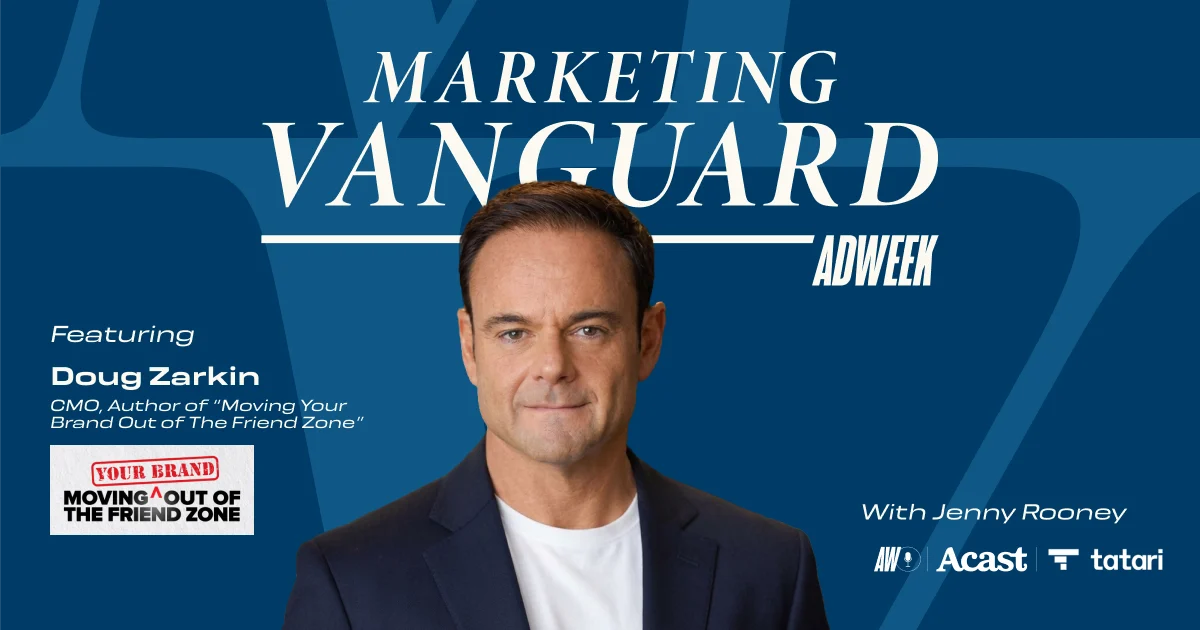
Live from the Marketing Vanguard stage at Brandweek 2026, Jenny Rooney, editor and moderator extraordinaire, sat down with veteran chief marketing officer and author Doug Zarkin to diagnose what ails contemporary brand strategy. Zarkin, whose extensive career includes steering brand leadership at Avon, Victoria’s Secret, and an influential 11-year tenure spearheading marketing at Pearle Vision, brought a refreshing, no-nonsense dose of operational reality to the conference floor.
At the heart of the conversation was a central thesis from Zarkin’s book, Moving Your Brand Out of the Friend Zone: being liked by a consumer is fundamentally different from being loved. And in an era where brand loyalty is increasingly volatile, the traditional playbook of courting strangers while ignoring the people already inside the house is no longer sustainable.
Main Facts: The Anatomy of Modern Marketing’s Blind Spots
The Brandweek 2026 session cut straight through industry buzzwords to address core structural inefficiencies plaguing executive suites worldwide.
- The Acquisition Bias: Brands chronically allocate disproportionate capital, creative energy, and incentives to prospective customers while offering little to no incentive or love to loyal, repeat buyers.
- Misdiagnosed Business Crises: Internal silos frequently mislabel structural, operational, and reputational failures as "marketing problems," expecting creative campaigns to fix fundamental product or service flaws.
- The "Think Human" Mandate: Moving past transactional thinking requires brands to treat individual consumers with the empathy, attentiveness, and reliability reserved for personal relationships.
- Leadership Evolution: For veteran executives like Zarkin, the metric of success has shifted away from ego and intellectual dominance—being the smartest person in the room—toward cross-functional effectiveness and team empowerment.
Chronology: From Agency Floor to Brand Transformation
To understand Zarkin’s diagnostic approach to modern marketing, one must look at the arc of his career, which bridges the worlds of agency-side strategy and deep, long-term enterprise brand stewardship.
The Early Foundation
Zarkin’s journey began in the high-stakes trenches of the agency world, where he learned the mechanics of consumer psychology, campaign creation, and the brutal reality of client-side expectations. This foundational era taught him how external messaging interacts with market realities, laying the groundwork for a career defined by repositioning legacy brands.
Scaling Global Giants
Moving in-house, Zarkin took on high-profile leadership roles at iconic global brands, including Avon and Victoria’s Secret. Operating inside these corporate engines exposed him to the immense pressures of scale, fast-moving retail cycles, and the complex challenge of maintaining brand equity across diverse, multinational consumer bases.
The Pearle Vision Blueprint (2010s–Present)
Zarkin’s tenure as CMO of Pearle Vision—spanning more than a decade—served as the ultimate laboratory for his holistic approach to brand transformation. Rather than treating marketing as an isolated department tasked merely with driving foot traffic, Zarkin viewed the brand through an operational lens. He recognized that in service-oriented retail, the brand is the experience delivered by the local optician, the cleanliness of the store, and the transparency of the transaction. This 11-year run crystallized his understanding that brand positioning must live and breathe across every tier of business operations.
The Author and Thought Leader
Culminating decades of trial, error, and hard-won executive lessons, Zarkin penned Moving Your Brand Out of the Friend Zone. The book—and his subsequent speaking engagements, including his standout appearance at Brandweek 2026—serves as a manual for pulling brands out of generic, forgettable customer relationships and forging genuine, long-lasting affinity.
Supporting Data & Economic Realities: The Cost of a Leaky Bucket
While marketers are continually enticed by the dopamine hit of new user acquisition metrics, the underlying economics tell a starkly different story.
Industry benchmarks consistently reinforce that acquiring a new customer is anywhere from five to twenty-five times more expensive than retaining an existing one. Yet, companies routinely pour millions into top-of-funnel acquisition campaigns while watching their baseline churn rates climb.
+-----------------------------------------------------------------------+
|               THE MODERN MARKETING FUNNEL PARADOX                     |
|                                                                       |
|   [TOP OF FUNNEL] ---> Massive Ad Spend & Acquisition Focus           |
|                        (Looks great on quarterly dashboards)          |
|                                                                       |
|   [MIDDLE]        ---> Indifference & Lack of Engagement              |
|                                                                       |
|   [BOTTOM]        ---> A Leaky Bucket: High Churn / Zero Retention    |
|                        (The expensive problem quietly draining ROI)   |
+-----------------------------------------------------------------------+
During his Brandweek session, Zarkin did not mince words regarding this industry-wide fixation:
"Why do brands save their best offers for people who have never bought from them?"
This simple question exposes a profound operational contradiction. New customers generate exciting spikes on digital dashboards, creating the illusion of explosive growth. However, sustainable business economics rely on compounding customer lifetime value (LTV). When brands continually ignore existing buyers to chase fresh leads, they are effectively pouring water into a bucket with a massive hole at the bottom.
Furthermore, Zarkin notes that if a customer base keeps churning, simply throwing more top-of-funnel capital at the problem is a fool’s errand. It masks underlying systemic issues with high-cost Band-Aids.
Official Insights & Quotes from the Brandweek Stage
The conversation between Jenny Rooney and Doug Zarkin yielded several hard-hitting takeaways regarding organizational accountability and customer empathy.
1. The Myth of the "Marketing Problem"
One of the most provocative arguments Zarkin raised on stage was the tendency for executive boards to point fingers at the marketing department whenever growth stalls.
"If you have a reputational problem, there is not enough marketing in the world to cure it. If you have a retention problem, the root cause may sit in operations."
According to Zarkin, bickering over whether a failure belongs to marketing or operations misses the forest for the trees. Poor customer service, clunky digital checkouts, subpar product quality, and delayed shipping are not marketing failures—they are holistic brand failures. Growth cannot occur when a company attempts to market its way out of an operational nightmare.
2. The "Think Human" Philosophy
Moving away from cold analytics and metrics-driven abstraction, Zarkin introduced his core operational philosophy: Think Human.
He challenges brand leaders to imagine treating every customer the way they would treat a best friend in a moment of need: fully present, genuinely important, and worth stopping for. When that mindset is applied to a consumer walking into a physical storefront or landing on an e-commerce website, the fundamental questions change entirely:
- What would genuine customer service look like?
- How is loyalty rewarded, rather than exploited?
- Does the brand experience feel transactional, or does it feel relational?
By focusing on the individual person rather than the aggregate transaction, brands unlock the trust and relevance required to escape the dreaded marketing "friend zone."
3. Redefining Executive Leadership
Reflecting on decades in the corporate trenches, Zarkin shared a powerful lesson on leadership maturity. For many rising executives, the temptation is to prove intellectual dominance—to be the smartest person in the room. Zarkin’s perspective has radically inverted:
"Being effective matters a lot more than being the smartest person in the room. If I am the smartest person in the room, I think I am in the wrong room."
True leadership, in his view, is less about having all the answers and more about building high-performing teams, setting clear expectations, motivating cross-functional talent, and driving measurable, compounding business progress.
Implications for the Future of Brand Strategy
The intersection of Zarkin’s philosophies at Brandweek 2026 offers a clear roadmap for CMOs and enterprise leaders navigating an increasingly skeptical consumer base.
1. Structural Integration Over Siloed Marketing
Companies can no longer afford to operate marketing as an isolated creative island. For retention strategies to work, marketing must actively collaborate with product, customer service, supply chain, and retail operations. Brand equity is no longer built solely by what a company says in an ad campaign; it is forged by what it delivers across every single touchpoint of the customer journey.
2. Rebalancing Budgets for Long-Term LTV
Chief financial officers and CMOs must collaborate to re-evaluate ROI metrics. Transitioning away from short-term acquisition metrics toward long-term customer lifetime value requires courage, particularly in publicly traded companies beholden to quarterly earnings calls. However, brands that successfully reallocate capital toward keeping existing customers happy will build resilient moats against economic uncertainty.
3. Empathy as a Competitive Advantage
In an automated, AI-driven marketplace where hyper-targeting and personalization algorithms are accessible to every competitor, genuine human empathy stands out as a rare differentiator. Brands that operationalize empathy—treating consumers as individuals rather than data points—will successfully transition from being merely "liked" to deeply, enduringly "loved."
This special feature is part of a live vidcast series recorded during Brandweek 2026 in partnership with Tatari. To watch the full discussion with Doug Zarkin and Jenny Rooney, view the embedded video above or visit the official Brandweek archives.