In the high-stakes world of global enterprise marketing, where companies operate across 75 countries and manage multi-million dollar budgets, the difference between success and obsolescence often boils down to a single, critical question: What are we actually measuring?
For years, digital marketing has been plagued by "vanity metrics"—data points that look good on a dashboard but provide zero insight into business health. Recently, an alarming trend has surfaced in corporate strategy: the elevation of "Cost Per Session" (CPS) to a primary success KPI. For seasoned analytics experts, this shift is not just a misstep; it is a fundamental betrayal of the marketing function’s purpose.
The Mirage of Cost Per Session
The realization of how deep this problem runs occurred during a strategic consulting engagement for a major global corporation. In an initial meeting with the marketing sub-team, the client proudly declared that their primary success metric was Cost Per Session.
To a professional with decades of experience, having authored bestselling books on analytics and helped pioneer modern tracking tools, the metric was an anomaly. The only "CPS" recognized in serious financial circles is "Cost Per Sale." When marketing teams prioritize the cost of getting a user to a webpage over the cost of turning that user into a customer, they are essentially signaling that their job is merely to "shovel traffic"—and to do it as cheaply as possible, regardless of whether that traffic has any intent to purchase.
Why Impressions and Sessions Are Just "Things"
If Cost Per Session is a poor metric, "Impressions" and "Views" are even worse. In the current analytics landscape, these are not metrics; they are "things." They represent noise rather than signals. When marketing leaders allow their teams to optimize for low-cost sessions, they create an environment where the objective is to maximize quantity at the absolute expense of quality. This creates a "leaky bucket" scenario where the company pays to bring thousands of visitors to a site, only for the vast majority to bounce immediately, providing no value to the bottom line.
Chronology of an Analytics Failure
The drift toward these ineffective metrics didn’t happen overnight. It is the result of an industry-wide over-reliance on automated advertising platforms that prioritize volume.
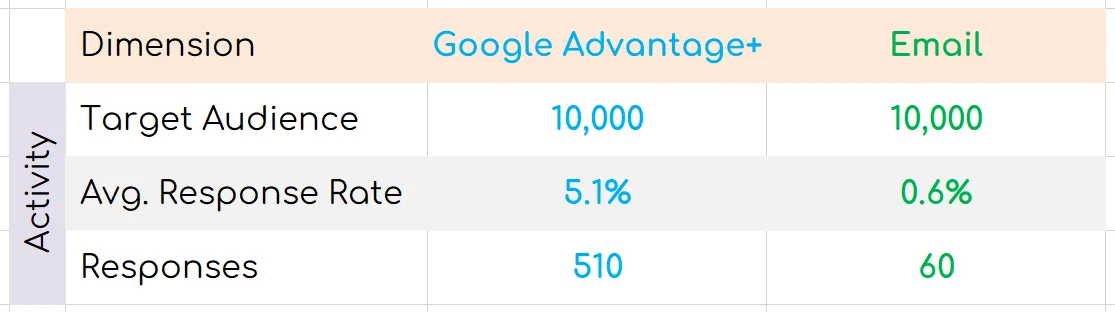
- The Era of Blind Growth: As platforms like Google and Meta introduced "Advantage+" and other AI-driven automated campaigns, marketing teams shifted their focus from granular audience targeting to "set it and forget it" models.
- The Metric Misalignment: As budgets expanded, CFOs demanded reports. Marketing teams, lacking a clear bridge between ad spend and bottom-line profit, defaulted to the easiest-to-measure metrics: clicks and sessions.
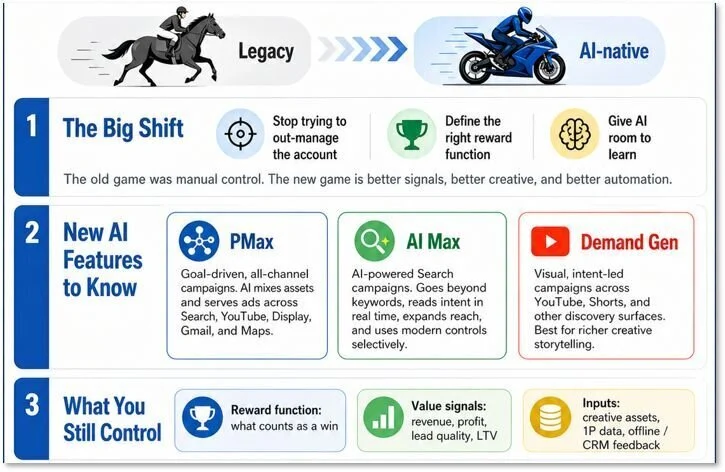
- The AI Tipping Point: With the advent of AI-driven search and automated bidding, the reliance on these shallow metrics has become dangerous. Algorithms now optimize for the goals they are given. If you tell an AI to optimize for "lowest cost per session," it will find the cheapest, lowest-quality traffic possible, effectively poisoning your data and wasting your budget.
Data-Driven Accountability: Moving Beyond Activity
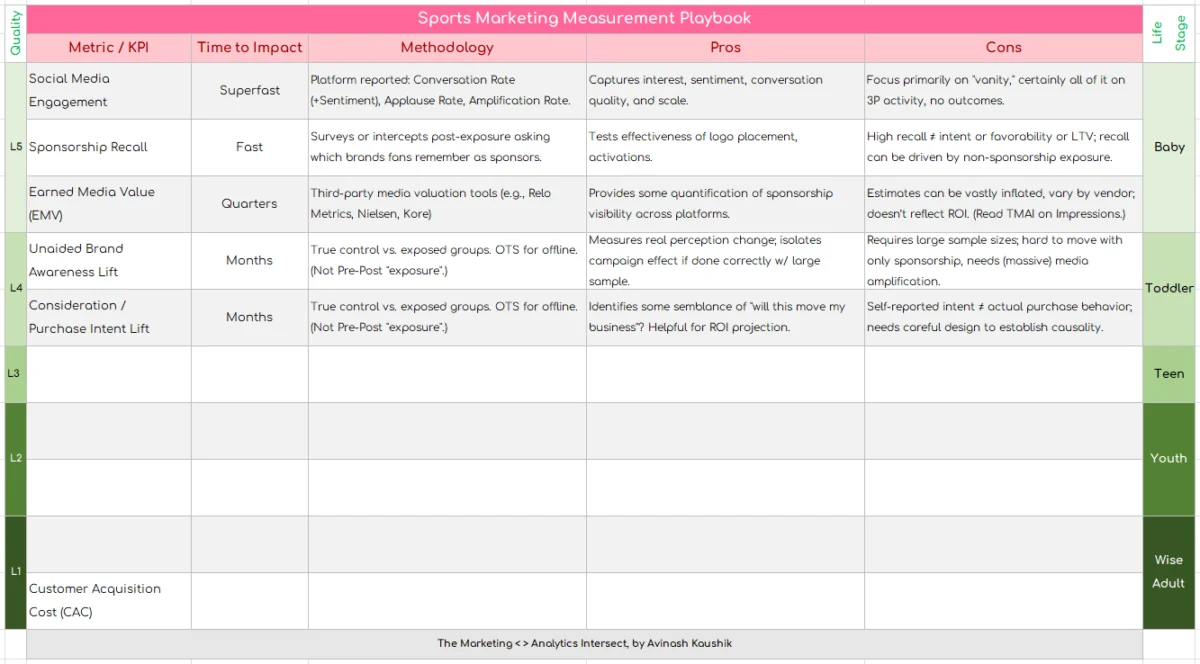
To protect the CMO from the scrutiny of a skeptical CFO, marketing organizations must shift their focus. The hierarchy of reporting should always be: Accountability > Outcomes > Activity.
The "Activity" Trap
Most corporate reports focus on Activity: How many clicks did we get? What was the CPC? How many sessions did we drive? While these figures are important for tactical adjustments, they are meaningless in isolation. A campaign can drive a million sessions at a low cost, but if it drives zero revenue, it is a failure.
The "Outcomes" Standard
At a minimum, organizations must track Outcomes: Revenue, Conversion Rate, and Customer Lifetime Value. For B2B or specialized B2C companies where sales cycles are long, this is often challenging. However, the solution is not to revert to tracking sessions; it is to use proxy data. By measuring micro-conversions (e.g., whitepaper downloads, demo requests) and applying an average Lead-to-Close conversion rate, marketers can approximate a "working value" for their traffic that is infinitely more useful than simple visit counts.
The "Accountability" Mandate
The final and most important layer is Accountability. A truly effective marketing dashboard accounts for:
- Campaign Cost: The total spend on advertising.
- Cost of Goods Sold (COGS): The actual cost of producing the products sold through those campaigns.
When you subtract these from your total revenue, you arrive at the true Profit. Many organizations rely on Return on Ad Spend (ROAS), which is a flawed metric because it ignores the costs of the product and the overhead of the marketing effort. A high ROAS can hide a business model that is actually losing money. The superior metric is Profit on Investment (POI).
Implications for the Modern CMO
The implications of ignoring POI are dire. In the case study analyzed, a campaign that looked like a success based on "Revenue" and "Orders" was, in fact, destroying profitability. For every dollar spent on Google’s automated campaigns, the company was receiving only $0.70 in profit. This is the definition of a "sucking sound" on company value—an operation that exists solely to subsidize the advertising platform’s revenue.
The Strategic Pivot: A Five-Step Plan
To rectify this, organizations must be willing to take drastic, often uncomfortable steps:
- Stop the Bleeding: Immediately pause campaigns that are not delivering green POI. Do not be intimidated by the drop in traffic or revenue; prioritize profit recovery.
- Challenge the Agency: Demand that internal teams and external agencies align their incentives with profit, not volume.
- Refine Intent: Shift the strategy toward capturing high-intent traffic rather than just high-volume traffic.
- Leverage AI Strategically: Use AI to optimize for outcomes, not just clicks. Feed the platform data on actual customer value so the algorithm understands which users are worth paying for.
- Iterate for Scale: Only increase spend when the POI is consistently positive and the unit economics are sound.
The AI Search Revolution: Why Context Matters
The need to abandon Cost Per Session is further solidified by the shift toward AI-integrated search experiences. Google has explicitly advised that in an AI-Search world, clicks are becoming less of a goal and "quality of visit" is becoming the gold standard.
When users interact with AI-generated summaries, they are arriving at websites with more context and higher intent. If you continue to optimize for "Cost Per Session," you are effectively telling your team to ignore the most valuable visitors—those who are actually engaging with your content and potentially converting—in favor of low-cost, low-intent traffic that will likely bounce.
Conclusion: Building an AI-Proof Career
Marketing is currently undergoing its most significant transition in two decades. The "easy" days of buying cheap traffic and calling it "success" are over. The future belongs to the professionals who can speak the language of the CFO—the language of Profit, Accountability, and Incremental Business Impact.
If you want to protect your career from AI disruption, stop measuring vanity. Start measuring the bottom line. It will be harder, the conversations will be more uncomfortable, and the scrutiny will be higher. But in exchange, you will build a strategy that is not only resilient but demonstrably essential to the growth of your company.
Carpe diem—the era of the responsible marketer has arrived.