By [Author Name]
Published: November 2025
Introduction: The Disappearing Blue Link
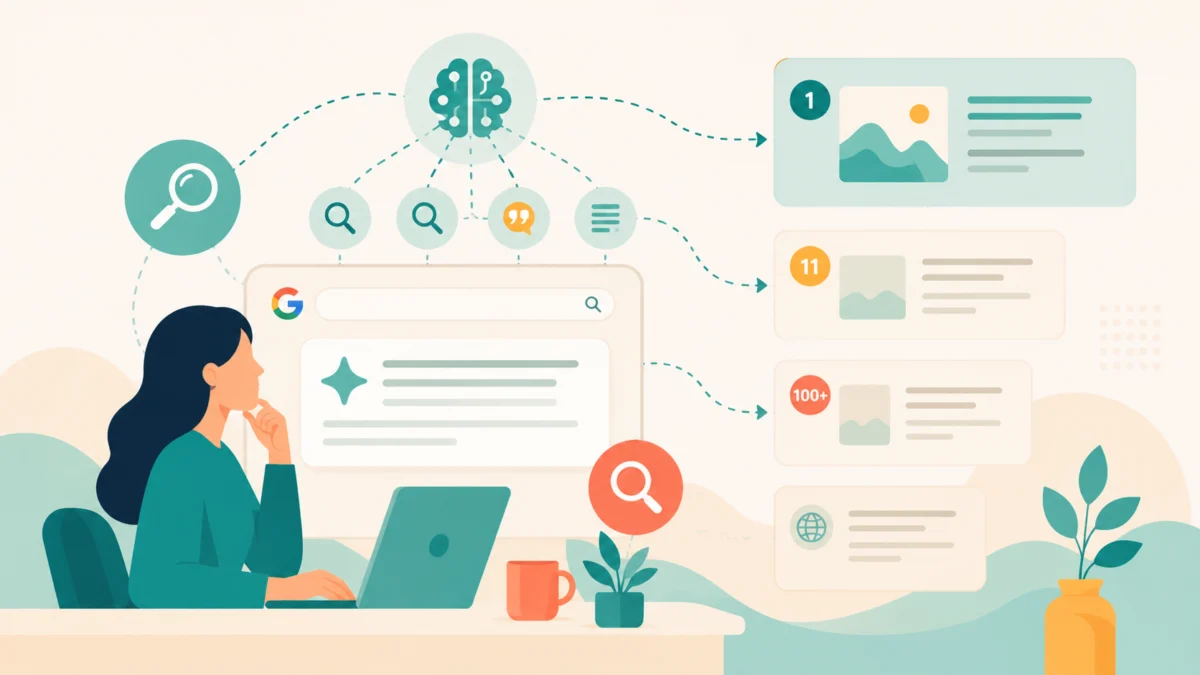
You type a burning question into Google that your prospective buyers ask every single day. Historically, your eyes would immediately scan a competitive landscape of ten blue links, evaluating domain authority and scanning snippets to find the right answer. Today, you are met with an AI Overview—a tidy, synthesized paragraph accompanied by a few discreet citations.
You pivot to ChatGPT Search or Perplexity, testing the exact same query. Within milliseconds, another neat, algorithmic summary appears on your screen.
If your brand is fortunate enough to be mentioned, the payoff is typically a single, unformatted line of text, stripped of your brand’s unique editorial style and distinct voice. But even when that citation happens, a sobering reality sets in: the story is no longer yours. The headline your managing editor spent hours crafting has been comprehensively rewritten. All the nuanced arguments, carefully paced transitions, and emotional resonance have been flattened. Your once-differentiated point of view now reads like it was generated by an uninspired committee.
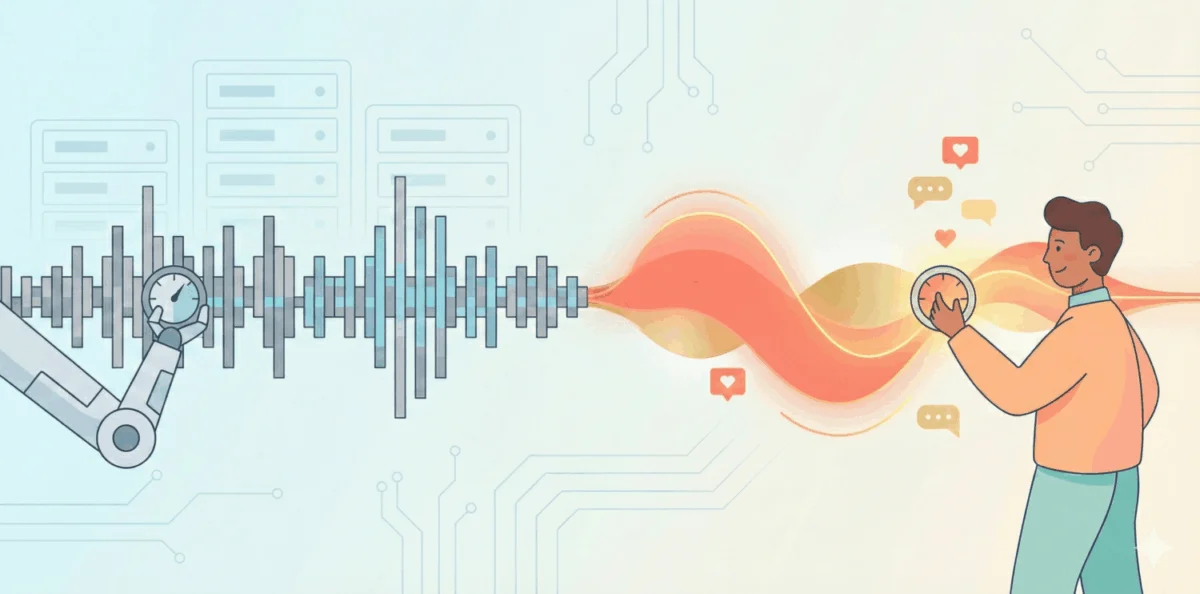
This is the new operational reality for modern marketers. Humans still read content, but increasingly, algorithms and large language models (LLMs) decide what they read first. The modern content marketing job description now entails speaking to two radically different audiences simultaneously: human customers with distinct motivations, fluid emotions, and unpredictable purchasing journeys, and robotic algorithms that extract, rewrite, and rank your ideas—ideally without turning your thought leadership into boring, mechanical slop.
The marketers who win in this high-stakes, zero-click era will be those whose original ideas survive translation. Here is how modern organizations can pair standout storytelling with extraction-ready structure.
1. The Two Audiences Problem: Anatomy of a Paradigm Shift
AI Overviews, ChatGPT Search, Perplexity, and voice-activated assistants now read, compress, and represent brand content, often bypassing human discovery entirely. They snip, condense, and reword. This shift introduces fewer organic clicks, heightened risks of brand misrepresentation, and an entirely new rulebook for how credit and context travel across the web.
This distribution shift has deep practical implications for brand publishers: you must simultaneously serve humans with memorable narratives and serve machines with cleanly extractable facts.
Creating Content for Humans
We may be marketing in the golden age of machine automation, but people remain the ultimate decision-makers who share, advocate for, and buy from your brand. According to research from Ipsos, audiences retain a strong, measurable preference for human-created content, even within marketing and corporate communications.
Therefore, even if you are utilizing generative AI to scale your content operations—which, practically speaking, is an operational necessity in 2025—your final message cannot sound mechanical.
- What moves people: Emotional resonance, shared struggles, surprising counter-narratives, and empathetic storytelling that reflects their lived experiences.
- The challenge: Balancing the efficiency of AI-assisted drafting with the absolute necessity of authentic, human-centric editing.
- The takeaway for marketers: Algorithms can synthesize and summarize information, but only humans can be emotionally moved by it. The best human-centric content earns attention by saying something that feels simultaneously familiar and fresh, useful and relatable. It draws readers in because it sounds like it was written by an empathetic peer who genuinely understands their operational pain points.
Creating Content for Machines
AI engines, search bots, and massive LLMs tokenize, extract, and rank information based on semantic clarity. They do not care how lyrical your prose is, nor do they appreciate the countless hours your writing team spent finding the exact right turn of phrase for a product tagline.
Instead, machines look for claims, supporting evidence, and context mapped to recognizable entities so they can answer a user’s prompt with absolute confidence.
- Machines prioritize: Clear hierarchical headings, structured data (schema markup), factual assertions backed by statistics, and unambiguous definitions.
- The challenge: Resisting the urge to bury key takeaways inside clever prose, extended metaphors, or journalistic fluff.
- The takeaway for marketers: Write with the model in mind. Label your answers clearly, standardize your industry terminology, and publish your receipts (citations, data sources, and methodologies). When writing for AI, clarity—not cleverness—earns citations. Furthermore, industry data shows that content freshness is a core factor that search assistants evaluate when choosing which sources to reference.
2. Chronology of the Zero-Click Transformation
To understand how we arrived at this precarious crossroads, it is helpful to trace the rapid evolution of digital discovery over the past decade:
- 2015–2019 (The Keyword Dominance Era): Search engine optimization was largely mechanical. Marketers focused heavily on keyword density, meta descriptions, and backlink volume. Content was written primarily to appease crawler bots, often at the expense of human readability.
- 2020–2022 (The Rise of Featured Snippets): Search engines began experimenting with "Position Zero" answers. Brands fought aggressively to structure their content into bullet points and concise definitions to capture immediate visibility above the traditional fold.
- 2023–2024 (The Generative AI Explosion): The public launch of advanced LLMs fundamentally disrupted organic traffic models. Referral traffic patterns shifted as users began getting complete answers directly on search engine results pages (SERPs) without clicking through to publisher websites.
- 2025 and Beyond (The Era of Dual Optimization): We have officially entered the zero-click, multi-model landscape. Content must now be engineered to satisfy conversational AI models, voice assistants, and semantic search agents while still engaging discerning human buyers.
3. Five Strategies to Master Dual-Audience Content
How do enterprise brands create content that successfully speaks to both human buyers and machine parsers? The art lies in crafting material that reads beautifully to people while feeding machines the clean signals they require to understand, trust, and amplify your narrative.
Here are five actionable moves to master both sides of the equation:
1. Lead with a Scene; Label with Structure
Open every piece of content with a hook that drops readers directly into a moment of conflict, a compelling question, or a vivid visual scenario. This captures human interest immediately.
Simultaneously, ensure your subheadings, schema markup, and executive summaries clearly outline the core takeaways so machines can easily parse and interpret them. Humans remember stories; machines remember scaffolding.
2. Make Every Claim Quotable and Parsable
When you state a strategic insight or industry prediction, back it up with hard data, name your sources explicitly, and phrase the core takeaway cleanly enough for an AI model to lift verbatim. Think of this as writing for citation: craft lines that resonate emotionally with human readers while constructing sentences that can stand entirely on their own inside an AI Overview.
3. Design Visuals That Speak in Two Languages
For human audiences, visual assets must tell a story complete with emotion, context, and aesthetic appeal. For machines, those same visuals require robust text alternatives (alt text), descriptive filenames, and comprehensive captions. Whether you are publishing an infographics carousel or a product demo video, clean metadata is your best friend.
4. Use Video to Teach Twice
In video and short-form content formats, open with extreme strength—the first three seconds act as your headline. Speak industry keywords naturally within your voiceovers, add closed captions with consistent, standardized terminology, and include a structured, keyword-optimized description upon uploading. This dual approach helps algorithms surface your video while giving human viewers a compelling reason to stay engaged until the end.
5. Keep Your Message Stable Across All Touchpoints
Machines learn from pattern repetition and semantic alignment, while humans learn from consistency and tone. Use identical product names, core taglines, and messaging frameworks everywhere—from deep-dive blog posts to YouTube titles and social snippets—so both audiences instantly recognize, recall, and trust your brand.
4. Measuring Success in a Zero-Click Era
As AI-generated summaries become the default digital first impression, traditional web analytics and traffic metrics no longer tell the complete brand story. A massive spike in market visibility may no longer manifest as an influx of direct website clicks, but it can profoundly shape brand perception, mental availability, and downstream buying behavior.
Forward-thinking marketing organizations are redefining their Key Performance Indicators (KPIs) to live at the intersection of influence and semantic alignment:
- AI Citation Share of Voice: Tracking how frequently your brand and products are referenced within ChatGPT, Perplexity, and Google AI Overviews for core industry queries.
- Brand Sentiment in Summaries: Analyzing the qualitative tone of AI-generated responses when your brand is cited.
- Direct and Branded Search Lift: Monitoring whether zero-click exposure correlates with an increase in users directly searching for your company name.
- Pipeline Influence via Dark Social and Multitouch Attribution: Expanding attribution models to account for buyers who discover your brand via AI summaries before entering your direct sales funnel.
5. Official Industry Responses and Expert Perspectives
As the marketing ecosystem adapts to these structural changes, industry leaders are weighing in on the necessity of editorial evolution.
"We have spent the past decade optimizing content for human readers and search algorithms alike," notes a senior digital strategist at a Fortune 500 tech firm. "Today, we are no longer just optimizing for people and platforms—we are actively optimizing for people and parsers. That transition does not mean stripping the soul, creativity, and emotion from your storytelling. Rather, it involves teaching machines how to accurately carry your brand values forward without distortion."
Compliance and content integrity teams are also pivoting. Modern content programs increasingly rely on verified subject-matter experts—such as Chartered Financial Analysts (CFAs), Medical Doctors (MDs), Juris Doctors (JDs), and FINRA-registered reviewers—to ensure that AI-assisted content maintains rigorous factual integrity. When machines pull your data to answer a user’s prompt, having verifiable, expert-backed credentials ensures that your citations stand up to strict compliance scrutiny.
Implications for the Future of Brand Publishing
The rapid rise of generative search engines and conversational AI assistants marks the most significant evolution in digital publishing since the advent of search engines themselves. Brands that cling to outdated, keyword-stuffed SEO strategies risk fading into digital obscurity as AI models bypass traditional web traffic en masse.
Conversely, organizations that embrace the dual-audience imperative—crafting empathetic, deeply human narratives backed by rigorous, machine-parsable structural scaffolding—will secure unprecedented visibility and authority in their respective markets.
The mandate for content marketers is clear: Your stories deserve to be seen and cited. By mastering the delicate balance between human emotion and machine clarity, modern brands can ensure they own the next era of digital visibility.