The landscape of global commerce is shifting at an unprecedented velocity. As consumer expectations for seamless, personalized, and instantaneous shopping experiences rise, merchants and service providers are responding with a wave of technological advancements. From the integration of artificial intelligence into daily operations to the refinement of logistical networks and the emergence of "agentic" commerce, the industry is undergoing a structural transformation.
This report curates the most significant product releases, strategic partnerships, and platform updates from the past week, covering critical developments in livestreaming, payments, logistics, and AI-powered product intelligence.
I. Main Facts: The New Tools of the Trade
The past week has been defined by a convergence of disparate technologies—finance, logistics, and generative AI—all aimed at reducing friction in the buyer’s journey.
Financial and Operational Integrations
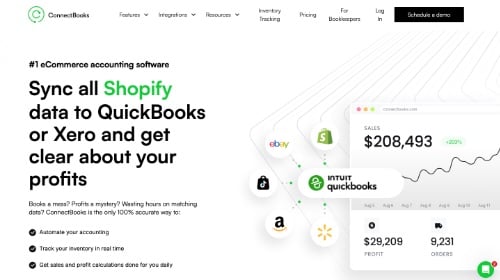
Profitability in ecommerce is often obscured by fragmented data. Ordoro and ConnectBooks have announced a strategic integration that addresses this by linking inventory cost data directly with accounting financials. By automating the reconciliation of shipping and fulfillment costs against revenue, merchants gain real-time visibility into their true margins—a critical advancement for scaling operations.

The Rise of Agentic Commerce
Perhaps the most notable trend is the move toward "agentic" commerce, where AI-powered bots perform complex tasks autonomously. Meta has expanded its Business Agent across WhatsApp, Messenger, and Instagram, allowing brands to automate customer support, product recommendations, and lead qualification. Simultaneously, Hey Savi and PayPal have launched a U.K.-based platform that allows shoppers to search for products and complete native checkouts without ever leaving the AI-driven search interface.
Payment Diversification
Fintech continues to push boundaries. Google Pay has introduced a direct checkout feature, integrating Google Wallet options directly into merchant checkout pages. On the crypto front, RedotPay has launched "Connect," a B2B gateway that allows merchants to accept stablecoin payments while settling in their local fiat currency, effectively lowering transaction fees by as much as 70%.
II. Chronology of Developments
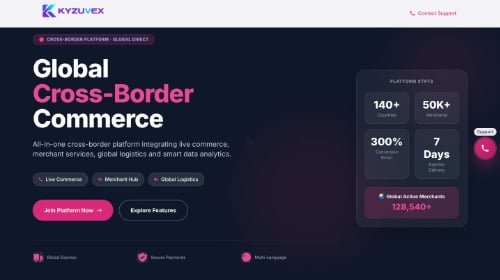
- Early Week: Kyzuvex launches its AI Virtual Livestream Commerce ecosystem, providing merchants with virtual hosts and real-time multilingual capabilities to reach global audiences.
- Mid-Week: DoorDash Ads announces a major expansion of its media platform, introducing "Spotlight" ad formats and privacy-centric data partnerships with LiveRamp to facilitate better attribution.
- Mid-Week: Etsy updates its advertising suite, allowing sellers to define budget strategies on a per-listing basis, moving away from rigid, campaign-wide budget allocations.
- Late Week: ShipStation Global is officially formed following the merger of WWEX Group and Auctane, signaling a massive consolidation in the shipping software and logistics sector.
- Late Week: Amazon debuts AI-generated visual suggestions in its mobile search bar, allowing users to see their search intent visualized and refined in real-time.
- Weekend: Constant Contact expands its footprint in Australia with the launch of an integrated SMS marketing tool, bridging the gap between email and text-based customer engagement.
III. Supporting Data and Industry Context
The rapid adoption of these technologies is not arbitrary; it is driven by the necessity of efficiency in a high-cost environment.
According to industry benchmarks, Shopsense AI claims its new "Shoppable Intelligence Model" delivers a 25% to 50% improvement in retrieval accuracy compared to industry standards like OpenAI’s CLIP or Google’s SigLIP2. This data underscores a pivot toward proprietary, vertical-specific models that outperform general-purpose AI.
Furthermore, the logistics sector is seeing a push for granular transparency. iThink Logistics has introduced real-time overseas tracking for India-based sellers, a move intended to bolster the competitive edge of independent makers exporting to over 220 countries. By providing live visibility, platforms like iThink are effectively reducing "Where is my order?" (WISMO) tickets, which historically account for a significant portion of customer service overhead.
The shift toward NielsenIQ’s new "Product Intelligence" service also highlights the struggle with data fragmentation. By creating a unified product layer that standardizes attributes, NIQ is solving a fundamental bottleneck: the inability of AI systems to match and recommend products effectively when the underlying data is inconsistent or "dirty."
IV. Official Responses and Perspectives
Industry leaders are framing these updates as necessary evolution rather than mere convenience.
Regarding the Google Pay expansion, spokespeople highlighted the importance of "Secure Payment Authentication," noting that as the complexity of global commerce grows, the safeguards for personal credentials must be woven into the fabric of the checkout experience rather than acting as a separate, burdensome layer.
The WWEX Group and Auctane merger represents a major shift in how the industry views the "logistics stack." By combining freight brokerage with shipping automation, the newly formed ShipStation Global aims to provide a "one-stop shop" for mid-market and enterprise retailers. In a statement regarding the merger, the organizations emphasized that global carrier connectivity is no longer just an operational advantage—it is a baseline requirement for survival in a fragmented global shipping market.
Regarding Meta’s agentic platform, analysts suggest that the company is attempting to capture the "intent-to-purchase" window within the social messaging environment, effectively turning a chat app into a storefront. By allowing businesses to deploy customized agents at scale, Meta is lowering the barrier to entry for small businesses that previously could not afford sophisticated chatbot development.
V. Implications for the Future of Ecommerce
The implications of this week’s developments are twofold: the democratization of sophisticated tools and the increasing invisibility of the transaction.
1. The Death of the Traditional "Storefront"
With the rise of TeleSuite’s ecommerce layer for Telegram and Hey Savi’s agentic checkout, the concept of a "website" is becoming secondary. Commerce is increasingly occurring where the consumer already spends their time—in messaging apps, AI search bars, and social feeds. Merchants must prepare for a "headless" future where their inventory is pushed to these third-party platforms rather than waiting for traffic to arrive at a traditional URL.

2. The AI Efficiency Mandate
The launch of the Shopsense AI model and NIQ’s Product Intelligence platform signals that the "AI era" has shifted from generative text to predictive and analytical infrastructure. Brands that do not invest in structured data—or that rely on legacy, fragmented PIM (Product Information Management) systems—will find themselves unable to integrate with the new wave of AI-driven discovery engines.
3. Cross-Border Accessibility
The combination of RedotPay’s crypto-based B2B gateway and iThink Logistics’ global tracking indicates a lowering of the barriers for cross-border trade. Smaller, independent merchants in emerging markets now have access to the same financial and logistical tools as established multinational corporations. This will likely lead to a surge in global competition, forcing domestic brands to differentiate based on brand value and loyalty rather than merely price or accessibility.
4. The Privacy-Centric Measurement Shift
As third-party cookies fade, the partnership between DoorDash Ads and LiveRamp serves as a template for the future. By using identity verification to match data in a privacy-compliant way, the industry is moving toward a "clean room" model of advertising. Advertisers must move away from broad-spectrum tracking and toward authenticated, high-intent data environments.
Conclusion
The ecommerce ecosystem is currently in a state of rapid reconfiguration. For the merchant, the primary challenge is no longer just "getting seen"—it is managing the complex orchestration of AI, logistics, and data that makes the transaction possible. As we move into the second half of the year, the winners will be those who successfully integrate these disparate tools into a unified, frictionless, and secure customer experience.

Got an ecommerce product release? Email [email protected] to ensure your innovations are featured in our upcoming weekly roundups.