By Josh Gallant | Updated July 21, 2026
Sales and marketing misalignment rarely presents itself as a catastrophic, singular event. It doesn’t usually arrive as a boardroom scandal or a sudden collapse in morale. Instead, it manifests as a quiet, systemic rot: "qualified" leads from marketing that sales teams refuse to touch, campaign messaging that lands on deaf ears during discovery calls, and a pipeline that appears robust on the surface while revenue growth remains stagnant.
To uncover the reality of modern go-to-market (GTM) operations, Unbounce surveyed over 500 SMB GTM professionals. The findings suggest a stark reality: while 87% of teams believe that better alignment is the key to unlocking performance, only 56% consider themselves "highly aligned." This gap between expectation and execution is not just a cultural hurdle—it is a significant operational tax on business growth.
The Anatomy of the Misalignment Gap
The survey reveals a "perception gap" that defines the struggle of many organizations. While 69% of executives report that their sales and marketing functions are strongly aligned, only 47% of non-executives agree. This discrepancy suggests that while leadership views a recurring sync call or a shared Slack channel as "alignment," those on the front lines feel the friction of data silos, inconsistent messaging, and conflicting priorities every single day.

When we strip away the corporate rhetoric, we see that most teams are merely building a meeting cadence without addressing the operating model beneath it. They are communicating more often, but they still lack consensus on the fundamental pillars of their business: what constitutes a high-quality lead, when sales should initiate outreach, and who holds the keys to revenue attribution.
Chronology of a Breakdown: From Strategy to Execution
Misalignment is rarely a single failure; it is a compounding process that begins at the top and accelerates as it moves down the funnel.
- The Planning Phase: Leadership sets goals for marketing (lead volume) and sales (revenue). Because these goals are not tethered to a shared incentive, the teams begin their work with different north stars.
- The Messaging Phase: Marketing crafts campaigns based on high-level personas, while sales interacts with prospects who have real-world objections. Without a feedback loop, the two stories drift apart.
- The Handoff Phase: Marketing sends "qualified" leads to the CRM. Sales finds them lacking in context or intent. The "lead quality" debate begins, leading to finger-pointing rather than process refinement.
- The Pipeline Phase: The deal cycle drags. Marketing complains about the lack of follow-up; sales complains about the quality of the leads. Revenue targets are missed, and the cycle repeats.
The Cost of Disconnected Operations
Misalignment is not merely a "soft" issue related to office politics; it is a hard cost to the balance sheet. According to the report, employee frustration is the leading side effect, cited by 29% of respondents. However, the financial implications are more severe:
- Delayed Follow-up: When lead handoffs are ambiguous, response times lag. In the fast-paced SMB world, a delay of even a few hours can mean the difference between a conversion and a lost prospect.
- Resource Inefficiency: Marketing budgets are wasted on campaigns that don’t address the actual pain points sales teams hear on the phone. Conversely, sales reps spend hours qualifying leads that were never ready for outreach.
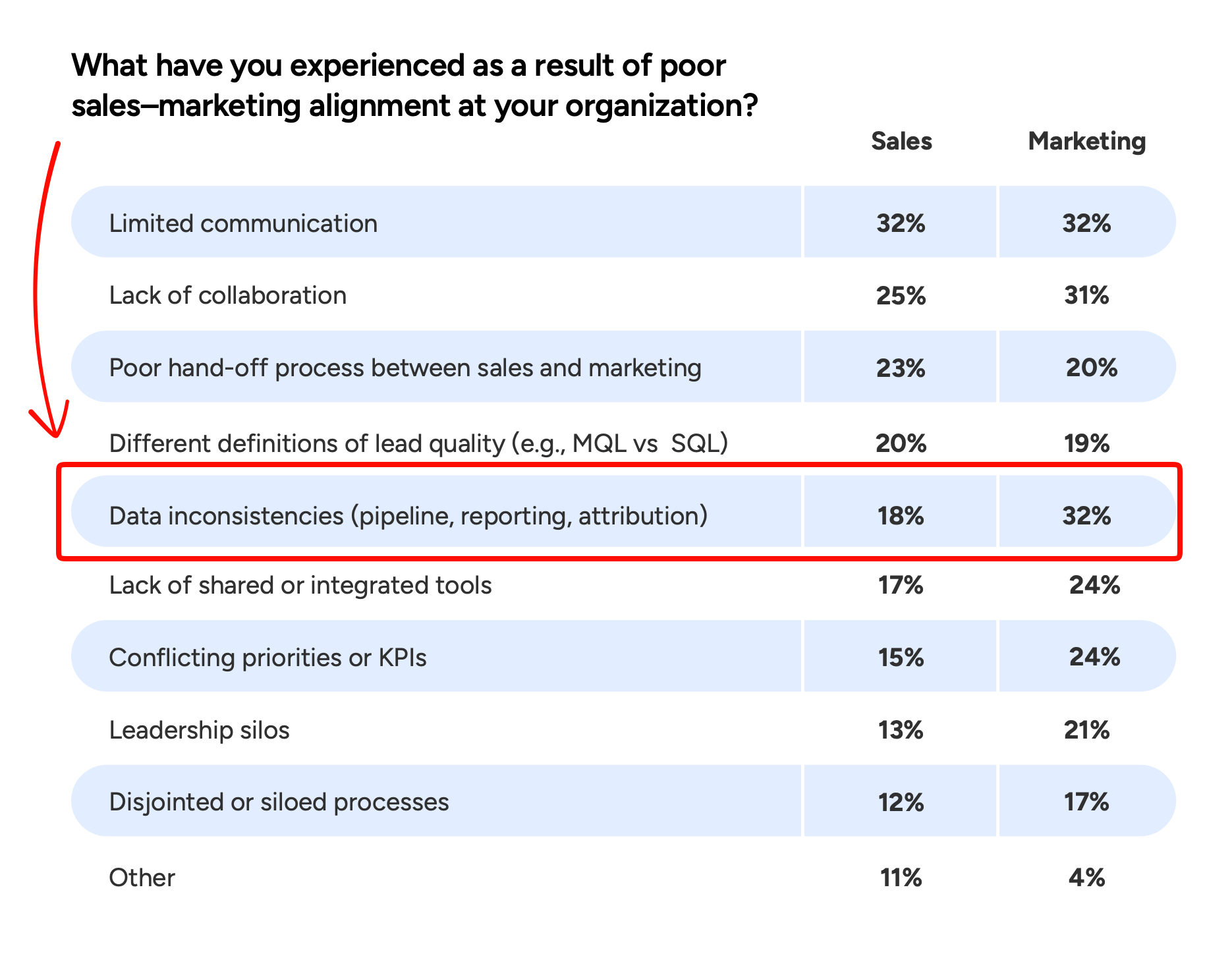
- Data Inconsistency: When teams work from different sets of data—or different definitions of success—the pipeline becomes a "he-said, she-said" environment where no one can accurately predict future revenue.
Supporting Data: The Evidence of the Shift
The numbers provide a clear mandate for change. The most successful organizations—the 56% who claim high alignment—are not just talking more; they are operating differently.

- Data Sharing: Aligned teams are 3.5x more likely to have strong, cross-functional data sharing compared to their peers.
- Tech Stack Optimization: Contrary to the impulse to buy more software, high-performing teams actually favor leaner stacks. Teams that have consolidated their tooling are twice as likely to rate their lead quality as "excellent."
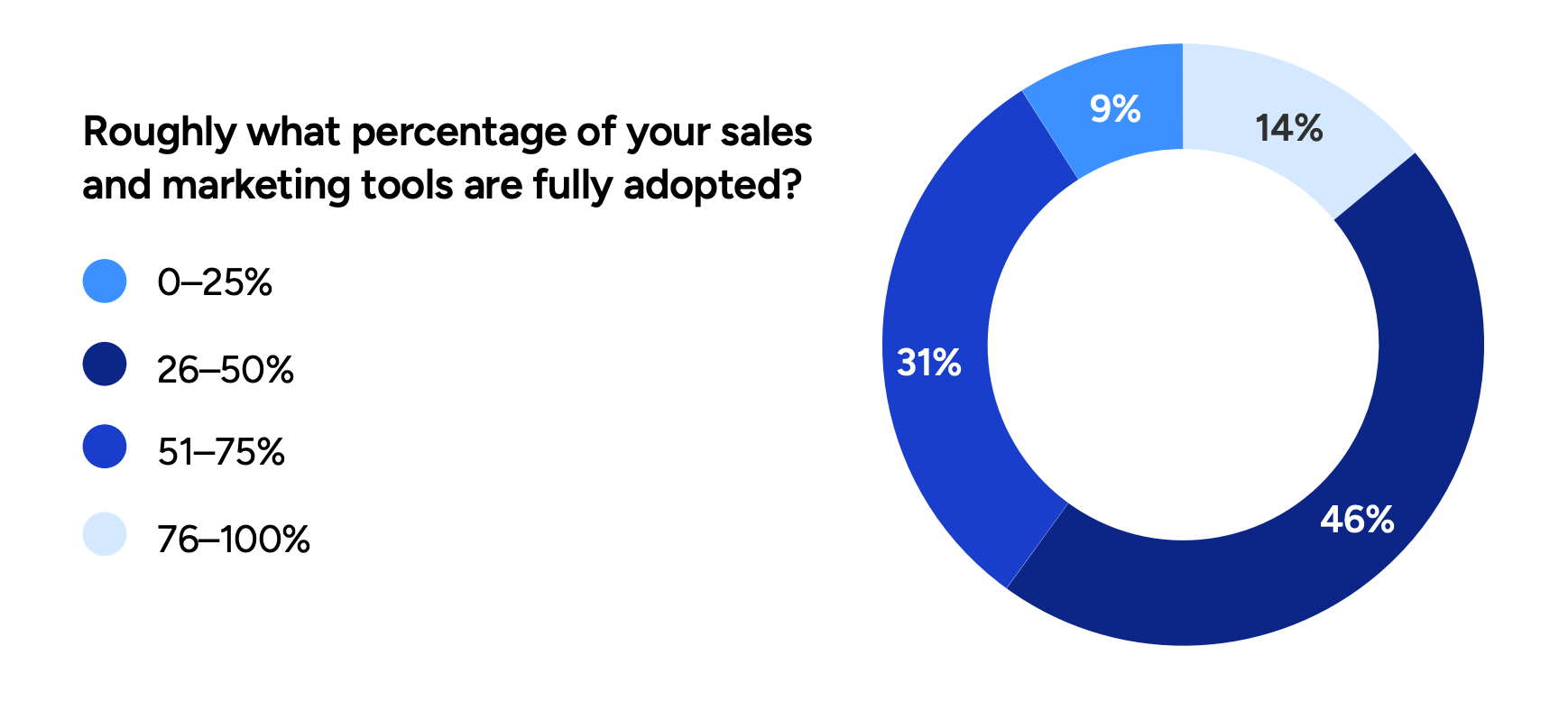
- The Adoption Problem: 60% of GTM professionals report that they use less than half of their available software tools. This "tool bloat" creates data silos, as each department adopts its own software stack, further isolating the information needed to close deals.
Implications for the Future of GTM Teams
The implications for businesses are clear: the era of "throwing leads over the fence" is over. To survive in a competitive landscape, SMBs must transition toward a unified operating model.
"The definition [of a lead] is a symptom, not the solution," the report notes. Simply agreeing that a lead is "good" won’t fix a broken handoff process. The real work involves integrating workflows, standardizing lead scoring, and, crucially, aligning compensation and incentives. If a marketer is paid on volume and a salesperson is paid on closed deals, they will never be truly aligned. Alignment requires shared KPIs, such as Customer Acquisition Cost (CAC) and conversion rates, that force both departments to work toward the same bottom line.
Actionable Steps: How to Move the Needle
For teams looking to bridge the divide, the report suggests three primary levers:
1. Define Shared Buyer Personas
Personas should not be a static document created by marketing in a vacuum. They should be a living, breathing artifact shaped by sales input. When sales reps contribute to persona development, they ensure that the language used in marketing campaigns directly addresses the objections they encounter on discovery calls.
2. Standardize the Handoff SLA
A Service Level Agreement (SLA) between sales and marketing is the ultimate cure for the "bad lead" syndrome. This document must clearly define:
- What information must accompany a lead.
- The exact timeline for sales follow-up.
- The criteria for "recycling" a lead back to marketing for further nurturing.
3. Unify the Data Infrastructure
The "data paradox" occurs when sales and marketing look at the same CRM but see different realities. By centralizing reporting, teams can ensure they are measuring success against the same dashboard. When both sides agree on the numbers, the focus shifts from debating whose data is "right" to discussing how to improve the strategy.
Expert Insight: Building for the Long Term
The consensus among top-performing GTM teams is that alignment is not a project; it is a constant state of operational discipline. As Charlie Munger famously said, "Show me the incentive and I’ll show you the outcome." When you align the incentives, the operational processes—like shared dashboards, common lead definitions, and collaborative campaign planning—follow naturally.
For SMBs, the path forward is not found in the next "all-in-one" AI tool, but in the rigorous, often difficult work of process alignment. By narrowing the focus, clearing out unused tech, and establishing a shared language with their buyers, teams can move from a state of internal friction to one of synchronized, scalable growth.
Download the full Unbounce report to access the complete dataset and identify which alignment gaps are currently costing your team the most revenue.