The landscape of search engine optimization (SEO) is undergoing its most radical transformation since the inception of the algorithm. As generative AI (genAI) platforms like ChatGPT, Perplexity, and Google’s AI Overviews become the primary interface for information discovery, businesses are scrambling to measure their "visibility." However, a dangerous trend is emerging: the reliance on vanity metrics provided by specialized AI-tracking tools that often paint a distorted picture of brand presence.
While platforms like Profound and Peec AI offer a window into how AI models perceive brands, industry experts are warning that these "visibility scores" are often highly manipulated. As marketers obsess over appearing in every conceivable prompt, they risk ignoring the foundational truth of the new search era: AI visibility is not a static score—it is a dynamic, volatile, and often deceptive metric.
The Anatomy of the AI Visibility Trap
The core issue lies in how visibility-tracking tools function. Typically, these tools monitor specific, curated prompts and report how frequently a business is cited in the resulting responses. They assign a percentage score based on these appearances. On the surface, this sounds like a modern iteration of "keyword ranking," but the reality is far more fragile.
The Manipulation of Data
Visibility scores are entirely dependent on the input. Some marketing agencies have begun "gaming" these tools by feeding them prompts that practically force the AI to include the client’s brand name. If an agency queries, "Why is [Brand Name] the best solution for X?", the AI is almost statistically guaranteed to cite the brand. When this result is reported back to a client as a "100% visibility score," it creates a false sense of success.
This leads to "average inflation," where a brand appears to be highly visible across the board, even though they are completely absent from organic, unprompted consumer queries. This practice is essentially vanity reporting—a digital mirror designed to satisfy stakeholders rather than reflect market reality.
Chronology of the Shift: From Keywords to Context
To understand why current metrics are failing, we must look at how the search paradigm has shifted over the last three years.
- 2022–2023: The Advent of Large Language Models. The initial shock of ChatGPT’s release forced SEOs to pivot from traditional blue-link strategies to "answer-based" optimization.
- Early 2024: The Proliferation of Tracking Tools. As businesses panicked about being "left behind," a cottage industry of AI-tracking SaaS platforms emerged, promising to map "AI share of voice."
- Late 2024–2025: The Recognition of Volatility. Marketers began to notice that the exact same prompt, entered by the same user, yielded different citations minutes apart. The "certainty" of the search engine was replaced by the "probabilistic" nature of the LLM.
- 2026: The Call for Better Metrics. Leading industry analysts are now advocating for a move away from simple citation counting toward intent-based performance metrics that mirror actual consumer behavior.
Supporting Data: Moving Beyond the Vanity Score
The obsession with being cited in every relevant prompt is a strategic dead end. Citations are dynamic, ephemeral, and subject to the underlying training data and "temperature" settings of the model at the moment of query.

The "Invisible Citation" Problem
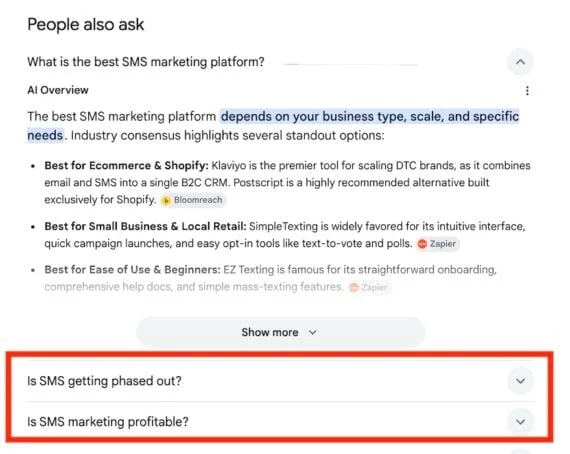
A significant portion of AI-driven traffic currently relies on "invisible citations." These are instances where an AI provides a summary and links to a source in a sidebar or an inline bracket, but never mentions the brand name in the conversational text.
Data suggests that these invisible citations generate negligible click-through rates. When a user interacts with a chatbot, they are looking for a conversational authority. If a brand is not mentioned by name—if it is not part of the "narrative" provided by the AI—it rarely receives the trust-based traffic that converts into sales.
The Case for Visible Citations
Visible citations, where the brand is named as a key authority or solution, are the true gold standard. In recent testing, these mentions correlate significantly higher with purchase intent. When an AI says, "According to [Brand], the best way to solve this is…", it creates a psychological "pre-sell" that invisible links simply cannot match.
Strategic Implications: How to Pivot Your Strategy
If the current metrics are flawed, what should a modern content strategy look like? The answer lies in moving from "appearing everywhere" to "being the most useful source."
1. Competitor Citation Analysis
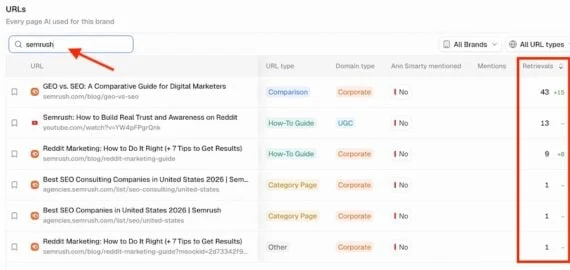
Instead of tracking if you appear, track why your competitors appear. If a competitor is consistently cited in answers regarding a specific problem, analyze their on-site content. Often, you will find that their pages are more thorough, address consumer concerns more directly, and offer more structured data. The "content gap" in the AI era is not about keywords; it is about who provides the most comprehensive answer to a user’s pain point.
2. The Power of Branded Prompts
Businesses must test their AI presence using "branded prompts." These are queries that connect your brand to your specific industry solutions. For example:
- "What are the best enterprise SEO platforms for small businesses?"
- "How does [Brand Name] compare to [Competitor] in terms of ease of use?"
If the AI fails to provide a detailed, up-to-date, or accurate summary for these queries, you have a brand-authority problem. Your goal should be to ensure that when a user asks about your brand specifically, the AI has a robust, positive, and factual summary ready to serve.
3. Improving On-Site Content for AI Consumption
The most effective way to be cited is to make your content "AI-ready." This includes:
- Structured Data: Use schema markup to help AI crawlers understand the relationships between your products, services, and authority.
- Direct Answers: Structure your content to provide a concise summary at the top of the page. LLMs are trained to favor content that provides a clear, digestible answer to a potential query.
- Unique Perspectives: AI models are increasingly tuned to favor primary sources. If you are just regurgitating what everyone else says, the AI has no incentive to cite you over a more established source.
Official Industry Stance and Future Outlook
The industry consensus is shifting toward a more nuanced understanding of "Generative Engine Optimization" (GEO). Industry leaders suggest that the future of search visibility lies in three distinct buckets:
- Direct Brand Mentions: Driving the brand into the "conversation" of the AI.
- Referential Authority: Becoming the source that AI models reference for industry-specific data.
- Content Utility: Ensuring that when a user lands on your site via an AI link, the content is so useful that they do not bounce, thereby signaling quality to the search platform.
"We are moving from a world where we optimized for robots to read code, to a world where we optimize for models to understand concepts," says one industry expert. "If you are focusing on your citation score, you are looking at a snapshot of a moving target. If you focus on becoming the authoritative voice in your space, the citations will follow as a byproduct of your utility."
Conclusion: The Path Forward
The rise of generative AI has created a "measurement vacuum" that is currently being filled by imperfect, and sometimes misleading, tools. For marketers, the path forward requires a level of maturity that resists the urge to chase high visibility scores at the cost of genuine authority.
Stop focusing on the number of citations and start focusing on the quality of the narrative. Are you being cited as a solution? Are you providing the data that models use to formulate their answers? Are you addressing the questions that your customers are actually asking?
The era of the "keyword" is dying; the era of the "answer" is here. Those who adapt their strategies to provide the most authoritative, clear, and context-rich information will find that they don’t need to manipulate a score to be seen—they will be the very source the AI turns to when a user asks for help.
As we look toward the remainder of the decade, the businesses that win will be those that view AI not as a search engine to be gamed, but as a collaborative partner in delivering value to the end consumer. The visibility you earn by being useful is the only visibility that will last.