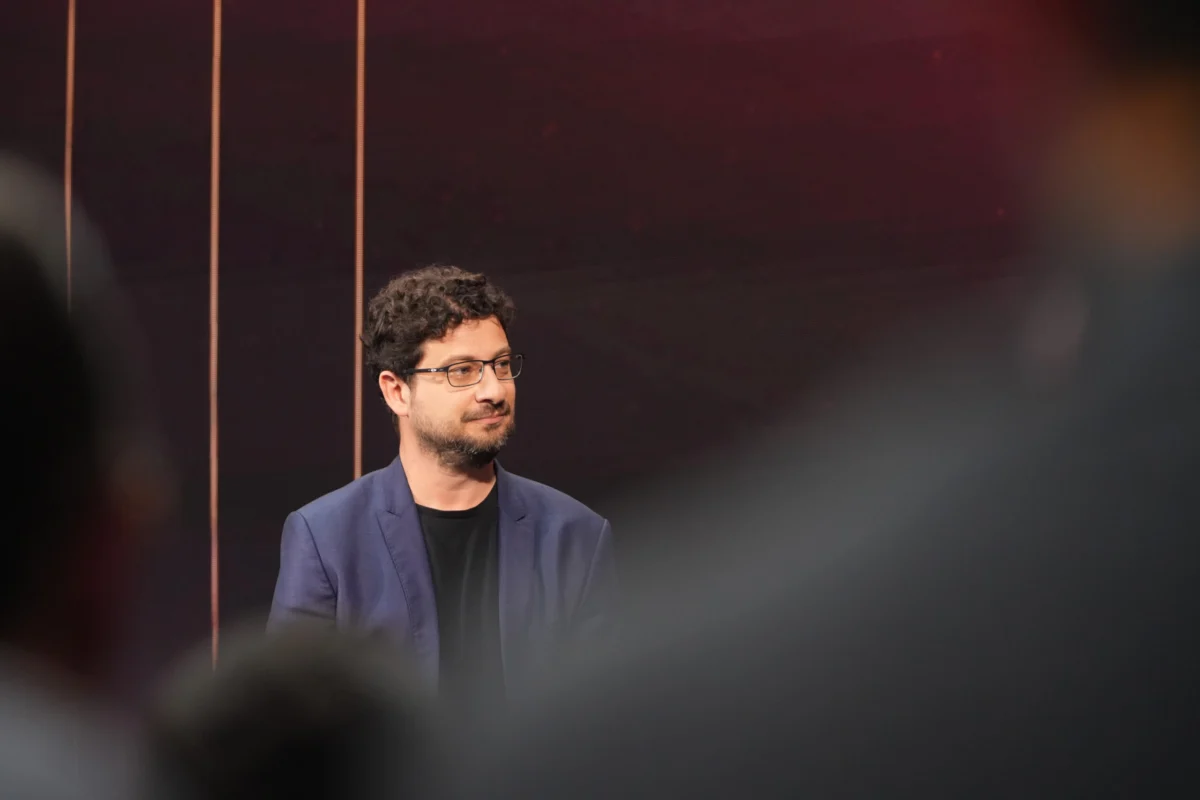
If you have ever opened a video file on a computer, you have likely encountered the orange traffic cone. VLC Media Player, the ubiquitous open-source software, has been downloaded more than 6 billion times, serving as the universal standard for digital playback. Now, its lead developer, Jean-Baptiste Kempf, is turning his attention from the screen to the streets.
Kempf, a French serial entrepreneur and a titan of the open-source community, believes we are on the cusp of a "robotics revolution." He envisions a near future where hundreds of millions of autonomous robots and drones roam our cities, warehouses, and skies. To support this vision, he has founded Kyber, a Paris-based startup building the essential infrastructure layer required to control remote devices in real-time. With a fresh $5 million in funding led by Lightspeed Venture Partners, Kyber is positioning itself to be the "plumbing" for the next generation of physical AI.
The Core Mission: Solving the Latency Bottleneck
At its heart, Kyber is an SDK (Software Development Kit) designed to synchronize video, audio, sensor data, and control inputs with minimal latency. While the rise of physical AI—the integration of artificial intelligence into robotics and physical hardware—has dominated the tech discourse, Kempf argues that the sector’s progress is hindered by the quality of the underlying systems.
"Physical AI is only as good as the underlying systems running it," noted Lightspeed Venture Partners in a statement accompanying their investment. This sentiment mirrors the internal logic of the startup: if an AI agent is making decisions for a drone or a delivery robot, the connection between the "brain" (the compute) and the "limbs" (the hardware) must be instantaneous.
The name "Kyber" is a deliberate nod to the kyber crystals of the Star Wars universe—the power source that gives lightsabers their energy. For Kempf, the metaphor is apt: when operating machinery in the real world, every millisecond counts. In environments where the human operator or the remote compute is not in the same physical location as the action, traditional streaming protocols simply aren’t fast enough.
A Chronology of Innovation: From Shadow to Kyber
To understand Kyber, one must look at the path taken by its founder. Kempf’s pedigree is rooted in the high-stakes world of low-latency performance. Before founding Kyber, he served as the CTO at Shadow, a cloud-gaming platform that requires near-zero latency to be functional.
The Evolution of the Tech
- The VLC Era: Kempf’s foundational work on VLC taught him how to handle video streams at a scale that had never been seen before. This experience with codec optimization and data packet delivery remains the backbone of Kyber’s streaming architecture.
- The Shadow Years: During his tenure as CTO of Shadow, the limitations of existing remote-access protocols became clear. Handling high-performance gaming via the cloud required a level of synchronization that standard off-the-shelf software could not provide.
- The Inception of Kyber: Recognizing that these same hurdles would plague the burgeoning robotics industry, Kempf transitioned from gaming to industrial IoT (Internet of Things). He began building an infrastructure that could handle the complexity of remote device orchestration.
- The Funding Milestone: In late 2024, the startup secured its $5 million seed round, attracting investors who had previously backed industry heavyweights like Anthropic and Mistral AI, signaling that the venture capital community views Kyber as a critical "picks and shovels" player in the AI arms race.
Supporting Data: Why Scale Matters
The challenge of managing a few robots is trivial; the challenge of managing a fleet of millions is a logistical and technical nightmare. Kempf points out that while some tech-forward companies have built custom, proprietary solutions for their own remote-driving or autonomous-fleet needs, these systems are rarely scalable or interoperable.
"The largest fleets today have maybe 2,000 or 3,000 vehicles," Kempf explains. "Imagine you need to manage millions of them; that’s not the same thing."
Key Technical Challenges:
- Observability at Scale: As fleets grow, monitoring the health of each device becomes impossible without an automated, high-fidelity feedback loop. Kyber provides a window into the "nervous system" of these machines.
- Edge Compute Orchestration: Tuning performance to the specific compute capabilities of a device—whether it’s a lightweight drone or a heavy-duty industrial robot—requires sophisticated, hardware-aware software.
- Remote Maintenance: Physical access is expensive. Kyber’s ability to facilitate remote updates and diagnostics reduces the need for human technicians to physically travel to a device, drastically lowering operational expenditures (OpEx).
Official Responses and Strategic Direction
Kyber’s team, currently numbering 25 full-time employees, operates with a global mindset. While headquartered in Paris, the company maintains offices in San Francisco and Singapore to stay close to the epicenter of AI development and the manufacturing hubs of Asia.
The startup’s business model is a hybrid. It maintains the core project as open-source—a nod to Kempf’s roots and a strategy to ensure rapid adoption and standard-setting. However, it sells a productized, enterprise-grade version of the software to commercial clients. Furthermore, much like Palantir, Kyber deploys "Forward-Deployed Engineers" (FDEs) to work directly with clients, ensuring that the software is optimized for specific, high-stakes environments.
Commercial deployment is already underway across several sectors:
- Defense: Enabling remote operation of unmanned assets.
- Telecommunications: Managing remote infrastructure that requires low-latency monitoring.
- Robotics and Drones: Providing the control layer for autonomous logistics and aerial survey platforms.
- Remote IT Access: A high-demand segment where Kyber is aiming to disrupt incumbents like Citrix by offering a more modern, efficient alternative.
Implications for the Future of Physical AI
The rise of Kyber signals a maturation of the robotics industry. For years, the focus has been on "the brain"—the LLMs (Large Language Models) and vision models that allow robots to "think." But as these models move from research labs to the real world, the "body" of the robot is becoming the primary point of failure.
If a robot is in a warehouse, an office, or a disaster zone, it needs to communicate with the cloud, other robots, and human supervisors. A failure in communication or a spike in latency can lead to catastrophic hardware damage or safety risks. By building a standardized infrastructure layer, Kyber is effectively creating a "TCP/IP for the physical world."
The "Citrix Challenger" Ambition
While the term "remote IT access" may lack the glamour of humanoid robotics, Kempf views it as a massive market opportunity. The demand for secure, high-speed remote access to compute resources is exploding as companies decentralize their workforces and operations. By building a tool that is general-purpose, Kyber avoids the "custom solution trap." As the company’s careers page bluntly states: "The companies that tried to solve it spent years and tens of millions building custom solutions they’ll never share. We’re building the version everyone else can use."
Conclusion
Jean-Baptiste Kempf’s transition from the world’s most popular media player to the infrastructure of the robotics age is a testament to the evolution of the software industry. Just as the internet required a common protocol to flourish, the age of autonomous physical systems requires a common nervous system. With its open-source roots, backing from top-tier VCs, and a clear focus on solving the latency bottleneck, Kyber is positioning itself to be the invisible force powering the robots of tomorrow. Whether in the air or on the ground, the future of physical AI will likely depend on the very synchronization that Kempf is now engineering.