In the rapidly evolving landscape of digital search, a peculiar phenomenon is quietly confounding marketing departments across heavily regulated industries. Brands are discovering that generative artificial intelligence models—such as OpenAI’s ChatGPT, Google’s Gemini, Perplexity, and Google AI Overviews—are eagerly using their proprietary research, educational guides, and expert data to construct answers for users. Yet, when the dust settles, these same AI engines fail to mention the brand itself.
The content is trusted, scraped, summarized, and served to prospective buyers, but the corporate author remains a ghost in the machine.
This disconnect has profound implications for digital visibility, brand equity, and customer acquisition. As consumers increasingly bypass traditional search engine results pages (SERPs) in favor of direct, synthesized answers from AI bots, understanding the mechanics of this "citation-versus-mention" gap has become an urgent priority for modern enterprises.
Main Facts: The Anatomy of the AI Visibility Gap
Recent visibility audits conducted on major national financial institutions and insurers have brought this hidden dynamic to light. When researchers fed 40 high-intent buyer questions into ChatGPT, Gemini, Perplexity, and Google AI Overviews—generating roughly 640 unique AI responses—a stark operational reality emerged: AI answer engines treat being cited and being named as two entirely separate measurements.
In many cases, the audit revealed that buyers were receiving answers built entirely on an insurer’s proprietary content, but with a competitor’s name attached as the recommended provider.
The Illusion of Blended Metrics
The primary reason most marketing teams miss this discrepancy lies in the tools they use. Traditional AI visibility dashboards typically blend mentions and citations into a single composite score.
Under a blended metric system:
- A brand that is cited frequently for its educational definitions, but rarely named in recommendations, still ends up with a superficially respectable score.
- The visibility gap is effectively swallowed by averages, masking a critical vulnerability.
- Furthermore, monitoring tools often undercount brand mentions. Automated tools frequently fail to recognize informal, shortened, or colloquial versions of a company name used by generative engines, leading to skewed analytics.
Conversely, the inverse pattern also exists. Researchers audited a direct-to-consumer bank that was named in approximately 39% of relevant AI answers—making it one of the most visible brands in its market. Yet, its own website ranked near the bottom of the bank sites cited by the engines. Clearly, the AI knew the brand well from third-party ecosystems, but it wasn’t learning anything directly from the bank’s own published content. Neither of these nuanced patterns surfaces in a blended metric; both become glaringly obvious only when tracked independently.
Chronology: How the Search Paradigm Shifted
To understand how enterprises arrived at this crossroads, it is necessary to examine the evolution of search behavior over the past half-decade.
- Phase One (Pre-2023): The Era of Blue Links. For decades, search engine optimization (SEO) was dominated by keyword targeting, backlink acquisition, and ranking on page one of traditional search engines. If a user searched for "term life insurance," a brand’s ranking page drove direct traffic, brand impressions, and conversions simultaneously.
- Phase Two (2023–2024): The Rise of Generative Overviews. As LLMs (Large Language Models) matured, search engines shifted from index-matching to synthesis. Instead of sending users to a website, engines began extracting definitions, charts, and facts directly onto the search page. Brands rejoiced when their URLs appeared as footnotes or citations, assuming this translated into brand awareness.
- Phase Three (Present Day): The Decoupling of Authority and Attribution. Enterprises are now realizing that LLMs process information through two distinct cognitive modes: reference extraction (fetching objective facts, definitions, and data) and recommendation synthesis (choosing who to endorse based on aggregator data, reviews, and market consensus). A brand can easily win the former while completely losing the latter.
Supporting Data: Why AI Uses Your Page But Skips Your Name
Why would an advanced artificial intelligence system ingest a company’s whitepaper, rely on its statistics, and link to its domain, yet completely omit the company name from the final output? Industry audits point to four primary drivers:
1. Functional Divide: Reference vs. Recommendation
Educational content inherently answers "what is" questions—such as what a deductible is, how a high-income savings account functions, or what comprehensive auto coverage entails. Financial and insurance institutions publish vast amounts of this material.
However, when a buyer asks, "Which insurance provider should I choose for my family?" the engine executes an entirely different task. It pivots from objective definition to subjective recommendation, pulling those recommendations from sources structurally different from those used for definitions. Your page provides the textbook definition; someone else’s page supplies the endorsement.
2. The Anonymous Passage Problem
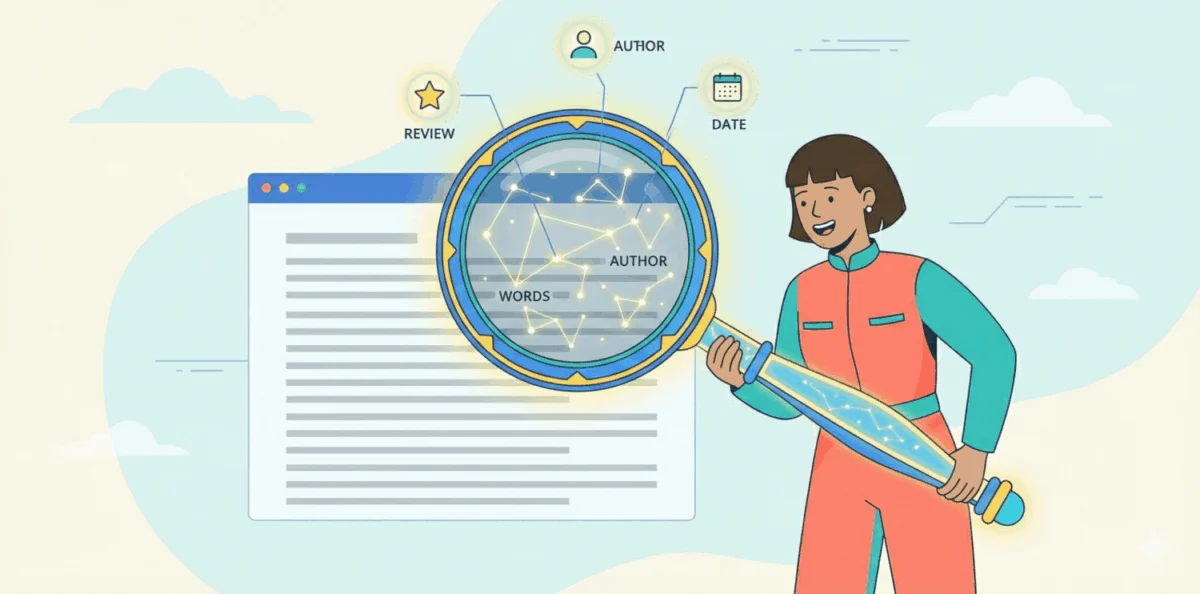
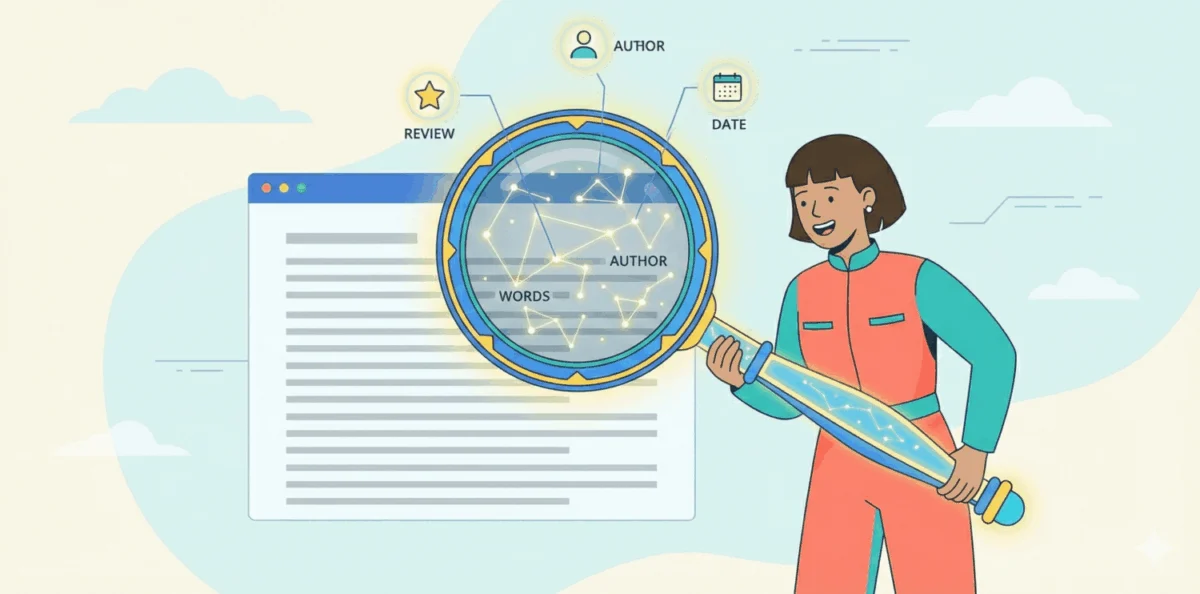
AI engines do not read web pages the way humans do; they parse text at the paragraph and sentence level. If an engine lifts a specific factual passage from your article, but that immediate paragraph lacks a visible author, clear credentials, or your corporate identifier, the context is stripped away.
In heavily regulated industries like banking, insurance, and healthcare, content is frequently published under a generic corporate byline to streamline compliance reviews. To an AI engine, that content is useful, highly accurate, but fundamentally anonymous.
3. The Pull of Third-Party Ecosystems
When LLMs curate shortlists of recommended brands, they do not rely solely on corporate blogs. Instead, they heavily weight comparative environments: review platforms, industry aggregators, forum discussions, and category comparison sites. If your brand lacks a robust footprint across these external ecosystems, your primary domain can be as authoritative as necessary, yet fail to secure a brand mention. Your site acts as the library; the aggregator acts as the town square where recommendations are swapped.
4. Failure to Address Niche Buying Intent
Much of corporate content targets broad, high-volume search queries designed to capture top-of-funnel traffic. However, AI-native buyers ask hyper-specific, scenario-based questions—such as which policy makes sense for a household adding a teenage driver, or which commercial bank optimizes cash handling for small businesses. If your content library stops at general definitions and fails to guide users through situational decision-making, the engine has no contextual reason to inject your brand name into the final recommendation.
Official Responses and Industry Reactions
As these insights circulate through digital marketing and compliance circles, industry leaders are shifting their content strategies.
Content strategists note that the natural human impulse—proven by behavioral research published in journals like Nature—is to solve problems through addition: writing more articles, launching more campaigns, and publishing higher volumes of content. However, in the age of generative AI, this additive reflex can backfire. Pumping out more anonymous, top-of-funnel educational pages merely feeds the AI’s need for free reference material without securing any brand equity in return.
Compliance officers in regulated sectors are also being forced to adapt. For years, removing author bylines and credentials was standard practice to minimize individual liability and ease legal review. Current data suggests this risk-averse strategy carries a hidden penalty: it renders the content invisible to AI recommendation engines that prioritize verifiable authorship and organizational provenance.
Implications: Strategic Steps Forward
Closing the citation-versus-mention gap requires a fundamental recalibration of enterprise content strategy. Organizations must move beyond traditional, blended SEO metrics and implement a targeted framework to ensure their brand identity travels alongside their intellectual property.
1. Separate Your Metrics
Content and analytics teams must audit their AI visibility every 60 to 90 days, explicitly separating citation rates (how often your URLs are referenced) from mention rates (how often your brand is recommended). Establishing this baseline reveals whether your brand is functioning like an uncredited textbook or a recognized market leader.
2. Embed Attribution at the Paragraph Level
Combat the anonymous passage problem by revising publishing workflows. In regulated verticals, ensure that subject matter experts—such as CFAs, MDs, JDs, or FINRA-registered professionals—are visibly credited with clear credentials directly attached to the specific passages and insights they author. When an AI engine scrapes a paragraph, it must ingest the author’s credentials alongside the data point.
3. Align Content with Buying Scenarios
Shift a portion of content production away from broad definitions and toward hyper-specific, scenario-based buyer questions. Answering the exact questions customers ask immediately before making a purchasing decision gives LLMs the contextual justification they need to include your brand on the shortlist.
4. Optimize the External Ecosystem
Recognize that AI engines form opinions based on the broader web. Strengthening your brand’s presence across reputable review sites, category comparisons, and industry aggregators ensures that when an engine looks outward for recommendations, your name is waiting to be found.
Conclusion
The reality of generative search is both a validation and a warning. If AI systems are actively citing your pages, the hardest hurdle has already been cleared: the engines fundamentally trust your facts, accuracy, and domain authority.
The immediate task for modern brands is to bridge the gap between utility and identity. By putting verifiable names on your pages, meeting buyers at the point of decision, and accurately measuring how your brand is perceived across the AI ecosystem, companies can ensure they are no longer building someone else’s reputation with their own hard work.