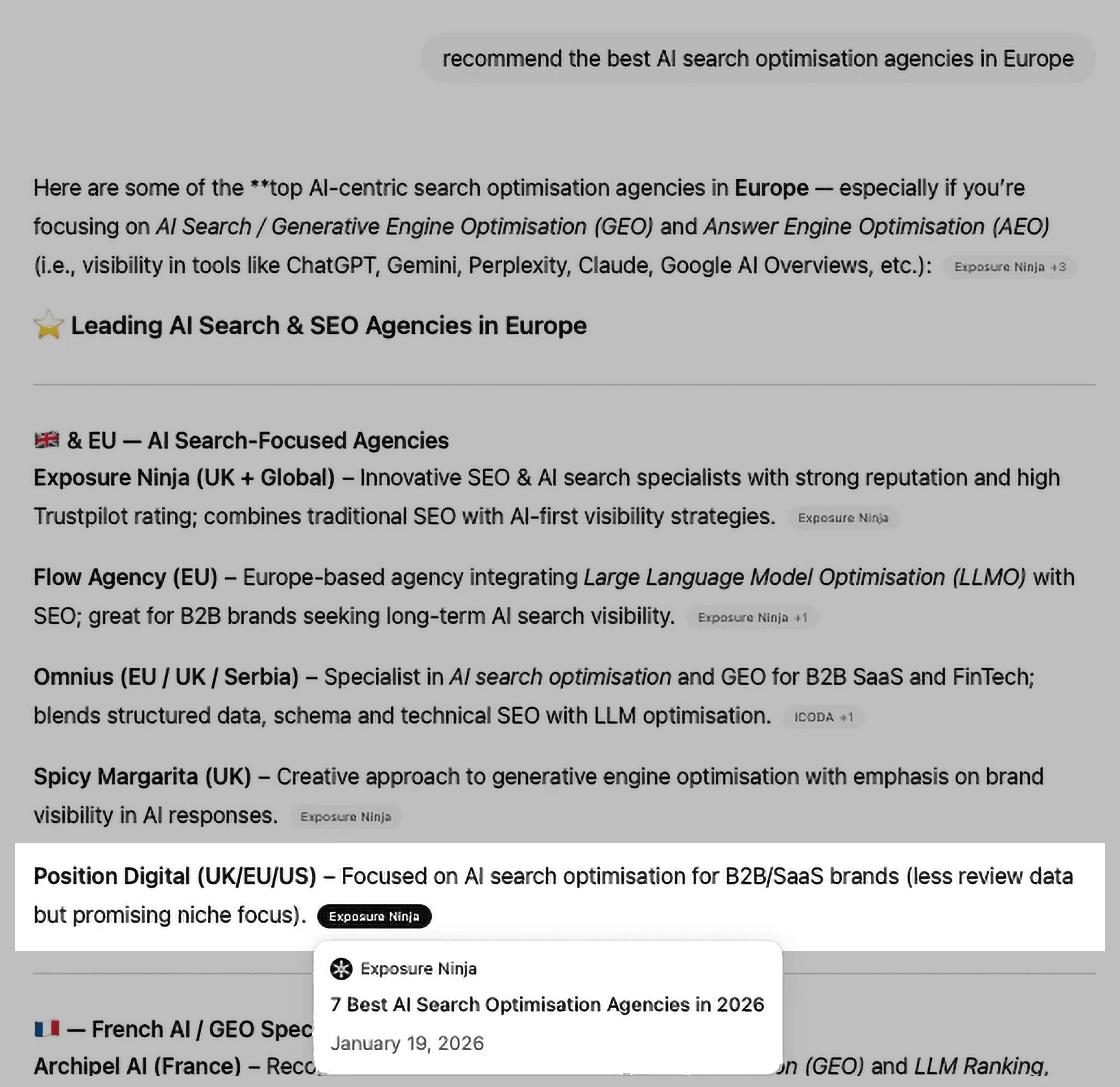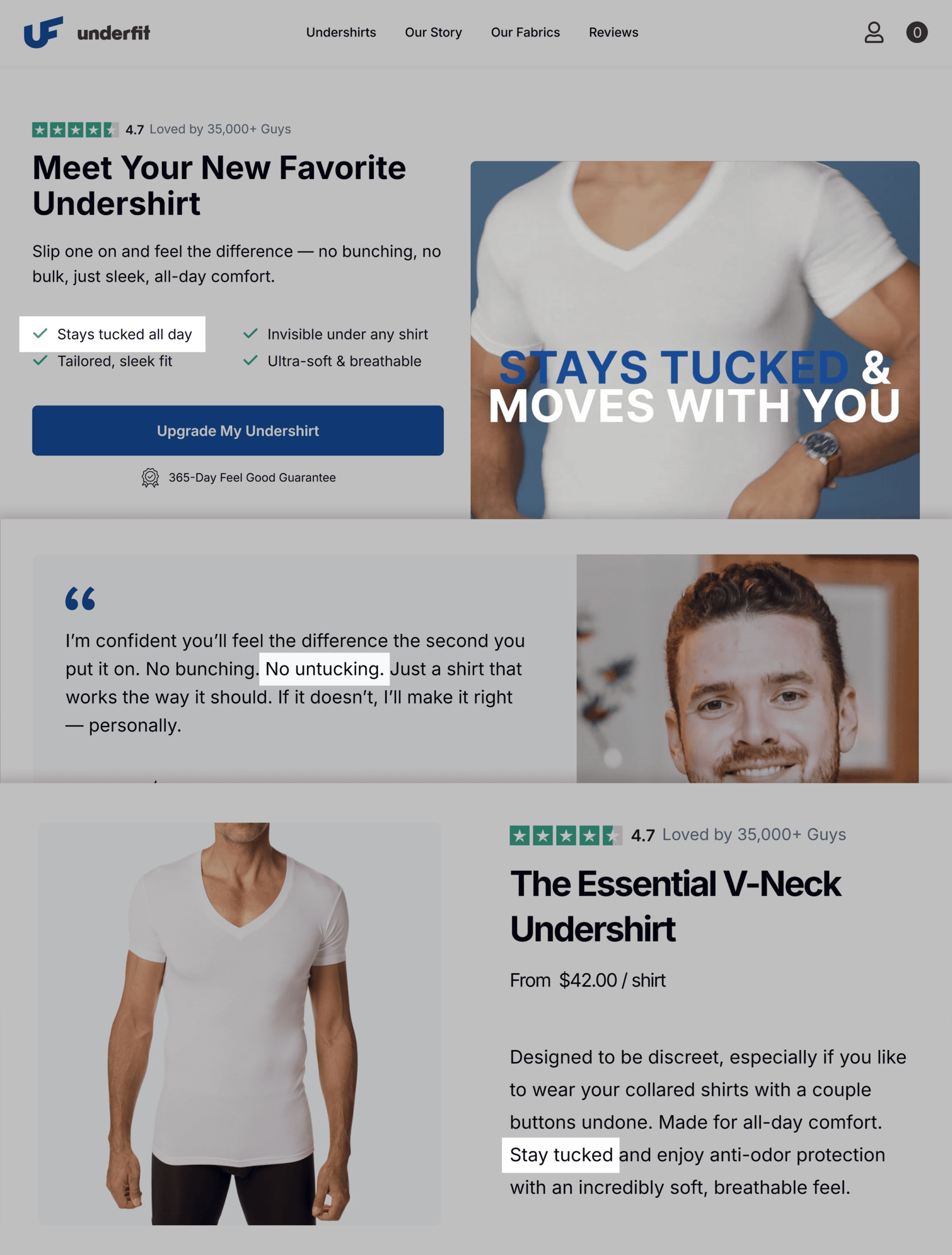
In the modern digital economy, a brand can hold the coveted #1 ranking on Google’s search engine results pages (SERPs) and simultaneously be entirely invisible to artificial intelligence.

As consumer behavior shifts away from traditional keyword queries toward conversational interfaces, thousands of companies are discovering a dangerous blind spot. While their URLs dominate the classic "ten blue links," they are completely absent from the conversations potential customers are having with large language models (LLMs) about their product categories. Worse yet, many are discovering that AI tools are surfacing inaccurate, outdated, or misleading information about their products—a failure that directly damages sales without leaving a digital paper trail in Google Analytics.
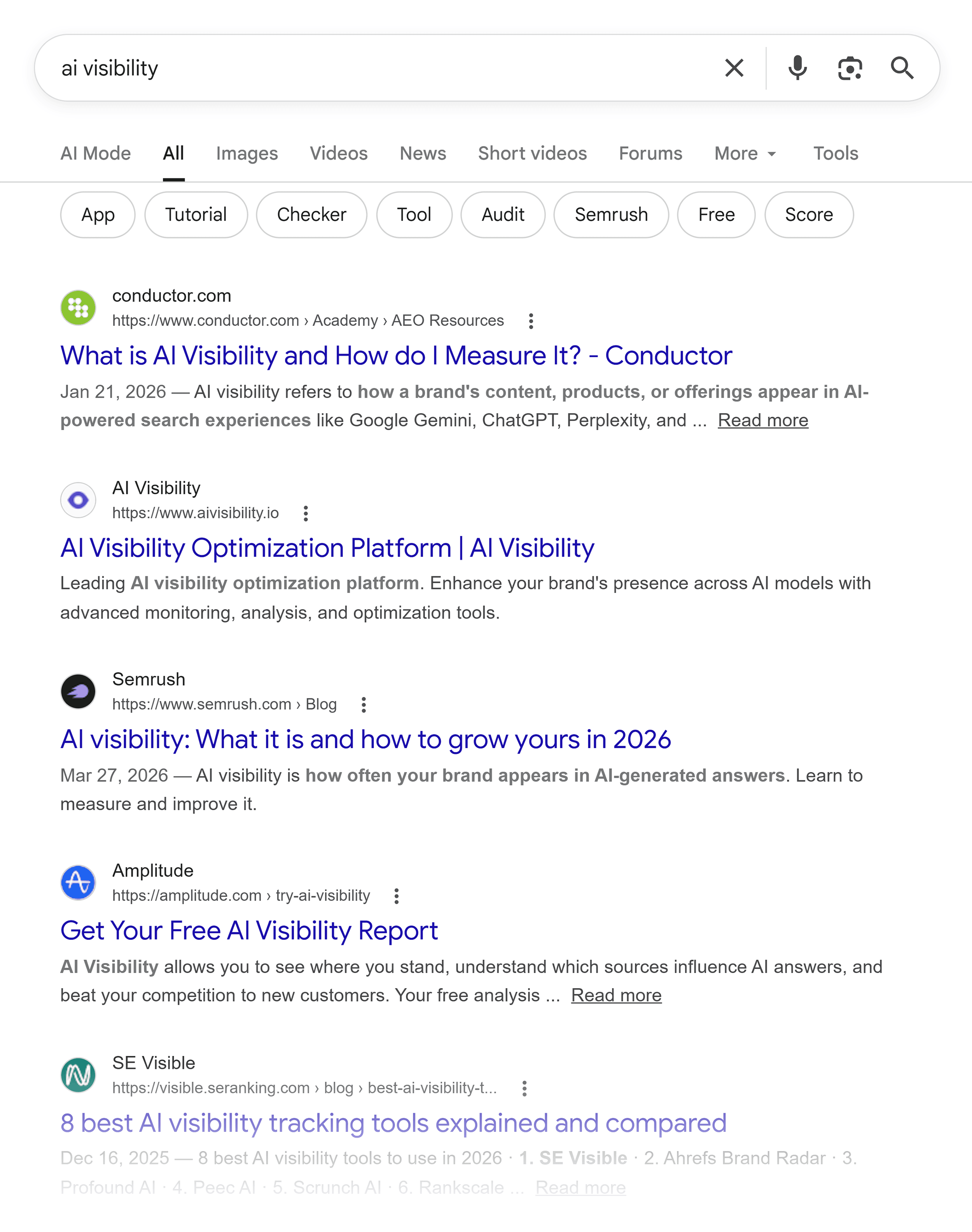
The solution to this emerging corporate risk is prompt tracking (also known as LLM visibility tracking). This practice monitors how a brand appears in AI-generated answers over time through mentions, citations, and semantic recommendations. As generative search redefines the digital marketplace, understanding how to audit and master your AI footprint is no longer optional; it is a critical baseline for survival.
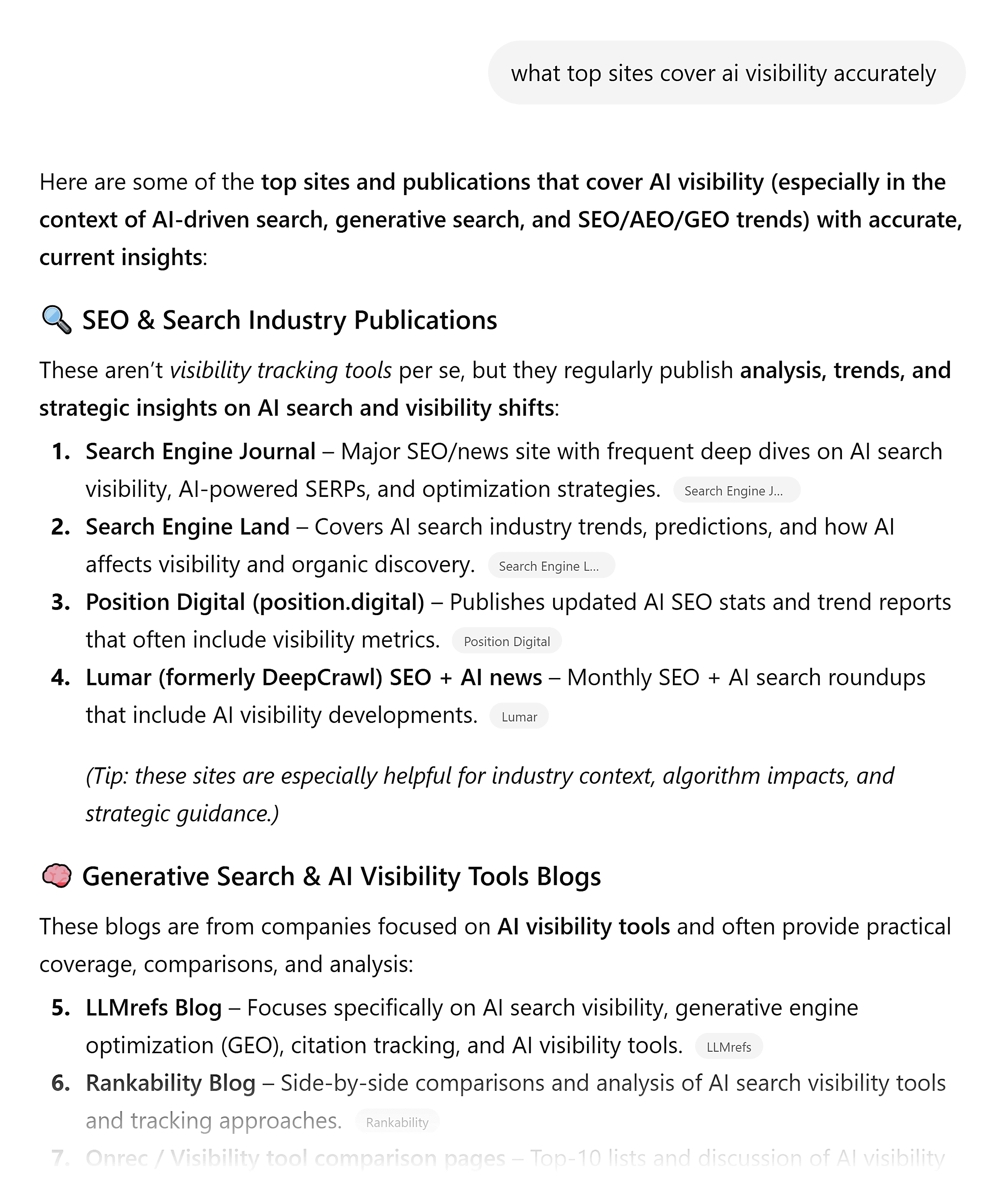
The Main Facts: The Shift from SERPs to Generative Answers
Traditional SEO rank tracking asks a straightforward question: "How close are our URLs to position one on the SERP for this specific keyword?"
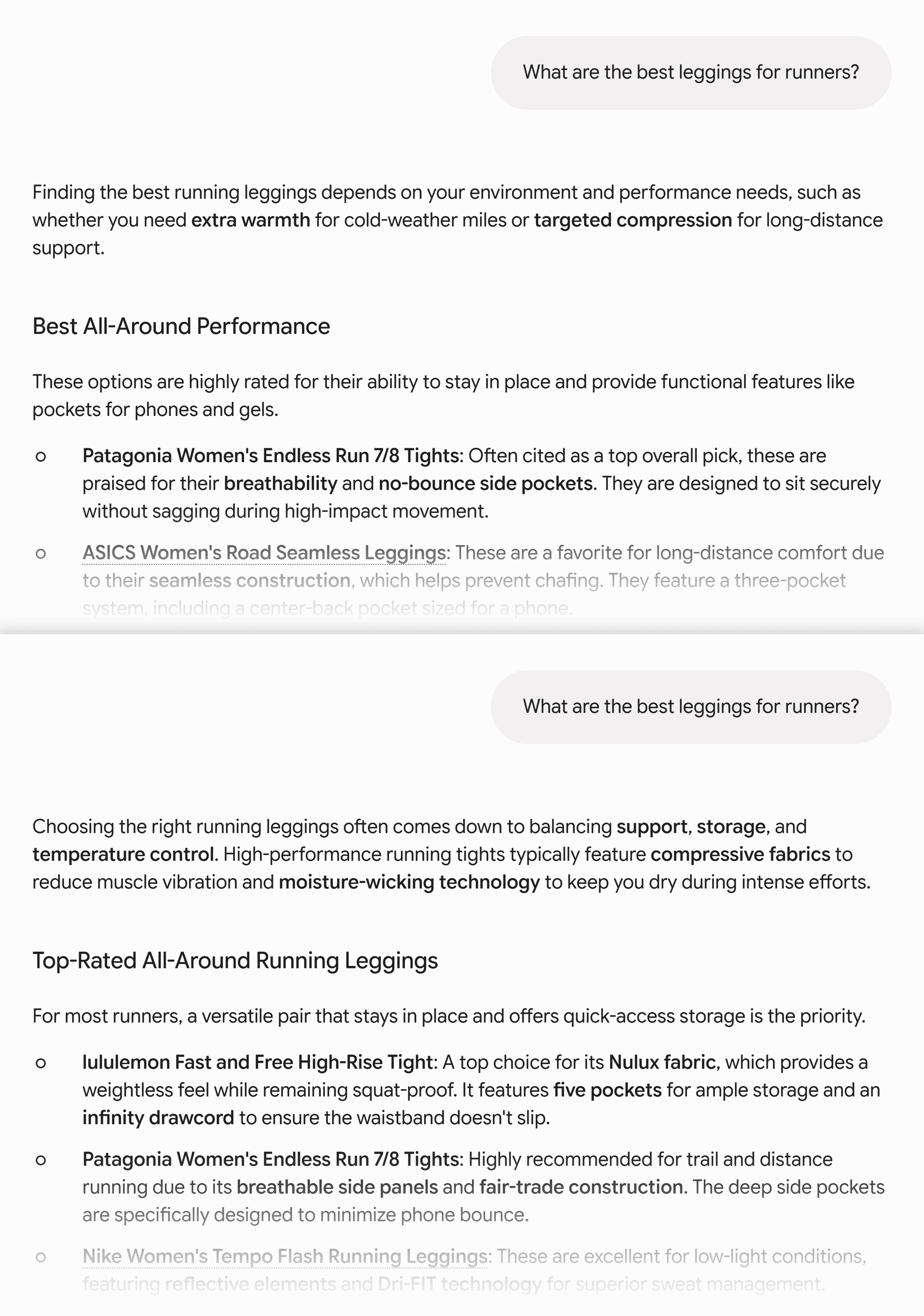
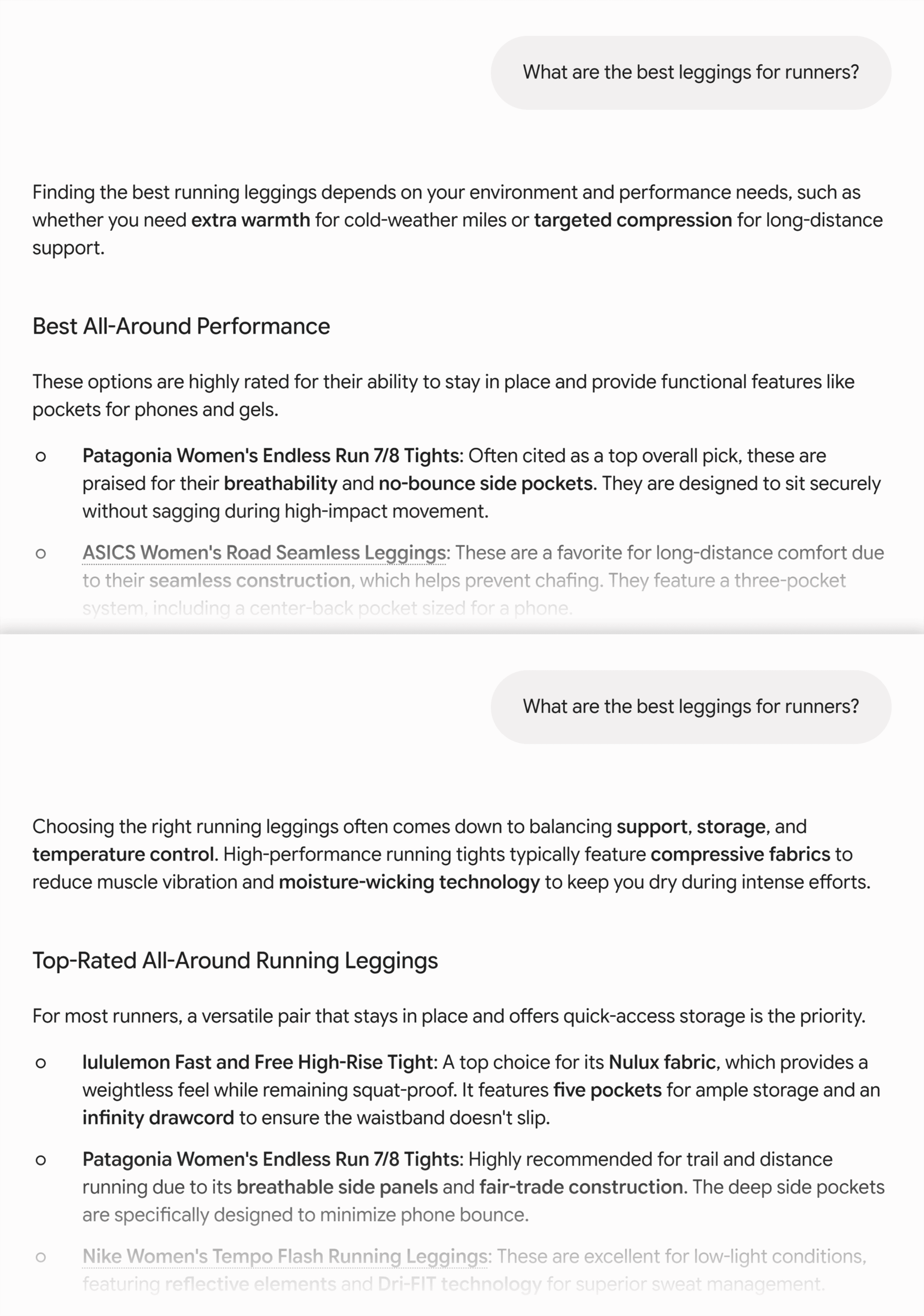
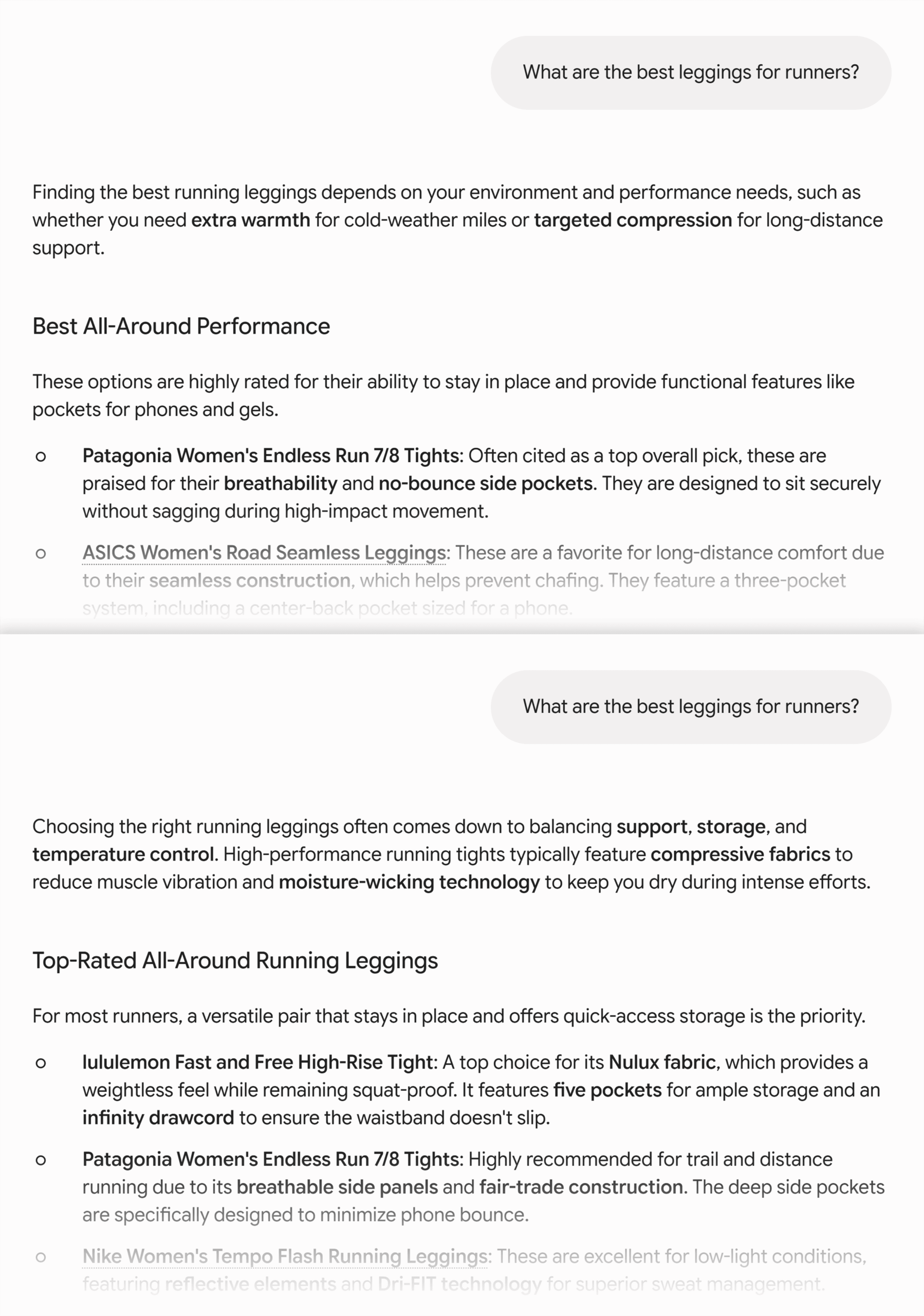
LLMs do not work this way. Instead of serving a static list of URLs, engines like OpenAI’s ChatGPT, Google Gemini, and Perplexity synthesize massive amounts of information to generate a unique, contextual response tailored to the user’s specific prompt. A user can ask the same question twice and receive two entirely different answers.
This non-deterministic nature changes the rules of engagement. In AI-driven search, ranking first matters far less than ensuring the model consistently says true, positive things about your brand to the right audience. Without a systematic monitoring framework, brands are flying blind. Prompt tracking provides the directional intelligence required to spot AI visibility gaps—high-value queries where a brand is consistently absent—and close them.
The Scale of the Adoption Problem
The urgency behind prompt tracking is underlined by recent industry research. According to data from Orbit Media, 55% of US internet users rely on AI as their primary or frequent research tool, with 32% utilizing it explicitly for product recommendations.
Furthermore, G2’s 2026 AI Search Insight Report reveals that 71% of B2B software buyers now rely on AI chatbots for product research, up from 60% just a year prior. For businesses, this translates to a harsh reality: a growing share of buyers are learning about your product, evaluating your features, and forming purchasing decisions within AI tools—without ever visiting your website.
Chronology: The Evolution from Keywords to Conversations
- Pre-2023 (The Era of Deterministic Search): Digital marketing was dictated almost entirely by traditional SEO. Success was measured by keyword rankings, backlink profiles, and click-through rates (CTR) on static SERPs.
- 2023–2024 (The Generative AI Boom): The mainstream proliferation of LLMs shifted consumer habits toward natural language queries. Early adopters realized that Google rankings did not automatically translate to recommendations in ChatGPT or Claude.
- 2025 (The Rise of "Ghost Ranking"): Marketers identified a phenomenon where brands appeared as passive citations (source links in the sidebar) while competitors were actively recommended in the core narrative of the AI’s response—a deceptive state of partial visibility.
- 2026 and Beyond (The Formalization of Prompt Tracking): Prompt tracking emerges as a distinct discipline. Industry pioneers begin treating LLM visibility metrics with the same rigor historically applied to rank tracking, utilizing specialized tools and APIs to monitor non-deterministic brand sentiment.
Supporting Data and Case Studies: How Enterprise Brands Navigate AI Visibility
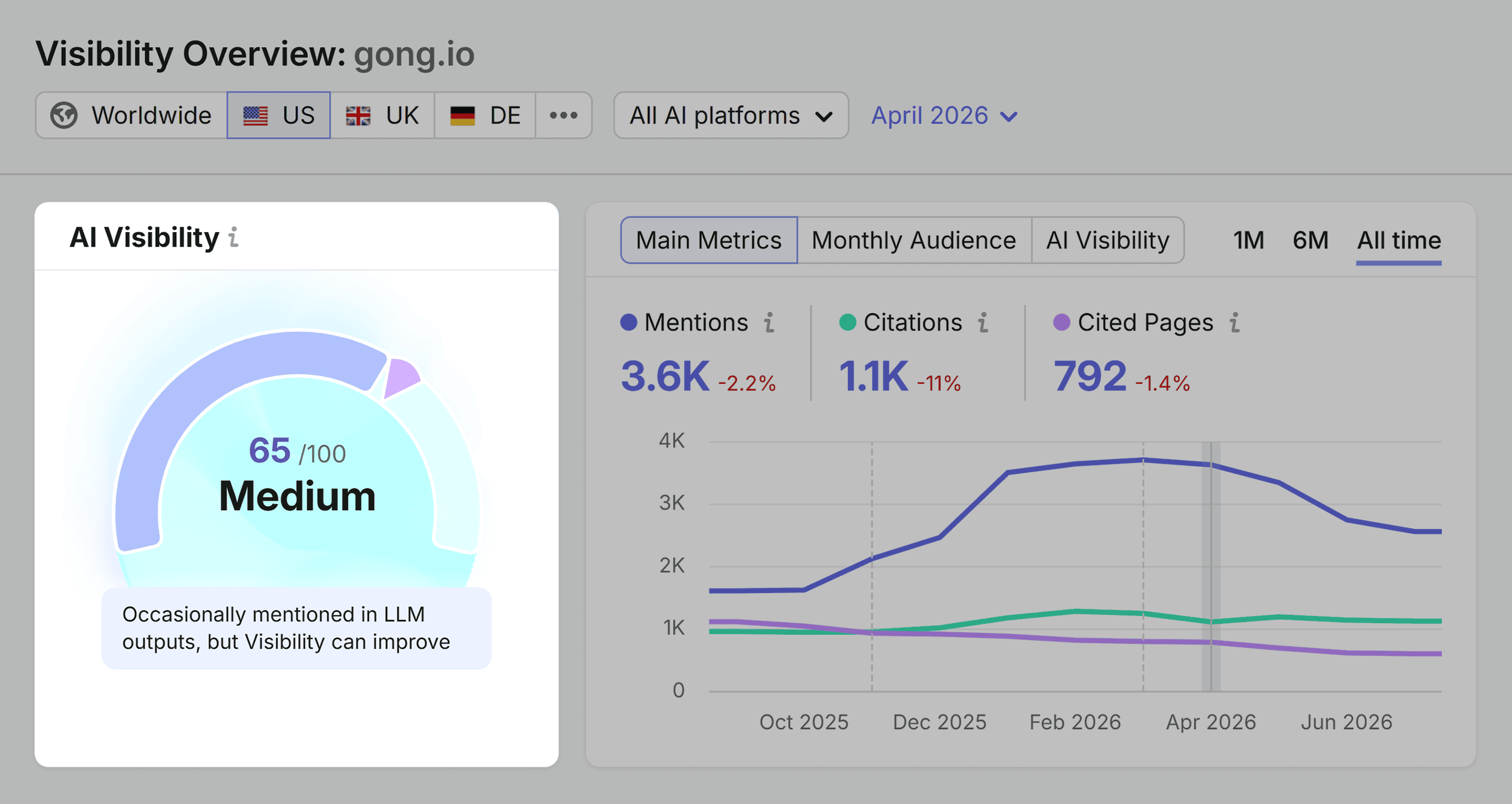
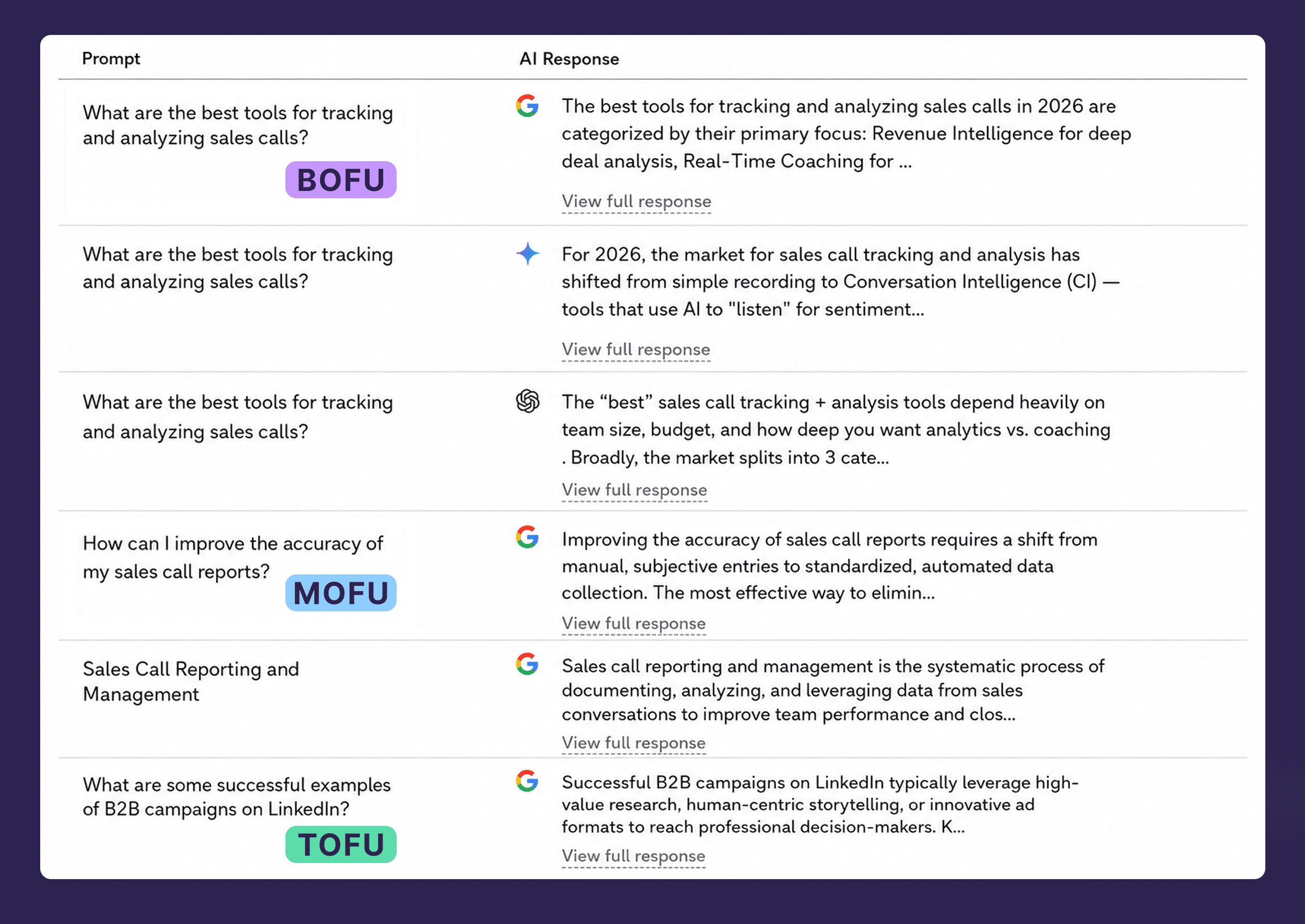
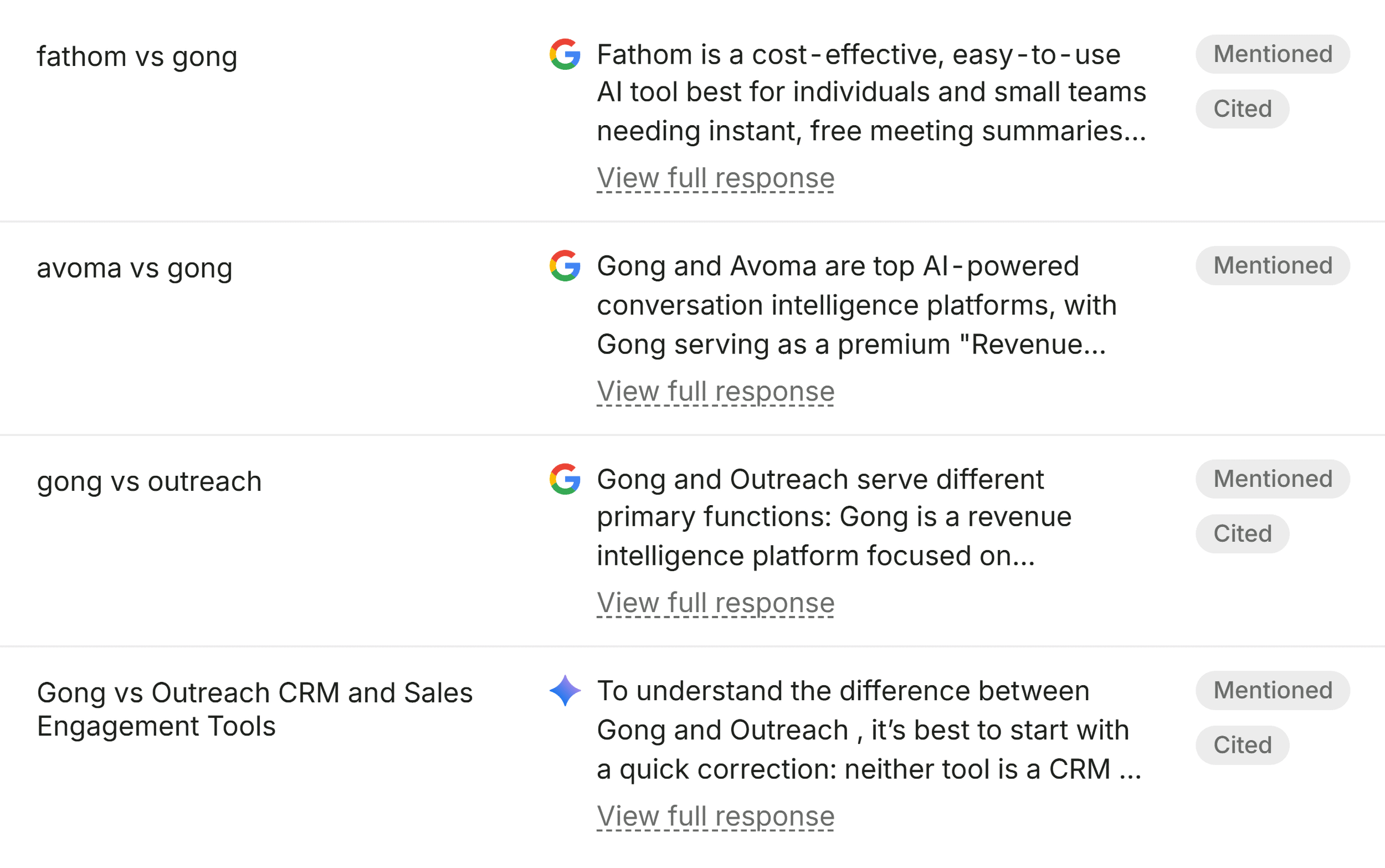
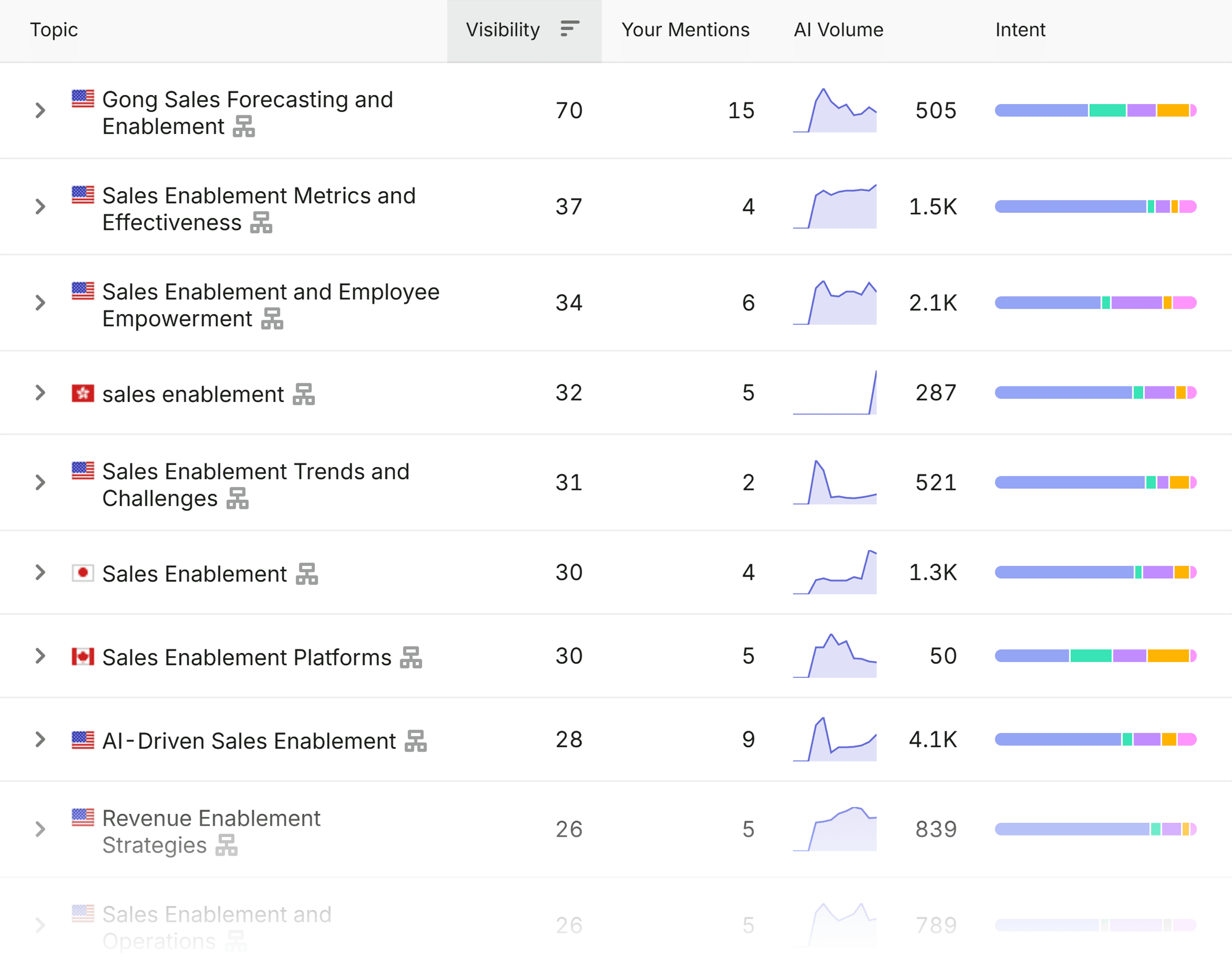
To understand the practical application of prompt tracking, consider enterprise software giant Gong. Gong maintains a healthy AI visibility score of 65, showing up across top-of-funnel (TOFU), middle-of-funnel (MOFU), and bottom-of-funnel (BOFU) prompts.
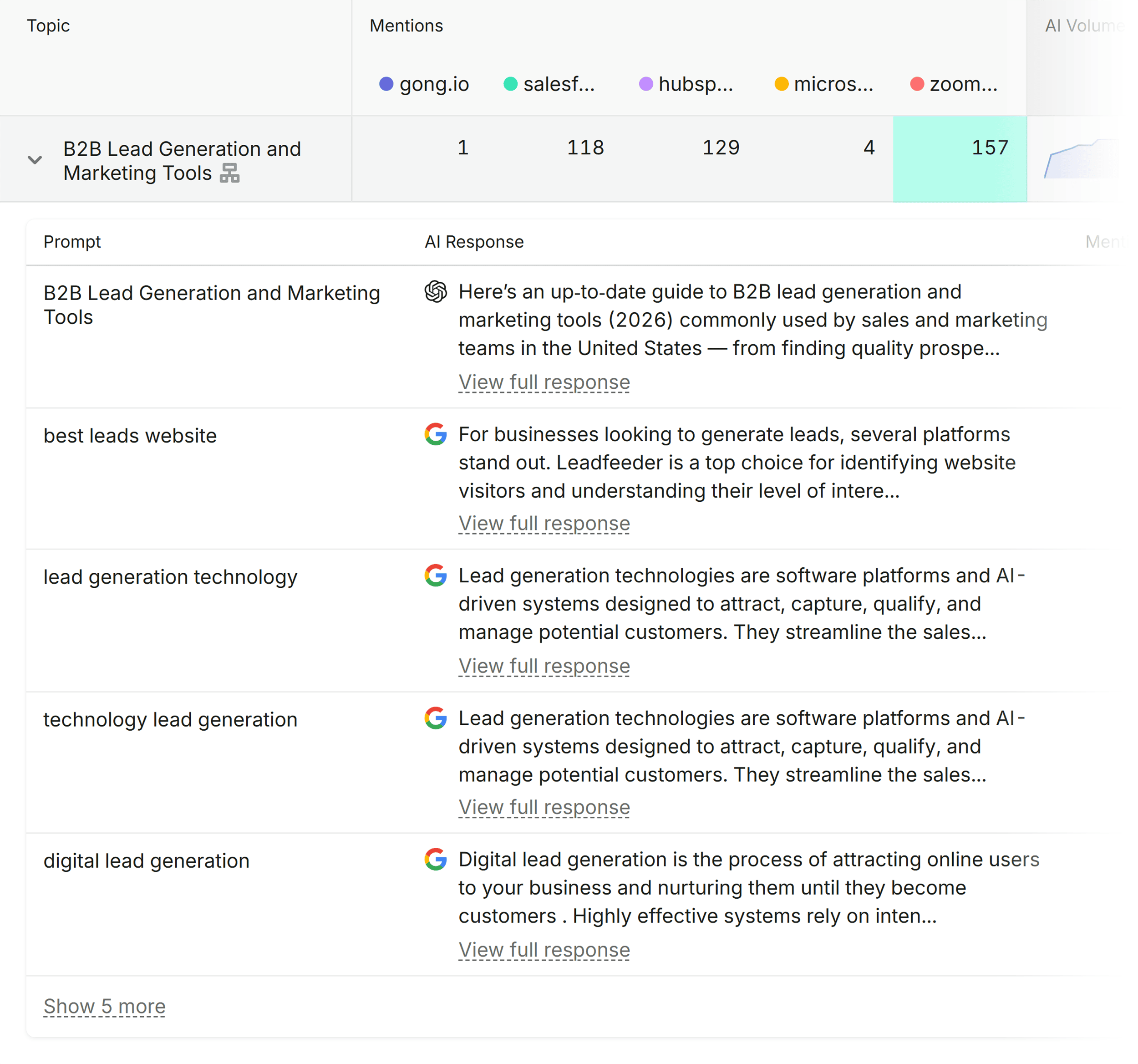
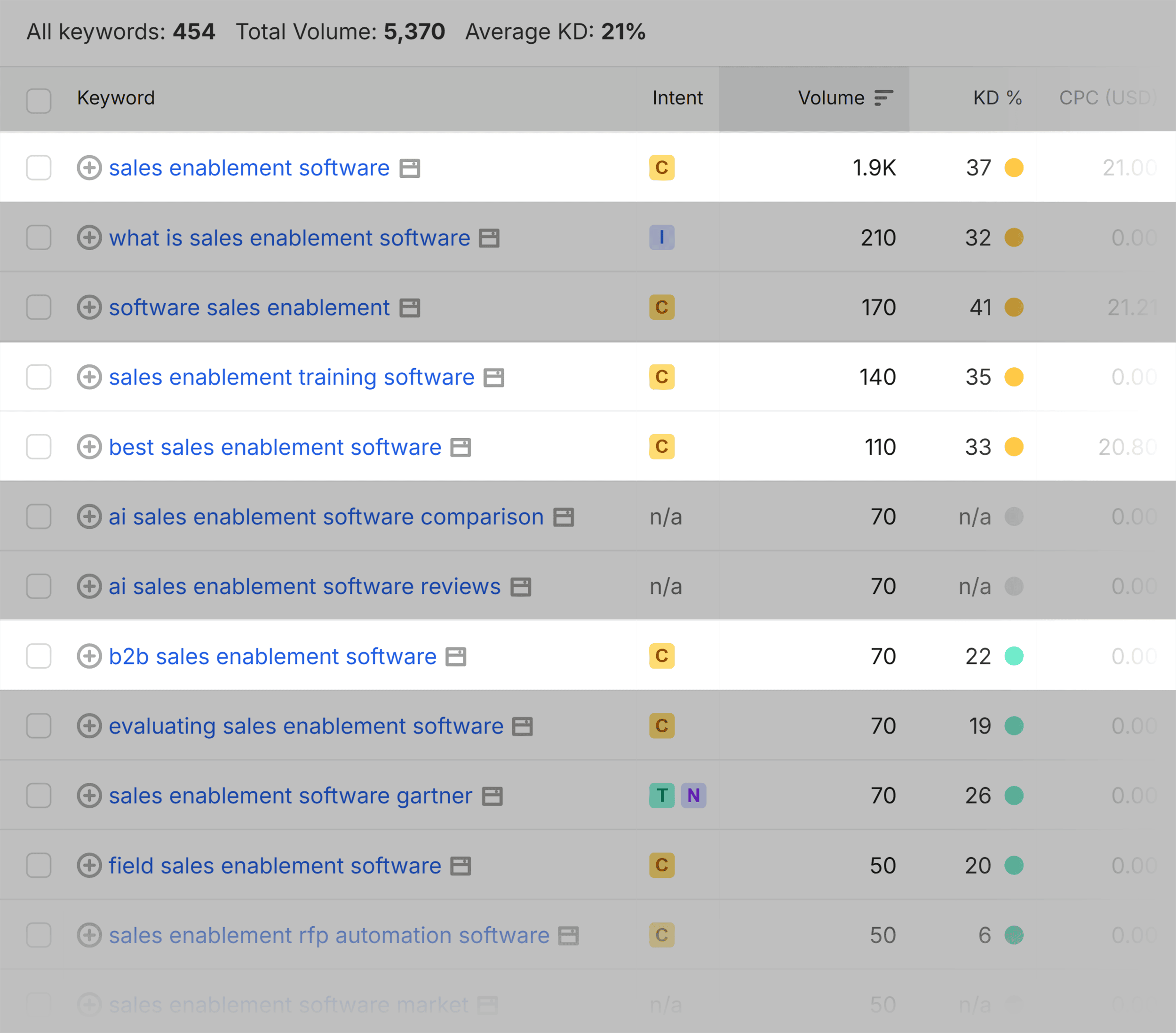
However, a deeper analysis reveals strategic vulnerabilities. While Gong dominates core conversational intelligence prompts, competitors like Salesforce and HubSpot consistently capture high-intent prompts related to lead generation and sales enablement tools. By tracking these metrics over time, Gong can identify exactly which categories require immediate content optimization or PR outreach to reclaim territory.
Anatomy of a High-Value Prompt Set
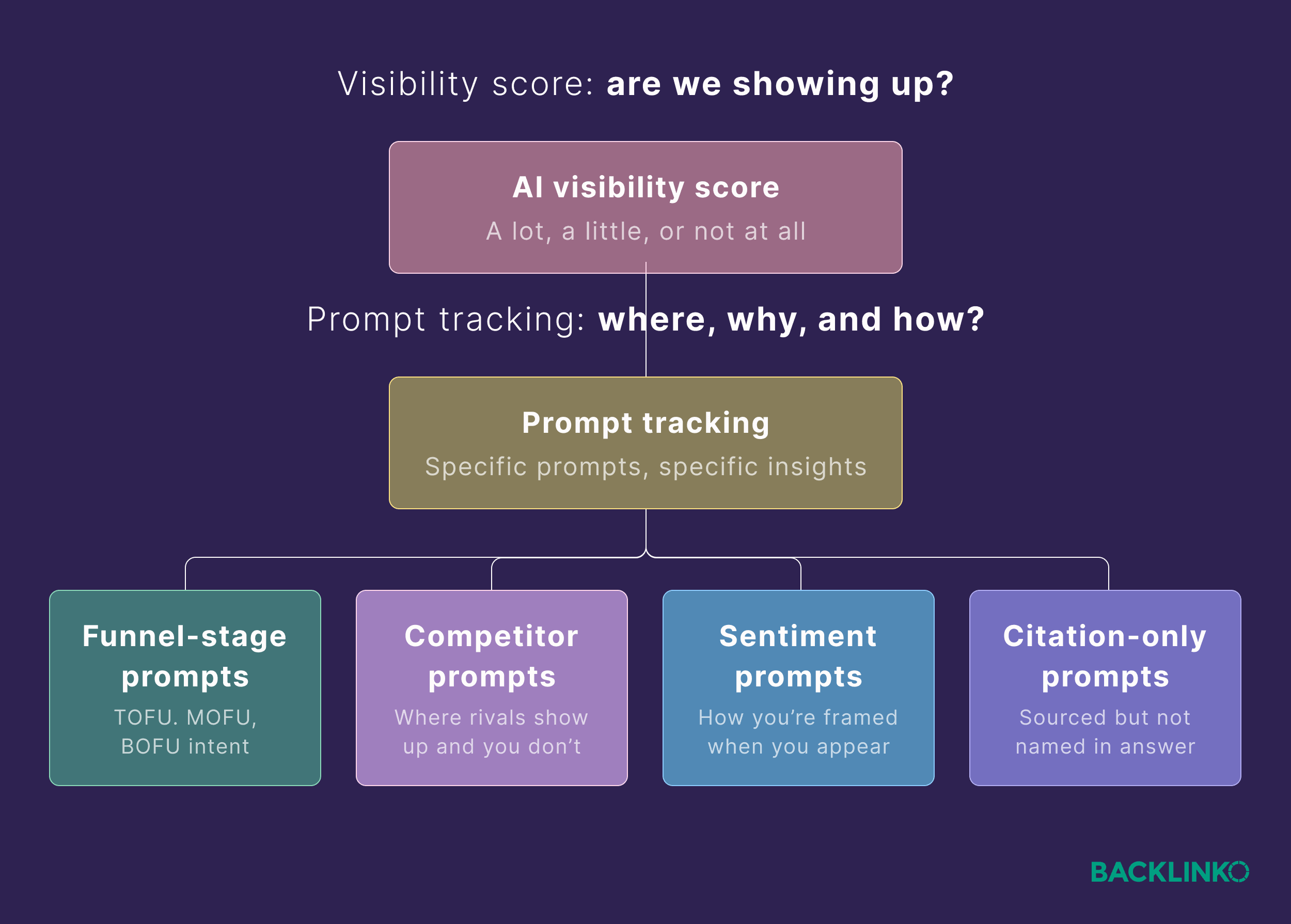
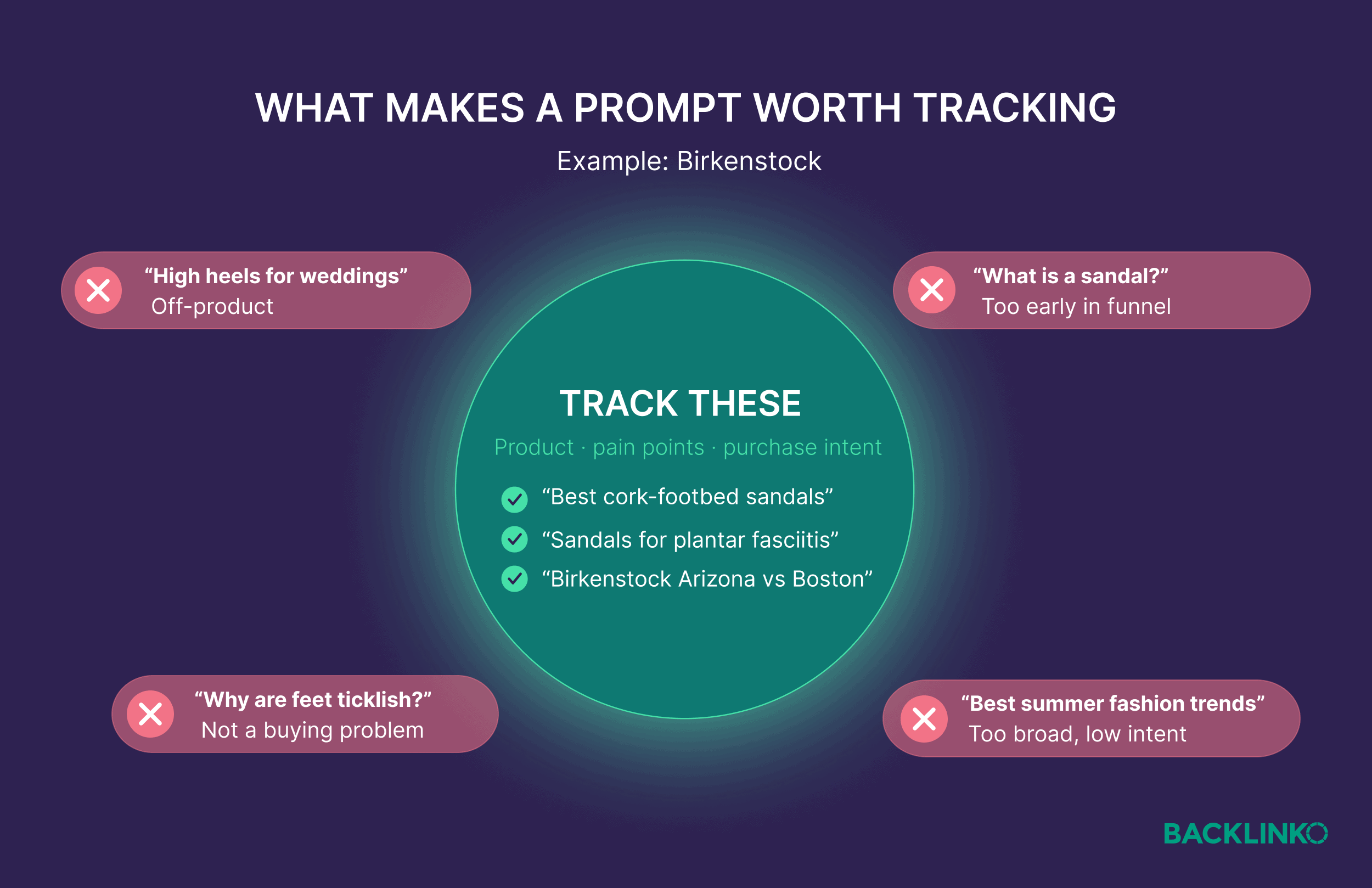
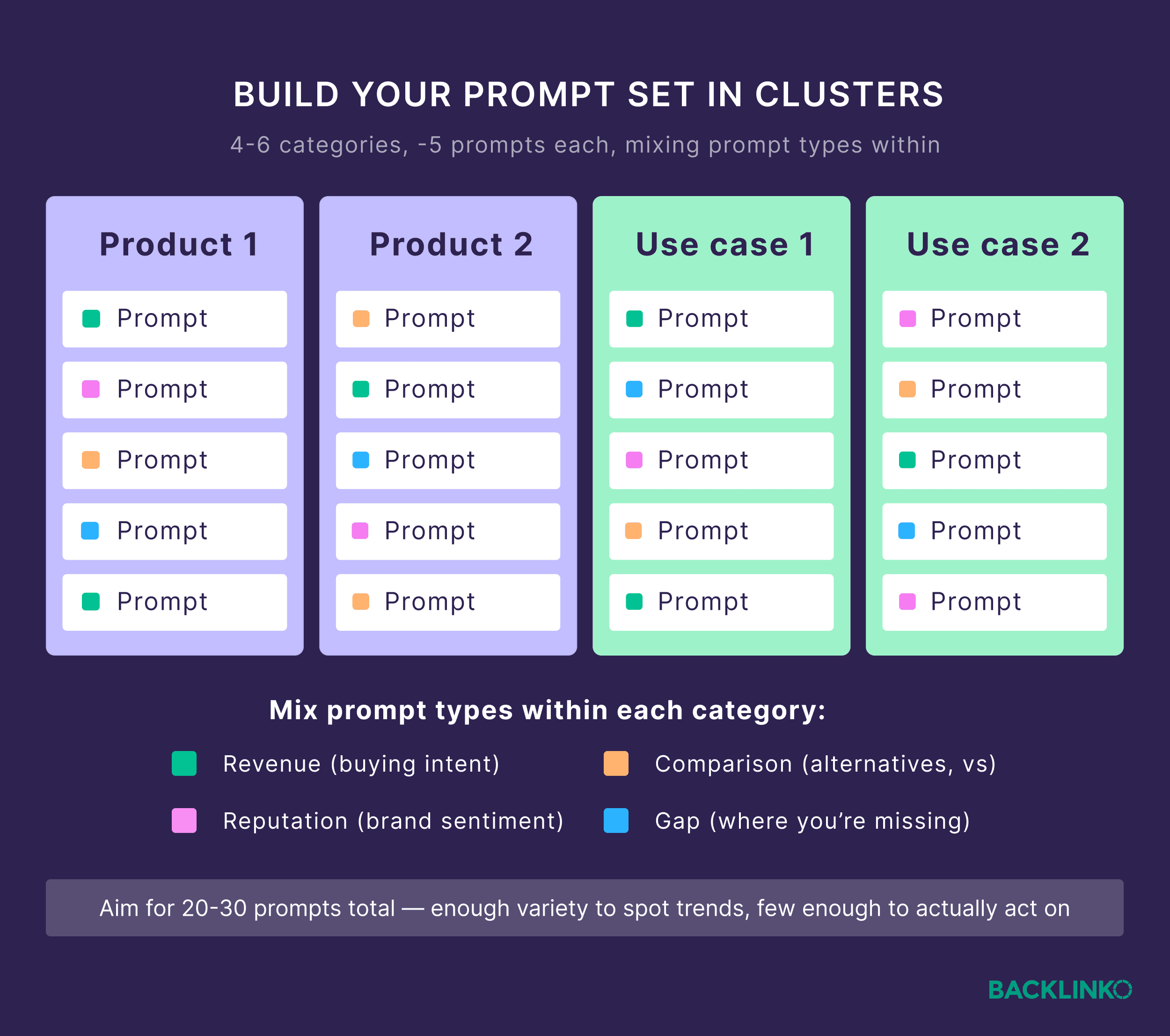
Effective prompt tracking relies on a curated set of 20 to 30 queries spread across 4 to 6 core categories. Experts categorize these tracked queries into four distinct types:
- Evaluation Prompts: "What are the best project management tools for enterprise marketing teams?"
- Comparison Prompts: "How does Asana compare to Monday.com for workflow automation?"
- Reputation Prompts: "Does Gong actually improve sales team productivity according to user reviews?"
- Gap Prompts: Unexplored queries where competitors frequently appear, but your brand is entirely missing.
According to Margaret Kapitany, Offsite SEO Lead at Hootsuite, successful tracking requires filtering out vanity metrics. For instance, tracking broad definitions ("What is social media management?") or brand-validation queries ("Is Hootsuite a good company?") yields little actionable data. Instead, teams must focus on high-intent evaluation and integration queries ("Which social media platforms integrate with Salesforce?").
Official Industry Responses and Expert Frameworks
Digital marketing agencies and enterprise leaders are rapidly developing standardized frameworks to manage generative search volatility.
Jonny Nastor, Founder and Head of Strategy at Digital Commerce Partners, pioneered the "Constraint Map" methodology. Nastor’s approach posits that buyers use LLMs by defining a core job-to-be-done (e.g., "best video doorbell") paired with specific constraints (e.g., "with no monthly subscription fees"). By mapping these constraints against keyword modifier data, agencies can automatically generate hundreds of targeted prompts and monitor them via APIs across ChatGPT, Gemini, and Perplexity.
The Role of Third-Party Sources
A common misconception is that AI visibility is controlled solely by optimizing corporate landing pages. Industry data indicates otherwise: 85% of brand mentions in LLM answers originate from third-party sources.
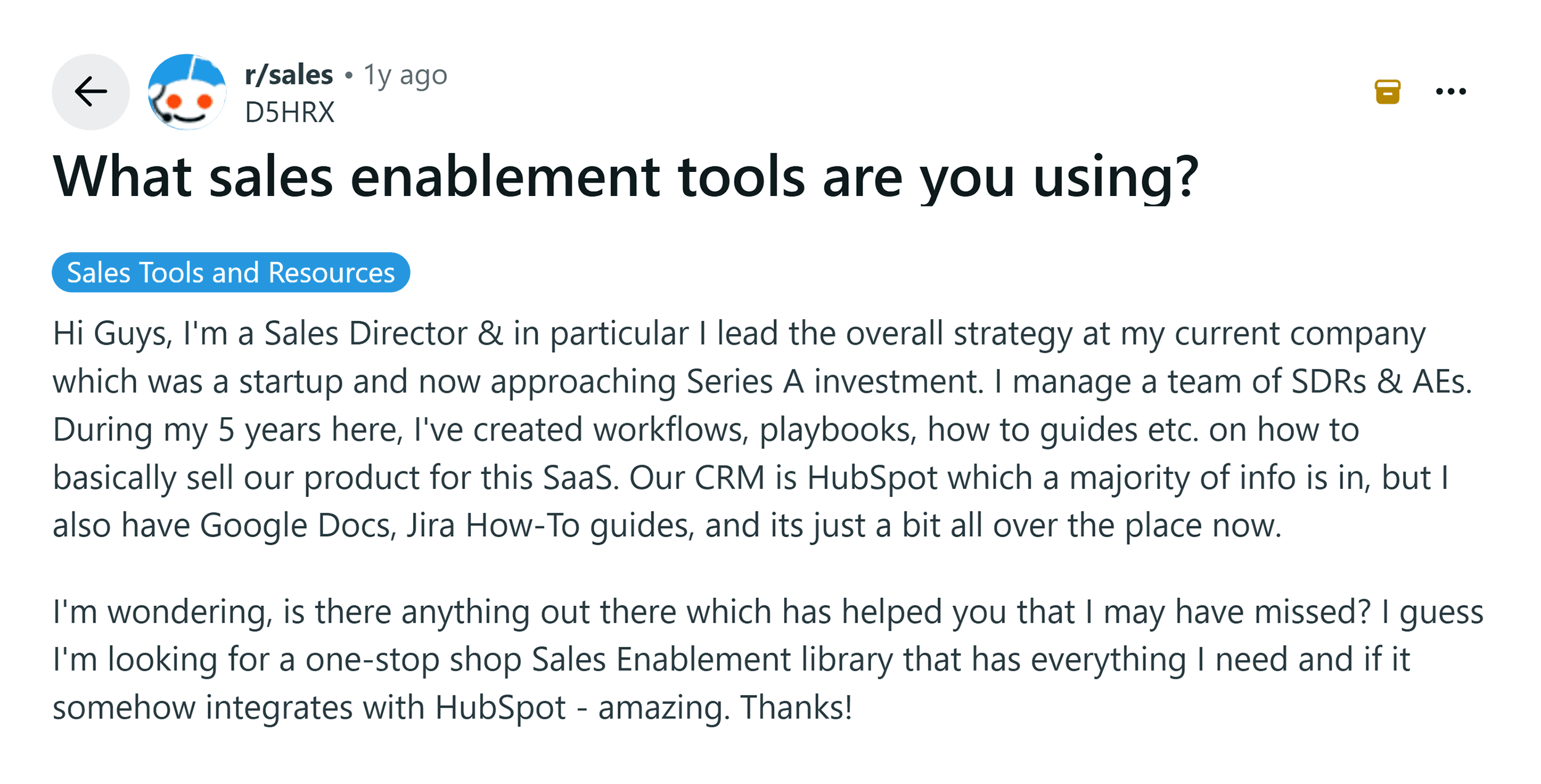
When models evaluate software or consumer products, they rely heavily on trusted aggregator sites, community forums (such as Reddit), and expert review publications (such as G2, TechRadar, or Capterra). If a brand is absent from these platforms, its chances of winning AI recommendations drop precipitously, regardless of its internal domain authority.
Implications: How to Read and Act on Prompt Data
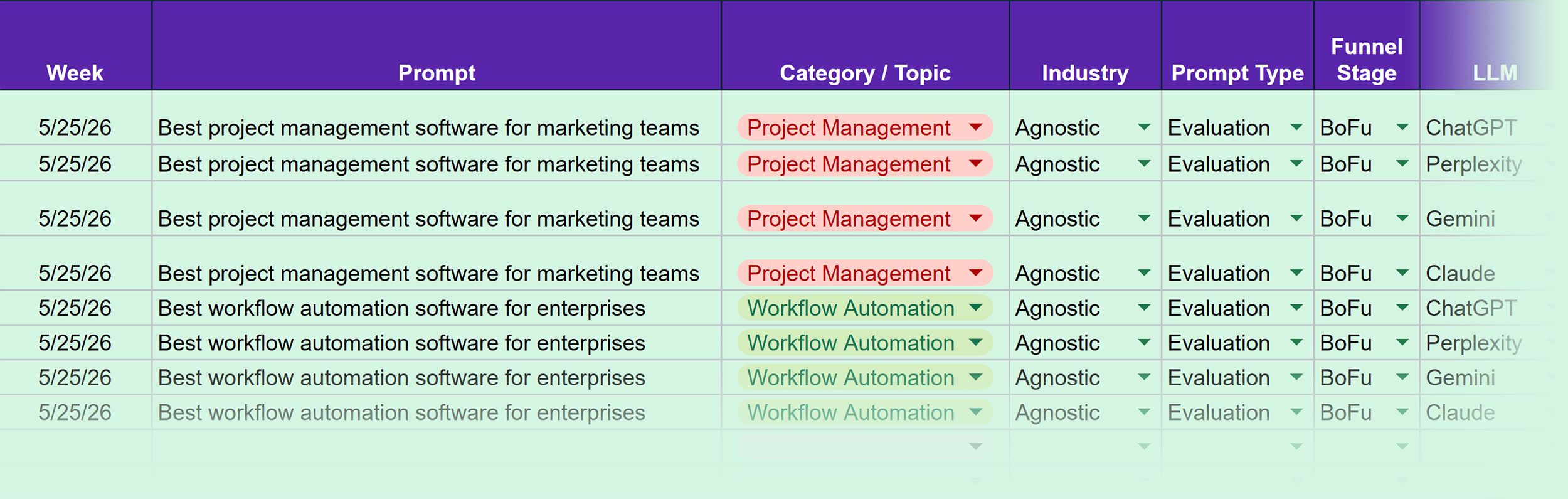
Because LLM outputs are inherently variable, acting on a single week of data is a recipe for wasted effort. Industry experts recommend reviewing trends over a minimum four-week window before making strategic adjustments.
Actionable Interventions for Marketing Teams
- If your frequency trend is rising: Isolate the content published in the weeks preceding the lift. Reverse-engineer that success and scale the strategy.
- If your frequency trend is falling: Check for stale product pages, outdated technical specifications, or a loss of share-of-voice on key review sites.
- If you are caught in "Ghost Ranking": If your brand appears as a citation source in the sidebar but your competitor is recommended in the text, audit your presence on that specific third-party site. Update product profiles, encourage user reviews, and ensure your descriptive metadata is pristine.
- Avoid Common Misreads: Do not panic over a single weak week, and do not inflate your visibility metrics by tracking overly broad definitions or purely branded queries.
Conclusion
Prompt tracking is not a static scoreboard; it is a strategic compass for the age of generative search. Organizations that succeed in this environment abandon the pursuit of universal visibility, zeroing in instead on high-intent buyer conversations, monitoring trends rather than moments, and optimizing both their owned properties and their third-party digital footprint. As AI reshapes how the world discovers products, the brands that track their prompts today will own the customer relationships of tomorrow.