By The Business Insights Desk
Published: February 2026
You have done the hard part.
You spent hours crafting a subject line that sparks curiosity and earns the open. You wrote body copy that sounds like it was written by a living, breathing human rather than a robotic corporation. You mapped out the intricate triggers of an automation sequence, scheduled the broadcast, and hit the send button with the quiet confidence of a founder who knows their product, their audience, and their market.
And then, your campaign simply vanishes.
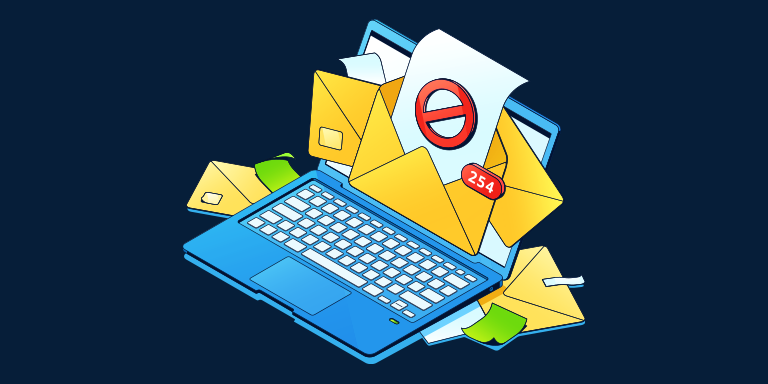
It did not bounce. It was not rejected due to an invalid email format. Instead, it quietly slipped past the outer defenses and dissolved into the digital abyss of the spam folder.
This is the brutal reality facing modern ecommerce founders, digital marketers, and solo entrepreneurs. You can invest thousands of dollars into customer acquisition, master the psychological triggers of high-converting copywriting, and design a world-class customer journey—but if your messages fail to reach the primary inbox, none of it matters. Not the psychology. Not the aesthetic design. Not the perfectly timed automation.
As digital real estate becomes increasingly crowded and email service providers (ESPs) tighten their automated screening parameters, email deliverability has transitioned from a back-end IT chore into a frontline business survival metric.
Main Facts: The Anatomy of Inbox Placement
To understand email deliverability, one must first dismantle a widespread misconception: delivery and deliverability are not the same thing.
When an email is marked as “delivered” on your marketing platform’s dashboard, it simply means the receiving mail server (such as Gmail, Yahoo, or Outlook) accepted the message without throwing a hard bounce. It cleared the front door. However, where that message landed once it crossed the threshold—whether it made it to the primary inbox, was shunted into the Promotions tab, or was quietly dumped straight into the spam folder—is an entirely separate metric.
Deliverability measures your actual success rate in reaching the user’s primary view. It is governed by a complex matrix of technical protocols, historical sending behavior, contact list hygiene, and content patterns. This matrix is evaluated in real-time by algorithmic gatekeepers.
For businesses operating online, a dip in deliverability is an insidious threat. If a merchant discovers that 20% of their broadcasts are missing the inbox, they have effectively lost 20% of their audience overnight. Because this drop happens invisibly behind the scenes, most founders remain completely unaware until they notice an unexplained stagnation in monthly revenue, sliding open rates, and declining customer lifetime value (LTV).
Chronology: The Evolution of Email Filtering
To appreciate how strict inbox placement has become, it helps to look at how email filtering evolved over the past two decades.
- The Early 2000s (Keyword Filtering): In the early days of commercial email marketing, spam filters relied heavily on naive keyword matching. Messages containing words like "free," "guarantee," or excessive exclamation marks were automatically flagged. Marketers quickly learned to game the system by using character substitutions (e.g., "fr33") or burying trigger words inside images.
- The 2010s (Reputation Scoring & Authentication): As spammers adapted, ESPs shifted from looking merely at what was inside the email to who was sending it. This era marked the widespread adoption of sender reputation metrics and early authentication protocols like SPF and DKIM. Internet Service Providers (ISPs) began tracking domain-level complaints and engagement metrics.
- The Present Day (Machine Learning & Behavioral Analysis): Modern spam filters operated by tech giants like Google and Microsoft are powered by sophisticated machine learning models. They evaluate hundreds of real-time signals simultaneously. They analyze the sender’s cryptographic signature, the historical engagement velocity of the receiving domain, the HTML-to-text ratio, and even micro-interactions like whether past emails from this sender were deleted without reading or moved out of the spam folder by the user.
As these gatekeepers have grown more intelligent, the margin for error for businesses has shrunk to near zero.
Supporting Data: The Mechanics of Reputation and Authentication
Modern inbox placement relies heavily on two foundational pillars: your sender reputation and your technical authentication setup. Ignoring either is a fast track to the spam folder.
1. Sender Reputation: The Credit Score of Your Domain
Think of your sender reputation as a financial credit score for your communication channels. Every time you dispatch an email, the algorithms watch how the recipients react.
- Are people opening and reading the message?
- Are they clicking links, replying, or forwarding?
- Are they hitting the "Mark as Spam" button?
- Are your messages bouncing back due to dead addresses?
Over time, these data points compound into a numerical reputation score attached to your sending domain and IP address. A pristine reputation grants you express passage into the primary inbox. A damaged reputation results in throttling, filtering, or outright blocking.
The two fastest ways to demolish a healthy sender reputation are high spam complaint rates and high hard-bounce rates. Bounces signal a dirty, unverified contact list, while complaints signal that your audience feels harassed or caught off-guard.
2. Authentication: Your Digital ID Card
If sender reputation is your credit score, authentication is your passport. Without it, email providers assume you are an imposter.
There are three essential technical standards that every business must configure:
- SPF (Sender Policy Framework): A public record that lists all the authorized IP addresses and servers permitted to send email on behalf of your domain.
- DKIM (DomainKeys Identified Mail): Adds a cryptographic digital signature to your emails, proving to the receiving server that the message was genuinely sent by you and was not altered in transit.
- DMARC (Domain-based Message Authentication, Reporting, and Conformance): A policy framework that tells receiving servers what to do if an email fails SPF or DKIM checks—whether to quarantine it or reject it entirely.
Platforms like Omnisend automate much of this heavy lifting during onboarding. However, founders must audit their DNS settings periodically. A single misconfigured or missing DKIM record can instantly tank deliverability, yet it can often be resolved in under fifteen minutes.
Official Responses and Industry Best Practices
Industry experts and infrastructure providers agree that maintaining high deliverability requires proactive, disciplined habits rather than reactive fixes.
List Hygiene: The Unsexy Work That Saves Revenue
Every database accumulates dead weight over time: abandoned email accounts, old corporate addresses, typos entered at checkout, and dormant subscribers who have not engaged in years. Keeping these contacts on your active sending list drags down your engagement metrics and triggers spam filters.
Industry best practices dictate regular list hygiene:
- Run Re-Engagement Campaigns: Target subscribers who have shown zero open or click activity over a 90- to 180-day window. Give them a clear opportunity to reaffirm their interest. If they do not bite, suppress them. Shrinking your list intentionally often yields higher overall revenue because your messages are hitting an audience that actually cares.
- Suppress Hard Bounces Immediately: Most quality ESPs do this automatically, but merchants should monitor soft bounces and domain errors closely.
- Implement Double Opt-In: While single opt-in grows an audience faster, double opt-in ensures that every subscriber explicitly confirms their desire to hear from you. This simple friction point dramatically improves long-term engagement and deliverability.
Content Habits That Trigger Silent Filters
Spam filters no longer stop at scanning for prohibited keywords. Modern filters parse HTML structures, image-to-text ratios, and tracking link integrity. To keep your emails out of the crosshairs, avoid these common pitfalls:
- Buying Email Lists: Purchased lists are a toxic cocktail of spam traps, inactive accounts, and angry recipients. Sending to them will crater your domain reputation almost immediately.
- Using URL Shorteners: Masking your destination links using generic shorteners looks suspicious to algorithms designed to catch phishing attacks. Always use your own branded sending domain for links.
- Neglecting Mobile-Friendly HTML: Bloated code, broken tables, and image-heavy layouts that fail to render cleanly on mobile devices frustrate users and trigger negative engagement signals.
- Inconsistent Sending Cadence: Blasting your list once every three months, followed by five emails in a single week, erraticates predictable engagement patterns and alerts filters to abnormal behavior.
Implications: Building a Resilient Email Strategy
Deliverability is not a box to check off a launch checklist; it is an ongoing operational commitment. The businesses that consistently land in the primary inbox are those that treat list health, technical compliance, and subscriber engagement as core pillars of their growth strategy.
Because deliverability is invisible until it fails, waiting for open rates to plummet before taking action is a dangerous game. By the time the decline is visible on your dashboard, your domain reputation has already taken a severe hit, requiring weeks or even months of careful remediation to repair.
To safeguard their revenue streams, forward-thinking merchants rely on specialized infrastructure designed to monitor and protect sender health automatically. Tools like Omnisend provide integrated deliverability monitoring, streamlined authentication setups, automated list-cleaning protocols, and smart-sending features that prevent audience fatigue before it starts.
Exclusive Offer for Readers
To help you secure your inbox placement and maximize your marketing ROI, Foundr readers can access 50% off their first three months with Omnisend. Simply use the promo code FOUNDR50 when you sign up here to build an email marketing program that reliably reaches the people who matter most: your customers.